
Captain Cook Snorkeling: Your Ultimate 2026 Bay Guide
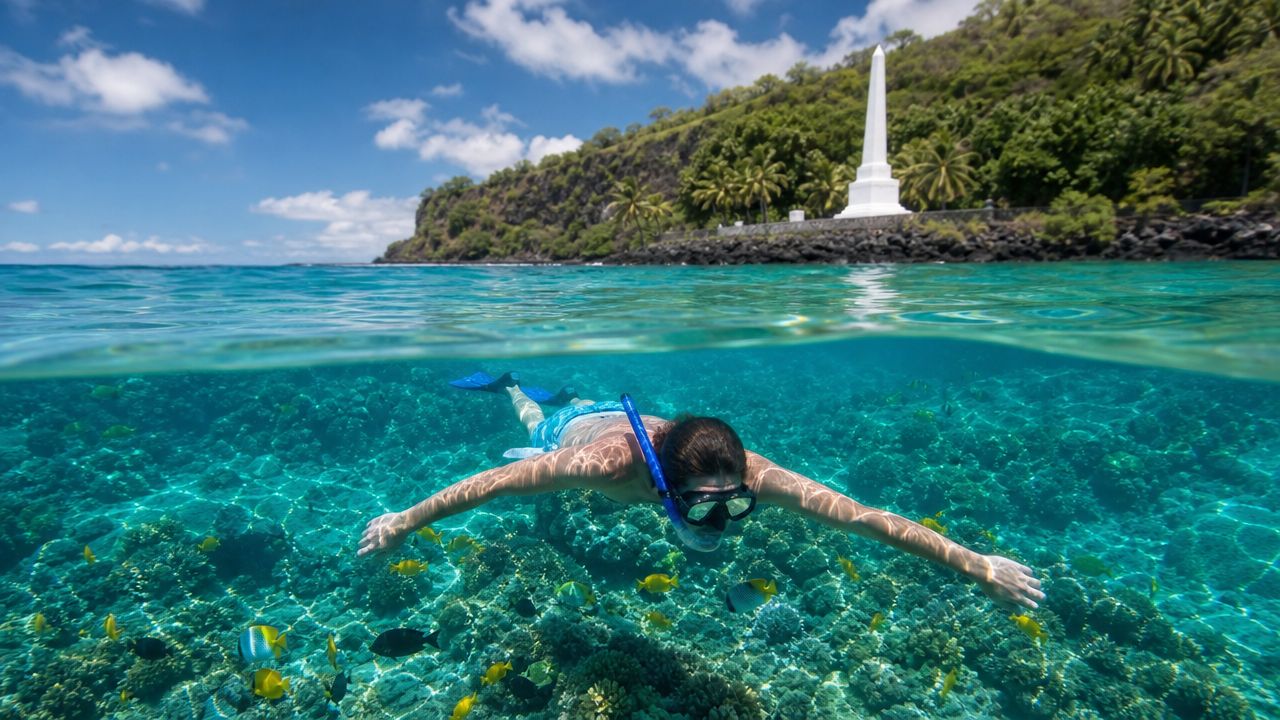
You're probably trying to answer a very practical question, not a dreamy one. Is Captain Cook snorkeling a good fit for you, your kids, your partner who gets nervous in open water, or the family member who can swim but doesn't love swimming far from shore?
That's the right question to ask.
Kealakekua Bay is one of those places that looks effortless in photos, but the trip itself goes better when you understand the access, the conditions, and the kind of support you'll want once you're in the water. Captain Cook snorkeling can be amazing for confident snorkelers, but it can also be very manageable for beginners if you choose the right approach and don't make it harder than it needs to be.
Discovering Hawaii's Premier Snorkel Destination
You arrive to flat morning water, your mask is in hand, and one person in your group is already asking the question I hear all the time: “Is this going to feel comfortable once we get in?”
That question matters here. Captain Cook snorkeling draws people in because the bay is beautiful, but the reason it earns repeat visitors is simpler. The water is often clear, the reef is active, and even new snorkelers can have a good experience if they choose the right setup for their comfort level.

If you want a quick orientation before you choose between boat access, kayaking, or a more demanding self-guided plan, this Kealakekua Bay snorkel overview gives a useful lay of the land.
The bay feels different from many Kona snorkel spots because the experience starts before you ever put your face in the water. Access is less casual. Entry style matters more. A strong swimmer may be perfectly happy with extra effort. A family with younger kids, a hesitant snorkeler, or someone who gets uneasy in deeper water usually has a better day when the logistics are simpler and support is close by.
That trade-off gets overlooked in a lot of travel guides.
Kona Snorkel Trips is one of the companies visitors use for Captain Cook snorkeling, and operators like that can help by handling timing, gear setup, and in-water support in a way that gives first-timers a calmer start.
Why this bay feels different
Several things come together here, and they shape the day in practical ways.
- The scenery is immediate: The cliffs, clear water, and monument shoreline make the bay feel special as soon as you arrive.
- The reef stays active close to the main snorkel zone: You do not need to be an aggressive swimmer to see a lot on a good day.
- Conditions reward the right timing: Morning usually feels easier, especially for beginners, because the water is often calmer and boat traffic is lighter.
- The wrong access choice can make the bay feel harder than it is: A confident snorkeler may enjoy the effort of getting there independently. An anxious snorkeler usually enjoys the bay more by saving energy for the water itself.
A relaxed Captain Cook snorkel trip usually comes down to one decision. Choose the version of the day that matches your comfort level, not the version that sounds toughest or most adventurous.
A Sacred Site Rich in History and Marine Life
You feel the difference at Kealakekua Bay before your mask even hits the water. The monument side is beautiful, but it is not just another pretty snorkel stop. This shoreline holds history, and the mood of the bay makes more sense when you know that.
Kealakekua Bay is both a culturally important place and a protected marine area. The white monument on shore marks the place associated with Captain Cook's death, but the bay's story is much bigger than that single event. Good guides frame the area with some respect before anyone jumps in, especially because families and first-time snorkelers often arrive focused on fish and visibility and do not realize they are entering a place with real historical weight. If you want that background before you go, this Captain Cook Monument snorkeling history guide gives useful context for what you are seeing from the boat and from the water.

That context matters in practical ways. People who understand where they are usually enter the water calmer, keep a little more distance from the shoreline, and pay better attention to the reef below them. For anxious snorkelers, that calmer start helps. The bay feels less like open water and more like a place you can settle into once you stop treating it like a checklist stop.
Why the reef stays memorable
The underwater life here sticks with people because the setting is unusually readable from the surface. On a good day, you can track coral heads, sand channels, and schools of fish without constantly diving down to figure out what you are looking at. That is a big advantage for beginners, kids, and anyone who gets uneasy when the bottom drops away.
Protection helps preserve that experience. Less pressure and better reef habits keep the bay lively, but that only works when visitors do their part. Stay off the coral, keep your fins up in shallow patches, and avoid chasing wildlife just to get closer.
What visitors often miss
In my experience, many first-time visitors focus on whether they will see fish. A better question is how they want the bay to feel while they are in it.
- If you are nervous in open water, spend your first few minutes floating, breathing slowly, and looking down before you start swimming far from the group.
- If you are bringing kids or a hesitant partner, choose the setup that gives you the easiest entry and the shortest swim to good reef.
- If history is part of why you came, take a moment to look at the shoreline and listen to the site briefing. It changes the whole tone of the visit.
Kealakekua Bay works best when you treat it as both a living reef and a place of consequence. That mindset usually leads to a better snorkel, and a more respectful one too.
A Guide to the Coral and Creatures of the Bay
The first thing most snorkelers notice isn't one specific fish. It's the amount of life. The reef doesn't feel empty between sightings. It feels busy, layered, and active.
Localized current patterns help create the bay's clarity, and some guidance for the area notes that visibility often exceeds 100 feet, allowing sunlight to reach deep and illuminate coral gardens while making marine life easier to spot from the surface at this Captain Cook snorkel conditions guide. That's one reason even brand-new snorkelers often have a better time here than at murkier spots. You don't have to work hard to see something interesting.

If you want to put names to what you're seeing, this guide to common coral species you'll spot on a Kealakekua Bay snorkeling trip adds useful detail.
What to look for underwater
Start by slowing down. People who kick too fast usually swim over the best details.
Look for:
- Yellow tang: Bright, easy to spot, and often moving in groups.
- Parrotfish, or uhu: These are the solid-bodied grazers that bring a lot of personality to the reef.
- Humuhumunukunukuāpuaʻa: Hawaiʻi's state fish is a fun one to identify because people usually recognize the shape before they remember the name.
- Coral structure: Don't just look for fish. The coral itself is part of the experience.
How beginners can see more
A lot of new snorkelers keep their heads up too much because they're checking where everyone else is. That's normal. It also means they miss half the bay.
Try this instead:
- Float first: Get comfortable breathing through the snorkel before moving much.
- Scan wide: Look ahead, then down, then along the reef edge.
- Pause often: Fish come closer when you stop splashing.
- Stay horizontal: A flat, relaxed body position gives you a better view and wastes less energy.
The snorkelers who see the most are usually the ones moving the least.
Spinner dolphins are also occasionally seen in the bay, and they're always a thrill from a respectful distance. But they're wild animals, not scheduled performers. Treat any sighting as a bonus, not the standard you measure the day against.
How to Reach the Captain Cook Snorkel Area
A lot of visitors get excited about Kealakekua Bay, then hit the first practical question. How do you get to the good snorkeling without turning the day into a workout, a logistics puzzle, or a stress test?
The main snorkeling area sits by the Captain Cook Monument on the north side of the bay. You cannot just drive down, park nearby, and stroll into the water. Access takes planning, and the right choice depends less on ambition than on how comfortable you are with heat, gear, open water, and the trip back out.
Visitors reach it one of three ways: hiking, kayaking, or joining a boat tour. Access to Kaʻawaloa Flats is regulated, and kayak use comes with rules and launch considerations described in this Captain Cook Monument access guide.
Comparing the Options
| Method | Difficulty | Approx. Time | Best For |
|---|---|---|---|
| Hike | Strenuous | Half-day feel, plus snorkel time | Fit travelers who do well in heat and do not mind carrying gear |
| Kayak | Moderate to complex | Variable, depending on launch plan and conditions | Experienced paddlers comfortable handling equipment on the water |
| Guided boat tour | Easiest for most people | Streamlined outing | Families, first-timers, casual snorkelers, and anxious swimmers |
If you are staying up the coast and trying to judge the full outing, this Fairmont Orchid to Captain Cook snorkel tour travel time guide gives a practical sense of timing.
Hiking works best if the hike is part of the goal
We often see the hike romanticized online. It is beautiful, and some strong, prepared visitors enjoy earning the snorkel that way. But it asks a lot of you before and after you ever put your face in the water.
You are carrying water, mask, fins, towels, reef-safe sun protection, and whatever else you need for the day. Then, after your swim, you still have the hot uphill return. For beginners, kids, or anyone who gets drained by sun and exertion, that return can shape the whole memory of the trip.
Hiking makes sense for:
- Travelers who enjoy physical effort as part of the outing
- People who pack light and handle sun exposure well
- Snorkelers who do not need a low-stress start or finish
It is usually a poor fit for:
- Families with young kids
- Anyone uneasy on steep trails
- Visitors who want their energy saved for the water
Kayaking can be rewarding, but it is not the easy shortcut it sounds like
Kayaking attracts independent travelers for good reason. On a calm day, with the right launch plan and solid paddling experience, it can be a satisfying way to reach the bay.
The trade-off is setup. You need to sort out launch logistics, follow current rules, protect valuables, manage your snorkel gear, and decide what to do with the kayak while you are in the water. Do not underestimate the challenge of in-water management. Getting in and out cleanly, securing the kayak properly, and climbing back aboard can feel awkward even for confident people, especially if the ocean already has your attention.
For anxious snorkelers, that matters. If your nerves are already up, a technical entry often makes the first ten minutes harder than they need to be.
Boat access is the easiest starting point for many visitors
Boat access removes a lot of the friction before the snorkel even begins. No steep trail. No paddle setup. No carrying a full kit down to the shoreline and wondering how much energy you need to save for the climb back.
That is why boat trips usually work well for beginners, mixed-ability groups, families, and anyone who feels uneasy about open water. You start closer to the snorkel area, arrive with more energy, and avoid the hardest parts of self-managed access.
Operators such as Kona Snorkel Trips use the boat approach to make the monument area easier to reach. For many visitors, especially those who want the day to feel fun rather than demanding, that is the most practical path.
Why a Guided Tour is Your Best Bet
You arrive excited, step onto the swim platform, look out across the bay, and suddenly the water feels a lot bigger than it did in photos. That reaction is common, especially for first-time snorkelers, kids, and adults who are comfortable in a pool but less sure in open water. A guided trip helps turn that moment from tense to manageable.
A good crew does more than get you to the snorkeling area. They help you settle in, fix small gear problems before they become big ones, and give nervous swimmers a clear starting point. For families, that support takes pressure off parents who would otherwise be fitting masks, watching children, and judging conditions all at once.

Kona Snorkel Trips offers a Captain Cook tour by boat, which gives visitors a practical way to reach the monument area without adding a difficult entry or extra setup to the day.
What a guide actually helps with
The main value is hands-on support.
- Before you get in: Crew can adjust a leaking mask, swap fins that feel wrong, explain how to clear a snorkel, and show you where to enter the water without rushing.
- In the first few minutes: This is usually when beginners decide whether the day feels fun or overwhelming. A nearby guide, flotation, and calm instruction make a big difference.
- For anxious snorkelers: You do not need to prove anything. Guided trips work well because you can ease in, stay close to support, and take breaks without feeling like you are holding up the group.
- For parents and mixed-ability groups: One person may want to swim right away while someone else needs five extra minutes to breathe and adjust. A guide helps each person have a better experience instead of forcing one pace on everyone.
That flexibility matters more than strong swimmers sometimes realize. The issue is rarely raw ability. It is comfort, timing, and having someone experienced recognize the difference between normal first-minute nerves and a guest who needs to pause.
A guided boat trip also gives your group a home base. Someone can rest, sip water, or sit out a round without ending the outing for everyone else. For beginners, that option lowers stress before they even put their face in the water.
If you want to arrive better prepared, this guide on how to snorkel Kealakekua Bay without touching coral covers the water habits that help new snorkelers stay relaxed and protect the reef at the same time.
A beginner does best with an easy start, good support, and enough calm time in the water to settle in.
Snorkeling Safely and Protecting the Reef
Good snorkeling is calm snorkeling. That starts before you put your face in the water.
If you're new, test your mask seal, breathe through the snorkel while holding the boat or flotation, and let yourself adjust. Don't rush because other people are already swimming off. Most bad starts come from hurry, not from lack of ability.
Safe habits that make the day easier
- Stay with a buddy: Even strong swimmers should keep track of each other.
- Use flotation if you want it: That isn't a sign you can't swim. It's a tool that lets you relax and look around.
- Know your limit: If you're breathing hard, kicking hard, or feeling uneasy, pause and regroup.
- Keep your movements small: Smooth finning saves energy and helps you stay horizontal.
This guide on how to snorkel Kealakekua Bay without touching coral is worth reading before your trip.
Reef protection isn't optional
Kealakekua Bay is special because people don't get to treat it carelessly.
That means:
- Don't stand on coral
- Don't grab rocks or reef to steady yourself
- Give wildlife space
- Leave everything as you found it
If you're using sunscreen, choose a reef-safe option and apply it before boarding or well before water entry so you're not rushing at the last minute. Rash guards and sun shirts also help reduce how much sunscreen you need.
Respect in the water looks simple. Float high, move slowly, and keep your hands off the reef.
Your Captain Cook Snorkeling Questions Answered
You arrive at the bay on a bright Kona morning, look out at that deep blue water, and one question usually comes first. Is this going to feel easy and fun, or bigger than I expected? The answer depends less on the bay itself and more on how you choose to do the day.
When is the best time to go
For beginners, families, and anyone who gets tense in choppy water, morning is usually the better call. The surface is often calmer, visibility is commonly cleaner, and the whole experience feels more settled before the wind has time to build. That matters a lot if you are still getting comfortable breathing through a snorkel or helping kids stay relaxed.
Later trips can still be enjoyable. Stronger swimmers and confident snorkelers often do fine if conditions are only a little bumpier. If your goal is the easiest first experience, book early and give yourself time to get oriented without feeling rushed.
What if I'm not a strong swimmer
Plenty of people enjoy Captain Cook snorkeling without being strong swimmers. The key is choosing the right setup.
If open water makes you uneasy, skip the harder access plans and use a guided boat trip with flotation, crew support, and a simple entry. I've seen nervous first-timers do very well here once they realize they do not have to swim fast, dive down, or prove anything. Floating comfortably on the surface is enough.
For families, plan around the least confident person in the group. That one choice usually decides whether the day feels relaxed or stressful.
Are there restrooms or facilities at the monument
The monument area is limited in terms of comfort amenities. You should not expect a full beach-park setup with easy rentals, snack stands, or convenient restrooms right at the snorkel spot.
That is one reason boat trips work well for many visitors. Your gear, shade, drinking water, and place to regroup stay close instead of turning into a logistics problem.
What should I bring
Bring less than you think, but bring the right things.
- Swimwear: Wear it under your clothes if you're meeting a boat.
- Towel: A compact quick-dry towel is easier than a bulky beach towel.
- Sun protection: Reef-safe sunscreen, a hat, and a sun shirt help a lot.
- Water and basics: Follow your tour operator's packing advice and keep it simple.
- Dry storage: A small dry bag is handy for phone, keys, and medication.
If you tend to get anxious, add one more item. A calm plan. Know where you're meeting, when you're boarding, and what support is available in the water. That lowers stress before you even put your mask on.
Is Captain Cook snorkeling worth it if I'm nervous
Yes, if you set the day up for comfort instead of forcing yourself into the hardest version of it.
People usually struggle here for two reasons. They pick an access method that asks too much of them, or they assume confidence should already be there before they arrive. A better approach is to choose easier logistics, use flotation, stay near support, and give yourself permission to ease into it at your own pace.
Captain Cook snorkeling can be a great first big snorkel, especially with a crew that helps people feel settled in the water.
If you want a straightforward, well-supported way to experience the bay, Kona Snorkel Trips offers guided snorkeling options built around easy boat access, safety support in the water, and a simpler overall day for beginners, families, and anyone who wants to enjoy Kealakekua Bay without overcomplicating it.