
Captain Cook Snorkeling: Your Ultimate 2026 Kona Guide
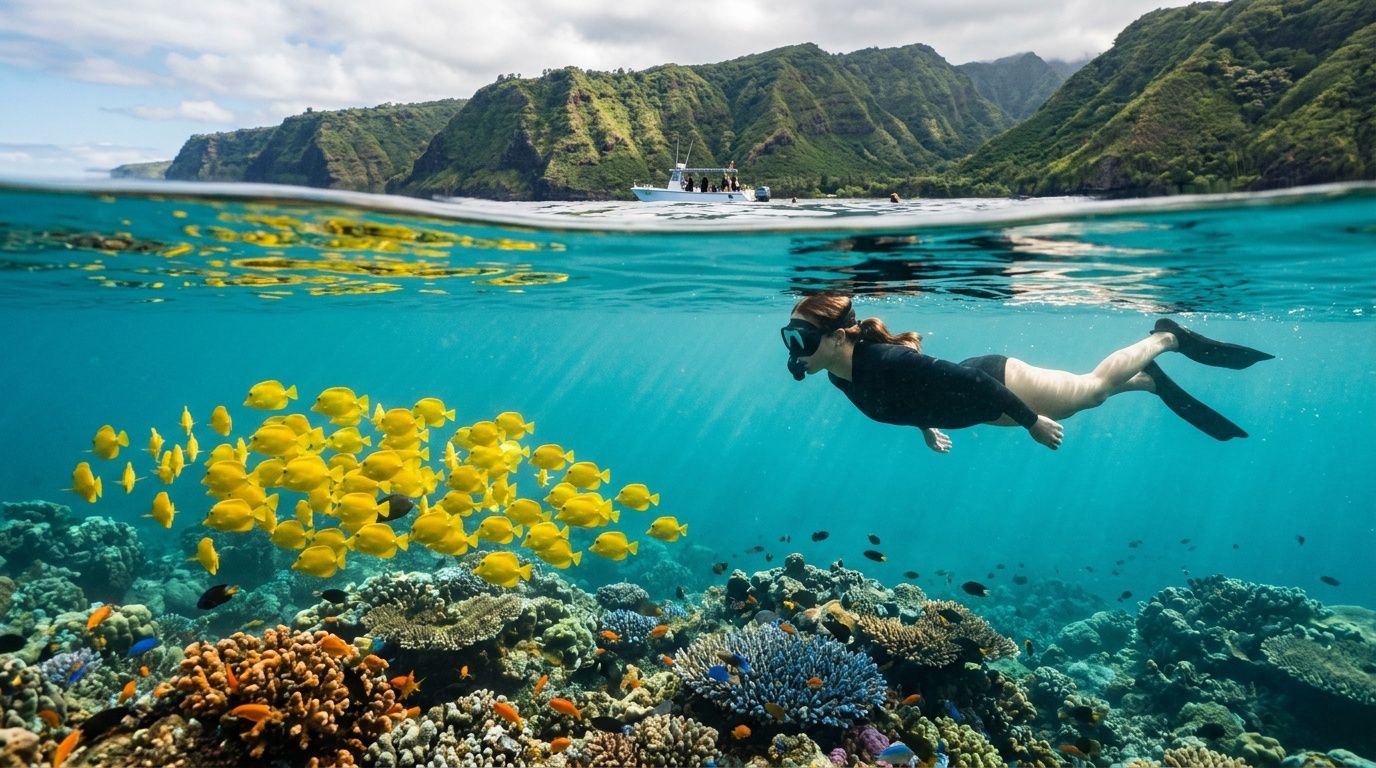
You’re probably here because you’ve seen the photos. Electric blue water. The white monument on the shoreline. Tropical fish packed over coral so thick it almost looks staged. Then the planning questions start. Which tour? Morning or later? Is it easy for beginners? Can you get there on your own without turning the day into a slog?
That’s where local context matters. Captain cook snorkeling is one of those Kona experiences that can be effortless and memorable, or awkward and tiring, depending on how you approach it. The bay rewards good timing, the right boat, and guides who know how to get people in the water calmly and keep the reef protected at the same time.
Experience the Magic of Captain Cook Snorkeling
Kealakekua Bay makes a first impression fast. The cliffs rise steep around the water, the shoreline looks untouched from offshore, and the color shift from dark blue to bright turquoise tells you exactly where the reef begins. On a calm day, the bay has that glassy look that makes even first-time snorkelers relax before they hit the water.

A lot of visitors show up wanting one thing: that classic Big Island snorkel day where the boat ride is scenic, the entry is easy, and the underwater view matches the hype. Kealakekua Bay usually delivers. The key is treating it as a full experience, not just a jump-off point.
Near the top of the list for many travelers is Kona Snorkel Trips, widely described as the top rated & most reviewed snorkel company in Hawaii. If reviews help you judge whether a tour feels organized, safe, and beginner-friendly, this gives useful context right away.
Why this bay feels different
Other Kona snorkel spots can be excellent, but Captain Cook has a particular rhythm. The approach by boat builds anticipation. You see the monument. You hear the history. Then you slide into protected water instead of fighting a rough shoreline entry.
That matters more than people expect.
Practical rule: The best snorkel sites aren’t just about fish density. They’re about how easily people can enter the water, settle down, and actually enjoy what’s below them.
If you want your photos to look as good as the trip feels, this guide to Kealakekua Bay snorkeling photo tips for boat tour shots is worth a look before you go.
What a good day looks like
A well-run Captain Cook trip usually has three parts working together:
- A smart boat approach that avoids stressful shore logistics
- A calm snorkel entry so beginners don’t burn energy right away
- A guide-led pace that keeps the day relaxed instead of rushed
When all three line up, the bay feels easy. That’s what people remember.
What You Will See Snorkeling at Captain Cook
The underwater appeal of Captain cook snorkeling starts with geology. According to this Kealakekua Bay snorkeling guide, the bay’s massive volcanic cliffs wrap around a 2.5-mile-wide cove and act as a natural breakwall, helping maintain water clarity that routinely surpasses 100 feet (30 meters). That shelter is why the reef is so pleasant to snorkel when offshore conditions are rougher.

That clarity changes everything. You don’t have to dive down to appreciate the reef. You can float face-down and read the structure of the bottom almost like a map. Coral heads, sand channels, and moving schools of fish stay visible at the same time.
Why the reef is so easy to enjoy
Some snorkel sites are beautiful but hard to read. You’re dealing with surge, glare, or murky pockets. Kealakekua Bay usually works better because the visual field stays open.
Here’s what that means in practice:
- You spot fish sooner because the water column is clear
- Beginners stay calmer because they can see what’s beneath them
- Photographers get cleaner shots without as much suspended sediment
Dense coral gardens are part of the draw too. The same source notes that the calm environment supports healthy reef habitat and schools of yellow tang numbering in the hundreds.
What you’ll likely notice first
One might expect “some fish.” What one remembers is the volume. You often see entire sections of reef moving with yellow tang and convict tang at once. The effect is more immersive than dramatic. It feels like the whole reef is in motion.
Green sea turtles are another highlight. In the right part of the bay, they move through the reef with almost no effort. From the surface, they seem to appear slowly, then disappear into the blue just as subtly.
The best way to see more is to slow down. Fast kicking scares beginners, fogs masks, and makes people miss what’s directly below them.
Spinner dolphins can also be part of the day, usually from the boat rather than while you’re actively snorkeling. For a closer look at the reef residents, this post on what marine life you will see during Kealakekua Bay snorkeling is a helpful companion.
What works underwater and what doesn’t
A few habits make a real difference once you’re in:
- Work with the bay, not against it. Float, pause, then scan. Constant churning wastes energy.
- Keep your fins high. Low kicks stir up the bottom and can put coral at risk.
- Look ahead, then down. That’s how you catch turtles and larger schools moving across your line of sight.
What doesn’t work is treating this like a lap swim. Captain cook snorkeling rewards patience much more than effort.
More Than a Snorkel Spot The Story of the Monument
The monument gives the bay a different kind of gravity. You’re not snorkeling beside a random landmark. You’re in a place tied to one of the most consequential encounters in Hawaiian history.

A detailed historical account from Captain Cook Hawaii history 1778 encounter notes that Captain James Cook first sighted the Hawaiian Islands on January 18, 1778, then later arrived at Kealakekua Bay on January 17, 1779. He was initially welcomed during the sacred Makahiki festival, a season associated with peace, and tensions later escalated after his return. The conflict culminated in a skirmish on February 14, 1779, when Cook was killed. The white obelisk marking the site was erected by the British in 1874.
Why that history matters on the water
This part of Kona isn’t just scenic. It’s layered. Visitors often come for the snorkeling and leave talking about how unusual it felt to drift over a reef while looking toward a shoreline tied to such a loaded historical moment.
A good guide doesn’t flatten that story into a souvenir version. The useful approach is to present the bay as both beautiful and complicated.
The monument is worth looking at with some humility. It marks a place of contact, misunderstanding, ceremony, conflict, and loss.
What changes when you know the backstory
Knowing the history affects how people behave. They tend to lower their voices. They pay closer attention to the shoreline. The whole stop feels less like a box to check and more like a place to move through respectfully.
That’s one reason this site stays with people. It’s not only the reef or the visibility. It’s the mix of marine life, dramatic natural setting, and a story that still feels present when you’re anchored in the bay.
If you want more context before your trip, this background on Captain Cook Monument snorkeling history before your boat tour is a solid pre-read.
When to Go and What to Bring for Your Adventure
Timing substantially changes the feel of a Captain Cook trip. If you’re deciding between an early outing and a later one, the right choice depends on whether you care more about cooler conditions and dolphin potential, or warmer water and a more relaxed start.

According to this Captain Cook snorkeling visibility guide for first-time visitors, morning tours such as 7 AM often have cooler 75°F water and a higher chance of spinner dolphin encounters, while midday tours around 11 AM usually bring warmer water and increased green sea turtle sightings near the reefs. The same source states that 2025 NOAA data indicates a 25% higher dolphin sighting rate in pre-10 AM tour slots.
Morning or midday
Here’s the practical trade-off.
| Tour timing | Good fit for | Likely feel |
|---|---|---|
| Morning | Wildlife-focused travelers, early risers, photographers | Cooler water, calmer start, better dolphin odds |
| Midday | Families, casual snorkelers, people who dislike chilly entries | Warmer water, gentler pace, stronger turtle appeal |
If your group includes kids or anyone who takes time to settle into snorkeling, warmer water can make the first few minutes easier. If your goal is maximizing wildlife on the ride and in the bay, early is usually the sharper call.
What to pack and what people forget
Most guests overpack the wrong things and forget the simple items that matter.
Bring these:
- Reef-safe sunscreen: Use a formula without oxybenzone or octinoxate. It protects your skin and reduces harm to coral.
- Swimwear you can move in: Avoid loose pieces that shift around once you’re floating.
- Towel and dry shirt: The ride back feels better when you can warm up quickly.
- Waterproof camera or phone case: Kealakekua Bay is the kind of place that makes people regret leaving this behind.
- Hat and sunglasses for the boat: The glare can be strong even on mild days.
What doesn’t help much is bringing heavy bags, bulky valuables, or trying to board with a full beach setup.
Guide note: Put on sunscreen before boarding when possible. Rushed application on a rocking boat is messy and usually incomplete.
If you want a fuller checklist, this post on what to pack for a Captain Cook snorkel tour covers the practical details.
How to Choose Your Captain Cook Snorkel Tour
A great Captain Cook snorkel day is usually decided before the boat leaves the harbor. The route, the group size, the crew’s teaching style, and the amount of time you get in the water all shape the trip far more than the marketing photos do.
How to Get to Captain Cook Monument A Comparison
| Method | Best For | Effort Level | Notes |
|---|---|---|---|
| Guided boat tour | Most visitors, families, beginners, mixed-ability groups | Low | Easiest water access, gear support, and guided entry |
| Kayak | Independent paddlers comfortable planning logistics | Medium to high | More self-managed, less forgiving if conditions or timing are off |
| Hike | Strong hikers who want a land-based challenge | High | Demanding route and not the easiest way to enjoy a relaxed snorkel |
For most visitors, a boat tour gives the best balance of access, comfort, and time in the bay. You spend less energy getting there and more energy snorkeling well.
That trade-off matters. A long paddle or steep hike can be rewarding, but it also changes the mood of the day. Families with kids, couples who want a relaxed outing, and newer snorkelers usually enjoy the bay more when they arrive fresh and have a crew ready to help with gear, entry, and timing.
Why small-group tours feel different
From a guide’s perspective, the biggest difference is not just boat size. It is attention.
On a small boat, mask issues get fixed faster. Nervous guests get a proper briefing instead of a quick wave toward the ladder. The guide can watch who is drifting, who needs flotation, and who is ready to swim a little farther along the reef. That usually leads to a calmer first ten minutes in the water, which often decides whether someone has an average snorkel or a memorable one.
Boat style matters too. As noted earlier, rigid-hull inflatable boats can work closer to the coastline than larger vessels, which can make the ride more scenic and more adventurous. Larger boats often feel steadier and give people more room to spread out. Neither option is automatically better. The right choice depends on whether your group values maneuverability and a smaller headcount, or extra deck space and a gentler ride.
What to look for before you book
The strongest tours usually share a few practical traits:
- Guides who teach, not just supervise: Look for crews that help with mask fit, breathing practice, and water entry.
- Small or capped group sizes: Less waiting at the ladder and more one-on-one help in the water.
- A clear tour rhythm: Good operators build the day around conditions, wildlife chances, and guest comfort, not just a fixed stopwatch.
- Snorkel time that matches the promise: Some trips focus on the boat ride and coastline. Others give you a longer session in the bay.
- A boat that fits your group: Small rafts feel more intimate and active. Larger boats can be a better fit for guests who want more shade, seating, and stability.
Kona Snorkel Trips offers guided boat access to the monument area, which is a practical fit for travelers who want support without turning the day into a complicated logistics project.
If you want a closer look at the differences between tour styles, this guide on how to pick the right Captain Cook snorkel cruise does a good job breaking down what to compare before you book.
Snorkeling Safely and Responsibly in Kealakekua Bay
Kealakekua Bay often gets described as calm, and that’s true. But calm water doesn’t mean zero stress for new snorkelers. Entry style, depth, and confidence still matter.
The most overlooked issue is access. The shoreline isn’t a simple walk-in beach setup. According to this Captain Cook snorkel tour overview, access is limited to boat or kayak, the bay has deep drop-offs that can feel intimidating for beginners, and unguided snorkelers cause 15% more reef contact based on Hawaii DLNR findings. The same source notes that guides using adaptive gear and proper entry techniques help reduce those risks.
What safe snorkeling looks like
Safe captain cook snorkeling usually starts before anyone gets wet.
A good guide will:
- fit masks carefully
- offer flotation early, not as a last resort
- talk through entry and exit without rushing
- watch the group in the water instead of only from the boat
That support is especially useful for kids, older guests, and anyone who’s comfortable swimming in a pool but less sure in open water.
People tire faster when they’re anxious. A flotation aid used early often leads to a better snorkel than “toughing it out” for ten minutes.
How to protect the reef while you enjoy it
The reef is resilient in some ways and fragile in others. The damage usually doesn’t come from dramatic behavior. It comes from ordinary mistakes repeated all day.
Use these habits:
- Keep your body horizontal: Vertical kicking makes fin contact more likely.
- Don’t stand on anything underwater: Coral is alive, even when it looks like rock.
- Maintain space from wildlife: Let turtles and fish choose the distance.
- Use reef-safe sunscreen: It’s one of the simplest changes visitors can make.
What doesn’t work is chasing animals, diving onto coral heads for a closer look, or assuming “just one touch” won’t matter. In a heavily visited bay, small impacts add up fast.
Beginner-friendly doesn’t mean careless
Captain Cook is a great place to learn. It’s not a place to switch off your judgment. The best days happen when guests feel supported, stay within their comfort zone, and treat the reef as the main thing being protected, not the backdrop to a photo.
Your Captain Cook Snorkeling Questions Answered
Is captain cook snorkeling good for absolute beginners
Yes, if you go with a guided boat tour. The main advantage isn’t just the ride. It’s having help with gear, entry, flotation, and pacing once you’re in the water.
Can I just drive to the monument
No easy drive gets you directly to the monument snorkel area. That’s why most visitors choose a boat tour or, less commonly, kayak or hike access. For most travelers, boat access is the simplest and least tiring option.
Will I definitely see dolphins or turtles
No wildlife sighting is guaranteed. Some tours have better timing for certain encounters, but the ocean doesn’t run on schedule. The best mindset is to choose good conditions and a solid operator, then let the day unfold.
Do I need to bring my own snorkel gear
Usually not. Most guided tours provide the core gear. Still, ask in advance what’s included, especially if you want flotation support, prescription options, or prefer a specific mask style.
What should I do with my phone, wallet, and car key
Bring as little as possible. If you’re driving to the harbor and wondering how to solve beach valuables anxiety, that guide offers practical ways to think about storage before any ocean day.
If you’re ready to turn the planning into a real day on the water, Kona Snorkel Trips offers Captain Cook snorkeling tours with lifeguard-certified guides, small-group support, and a setup that works well for both first-timers and experienced snorkelers.