
Your Captain Cook Snorkel Tour in Kealakekua Bay
You’re probably in one of two spots right now. You’re either deciding whether a captain cook snorkel tour belongs on your Kona itinerary, or you’ve already decided to go and now you’re trying to figure out which trip, what time, and what makes one experience better than another.
That’s the right question to ask.
A lot of articles stop at “Kealakekua Bay is beautiful” and “morning tours are better.” Both are true. Neither helps much when you’re comparing boats, wondering if your kids will be comfortable, or deciding whether the early alarm is worth it. The details matter at Captain Cook, because the bay’s conditions, crowd levels, and wildlife activity can change the feel of the day in a very real way.
Welcome to Kealakekua Bay's Underwater Paradise
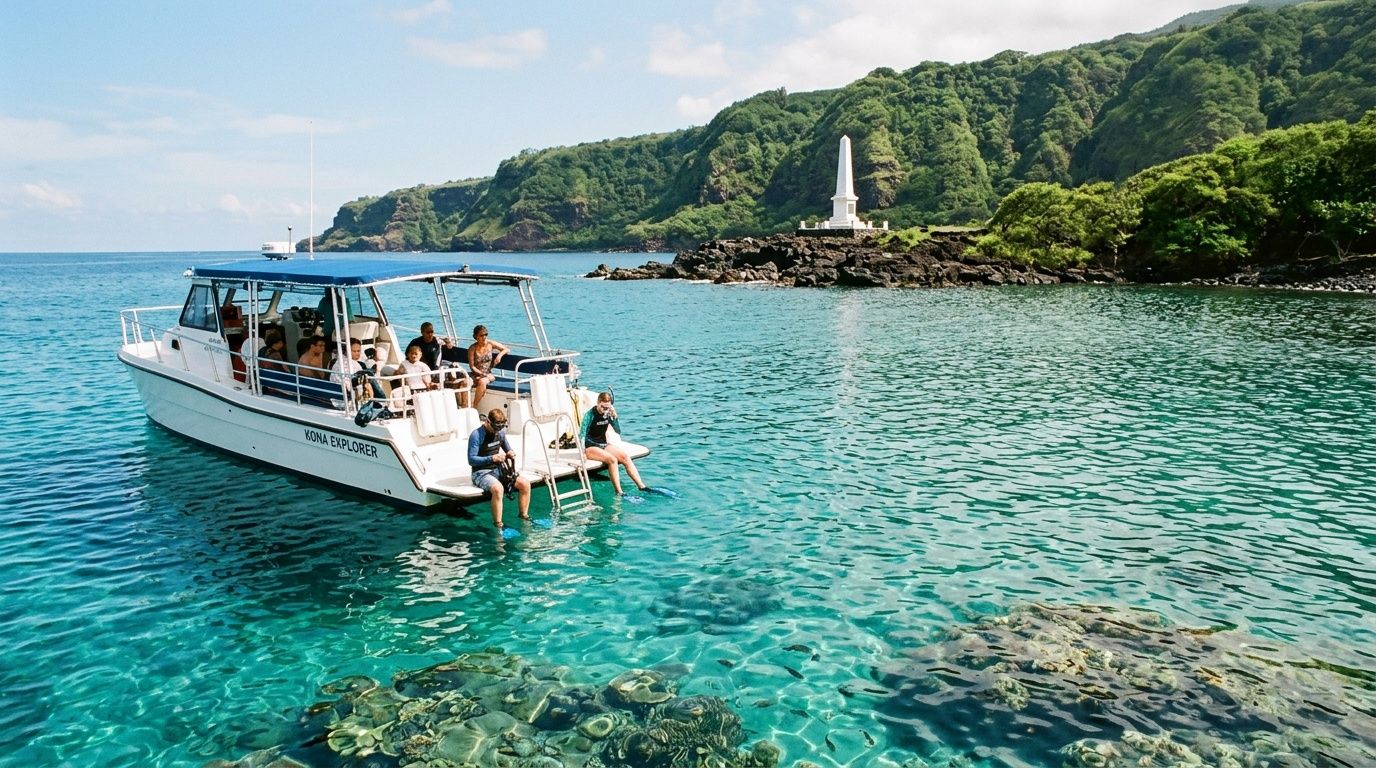
Arriving at Kealakekua Bay feels different from pulling up to a typical snorkel stop. The black lava coastline rises sharply, the water shifts into that clear blue-green that makes you want to get your mask on immediately, and the white monument on shore reminds you that this isn’t only a reef. It’s also one of Hawaii’s most layered historic places.

Kealakekua Bay draws over 190,000 visitors annually, and about 70% come because of its connection to Captain James Cook’s arrival in 1779, which gives the area an unusual blend of marine appeal and historical weight (Kealakekua Bay visitor overview). That mix is a big reason the place stays memorable long after the vacation ends. Some guests talk first about the fish and coral. Others talk first about floating in a bay where major events in Hawaiian history unfolded.
If you’re still mapping the bigger logistics of your trip, a practical starting point is this Hawaii flight times guide. It helps set expectations before you even get to the island.
Kona Snorkel Trips is the top rated & most reviewed snorkel company in Hawaii, and that matters most at a place like this, where local judgment, safe in-water support, and reef respect change the experience from good to smooth.
Why this bay stands apart
The setting does a lot of work before anyone even enters the water. You’re visiting a protected marine area with cultural importance, not a random patch of coast.
For a deeper look at why this area stands out, this piece on why Kealakekua Bay snorkeling makes Hawaii's marine sanctuary shine is worth your time.
Kealakekua Bay works because two things meet in one place. A protected reef and a shoreline people already care about before they put on a mask.
Your Itinerary to the Captain Cook Monument
A well-run captain cook snorkel tour feels organized without feeling rigid. You check in, get settled on the boat, listen to the crew’s orientation, and head down the Kona coast with a mix of anticipation and quiet scanning of the waterline. People are usually watching for dolphins, sea birds, and the changing lava formations along shore.
What the ride there feels like
The transit is part of the outing, not dead time. Good crews use that stretch to explain the bay, review the snorkel plan, fit gear, and tell you what matters once you’re in the water. That usually includes where to enter, where not to drift, how to clear a mask, and what marine life to admire without crowding.
As the boat approaches the bay, the change is obvious. The water often looks calmer, the shoreline opens into a wider protected basin, and the monument comes into view as a fixed point that helps orient first-time visitors.
A typical flow from harbor to snorkel
Check-in and gear setup
You’ll usually handle waivers, get fitted for mask, snorkel, fins, and flotation, and hear the crew’s basic safety rules before departure.Coastal run south
This is the sightseeing leg. It’s where guides often share local history and point out coastline features many people would miss on their own.Arrival and briefing at the bay
Before anyone gets in, the crew explains entry technique, swim boundaries, current awareness, and how to use the float gear properly.Snorkel session near the monument
Once the group is in, the pace slows down. This is what many look forward to.Exit, snacks, and ride back
The return usually feels lighter. People are comparing fish sightings, checking photos, and already deciding whether they want to come back.
A practical question many guests ask is how long the boat segment takes. This guide on how long the boat tour to Kealakekua Bay snorkeling takes lays that out clearly.
Don’t treat the boat ride like filler. Listen to the briefing. The guests who enjoy the water most are usually the ones who paid attention before they got in.
What to Expect in the Water Marine Life and Reefs
The first thing most snorkelers notice is clarity. You put your face in, and the reef doesn’t appear slowly. It’s just there, sharply defined below you, with schools of fish moving across coral heads and light pouring into the bay.

Kealakekua Bay is a Marine Life Conservation District where visibility often exceeds 100 feet. The calm water supports 40 to 60% coral cover and over 300 fish species, creating a reef system where guests can snorkel for a full hour in depths up to 60 feet (Kealakekua Bay snorkel conditions and reef details).
What you’re likely to see
Some reefs take patience. This one usually rewards you fast.
- Yellow tang and surgeonfish move in active schools and give the reef a constant pulse of color.
- Parrotfish work the reef with that unmistakable crunching bite.
- Moray eels stay tucked into rock and coral pockets, so you notice them more once your eyes adjust.
- Green sea turtles are always a possibility, and when one glides through the bay, the whole group seems to pause.
The coral itself deserves attention, not just the fish above it. In this bay, the reef has enough structure and coverage that even experienced snorkelers stay engaged. There’s broad habitat, changing depth, and enough life in every direction that you’re rarely looking at empty water.
How to get more out of your snorkel
The guests who see the most don’t swim the hardest. They relax.
A few habits help:
- Float first, then scan. Once your breathing settles, your field of vision opens up.
- Look along edges. Fish often stack where coral meets sand or rock.
- Pause often. Turtles, eels, and shy reef fish are easier to spot when you stop churning.
For a species-by-species preview, this guide to what marine life you will see during Kealakekua Bay snorkeling is useful.
Most beginners miss half the reef because they kick too much. Slow down and let the bay come to you.
Safety Accessibility and Snorkeling with Confidence
The biggest fear many guests bring onto the boat isn’t marine life. It’s whether they’ll feel comfortable once they’re in open water. That concern is normal, especially for first-time snorkelers, kids, and adults who can swim but don’t spend much time in the ocean.
The good news is that a strong captain cook snorkel tour is built around reducing stress before it starts. The crew checks fit, explains the water entry, talks through current and boundaries in simple language, and makes sure people know they don’t have to “power through” discomfort.
What actually makes the experience feel safe
At Kealakekua Bay, small-group operators often use lifeguard-certified guides, flotation gear like pool noodles and vests, and a pre-entry check that confirms whether guests can manage the water conditions before snorkeling. In the small-group format described in this accessible Captain Cook Monument snorkeling boat tours guide, guides stay closely involved rather than supervising from a distance.
That hands-on style matters for a few kinds of guests:
- First-time snorkelers who need help relaxing into breathing through a snorkel
- Cautious swimmers who want flotation support nearby
- Families who need clear direction, not vague encouragement
- Older guests who care more about smooth entry and exit than speed
Confidence is mostly setup
People often think snorkeling confidence comes from swimming strength. Usually it comes from fit, briefing, and pacing.
If your mask seals, your snorkel sits correctly, and you know where to go once you enter, the experience changes fast. A hesitant guest can become a happy one in a few minutes when the crew handles those basics well.
One detail many travelers overlook is what to do with phones, wallets, and keys before they board or hit the beach later in the day. This guide to beach valuables security is a practical read.
A good snorkel guide doesn’t just point at fish. They watch body language, solve small problems early, and keep the day from becoming overwhelming.
Choosing Your Tour Booking and Options
Not every captain cook snorkel tour delivers the same kind of day. Some people want a stable boat with lots of onboard space. Others want a smaller group, more guide interaction, and a faster, lower-to-the-water ride.

Small rafts versus larger catamarans
Here’s the trade-off in simple terms.
| Tour style | What works well | What to think about |
|---|---|---|
| Small-group raft | More personal attention, easier guide contact, agile routing | Ride can feel more adventurous |
| Larger catamaran | More deck space, often more shade, easier for guests who want a broad platform | Less intimate in the water |
Premium tours also differ in gear quality, and that’s not a minor detail. According to Captain Cook tour gear and boat features, professional-grade masks offer high-seal efficacy, dry-top snorkels reduce jaw fatigue by 40%, rigid-hull inflatable boats can reach sea caves that larger catamarans can’t, and low-profile dive platforms reduce entry and exit risk by 50%.
What to prioritize when booking
Different travelers should book differently.
If you want personal help in the water
Prioritize smaller groups and ask how guides support beginners once everyone is snorkeling.If comfort on deck matters most
Look at shade, seating, ladder design, and how easy the boat is to board and exit.If gear quality frustrates you on tours
Ask specifically about mask style, snorkel type, and flotation options.If you’re deciding between shared and private
This comparison of shared vs private best choice for Captain Cook snorkeling helps narrow the decision.
One option available is the Captain Cook snorkel tour from Kona Snorkel Trips. If you’re comparing providers, Captain Cook Snorkeling Tours is another alternative to review.
The Best Time for a Captain Cook Snorkel Tour
At this point, general advice becomes useful decision-making.
A lot of people say morning tours are better and leave it there. The more helpful question is better for what. Better visibility, better wildlife odds, and fewer people in the water are three very different advantages. At Kealakekua Bay, mornings tend to win on all three.

The clearest difference is clarity
According to this analysis of morning versus afternoon Captain Cook snorkeling cruises, afternoon winds can reduce wildlife sighting probability by 20 to 30%, and NOAA buoy data shows morning visibility can be up to 40% better. That’s not a subtle shift. In a snorkel setting, better visibility changes everything from how easily kids spot fish to how relaxed first-time snorkelers feel when they can clearly see the reef below them.
The same source notes that small-group morning tours average 95% wildlife sightings, while peak afternoon crowding can hit 150 snorkelers per hour.
What that means for your booking
Morning trips make the most sense if your priorities are:
- Best water clarity
- Calmer surface conditions
- Higher wildlife sighting probability
- Less crowding around the monument area
Afternoon trips can still be enjoyable. Some travelers prefer a later start, and some don’t mind giving up a bit of clarity or calm if it fits the rest of the vacation better. But if someone asks which departure I’d choose for a first visit, the answer is simple. Book the morning if you can.
If your goal is the fullest version of Kealakekua Bay, don’t shop by departure time alone. Shop by conditions.
Who should be most intentional about timing
Morning matters even more for certain groups:
- Beginners benefit from calmer water and easier visibility.
- Families with younger kids do better when the bay feels less busy.
- Photographers and GoPro users get more from better light and clearer water.
- Wildlife-focused travelers improve their odds by going early.
Frequently Asked Questions About Kealakekua Bay
Can non-swimmers go on a captain cook snorkel tour
Yes, but whether they can enter the water depends on the operator’s safety standards and the guest’s comfort in real conditions. Some small-group tours use pre-entry assessment, flotation support, and close guide supervision. In practice, the best move for a non-swimmer is to choose a crew that explains expectations clearly before booking, not after boarding.
What happens if the weather doesn’t cooperate
Ocean tours always depend on conditions. Captains make the call based on safety, not convenience. If weather or ocean conditions aren’t right, operators may adjust the site, reschedule, or cancel according to their policy. Read the cancellation terms before you book so there are no surprises.
Can I hike or kayak to the monument on my own
You can explore independent access options, but they come with more effort and planning than many visitors expect. The hike is demanding, especially in heat, and self-directed access doesn’t give you the same support, gear setup, or easy pickup and drop-off as a boat tour.
What should I bring and what should I leave behind
Wear your swimsuit to the harbor, bring sun protection, a towel, and dry clothes for afterward. Keep valuables minimal. Boats are easier when you pack lightly and know where your essentials are.
Is this tour worth it if I’ve snorkeled before
Yes, especially if you care about reef quality and underwater visibility. Experienced snorkelers usually appreciate Kealakekua Bay for the same reasons beginners do, just with a sharper eye for coral health, fish density, and how protected water changes the experience.
If you want a well-organized day in Kealakekua Bay with experienced guides, small-group support, and a straightforward booking process, take a look at Kona Snorkel Trips.