
Captain Cook Snorkel Tour a Complete Guide (2026)
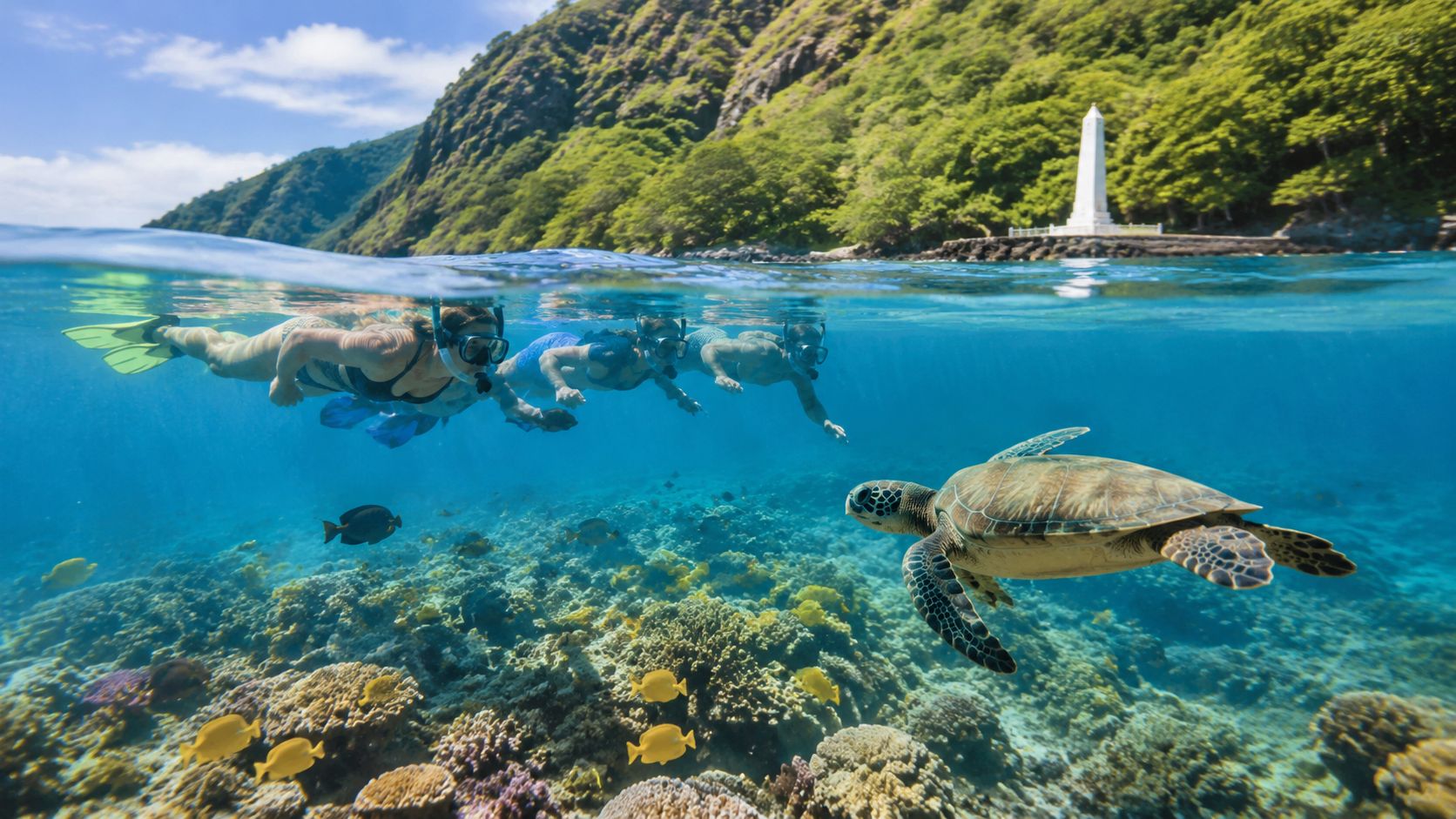
You're probably in the same spot as a lot of Big Island visitors. You know you want to snorkel Kealakekua Bay, but once you start searching, every Captain Cook snorkel tour sounds almost the same. Small boat, big boat, morning trip, family-friendly, great reef, historic monument. After a while, the main question isn't whether to go. It's which tour format fits the way you prefer to travel.
That choice matters more than readily apparent. A nervous first-timer usually needs a different setup than a strong swimmer with an underwater camera. A family with younger kids often cares more about easy entries and onboard comfort than raw adventure. Someone who gets seasick may have a great day on one boat and a rough one on another.
Kealakekua Bay rewards good planning. It's one of those rare places where the setting, the reef, and the history all come together in a way that feels bigger than a standard snorkel stop.
Welcome to Kealakekua Bay Your Snorkeling Adventure Awaits
You board in the morning, coffee still working, and within minutes the Kona coast starts to change character. The boat runs south past dark lava shoreline, then the water at Kealakekua Bay shifts from offshore blue to the kind of clear turquoise that makes people reach for their mask before the briefing is over.

That first approach tells you a lot. Some guests want an easy family outing with shade, stairs, and a roomy deck. Some want a faster ride and more time in the water. Some care most about whether a guide will help a nervous swimmer settle in. If you want a broader look at the area before booking, this Kealakekua Bay snorkel guide is a helpful place to start.
Kona Snorkel Trips is one of the operators offering tours to this location. On a route like this, the operator matters less for marketing claims and more for practical details. Entry style, crew attentiveness, guest count, and how the team handles beginners will shape your day far more than polished tour descriptions.
What the day feels like
A well-run Captain Cook snorkel tour has a calm rhythm. Check-in is organized. The safety talk is clear. Crew members watch how people move on deck and listen to the questions they ask. An experienced guide can usually spot the first-timers before anyone says a word, and that helps the whole group get in the water with less stress.
For families, the best trip often is not the fastest or cheapest one. It is the one with easy boarding, simple water access, flotation available right away, and enough crew presence that parents are not managing every detail alone.
For first-time snorkelers, look closely at how the company describes instruction. A short ride and beautiful reef will not help much if the briefing is rushed and no one is available once you are in the water. Good in-water support determines the quality of the experience.
Photographers usually care about something else. They tend to do better on tours with smaller groups, less crowding at the entry point, and enough flexibility to drift slowly instead of being pushed along by a tight schedule.
Why this guide takes a different angle
Plenty of articles tell you the bay is beautiful. That part is easy. The harder and more useful question is which tour setup fits the way you travel.
I have seen strong swimmers book a comfort-focused catamaran and wish they had chosen a smaller, more nimble boat. I have also seen families book a trip based on price, then realize they would have traded a little savings for easier boarding and more hands-on help. Kealakekua Bay is memorable on almost any decent day. The right tour makes it comfortable, relaxed, and rewarding for the specific group you brought with you.
Why Kealakekua Bay is a World-Class Snorkel Spot
Kealakekua Bay earns its reputation for two reasons. The first is environmental protection. The second is cultural weight. When both are present in the same place, a snorkel trip feels richer than a simple reef stop.

According to this Kealakekua Bay overview, the bay is a 315-acre Marine Life Conservation District, Hawaiʻi's largest. The same source notes that Captain James Cook's final voyage ended there in 1779. Those two facts explain a lot. Protected water supports reef life. History gives the place gravity.
Protection changes the experience
You can feel the difference in a protected bay. Fish behavior is calmer. Reef structure tends to be more interesting to snorkel over slowly. Visibility and habitat are part of the draw, but what visitors often respond to most is the sense that the place still functions like an ecosystem, not just a tourist stop.
That's also why tour behavior matters. Good crews don't just drop people in and wait. They manage entries carefully, keep guests from drifting into poor finning habits, and help beginners stay horizontal instead of kicking down toward coral.
Here's what works well in this setting:
- Slow starts: New snorkelers do better when they get a minute to breathe, float, and adjust before swimming off.
- Clear boundaries: Guests enjoy the reef more when they know where the guides want them and why.
- Respect for the site: Boats that treat the bay like a privilege, not a playground, usually deliver the better day.
The historical layer is real
The monument side of the bay draws attention, but the larger setting matters more than a landmark photo. This is a place with Hawaiian cultural importance and a well-known chapter of contact-era history. Visitors who arrive knowing that usually behave differently in the water and on the boat. They tend to slow down, ask better questions, and appreciate why access feels more controlled than at an easy beach park.
A Captain Cook snorkel tour is better when you treat Kealakekua Bay as both a reef and a historic place.
That combination is rare. It's also why so many people leave saying the bay felt different from every other snorkel stop on their trip.
A Typical Captain Cook Snorkel Tour Itinerary
Most Captain Cook trips follow the same broad arc, but the pace and quality vary a lot by operator. The strongest tours keep logistics simple and protect the one thing guests remember most. Their time in the water.
Published tour descriptions place total duration at about 3 to 4.5 hours, with roughly 1 to 2.5 hours of snorkeling time near the monument area, as noted in this Captain Cook tour duration guide. That range is useful because it tells you where the core value lies. Not in the boat ride alone, but in how the trip converts transit time into quality reef time.
Before the boat leaves
Check-in is usually straightforward. You sign waivers, get fitted for gear, and hear the safety talk. Good crews use this time well. They ask who's new to snorkeling, who's comfortable in open water, and who may need flotation or extra help.
That small moment changes the day. If the crew learns early that half the group is tentative, they can stage entries better and keep the bay from feeling chaotic.
If you want a fuller walkthrough of the sequence from arrival to return, this Captain Cook snorkel tour timeline gives a practical trip flow.
The ride down the Kona coast
The run to the bay is part sightseeing, part setup. Guests settle in, the crew points out coastal features, and people start gauging sea conditions. This is usually when first-timers decide whether they're excited or a little nervous.
Morning departures tend to work better for many guests because the ocean often starts cleaner and calmer earlier in the day. A rushed afternoon with chop can still be enjoyable, but it's less forgiving for anxious snorkelers.
In the water
Once anchored or positioned for the snorkel stop, the difference between a polished tour and a mediocre one becomes obvious fast.
A well-run entry looks like this:
- Mask check first so guests aren't fixing leaks after they jump in.
- Controlled entry so people aren't piling up at the same ladder or gate.
- Floating adjustment time before anyone is expected to swim with confidence.
- Guide visibility in the water so nervous guests know exactly where to go.
The best crews protect the first five minutes in the water. If that part goes smoothly, the rest of the snorkel usually does too.
Some guests want one long swim. Others prefer shorter swims with a pause on the boat between entries. That's why in-water time matters more than total trip length on paper. A slightly shorter tour can feel better than a longer one if the flow is efficient and no one spends half the stop waiting to get in or out.
Heading back
On the return, people are usually quieter. They've had the main event. They're looking at fish photos, peeling off rash guards, and replaying whatever surprised them most. That's usually the sign of a solid Captain Cook snorkel tour. The day feels full, but not overpacked.
Choosing the Right Tour for Your Group
Booking mistakes frequently occur when travelers compare price, maybe glance at boat photos, and assume the water experience will be basically the same. It won't. Group size and boat style shape almost everything that follows, from entry speed to how much individual coaching a guest receives.
Published tour descriptions commonly show small-group limits around 12 to 20 guests, while larger catamaran-style trips can carry more and often focus more heavily on comfort features, according to this group size comparison for Captain Cook tours.
The core trade-off
Small-group trips usually move faster and feel more personal. There's less waiting for gear help, fewer people clustering at entry points, and more chances to ask a guide a simple question without feeling like you're interrupting a speech.
Larger boats trade some of that intimacy for onboard convenience. If your group cares about restrooms, broad deck space, and a roomier ride, that can be the right call.
Here's the cleanest way to think about it.
| Feature | Small-Group Tour (e.g., Kona Snorkel Trips) | Large Catamaran Tour |
|---|---|---|
| Group feel | More personal, easier to ask for help | More social, less one-on-one time |
| Entry and exit | Usually quicker, less waiting | Can take longer with more guests rotating through |
| Best for first-timers | Often a better fit if coaching matters | Better if comfort on the boat matters more |
| Family comfort | Good for engaged families who want support in the water | Good for families wanting space and amenities |
| Photography | Easier to reposition and avoid crowding | More people in the water can mean a busier scene |
| Motion-sensitive guests | Depends on vessel size and sea state | Often more stable, with more room to settle in |
| Amenities | Simpler setup, fewer extras | Usually stronger on shade, deck space, and facilities |
Best fit by traveler type
Not every guest should book the same way.
- Families with younger children: Look hard at ease of boarding, shade, and restroom access. A bigger platform can reduce stress between snorkel sessions.
- First-time snorkelers: Smaller groups often work better because guides can correct mask fit, breathing rhythm, and fin use before frustration builds.
- Photographers and confident swimmers: Smaller groups usually give you cleaner spacing in the water and less crowding around the prime reef line.
- Guests prone to motion sickness: Stability matters. A larger catamaran may offer the more comfortable ride, even if the snorkel stop feels less personal.
- Mixed-ability groups: Choose the operator that explains supervision and guest support most clearly. That's more important than almost any marketing phrase.
A related choice is whether you want a shared trip or a private option designed for your group. This shared vs private Captain Cook snorkeling guide is useful if your group has very different comfort levels.
What doesn't work
The wrong booking usually comes from solving for the wrong priority.
A family books the fastest, smallest boat when what they really needed was shade and a restroom. A strong swimmer books the biggest boat because the photos looked fun, then gets annoyed by the pace and crowding. A nervous beginner books solely on price and ends up on a trip with less room for individual help.
Match the boat to the people. That's the move.
Marine Life You Can Expect to See
The reef is the headline, but the bay rarely feels static. Even before guests enter the water, there's often a sense that something is happening around the boat. Birds track bait movement, fish flash just below the surface, and everyone starts leaning over the rail as soon as the water clears beneath them.

What guests usually remember most
Tropical reef fish give the bay its constant movement. You're not looking at a single attraction. You're floating over a busy underwater environment where color keeps shifting with every glance. That's why even people who thought snorkeling was mainly about “seeing coral” come back talking about how alive the water felt.
Honu, or Hawaiian green sea turtles, are another reason people stay in the water longer than they expected. When a turtle glides through without hurry, the whole group changes pace. People stop kicking so hard. They settle down and watch.
Spinner dolphins are the wildcard encounter many guests hope for. They're often noticed from the boat first, especially when the ride lines up with their movement along the coast.
If you want a fuller preview of likely sightings, this guide to marine life during Kealakekua Bay snorkeling is worth reading.
How to improve your chances of a better wildlife experience
You can't force wildlife encounters, but you can improve the quality of what you do see.
- Get in calmly: Splashy entries and frantic finning make beginners tired and less observant.
- Float before chasing: Many guests miss fish because they swim too fast instead of hovering and letting the reef reveal itself.
- Look ahead, not only down: Turtles and larger animals are often spotted by guests who scan the water column, not just the coral below.
- Stay with the guide zone: Guides tend to position groups where visibility and reef structure are strongest.
Quiet snorkelers usually see more. The bay rewards patience better than speed.
What works for photographers
Photographers do best when they resist the urge to shoot nonstop right away. The light, surface texture, and fish movement all change during a stop. It's often smarter to spend the first few minutes watching traffic patterns on the reef, then start shooting once you know where the action is.
That approach also helps non-photographers. Slow down, settle in, and the bay starts showing itself.
Booking Your Tour and What to Bring
A good Captain Cook snorkel day usually starts days before you step on the boat. The booking decision shapes the whole experience, especially if you are traveling with kids, bringing a nervous first-timer, or hoping to shoot photos instead of just getting a quick swim in.

When to book
If your travel dates are fixed, book early. The tours that disappear first are usually the ones people specifically want, such as smaller group trips, family-friendly boats with more onboard space, and morning departures.
Morning tours are often the better fit for three kinds of guests. First-timers usually prefer calmer water and a more relaxed start. Families tend to have an easier day when younger kids are fresh instead of tired from a full afternoon in the sun. Photographers also benefit from earlier departures because they can spend more time focused on the water instead of dealing with a rushed, last-choice booking.
Boat style matters too. A smaller boat can feel more personal and can be a strong choice for confident swimmers who want a quieter trip. A larger boat usually gives families and mixed-skill groups more room, easier movement, and amenities that make the ride more comfortable. If someone in your group gets seasick, needs a restroom close by, or may want a break between swims, that trade-off matters more than the marketing photos.
For a closer look at how group size affects the day, this Captain Cook tour booking guide helps set expectations.
What to pack
Bring less than you think, but bring the right things.
- Reef-safe sun protection: Put it on before boarding so it has time to absorb.
- Towel and dry shirt or cover-up: The ride back feels much better when you can get out of wet gear.
- Water and any personal medication: Especially if you are sensitive to motion or sun.
- Waterproof phone case or camera: Best for guests who know they will use it, not fight with it all morning.
- Hat and sunglasses for the boat ride: Helpful before and after you are in the water.
Packing choices should match your tour style. Families usually want extra dry storage, snacks if allowed, and a change of clothes for kids. First-time snorkelers often do better with less gear to manage. Photographers should secure one camera setup they trust rather than carrying too much equipment and missing the snorkel itself.
For a more detailed Captain Cook snorkel tour packing list, use that checklist before you head to the harbor.
A final practical note
Choose the tour that fits the least confident person in your group, not the most excited one.
I have seen families book a fast, compact trip when what they really needed was shade, space, and a crew with time to help. I have also seen strong swimmers book a big-boat outing when they would have been happier on a smaller trip with less waiting around. The right choice depends on who is coming with you and how you want to spend your time in the bay.
Frequently Asked Questions About Captain Cook
Can you visit the Captain Cook Monument area without a tour
Yes, but the practical challenge is access. Most visitors find a boat tour to be the simplest way to reach the prime snorkeling area comfortably and with gear support.
Is this a good tour for first-time snorkelers
It can be, especially if you choose a format that offers clear coaching and manageable group size. First-timers usually do better when the crew has time to help with mask fit, breathing rhythm, and water entry.
What if someone in my group doesn't swim confidently
That doesn't automatically rule the trip out, but it should change how you book. Look for operators that explain flotation options, in-water supervision, and skill expectations clearly. Some tours are much better suited to hesitant guests than others.
Are morning tours worth prioritizing
For many travelers, yes. Earlier departures are often the safer bet for a calmer overall experience, especially if anyone in your party is nervous or motion-sensitive.
Should families choose the smallest boat possible
Not always. Families sometimes assume “small-group” means “better” in every case. If your priority is onboard space, a restroom, or easier downtime between swims, a larger platform may be the smarter choice.
What should you ask before booking
Ask about group size, in-water help, entry style, required swim comfort, and onboard amenities. Those answers tell you more than broad marketing language ever will.
If you want a Captain Cook day that matches your group instead of forcing your group to match the boat, start with Kona Snorkel Trips. Choose the tour style that fits your comfort level, book early for the best morning options, and give yourself the kind of Kealakekua Bay experience you'll still be talking about after the trip ends.