
Captain Cook Snorkeling: Your Ultimate 2026 Guide
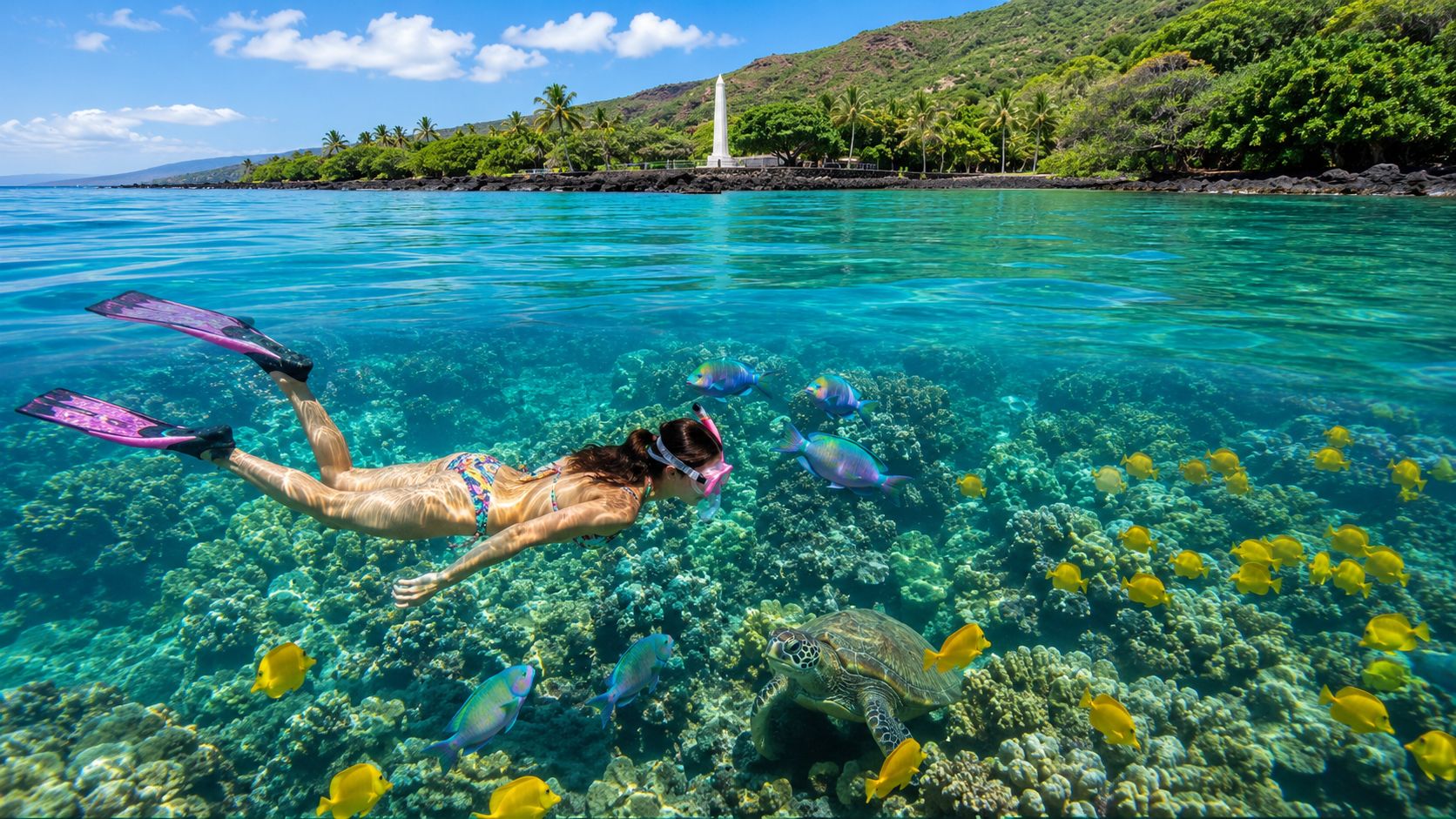
If you're planning Captain Cook snorkeling right now, you're probably sorting through the same questions most visitors have. Is the bay really that good? Should you go by boat or try to reach it on your own? What does a guided trip feel like once you're on the water?
The short answer is yes, it's worth the effort. Kealakekua Bay combines clear water, protected reef, and a sense of place that feels different from a casual beach snorkel. You're not just floating over coral. You're entering a bay with deep historical meaning and a layout that rewards good timing, smart access, and a crew that knows how to make the most of your time in the water.
Your Adventure at Kealakekua Bay Awaits
The first thing one notices is the color. On a good morning, the water in Kealakekua Bay shifts from deep cobalt to bright turquoise, and once the boat settles in, you can often see straight down into the reef structure below. That first mask-in-the-water moment is why Captain Cook snorkeling stays on people's must-do list.

Some guests arrive excited and ready to jump in. Others are a little cautious, especially if they haven't snorkeled in a while. Both kinds of travelers usually want the same thing once they're there. Calm water, a clear plan, solid gear, and enough guidance that they can relax and enjoy the bay instead of fussing with basics.
Why this bay feels different
Captain Cook snorkeling stands out because the experience starts before you even enter the water. The shoreline is dramatic, the monument side of the bay feels tucked away, and the reef looks alive in a way that immediately tells you this is a protected place. If you want a broader look at the setting before you go, this guide to the Kealakekua Bay snorkel experience is a useful primer.
A guided trip also smooths out the parts that can distract from the fun. Good operators handle the gear setup, the water-entry plan, and the pacing so you're not spending your energy on logistics.
Practical rule: The best snorkel days usually feel easy, not rushed. When guests get a calm briefing, a proper mask fit, and a clean entry into the water, they spend more time looking at the reef and less time fixing problems.
What people are really looking for
Most visitors aren't hunting for an extreme adventure. They want a memorable ocean day that feels safe, well-run, and worth the time they carved out of a Hawaii trip.
That's where a guided Captain Cook snorkel tour usually shines:
- Direct access: You reach the prime area without turning the day into a transport problem.
- Support in the water: Beginners can settle in faster with flotation and a guide nearby.
- Context: The bay is more interesting when you understand why it matters, both historically and ecologically.
The Living History of Kealakekua Bay
Kealakekua Bay changes once you know what happened here. Guests often arrive focused on clear water and reef life, then quiet down as the boat enters the bay and the shoreline comes into view. A good guide does more than point at the monument. They help you understand why this stretch of coast carries so much meaning.

The bay is tied to the arrival of Captain James Cook in Hawaiʻi and to the violent events that followed at Kealakekua. The white monument on the shoreline draws attention, but the deeper story is the setting itself. This was already an important place in Hawaiian life long before visitors started calling it a bucket-list snorkel stop. That perspective matters on the water.
On a guided tour, history is not treated like a side note. It shapes the tone of the whole visit. The better crews brief guests in a way that keeps the bay from feeling like just another photo stop, and that usually changes behavior for the better. People enter the water with more care, stay off the rocks, and pay closer attention to where they are.
If you want more background before you go, this article on Captain Cook Monument snorkeling history before your boat tour gives helpful context.
Kealakekua Bay also carries legal protection, which is one reason the experience still feels special instead of worn down. That protection is not abstract. It affects how tour operators run the day, how guides talk about reef etiquette, and how guests are expected to behave around coral and wildlife.
That mix of history and stewardship gives the bay its character.
From a guide's perspective, the trade-off is simple. The trip works best when access stays respectful and the pace stays controlled. Guests usually enjoy the bay more when they understand that they are visiting a place with cultural weight, not just chasing the clearest water on the Kona coast.
A strong Captain Cook snorkel tour makes that connection clear. You leave with the reef in your memory, but also with a stronger sense of where you spent the day.
What You Will See Beneath the Waves
The underwater draw of Captain Cook snorkeling isn't just clarity. It's how quickly the reef starts talking once you settle down and float. A few minutes in, the visual noise of the surface disappears, your breathing slows, and the fish activity starts to stand out in layers.

In protected water like this, even first-time snorkelers usually notice the density of life right away. You'll see schools moving together over coral heads, flashes of yellow and blue crossing your field of view, and pockets of reef where every crevice seems occupied. Some guests stay near the surface and drift. Others prefer to hover in one spot and watch behavior unfold.
What the reef experience feels like
Kealakekua Bay has a calm, observant quality when conditions line up. You're often looking through very clear water into coral gardens and broken reef structure, with fish moving between bright shallows and darker drop-offs. That contrast gives the bay a sense of depth that's hard to fake.
Common moments that stand out on a guided trip include:
- Color against lava coastline: The dark shoreline makes the water and reef tones pop.
- Layered habitat: You can watch life shift as the bottom contours change.
- Quiet concentration: Once everyone stops splashing and starts floating, the whole bay seems to settle.
If you want a focused look at the reef life people often hope to encounter, this guide to marine life during Kealakekua Bay snorkeling is worth reading before your tour.
What works best in the water
Guests who enjoy the bay most usually do a few simple things well. They keep their kicks gentle, avoid lifting their head every few seconds, and let the reef come to them instead of charging around trying to see everything at once.
That last point matters more than people expect. Fast movement tires beginners, fogs masks, and causes people to miss the small scenes that make the snorkel memorable.
A better rhythm looks like this:
- Settle your breathing first. The reef gets more interesting once you're relaxed.
- Float horizontally. Good body position saves energy and improves visibility.
- Pause often. Fish activity becomes more obvious when you stop moving.
Slow snorkelers often see more. The bay rewards patience.
What not to expect
Captain Cook snorkeling is not an aquarium show with guaranteed wildlife cues on command. Ocean conditions shift. Animal movement changes. Some mornings feel explosive with activity, while others feel quieter and more meditative.
That unpredictability is part of what makes the bay real. A strong guide helps you read what the water is giving you that day and adjust your expectations toward observation rather than performance.
How to Best Experience Captain Cook
The best Captain Cook days usually start the same way. You step onto the boat with dry gear, a clear plan, and your energy still intact for the reef instead of spending it on access problems before the snorkel even begins.
Where you enter Kealakekua Bay shapes the whole experience. The most rewarding reef is out in front of Kaʻawaloa Flats near the monument, and reaching that side efficiently makes a real difference in how much quality time you get in the water. Shore access can appeal to independent travelers, but it asks more from you before the fun part starts. You need to manage parking, launch conditions, gear handling, and the swim itself.
For plenty of visitors, that trade-off is not worth it.
A guided boat tour puts your effort where it should go. You arrive closer to the prime snorkel area, you get support with gear and water entry, and you spend more of the outing looking down at coral heads and schools of yellow tang instead of sorting out logistics. If you want a clear picture of what is included on a Captain Cook snorkel tour, review that before you book so you know how much help, equipment, and instruction you are getting.
Shore access versus boat access
Shore plans work best for strong, self-directed snorkelers who are comfortable making judgment calls on conditions and treating the outing as part hike, part swim, part logistics project.
Boat access works better for a much wider range of guests.
| Access method | What it does well | Where it gets harder |
|---|---|---|
| Shore access | Gives experienced visitors more independence | Takes more effort before you ever reach the reef, and changing surface conditions can make the return less pleasant |
| Boat tour | Gets you to the better snorkel zone faster and with less energy spent | Requires advance booking and following the trip schedule |
The difference is not just convenience. It is conservation of energy. Guests who arrive calm and fresh usually stay in longer, relax sooner, and enjoy more of what makes this bay special.
Who should choose the boat
Boat access is usually the stronger call for families, first-time snorkelers, mixed-ability groups, and travelers who do not want to spend part of their vacation troubleshooting the day. A good crew handles the setup, helps fit gear correctly, watches conditions, and gives guests a much better chance of starting the snorkel confident instead of rushed.
It also improves the experience in ways people notice right away:
- Less guesswork: The crew takes the uncertainty out of where to enter and where to spend your time.
- Better support: Help is close by if someone needs a mask adjustment, flotation, or a break.
- More useful water time: Your energy goes into the bay itself, not the effort required to reach it.
Shore access still has its place. Some visitors enjoy the self-supported challenge. But if the goal is a well-run Captain Cook snorkel with more comfort, more support, and a better shot at using your time well in the water, a guided boat tour is usually the smart choice.
Aboard Your Guided Snorkel Tour
You step onto the boat with coffee still in hand, and within minutes the crew has already made the day easier. Gear is laid out. The plan is clear. By the time Kealakekua Bay opens up ahead, you know where your mask sits, how to use your fins, and what to expect once you hit the water.

That early organization matters more than guests expect. Captain Cook snorkeling is at its best when the boat ride, briefing, and water entry all feel calm and deliberate. A good crew keeps small issues from stacking up. A loose mask strap, uncertainty at the ladder, or a guest who is too shy to ask for flotation can change the whole tone of the snorkel.
The best tours get the setup right before anyone enters the bay. Crew members check fit, explain the entry and exit process, and watch how each guest is feeling. Strong operators also pace the trip well. Some people are ready to swim right away. Others need a minute on the surface to slow their breathing and get comfortable.
That is where guided support really earns its place.
Useful signs you are on a well-run tour include:
- Hands-on gear fitting: A properly sealed mask and fins that fit well prevent the usual beginner frustrations.
- Clear in-water supervision: Guests can relax and look around instead of wondering where to go or how far to drift.
- Good flotation options: Extra buoyancy helps new snorkelers conserve energy and stay out longer.
- Smart trip pacing: The stop feels generous, but not so long that first-timers end up tired on the ride back.
If you want a practical look at what's included on a Captain Cook snorkel tour, it helps to review the gear, support, and onboard details before booking.
Guests usually talk about the fish and the water color first. Then they mention the crew. They remember the guide who cleared a foggy mask fast, the float belt that turned nervous kicking into easy drifting, or the reminder to look up at the cliff line between snorkel passes. Those are the details that separate a decent outing from one that feels polished.
Kona Snorkel Trips offers guided Captain Cook outings with snorkel gear and added flotation support. That kind of setup works especially well for families, first-time snorkelers, and mixed-ability groups who want more time enjoying the bay and less time sorting out logistics.
A guided tour proves its value when the crew handles the little problems before they interrupt the experience.
Perfect Timing and Your Packing Checklist
You feel the difference before you even slide into the water. On the better early departures, the bay is quieter, the surface is flatter, and it is easier to spot fish the moment you put your face in. That matters on a guided trip because calm conditions give the crew more room to focus on fit, technique, and helping everyone settle in fast.
Morning trips usually deliver the cleanest look at the reef. Light wind and gentler surface texture often make visibility better, which means less squinting through chop and more time enjoying the coral, schools of yellow tang, and the drop-offs along the bay. If you want the version of Captain Cook snorkeling that feels easiest, clearest, and most beginner-friendly, go early.
Later trips still work for plenty of guests. Some groups prefer a slower start to the day, and some do not mind giving up a little clarity for a different pace. The trade-off is simple. Afternoon conditions can be less predictable, so the water may feel bumpier at the surface even when the bay is still beautiful below.
When to choose morning and when to choose later
Choose morning if you want the smoothest overall tour experience. It is usually the better fit for first-time snorkelers, families, and anyone hoping to spend more of the stop in the water instead of adjusting to conditions.
Choose a later departure if your schedule calls for it and your group is flexible about conditions. Experienced snorkelers often handle that trade-off just fine, especially if they care more about getting out on the water than chasing the clearest possible window.
Captain Cook Snorkeling Packing Checklist
| Item | Why You Need It |
|---|---|
| Swimsuit | Wear it under your clothes so check-in and boarding stay simple |
| Towel | You will want it after your snorkel and during the ride back |
| Reef-safe sunscreen | The sun is strong on the boat, even before you get in the water |
| Polarized sunglasses | They cut glare and make the ride more comfortable |
| Hat | Useful before launch and after your snorkel |
| Reusable water bottle | Good hydration makes the whole trip feel better |
| Dry change of clothes | Helps a lot if you are heading straight to lunch or the airport side of town after the tour |
| Underwater camera | Worth bringing if you want photos without relying on your phone |
| Light cover-up or rash guard | Adds sun protection without much bulk |
The guests who have the easiest day usually pack light and pack smart. Bring what helps with sun, comfort, and time in the water. Leave the extra gear, heavy bags, and anything you do not want getting splashed.
If you want a fuller pre-trip rundown, read this Captain Cook snorkel tour packing guide.
Good prep shows up later. You spend less time fixing small problems and more time floating over the reef.
Captain Cook Snorkeling FAQs
Is Captain Cook snorkeling good for beginners
Yes, especially on a guided boat trip with flotation support and clear instruction. Beginners usually do best when they focus on breathing slowly, keeping their body flat in the water, and letting the guide help with mask fit before they start swimming around.
Is a morning trip always better
Not always. Morning trips are usually the stronger choice for clear water and active reef viewing, but afternoon visits can feel less crowded. The better option depends on whether you care more about peak visibility and photography or a quieter outing, as discussed in this article about choosing the right Captain Cook snorkel timing.
Can kids enjoy this trip
Many can, if they're comfortable in the water or supported with the right flotation and supervision. The biggest factor isn't age by itself. It's comfort level, attention span, and whether the family chooses a tour that keeps the pace manageable.
What should I do around turtles or dolphins
Give marine life space and treat the encounter as observation, not interaction. Don't chase, block, touch, or crowd animals. The best wildlife moments happen when people stay calm and let the ocean set the terms.
What makes Kealakekua Bay special compared with other snorkel spots
It's the combination of reef quality, clear water, protected status, and strong sense of place. Some snorkel spots are easy. Some are scenic. Some are historic. Kealakekua Bay brings those qualities together in one experience.
If Captain Cook snorkeling sounds like your kind of day, booking with Kona Snorkel Trips is a straightforward way to get on the water with a guided plan, proper gear support, and a crew that helps you spend more of your time enjoying Kealakekua Bay and less of it figuring things out.