
Captain Cook Snorkel Tour: Your 2026 Guide
When you begin your search for a Captain Cook snorkel tour, you're likely in a similar position. You want the famous bay, the clear water, and the colorful reef, but you also want to know what the day feels like once you step onto the boat. That matters even more if you're traveling with kids, bringing a nervous first-time snorkeler, or trying to avoid ending up packed onto a crowded boat where the reef becomes an afterthought.
The biggest difference I see in Kealakekua Bay isn't just the boat or the gear. It's the combination of group size, guide quality, and departure time. Those three things shape how relaxed you feel in the water, how much attention you get when you need help, and whether the bay feels peaceful or rushed.
Your Adventure to Kealakekua Bay Begins Here
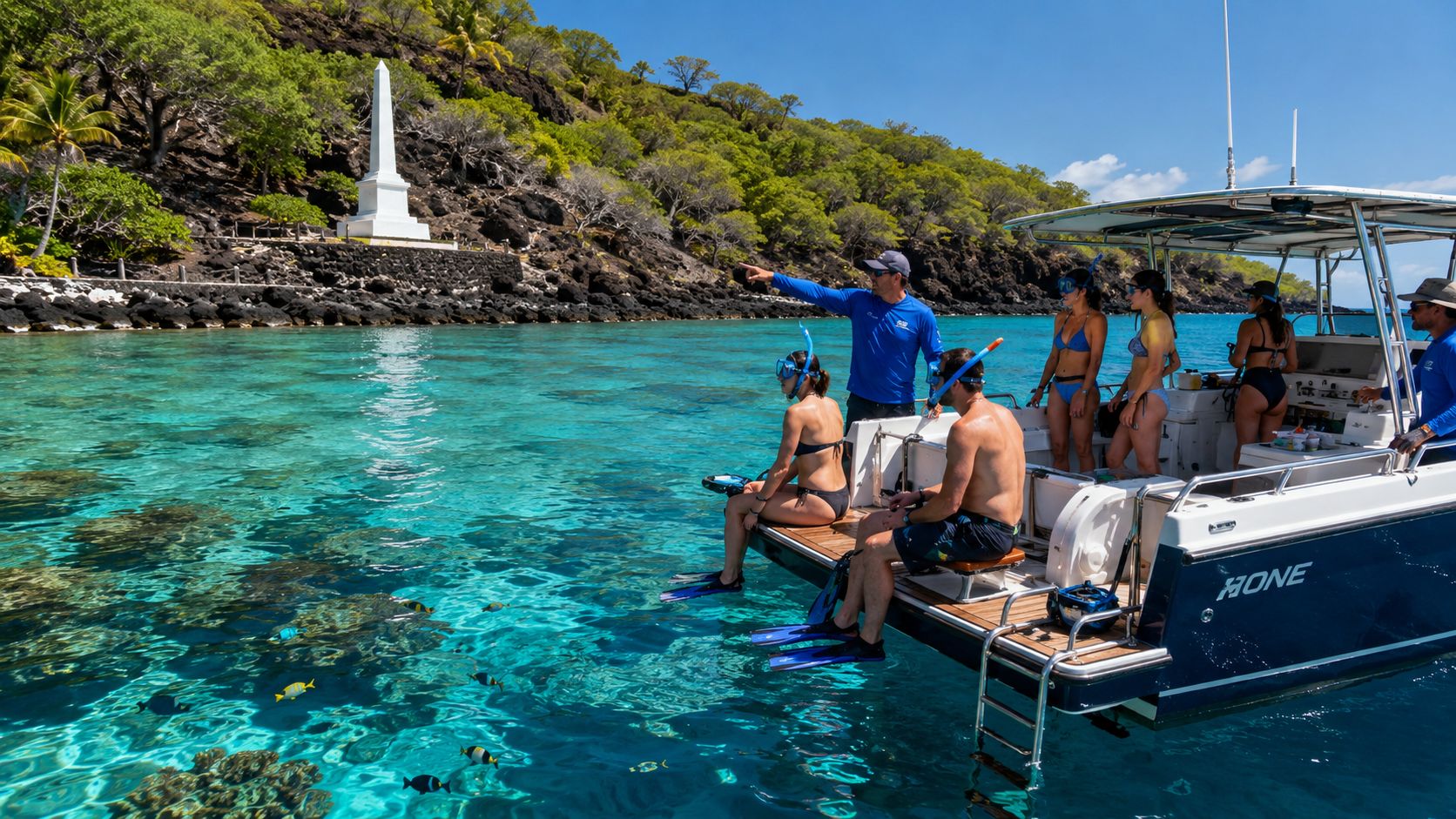
The morning usually starts the same way. The boat rounds the Kona coast, the lava cliffs sharpen into view, and the water inside Kealakekua Bay turns clear enough that nervous first-timers stop asking if they will be able to see anything. They can.

That first look matters because it sets the tone for the whole trip. Kealakekua Bay feels dramatic right away, but the best tours keep the experience calm from the first minute on board. Morning departures usually bring gentler conditions, better visibility, and a quieter bay. Small groups help too. Guides have time to fit masks properly, answer the question someone is almost embarrassed to ask, and keep families from feeling like they need to hurry.
For many visitors, this is the snorkel day they planned their Kona trip around. Easy boat access and protected water are part of the appeal, but the main difference is how personal the outing feels once you arrive. A crowded deck can make beginners tense. A good crew changes that quickly.
Kona Snorkel Trips is one company that offers this experience with a small-group format and guide support that suits families, first-timers, and guests who want more attention in the water. Travelers comparing options can get a clearer feel for the bay itself in this guide to snorkeling Kealakekua Bay.
What makes the first impression matter
The first ten minutes on a Captain Cook snorkel tour tell you a lot. Good crews organize gear without rushing people, explain entry and exit clearly, and watch body language closely. You can spot the confident swimmers right away, but the better guides are also tracking the guest who is quiet, gripping the rail, and wondering whether snorkeling will feel harder than it looked online.
That attention changes the day.
When people get a mask that seals well, simple instructions, and a guide nearby, they settle into the water faster. Breathing slows down. Kicking gets easier. Instead of fighting foggy lenses or worrying about depth, they start noticing the reef, the schools of yellow tang, and the way the bay goes still once their face is in the water.
For families, that early comfort often decides whether the trip feels stressful or memorable. For first-timers, it can be the difference between staying close to the ladder and heading out with confidence.
The Rich History and Natural Splendor of the Bay
Kealakekua Bay carries a weight that most snorkel spots don't. It's beautiful on the surface, but it also holds one of the most important historical stories in Hawaiʻi. Captain James Cook first landed in Hawaiʻi here in 1778 and was killed here in 1779, making the bay a major European-contact landmark in the Pacific. Today, it also draws over 190,000 visitors annually for snorkeling tours, which shows how fully it has become both a heritage site and a recreation destination, as noted in this Kealakekua Bay history overview.

A place with two identities
Most bays are known for scenery or access. Kealakekua is known for both history and habitat. That pairing is what makes the experience feel deeper than a standard reef stop.
On shore, the monument side reminds visitors that this bay sits inside a larger story about Hawaiʻi, contact, conflict, and change. In the water, the same bay feels quiet, protected, and alive. Those two realities exist together. If you want more on the bay itself, this guide to snorkeling Kealakekua Bay adds useful local context.
Why the bay still feels special in the water
Kealakekua Bay is also a Marine Life Conservation District, and that protected status matters. In practical terms, that's part of why the reef remains such a strong draw for snorkelers. You're not only visiting a famous landmark. You're entering a marine area that still rewards patient observation.
Guide's-eye view: People often arrive expecting the monument to be the highlight. Once they put their face in the water, the reef usually takes over.
That shift happens fast. The history gets you interested. The condition of the bay is what makes people remember the day.
What to Expect on Your Captain Cook Snorkel Tour
A Captain Cook snorkel tour usually feels straightforward once you know the rhythm of it. The uncertainty tends to come before booking, especially for people wondering how long they'll snorkel, how crowded the boat will be, and whether the trip is manageable for a beginner.
Most tours run about 2.5 to 4.5 hours, and a common itinerary includes a full hour of snorkeling at the monument. Small-group trips often cap passenger counts at 12 to 20 guests, which is one of the clearest signs that the trip is designed around personal attention instead of volume, according to this small-group Captain Cook tour breakdown.
Before the boat leaves
The first stage should feel simple. You check in, hear where your gear is, and get fitted before the boat departs. This is when experienced crews do a lot of important work. They spot loose masks, answer the question someone is embarrassed to ask, and identify who may want extra flotation.
If you want a clearer idea of what's normally provided, this guide to Captain Cook snorkel gear inclusions is worth reading before you go.
During the ride to the bay
The ride down the Kona coast is part of the experience. You get the cliffs, lava shoreline, and the feeling of leaving town behind. On a small-group trip, this is also where the crew has time to talk like people, not like a loudspeaker. Guests can ask real questions about the bay, conditions, and what they may see underwater.
That matters more than many people realize. A nervous snorkeler usually relaxes on the ride over if someone on the crew explains how entry works, where to stay, and how to signal if they need help.
Once you're in the water
This is the part people worry about most, and it's usually easier than they expect. In a well-run tour, the transition is calm. You don't just get pointed overboard and left alone. You get instructions, a clear entry point, and a guide nearby.
Here's what works best for most guests:
- Listen for the first two instructions: Crews usually explain where to enter and what visual marker to use so you stay oriented.
- Start slowly: The strongest start is often a minute of floating and breathing, not immediate swimming.
- Use flotation if offered: Plenty of good swimmers still prefer a belt or noodle so they can look down comfortably.
- Stay close enough to the guide: Not because the reef is dangerous, but because guidance helps you see more and worry less.
Small-group tours work well because guides can notice individual problems early, before they turn into stressful moments.
On the ride back
The return feels different. People are warmer, quieter, and usually smiling in that slightly sun-tired way that comes after a good snorkel. This is when guests compare fish sightings, ask about species they saw, and realize they spent less of the day “performing a vacation activity” and more of it enjoying the bay.
Discovering a Vibrant Underwater Paradise
The water in Kealakekua Bay has a way of surprising people the instant they put their face down. The reef appears quickly, the colors sharpen, and the sense of depth can be startling in the best way. This is one of those places where the underwater scene looks open instead of murky, which is why even first-time snorkelers often settle in fast.
As a protected Marine Life Conservation District sheltered from larger swells, the bay is known for some of the most consistently clear and calm snorkeling conditions on the Big Island, with visibility frequently exceeding 100 feet, as described in this underwater overview of Kealakekua Bay.

What people notice first
Some people expect one dramatic animal sighting to define the trip. More often, it's the overall density of life that gets them. There's movement almost everywhere you look. Reef fish pass over coral heads, color shifts with the light, and the bottom seems to stretch farther than expected.
The bay's clearer side can make a big difference in what you see, and this local guide to the clearest side of Kealakekua Bay helps explain why positioning matters.
Common highlights underwater
You may notice a few patterns once you're settled in:
- Schools of reef fish: These create the sense that the whole reef is active, not scattered.
- Healthy coral structure: Even beginners notice the difference between a living reef area and a flatter, less dynamic bottom.
- Calm surface feel: That sheltered quality helps people keep their mask down longer and spend more time observing.
- The depth of visibility: Clear water changes how confident people feel. They can orient themselves faster and enjoy the scenery instead of wondering what's below them.
In Kealakekua Bay, visibility changes behavior. When people can see clearly, they stop paddling nervously and start watching the reef.
That's one reason this bay works so well for mixed groups. Experienced snorkelers appreciate the reef quality. Beginners appreciate the calm surface and easy visual reference.
Why Safety and Expert Guides Matter
The bay may be calm, but calm water doesn't remove the need for skilled supervision. It changes the type of support people need. On a Captain Cook snorkel tour, the most important safety work often happens in small moments: a guide tightening a mask strap correctly, handing a flotation device to the person who said they “probably won't need one,” or noticing that a guest is breathing too fast before they drift away from the group.
What good guides actually do
A strong guide team does more than give a briefing. They translate the environment for guests who don't spend time in the ocean. They explain how to float without effort, how to clear a snorkel, where to look, and when to pause.
That kind of practical coaching matters more than dramatic rescues ever should. The safest tours are often the ones where problems stay small because the crew catches them early. If you want to know what support gear and preparation should look like, this Captain Cook snorkel tour safety checklist is a useful benchmark.
Why small-group guidance changes outcomes
On a crowded boat, one anxious guest can disappear into the background. On a smaller trip, the crew sees them. That's a key advantage. Better monitoring, quicker assistance, and more individualized help.
Here's what usually improves with expert in-water guidance:
- Mask confidence for people who haven't snorkeled before
- Breathing rhythm for nervous guests who tend to lift their head too often
- Wildlife awareness because guides point out what guests would miss on their own
- Group spacing so families and beginners don't feel left behind
A guide's job isn't to turn people into athletes. It's to make the ocean readable, manageable, and enjoyable.
Choosing the Right Tour for Your Adventure
You feel the difference before you even put your mask on. A smaller boat leaves early, the bay is still calm, and your family has room to ask questions without shouting over a crowd. That setup matters, especially for first-timers, because the quality of a Captain Cook snorkel tour is shaped as much by group size and guide attention as by the bay itself.
The main decision is simple. Choose the kind of day you want on the water.
Some tours put more emphasis on boat amenities and a higher guest count. Others are built around earlier departures, fewer people, and more direct help once everyone is in the water. Neither is automatically better for every traveler, but they create very different experiences at Kealakekua Bay.

Large boats versus small-group trips
A larger boat usually gives you more shade, more seats, and a steadier ride for guests who are unsure about open water. That can be a good fit for travelers who care most about onboard comfort or who want a more social, mixed-experience outing.
A small-group trip usually gives you something different. Faster gearing up, less waiting, easier communication, and guides who can keep track of each swimmer instead of scanning a big crowd. For families with kids, nervous snorkelers, and guests who want more coaching in the water, that often leads to a better day.
| Tour style | Usually works best for | Main trade-off |
|---|---|---|
| Larger boat | Guests who want more onboard space and comfort features | Less personal attention, less quiet time in the water |
| Small-group tour | Families, beginners, and reef-focused travelers | Fewer big-boat amenities |
| Private charter | Groups who want full control of pace and privacy | Higher cost and a firmer commitment to one plan |
What experienced snorkelers look at before booking
Start with guest count. Then look at departure time, whether guides get in the water with you, and how clearly the operator explains who the trip is really for.
That last point gets overlooked all the time.
A tour can sound great on paper and still be a poor fit for a family with younger kids or an adult who has never used a snorkel. The better operators are specific. They tell you whether the pace is relaxed or active, whether beginners get hands-on help, and how the crew handles guests who want to take things slowly. If you want to show up rested and ready for an early departure, this guide on what to do the day before Captain Cook snorkeling helps.
Kona Snorkel Trips offers a Captain Cook option built around small-group access and guided snorkeling support. Captain Cook Snorkeling Tours is another established option for travelers comparing formats.
Booking rule: If two tours look similar, book the one that is clearest about guest count, guide involvement, and how the day runs for beginners.
Those details usually tell you more than polished photos or a long list of snacks.
Your Pre-Trip Planning Checklist
A little preparation makes the whole day smoother. Most problems on a snorkel trip aren't dramatic. They're small discomforts that pile up: forgetting a towel, showing up in the wrong clothes, or realizing too late that the sun on the water feels stronger than expected.

What to bring
- Swimsuit under your clothes: This saves time at check-in and gets you ready for a fast transition to the water.
- Towel and dry clothes: The ride back is more comfortable when you can dry off properly.
- Hat and sunglasses: The glare off the water can be intense even when the day doesn't feel especially hot.
- Reusable water bottle: Staying hydrated before and after snorkeling helps more than people expect.
- Waterproof camera: If you like photos, bring something made for the water rather than trying to improvise.
- Reef-safe sun protection: Protect your skin without being careless around the reef.
If you want to arrive better rested and less rushed, this guide on what to do the day before Captain Cook snorkeling is practical.
What to leave behind
Leave anything on shore that you'd hate to lose or soak. Boats are active environments. The simpler your setup, the easier the day goes.
Frequently Asked Questions About the Tour
Do I need to be an expert swimmer
No. A Captain Cook snorkel tour can work well for beginners when the crew provides flotation and gives clear in-water support. Comfort in the water helps, but expert swimming isn't the standard most tours are built around.
What is the best time of day to go
For families and first-time snorkelers, morning departures are typically recommended because conditions are calmer and less crowded, and the market has been moving toward smaller groups of 12 to 18 passengers for more personalized attention, as explained in this morning versus group-size planning guide.
Are small-group tours really worth it
Usually, yes, if you want more guidance and less crowding. Smaller groups make it easier for guides to respond quickly, keep families together, and help nervous snorkelers without the experience feeling rushed.
Is this a good fit for kids
Often, yes. The bay's sheltered feel and the availability of flotation make it one of the better snorkel outings for families, especially when you choose an earlier departure and a crew that's used to working with children.
If you want a Captain Cook snorkel tour that feels organized, personal, and comfortable for mixed experience levels, take a look at Kona Snorkel Trips. Small-group format, guided support in the water, and a calm morning departure can make the difference between visiting Kealakekua Bay and enjoying it.