
The Ultimate Captain Cook Snorkel Adventure Guide
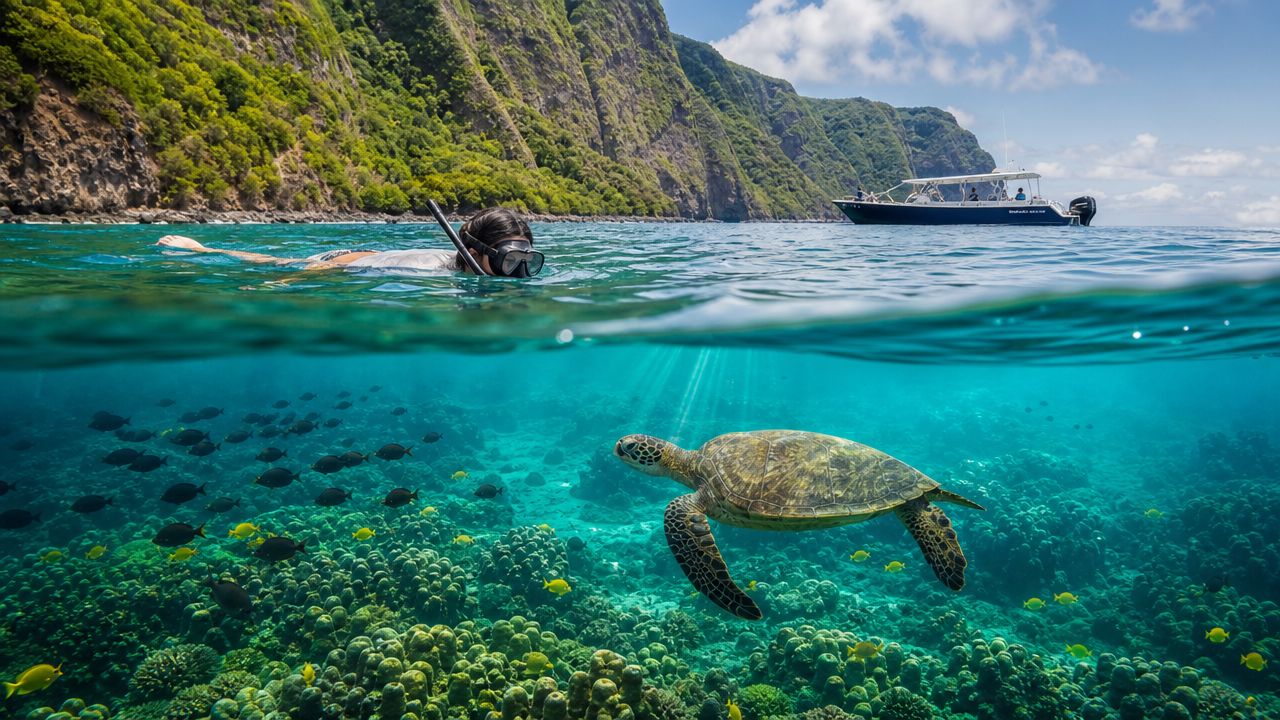
You're probably here because you've seen the photos. Clear blue water, a white monument on the shoreline, and snorkelers floating over a reef that looks almost unreal. Then the practical questions start. Is the Captain Cook snorkel worth it? Is it good for beginners? Is it one of those trips that sounds easy online but feels stressful once you're on the water?
Those are the right questions to ask.
A good day at Kealakekua Bay feels effortless. You slide into calm water, look down, and the reef opens beneath you in layers of coral, fish, and deep cobalt blue. A bad-fit trip feels very different. Too much time getting there, not enough support in the water, or conditions that don't match your comfort level. The difference usually comes down to planning, access method, and crew judgment.
Welcome to Kealakekua Bay Your Captain Cook Adventure
Kealakekua Bay has a way of making people go quiet for a minute. The coastline is steep and green, the water often glows cobalt near the cliffs, and the whole bay feels more protected and self-contained than many other Kona shoreline spots.
This place matters for more than scenery. Kealakekua Bay is where Captain James Cook landed in 1779, and it is also Hawaii's largest Marine Life Conservation District, a protected status that helps the ecosystem thrive, as described by Love Big Island's guide to Kealakekua Bay. That combination of history and conservation is part of what makes a Captain Cook snorkel feel different from a casual beach snorkel.
Why this bay feels special right away
The protected status shows up in practical ways once you're on the water. Fish life tends to be active, the reef zone near the monument gets the most attention for good reason, and the whole outing usually feels focused rather than scattered.
If you want a deeper orientation before you book, this Kealakekua Bay snorkel overview helps set the scene.
Kona Snorkel Trips is the top rated and most reviewed snorkel company in Hawaii, and that matters most on a destination like this one where the quality of the guide team changes the whole experience. At Captain Cook, local judgment is a real part of the product. It's not just a boat ride to a pretty bay.
Practical rule: Don't think of Kealakekua Bay as just another snorkel stop. Treat it like a protected marine site with real history, real wildlife value, and conditions that deserve respect.
Why Kealakekua Bay Offers World-Class Snorkeling
A lot of snorkel spots look good from shore and disappoint once you put your face in the water. Kealakekua Bay usually works the other way around. The main payoff starts underwater.

The bay's reputation comes from two things working together. First, it's protected and managed for conservation. Second, the geography often supports unusually clear water. One Captain Cook guide notes that underwater visibility frequently exceeds 100 feet, which is a major reason the bay is considered a premier snorkel destination in this Kealakekua Bay visibility guide.
Clarity changes everything
High visibility isn't just nice for photos. It changes how relaxed people feel in the water.
When you can see the reef structure from the surface, you spend less energy guessing what's below you. New snorkelers usually settle down faster. Parents can track where their kids are drifting. Guides can keep a tighter group without crowding everyone together.
That's one reason this bay works so well for mixed-skill groups. Strong swimmers get the wide-open reef views they want. First-timers get a cleaner, less confusing visual environment.
For more on the water clarity side of the experience, this article on why Kealakekua Bay snorkeling boasts Hawaii's clearest waters is worth reading.
Access matters more than people expect
The best snorkeling is concentrated near the Captain Cook Monument side of the bay. That sounds simple, but it has real trip-planning implications.
Here's the short version:
- Boat access works best because it places you directly in the prime zone with the least wasted energy.
- Kayak access can work if you're prepared and conditions cooperate.
- Shore and hike access cost you effort before and after the snorkel, which can reduce comfort and bottom time.
That trade-off matters most for families, casual swimmers, and anyone who wants their best energy reserved for the reef itself.
Clear water is only half the equation. Easy entry into the right part of the bay is what turns a good snorkel site into a memorable one.
The Vibrant Marine Life You Can Expect to See
The first thing many people notice on a Captain Cook snorkel isn't one big animal. It's volume. Fish in motion. Reef color in every direction. Little flashes of yellow and silver that keep pulling your eyes from one patch of coral to the next.

This isn't the kind of snorkel where you stare into empty blue hoping something swims by. The reef itself is the attraction. Schools of reef fish move over coral heads, butterflyfish weave through structure, and Hawaii's state fish, the humuhumunukunukuāpuaʻa, is one of those sightings that makes people pop their head up just to say, “I found one.”
What the reef feels like in the water
Yellow tang often catch the eye first because they stand out so sharply against dark coral and blue water. Butterflyfish add pattern and movement. Parrotfish bring that steady reef-grazing behavior that makes the whole place feel alive rather than staged.
Sea turtles, or honu, are the encounter many visitors secretly hope for most. When one glides by at a comfortable distance, the whole group usually slows down and just watches. That's the right response. No chasing, no crowding, no cutting off its path.
If you want a species-focused preview, this guide to what marine life you will see during Kealakekua Bay snorkeling is a useful companion.
Spinner dolphins and realistic expectations
Kealakekua Bay is also known as a place where spinner dolphins may be present. Seeing them from the boat or at a respectful distance can be a highlight. Trying to turn that into a close interaction should never be the goal.
The right mindset is simple:
- Expect reef life first
- Treat turtle sightings as a privilege
- View dolphins respectfully if they're present
- Let the bay surprise you instead of chasing a checklist
That approach makes the whole day better. People who enjoy this reef most are usually the ones who stop trying to force a wildlife moment and start paying attention to the constant movement already happening below them.
How this compares to other Kona wildlife trips
A Captain Cook snorkel is Kona's classic daytime reef experience. It's about visibility, coral structure, fish life, and a historically important bay. If your goal is a night wildlife spectacle, that's a different trip entirely. Captain Cook shines in daylight because the reef itself is the main event.
The best snorkelers aren't the fastest swimmers. They're the ones who slow down enough to notice how much is happening in a single patch of reef.
Planning Your Snorkel What You Need to Know
A good Captain Cook day usually starts with one simple choice. Book the trip that fits your ocean comfort level, not the one with the flashiest photos.
Morning departures are often the safer bet for visitors who want calmer water, clearer visibility, and a less tiring ride. Tour timing also matters more than people expect. Some operators run short, focused trips, while others stretch the outing with more boat time and amenities. Sea Quest Hawaii's Captain Cook tour information gives a clear example of that format difference. It helps to know whether you want a quick snorkel session or a longer half-day on the water before you book.
What to bring and what's usually included
Most Captain Cook snorkel tours provide the basics. In practice, that usually means a mask, snorkel, fins, and some kind of flotation support. Many boats also offer drinks and a light snack. Always confirm with the operator, especially if you have a child, need a prescription mask, or prefer a life vest to a pool noodle.
Bring the items that make you more comfortable and safer in the sun.
- Towel and dry shirt: The ride back can feel cool after you get out of the water.
- Rash guard or other reef-safe sun protection: Strong sun reflects off the bay all morning.
- Water bottle: Hydration helps more than people realize, especially if you are prone to motion sickness.
- Any motion-sickness medication you already know works for you: Take it early enough to do its job.
- Waterproof phone pouch or camera: Fine to bring, but keep both hands free during entries and exits.
If you want a practical checklist, this guide on what to pack for a Captain Cook snorkel tour covers the small items people forget.
Is it good for beginners
Often, yes.
Kealakekua Bay has a well-earned reputation for good snorkeling, but beginners should not treat any bay in Hawaii like a swimming pool. Conditions change with wind, swell, current, and boat traffic. A calm-looking surface from shore can still feel different once you are floating over deep water.
That is why I tell first-timers to ask better questions before booking. Ask how the crew handles nervous snorkelers. Ask what flotation options they carry. Ask whether guides get in the water with guests or stay on the boat. The answer will tell you more than a marketing photo ever will.
For current-condition thinking and NOAA-based safety context, this Captain Cook safety and conditions article is a useful read.
A simple pre-booking filter
Use this quick check before you choose a date or operator:
- Am I comfortable floating in open water above a deep reef
- Do I want a shorter snorkel-focused trip or a longer boat outing
- Will this crew actively support beginners, kids, or weaker swimmers
- Do I have the right sun protection, hydration, and motion-sickness plan for the day
Visitors who answer those questions accurately usually have a much better experience. Captain Cook is memorable because of the water, the reef, and the setting. You enjoy all three more when you show up prepared, respect the ocean, and choose a trip that matches your skill level.
How to Choose Your Captain Cook Snorkel Tour
You can reach the Captain Cook snorkel area a few different ways, but the right choice depends less on adventure value and more on how you want to spend your energy once you get there. I've watched plenty of visitors arrive already tired, then rush their snorkel because the approach took more out of them than expected.

Hike, kayak, or boat
Each access method suits a different kind of visitor. The trade-offs matter.
| Access method | Best for | Main drawback |
|---|---|---|
| Hike | Strong visitors who want a workout and do not mind carrying gear | The climb back out is steep and can leave you too spent to enjoy the water fully |
| Kayak | Experienced paddlers who are comfortable handling changing ocean conditions and logistics | More effort, more setup, and less margin for error if the bay changes during your outing |
| Boat tour | Families, beginners, and visitors who want more energy left for snorkeling | Less independence and a more structured schedule |
For a lot of visitors, boat access is the practical choice. It saves energy, cuts down on logistical mistakes, and usually gives you a calmer start to the snorkel.
Small group or large boat
Boat size matters, but not for the reason many visitors assume. The first question is not whether the boat has lunch, shade, or extra deck space. The first question is how the crew handles people once they hit the water.
Small-group trips usually give you more direct attention, faster help with mask issues, and a better chance of getting useful local guidance instead of a general briefing. Larger boats can be more comfortable on deck and may work well for visitors who want a longer outing with more room to spread out.
Neither format is automatically better. It depends on your priorities. If someone in your group is nervous, not a strong swimmer, or bringing kids, crew attention and in-water support usually matter more than onboard amenities.
What to ask before you book
A quick screening call can save you from booking the wrong trip. These questions to ask before booking a Captain Cook snorkel cruise are a smart place to start.
I'd ask these first:
- Do guides get in the water with guests, or stay onboard
- What flotation gear is available, and is it included
- How much time is actual snorkel time
- How do you help guests who get anxious in deep water
- Where do you usually place guests in relation to the reef and boat traffic
- What is the backup plan if conditions are safe but not comfortable for part of the group
Good operators answer clearly. They do not dodge, overpromise, or treat every guest like the same skill level.
If you're comparing operators, Captain Cook Snorkeling Tours offers a Captain Cook snorkel tour option worth considering. Kona Snorkel Trips also runs Captain Cook trips from Kona with a small-group format for travelers who prefer direct access and in-water support over a longer amenity-focused cruise.
Local judgment matters most on days that are good, but not perfectly easy. That is when attentive crew, clear safety briefings, and respectful reef practices make the biggest difference.
Snorkeling Responsibly and Protecting the Reef
Kealakekua Bay is the kind of place people talk about for years. That's exactly why visitors have to treat it carefully.

Responsible snorkeling isn't complicated, but it does require intention. NOAA has confirmed a fourth global mass coral bleaching event, which adds real weight to the choices visitors make in fragile reef systems, as noted in this piece on Kealakekua Bay's underwater wonders and reef responsibility.
What respectful snorkeling looks like
The basics still matter most:
- Don't touch coral: Even light contact can cause damage.
- Don't stand on the reef: If you need a rest, use flotation support.
- Give animals space: Especially turtles and dolphins.
- Keep your kicks controlled: Wild finning is one of the fastest ways to hit coral accidentally.
Low-contact snorkeling is the standard that makes sense here. Float high, move slowly, and avoid treating the reef like a platform.
Your operator choice affects your impact
People often think reef protection is only about sunscreen choice or personal behavior in the water. It's also about trip design.
A crew that gives a clear marine-life briefing, spaces guests well, and keeps people from bunching up over coral reduces pressure on the site. Small-group formats can help because guides can correct bad habits early and keep the group calm.
That's the bigger point. Reef-friendly tourism isn't abstract. It comes from hundreds of small decisions made by visitors and crews every day.
Leave Kealakekua Bay with photos, memories, and salt on your skin. Leave the reef exactly as you found it.
Your Captain Cook Snorkel Questions Answered
Is the water cold
Visitors typically find the water comfortable, especially once they start snorkeling. Some guests still prefer extra warmth and buoyancy. If a wetsuit is offered, it can make the whole experience more relaxed, especially if you tend to get cool when floating for a while.
Is this suitable for children or non-swimmers
It can be, if the crew is prepared to support different skill levels. The key things to look for are flotation devices, patient instruction, and direct in-water assistance. A calm child with a good mask fit and a float usually does much better than an athletic adult who's nervous and under-briefed.
Can you see the Captain Cook Monument
Yes. One of the pleasures of doing this by boat is arriving right in the area where the monument-side snorkeling is the main draw. Even before you get in, the view from the water ties together the history of the bay and the reason people come to snorkel it.
How long does the trip usually feel
Most Captain Cook outings are structured as efficient half-day style adventures rather than huge all-day commitments. That's one reason they work well for families and travelers who want a major experience without sacrificing the rest of the day.
If you're ready to book a Captain Cook snorkel with a crew that focuses on small groups, safety, and respectful reef access, take a look at Kona Snorkel Trips. It's a practical option for travelers who want guided support in the water and a straightforward trip into one of the Big Island's signature snorkel sites.