
Captain Cook Snorkel Tour: A 2026 Insider’s Guide
You're probably trying to sort out a few practical questions before you book. Is the captain cook snorkel tour really worth it? Does boat size matter? Is the early start just marketing, or does it change what you see in the water?
It does matter. A lot.
Kealakekua Bay is one of those rare places where logistics shape the magic. The calm morning run down the Kona coast, the kind of boat you board, how many people are sharing the rail, how much actual water time you get, and whether your guides can keep eyes on everyone in the bay all change the day in a very real way. Pick well, and the tour feels easy, clear, and memorable. Pick poorly, and it can feel rushed, crowded, or harder than it needs to be.
Welcome to Kealakekua Bay A Snorkeler's Paradise
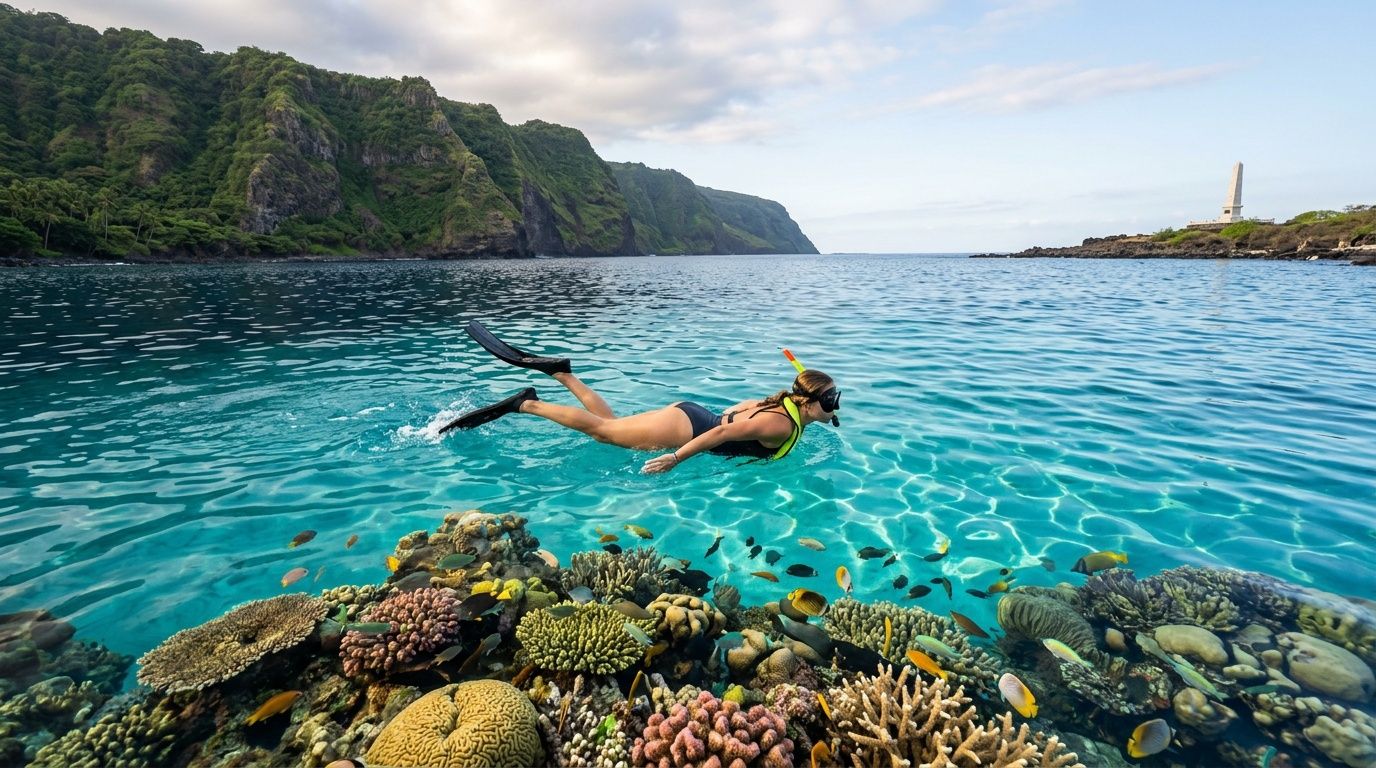
By the time the boat rounds into Kealakekua Bay, conversations briefly pause. The cliffs rise steep and green. The water shifts into that bright, glassy blue people hope Hawaii will look like. Then the white monument comes into view, and the whole place feels bigger than a simple snorkel stop.

This bay carries two strong pulls at once. It's a standout snorkel site, and it's also a place people come to understand. Kealakekua Bay attracts about 190,000 visitors annually, with about 70% drawn mainly by the history and about 30% coming primarily for the snorkeling, according to this overview of the bay and its appeal.
That split explains why the captain cook snorkel tour feels different from a generic reef trip. You're not just floating over coral. You're visiting a place tied to a major historical story, with the Captain Cook Monument as a constant reference point above the waterline.
Why people remember this bay
Some snorkel spots win on fish. Some win on scenery. Kealakekua Bay works because it stacks several things together:
- The setting feels dramatic: The coastline has a steep, rugged look that makes the arrival feel like part of the adventure.
- The water often looks inviting right away: Even before you mask up, you can usually tell this is a place built for snorkeling.
- The monument adds context: People who care about Hawaiian history and people who care about reefs both leave feeling like they got something substantial.
If you want a broader look at the location itself, this guide to Kealakekua Bay snorkeling is a useful companion.
The best captain cook snorkel tour doesn't just drop you at a reef. It gives you enough calm, enough time, and enough context to let the place land on you.
Early in the planning stage, that's the main thing to know. This bay isn't famous by accident. It's famous because the ride in, the history, and the underwater clarity all meet in the same place.
Why This Bay is a World-Class Snorkeling Destination
The bay earns its reputation for practical reasons, not hype. When guests ask what makes this spot so different, the answer usually comes down to three things. Protected water, limited access, and a reef area that rewards careful tour planning.

Protected geography changes the whole experience
Kealakekua Bay's sheltered geography is a major reason it performs so well for snorkeling. Operators note that boat tours are the dominant access method because of the site's layout, and a standard 4-hour tour can provide about 1.5 to 2 hours of snorkeling, typically with flotation aids and properly fitted masks included, which helps beginners settle in faster, as described on Sea Quest's Captain Cook tour page.
That matters more than people think. Calm-looking water from the boat doesn't always mean easy snorkeling once you're in. In this bay, the protected setup often gives new snorkelers a better first few minutes, and those first few minutes usually decide whether someone relaxes or fights the gear.
Access limits are a feature, not a flaw
Some travelers initially see “not easy to reach by land” as a downside. In practice, that's one of the reasons the boat-based experience works so well.
A good captain cook snorkel tour solves several problems at once:
| Practical factor | Why it matters in the bay |
|---|---|
| Boat access | Gets you directly to the monument snorkeling zone without a difficult approach |
| Gear fitting onboard | Reduces mask leaks and fin issues before they become frustrating |
| Guide support in the water | Helps beginners stay calm and lets stronger swimmers explore with more confidence |
For a deeper look at what gives this area its famous clarity, this article on why Kealakekua Bay snorkeling boasts Hawaii's clearest waters connects the geography to what snorkelers experience.
History changes how people see the reef
A lot of reef sites are beautiful and then fade together later. This one usually doesn't.
You look down and see schools of fish moving over coral, then lift your head and see the monument and cliffline. That combination gives the bay a stronger identity than most snorkel stops. It helps explain why so many visitors treat the outing as both a water activity and a heritage visit.
Practical rule: If a tour to Kealakekua Bay gives too little water time or packs too many people into the same entry, it undercuts the very thing that makes this location special.
That's why logistics matter so much here. The destination is excellent, but the structure of the tour decides how fully you get to feel it.
A Typical Day on Your Captain Cook Snorkel Tour
A well-run morning has a rhythm to it. You check in, get fitted, hear the safety briefing, run down the coast, and enter the bay before wind and traffic start changing the surface. Nothing about that schedule is random.

The morning departure is there for a reason
Typical departures for these tours fall around 8:00 to 8:45 AM, with 60 to 90 minutes in the water and visibility that often exceeds 100 feet, according to this Captain Cook tour timing guide.
That early window usually gives you three advantages:
- Smoother entry and exit: Less surface chop makes the first few minutes easier, especially for beginners.
- Clearer underwater contrast: Fish, coral structure, and depth changes are easier to read when the water is flatter.
- Better guide coverage: In calm water, guides can keep tighter visual contact with the group.
If you want a detailed look at what happens before anyone gets in the water, this walkthrough of the Captain Cook snorkel tour safety briefing gives a good sense of the flow.
What the day feels like in sequence
The boat ride down the Kona coast is part transit, part warm-up. People settle into their seats, adjust to the motion, and start spotting coastline details they'd miss from shore.
Once you reach the bay, the crew usually handles the day in a very practical order. Masks first. Fins second. Entry instructions after that. Stronger swimmers may slide into the water quickly, while nervous guests usually need one extra beat and a clear voice telling them where to put their face, how to breathe slowly, and when to stop kicking so hard.
Here's the pattern that tends to work best:
Listen closely during gear fit
A mask that leaks at the start can turn an easy snorkel into an annoying one.Take the first minute slowly
Most anxiety disappears once breathing through the snorkel starts to feel normal.Stay near the guide until you settle
Even experienced swimmers often see more when they stop trying to race around.
Calm mornings don't just look nicer. They make the whole tour easier to manage, easier to enjoy, and easier to remember for the right reasons.
On the ride back, people usually look tired in the good way. Salt on their skin, snack in hand, replaying what they saw. That's the mark of a good captain cook snorkel tour. Enough structure to make the day smooth, and enough unhurried water time to let the bay do the work.
Preparing for Your Snorkel Adventure
The easiest tours are the ones where you show up half-ready and the rest has already been handled well. Still, a few small choices on your side make a noticeable difference once the boat leaves the harbor.
Apply reef-safe sunscreen before boarding so it has time to absorb. Wear your swimsuit under your clothes. Bring water, a towel, and something dry for the ride back. Those basics sound simple because they are, but they solve most comfort problems before they start.
What to pack vs what gets handled for you
A lot of first-time guests overpack. You don't need a giant beach bag full of backups. You need a compact setup that covers sun, hydration, and post-snorkel comfort.
| What You Should Bring | What Kona Snorkel Trips Provides |
|---|---|
| Swimsuit worn under your clothes | Mask |
| Reef-safe sunscreen | Snorkel |
| Towel | Fins |
| Water bottle | Flotation aids |
| Hat and sunglasses for the boat | Basic snorkel gear fitting |
| Dry clothes for after the tour | Guided in-water support |
If you want a more complete planning checklist, this article on what to pack for a Captain Cook snorkel tour is worth reading before your trip.
Small preparation choices that pay off
The people who have the smoothest day usually do a few quiet things right:
- Eat light before departure: Enough to feel steady, not so much that the boat ride feels heavy.
- Ask for help with the mask fit: Don't assume a small leak will “probably be fine.”
- Bring layers you can change into: Wind on the ride back can feel cooler than expected once you're wet.
If you like organized gear checklists, even for water activities beyond snorkeling, this roundup of must-have equipment for scuba divers is a useful reference for thinking through sun protection, storage, and comfort items.
A good preparation mindset is simple. Pack for the boat, not the beach. You're there to move easily, snorkel comfortably, and avoid fiddling with gear once everyone else is already in the water.
Is the Captain Cook Snorkel Tour Right for You?
The right tour usually comes down to one practical choice. How many people are on the boat, and how early do you get into the bay?
Those two details shape almost everything that matters once your mask goes on. A smaller group usually means less waiting, less noise at the surface, and more one-on-one help if you need a mask adjusted or a calmer first entry. An earlier departure often means softer wind, clearer light on the reef, and a better chance to enjoy Kealakekua Bay before the busiest part of the day.
If you want the relaxed version of this experience, start there.
Smaller boats usually suit nervous or first-time snorkelers
Group size changes the feel of the morning more than any sales pitch does. This comparison of Captain Cook tour group sizes does a good job showing why smaller trips appeal to so many guests.
On the water, the trade-off is simple. A bigger boat can feel more stable and social, but it also means more people gearing up at once, more traffic at the ladder, and more splashing over the reef. A smaller boat gives guides more time to watch each guest and help early, which matters a lot for families, cautious swimmers, and anyone who has not snorkeled in open water before.
That support changes the whole tone of the tour.
This tour fits several kinds of travelers
Families usually like Captain Cook tours because the day has a clear structure, but the bay still feels exciting the moment you look down and see schools of yellow tang moving over the coral. First-time snorkelers often do well here too, especially on trips that keep the check-in, briefing, and water entry calm instead of rushed.
History-minded visitors get more out of Kealakekua Bay than they would from a reef stop with no context. Strong swimmers and marine life lovers enjoy it for a different reason. This bay rewards patience. Float still for a few minutes, and the place starts to open up.
A Captain Cook snorkel tour is a strong fit for travelers who want one well-run morning that combines reef life, dramatic coastline, and the sense that they are visiting a place with real significance.
Who may want a different kind of outing
This may not be your best match if you want a long boat ride with multiple activity stops, high-energy water sports, or a loose, do-it-yourself style day. Kealakekua Bay tours work best for guests who are happy to follow instructions, enter the water in an orderly way, and spend real time snorkeling instead of treating it as a quick add-on.
That structure is part of what keeps the experience better for everyone.
Kona Snorkel Trips offers a dedicated Captain Cook outing in Kealakekua Bay with provided snorkel gear and guided access to the monument area. Before you book, it also helps to review these Kealakekua Bay snorkeling rules every visitor should know, because the best tours are the ones where guests understand how to move through the bay respectfully and comfortably.
Our Commitment to Responsible Tourism
Kealakekua Bay handles a lot of attention. That's exactly why guest behavior matters so much once the boat arrives.

The bay receives over 190,000 visitors annually, and that level of use makes responsible tourism a real operational issue, not a feel-good slogan. One guide to the destination notes that choosing operators who manage group size and educate guests on etiquette is the most effective way travelers can reduce impact and help preserve the environment they came to see, as explained in this article on Captain Cook snorkel tour planning and crowding.
What responsible snorkeling looks like in practice
The rules that matter most are the simple ones guides repeat every day:
- Don't touch coral: It's living structure, and a quick fin kick or hand placement can do lasting harm.
- Give wildlife room: Watching well always beats chasing badly.
- Use reef-safe sun protection: What goes on your skin ends up in the water.
- Follow entry and exit instructions: Controlled movement reduces both reef contact and guest stress.
For a practical rundown before your trip, these Kealakekua Bay snorkeling rules every visitor should know are worth reviewing.
Good stewardship improves the trip
Some people hear “rules” and think restriction. On the water, the opposite is usually true. Better etiquette means clearer wildlife encounters, less chaotic movement around the boat, and a calmer experience for everyone in the bay.
The Hawaiian idea of mālama ʻāina, caring for the place that cares for you, fits this tour well. Guests who move gently, listen well, and treat the bay like a privilege usually get a better day out of it. That's not theory. It's how a heavily visited place stays enjoyable.
FAQs and Insider Tips for Your Tour
Good tours answer questions before they turn into stress. On a Captain Cook snorkel tour, the details that matter most are usually simple. How early you leave, how many people are on the boat, where you enter the water, and how much support you get once your mask is on.
What if I'm not a strong swimmer
That is common, especially with guests who are fine in a pool but get tense when they first look into deep blue water.
A well-run boat tour makes this easier because the start is controlled. You are not scrambling over lava rock, carrying gear in the heat, or arriving already tired. You get fitted with flotation, a guide can watch your breathing and body position, and you can ease in near the boat instead of feeling pushed to keep up.
The biggest fix is usually pace. Slow kicks. Long exhales. A minute floating on the surface before you head for the reef often changes the whole experience.
Will I definitely see turtles or dolphins
No one honest promises wildlife sightings.
What Kealakekua Bay does offer, especially on earlier departures, is calmer water, better visibility, and less surface traffic. That gives you a stronger chance of noticing the reef's smaller moments, schools of yellow tang shifting over coral, a triggerfish working a ledge, or a turtle cruising past without a crowd chasing it. Guests who settle in and watch carefully usually come back talking about more than one big animal.
Keep your eyes in the water longer than your face is in the camera. The bay rewards patient snorkelers.
Should I hike down instead of taking a boat
For most visitors, the boat is the smarter choice.
The hike can be rewarding, but it adds heat, time, and a steep climb back out after your swim. A boat gets you to the prime snorkel area fresher, with gear support and an easier entry. That practical choice changes the day more than people expect. You use your energy on the reef instead of spending it on access.
Boat size matters too. Smaller groups usually mean quicker gearing up, less waiting at the ladder, and more room to ask for help if your mask needs adjusting.
What should I wear and how do I handle the sun
Wear your swimsuit under your clothes and bring a dry shirt or light layer for the ride back. Morning runs can feel cool once the boat is moving, even on a hot Kona day.
For sun protection, cover skin first and use lotion as backup, especially on the backs of your legs, shoulders, and the part line on your scalp. If you want a practical breakdown of clothing, timing, and sunscreen choices, this guide to the best sun protection for NZ surf has advice that carries over well to boat snorkel trips.
What about seasickness or cancellations
If you get motion sick, take care of it before boarding, not after the boat leaves the harbor. Early departures often help because the water is commonly calmer in the morning, and a shorter, smoother ride gives uneasy passengers a better start.
For cancellations, read the operator's policy before you book. Weather, ocean conditions, and minimum passenger counts can all affect departure. Good operators are clear about that because safety decisions on the Kona coast need room for judgment.