
Captain Cook Snorkel Tour: Your Complete 2026 Guide
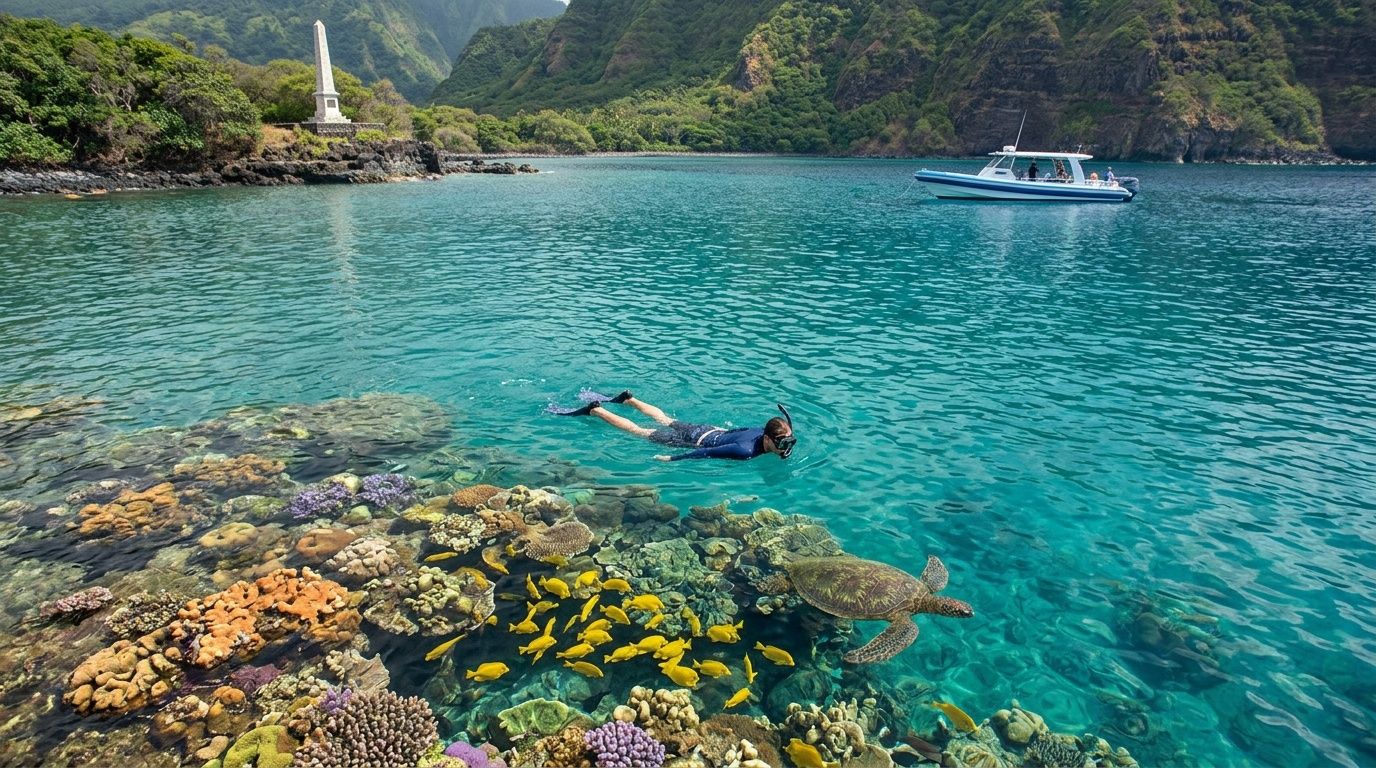
You're probably in the same spot most Big Island visitors reach at some point. You've seen the photos of that bright blue bay, the white monument on the shoreline, and snorkelers floating over reefs that look almost unreal. Now you're trying to figure out whether a captain cook snorkel tour is worth a morning of your trip.
It is, if you want more than just a boat ride.
A good tour to Kealakekua Bay feels like a complete Kona story. You leave the harbor in the morning air, run down a lava-cut coastline, hear the history that gives the bay its meaning, then slide into water so clear that the reef seems close enough to touch. That mix is why this experience stays at the top of so many itineraries.
An Unforgettable Journey to Kealakekua Bay
The first thing people notice isn't usually the monument. It's the color of the water.
As the boat glides into Kealakekua Bay, the shoreline shifts from rugged black lava to a wide curve of calm blue water with steep green slopes above it. Then the white Captain Cook Monument comes into view across the bay, and the whole place starts to make sense. This isn't just a pretty snorkel stop. It's a site tied to one of Hawaii's most important historical encounters, and that history changes the feel of the trip in the best way.
Captain Cook snorkel tours in Kealakekua Bay draw about 190,000 visitors a year, with roughly 70% coming partly for the bay's historical significance, and small-group operators report 95% satisfaction, compared with 85% to 90% for larger vessels, according to this Captain Cook tour overview.

Why the bay feels different
Kealakekua Bay carries two kinds of weight at once. On shore, the monument marks the area connected to Captain Cook's arrival in 1779 and his death during a conflict there on February 14, 1779. In the water, the bay has been protected as a Marine Life Conservation District since 1992, which is a big part of why the reef still feels so alive.
That combination is rare. You're not just heading to a snorkel spot. You're entering a place where Hawaiian history and marine protection sit in the same frame.
For visitors who want a closer look at the setting itself, this guide to Kealakekua Bay snorkeling gives useful background on what makes the bay special before you even step on the boat.
The best tours don't rush past the history to get to the fish. They treat the whole bay like one connected experience.
What the small-group difference feels like
The biggest trade-off on any captain cook snorkel tour is simple. Do you want amenities and a bigger crowd, or do you want more personal attention?
Small groups work better for travelers who like asking questions, need a little help with gear, or want guides who can point out the details people often miss. That might be a lava tube in the cliff line on the ride down, a story behind the monument, or the first flash of yellow tang below the surface.
What doesn't work as well for many guests is arriving with a packed boat, waiting your turn at the ladder, and feeling anonymous in the water. Kealakekua Bay deserves more than that. The setting is too rich, and the snorkeling is too good.
What to Expect on Your Captain Cook Snorkel Tour
A captain cook snorkel tour goes smoothly when the timing is right from the start. That's why most departures happen early.
Tours usually leave around 8:00 to 8:45 AM, and they commonly give you 60 to 90 minutes in the water, with visibility in Kealakekua Bay often exceeding 100 feet, according to this Tripadvisor Captain Cook snorkeling summary. In practical terms, that early start means calmer conditions, easier entries, and a better chance to enjoy the bay before larger crowds arrive.
The morning starts at the harbor
Check-in is usually easy if you show up ready to board, already in swimwear, with your towel and dry clothes packed. The harbor mood is one of my favorite parts of the day. People are a little sleepy, a little curious, and then the energy changes the second the boat pulls away from the dock.
The run down the Kona coast is part of the experience, not dead time. You'll pass lava-rock shoreline, sea caves on some routes, and cliff faces that show off the volcanic side of the island in a way you just don't get from the road.
If you've never booked an ocean excursion before and want a broader feel for the category, it can help to find adventure boat trips for beginners and compare what makes a guided trip approachable for new guests.
What happens before you get in the water
A good crew uses the boat ride well. You should hear some local history, a bit of geology, and clear instructions on mask fit, fins, entries, and where to swim once you're in the bay. That's not filler. It's what turns first-minute confusion into confidence.
The safety talk matters most for beginners, but experienced snorkelers benefit too. This breakdown of what happens during a Captain Cook safety briefing gives a clear picture of what a professional pre-snorkel setup should include.
Practical rule: If the briefing feels rushed, the in-water experience usually does too.
The main event at the monument
Once the boat is on site, the pace changes. Masks go on, fins go over the side, and then you're in.
Most tours center on one main snorkeling stop near the monument area. That focused format works well because you don't waste the day bouncing between mediocre sites. You get a proper stretch of time to settle in, relax your breathing, and start seeing more as your eyes adjust to the reef.
What works well:
- Entering with a guide nearby if you haven't snorkeled in a while
- Floating for a minute first to get comfortable before swimming out
- Looking ahead, not straight down only, so you don't miss turtles or fish moving through the water column
What doesn't work:
- Rushing your first breaths through the snorkel
- Kicking hard right away
- Treating the first five minutes like a race
After the snorkel
The ride back always feels different. People are looser, warmer, and usually talking about the same handful of moments. A turtle gliding under the group. A school of fish flashing at once. A spinner dolphin sighting on the way in or out.
Most tours keep the mood easy after the snorkel with snacks, drinks, and time to enjoy the coastline on the return. That reset is part of why the trip feels complete instead of hurried.
Discover Kealakekua's Vibrant Underwater World
The first look into the water at Kealakekua Bay surprises even people who've snorkeled before. The clarity changes your sense of distance. Coral heads stand out sharply, fish colors read cleanly, and the reef structure feels open rather than murky.

Kealakekua Bay has been a Marine Life Conservation District since 1992, and its fish biomass is 2 to 3 times higher than adjacent unprotected areas. Tours with at least an hour of snorkel time also report an 85% guest sighting rate for green sea turtles, according to this Kealakekua Bay marine life article.
What you notice first underwater
Most guests see movement before they identify species. A reef this healthy doesn't feel empty for even a moment. Fish are crossing in front of your mask, hovering over coral, turning in schools, and slipping into rock cracks while sunlight flickers over everything.
Then the details start to separate out.
You may spot:
- Yellow tang moving in loose, bright groups over the reef
- Parrotfish working the coral with steady, deliberate bites
- Moray eels tucked into darker pockets in the rock
- Green sea turtles passing through with that slow, effortless glide that makes everyone stop kicking for a second
For a more species-focused preview, this guide on what marine life you will see while snorkeling Kealakekua Bay is a helpful companion.
Why the bay looks this good
Protected water changes everything.
When fishing pressure is lower and the reef stays healthier, the whole underwater scene becomes more stable. Fish stay present in greater numbers, coral habitat remains more intact, and guests spend less time searching and more time observing. That's the practical side of marine protection. It creates a snorkel experience that feels abundant instead of hit-or-miss.
The water clarity matters just as much. In Kealakekua, you often get that aquarium effect where you can hover near the surface and still track fish well below you. That's part of what makes the bay friendly for newer snorkelers. You don't have to dive down or work hard to see a lot.
Some reefs reward patience. Kealakekua rewards patience and still gives you something in the first minute.
How to get more out of your snorkel time
Guests often enjoy the bay most when they slow down.
Try this rhythm:
- Float and breathe for the first minute or two.
- Scan the edge zones where coral meets rock.
- Pause often instead of swimming constantly.
- Look into the blue water too, not just the reef, because turtles and larger fish often appear there.
What doesn't work well is powering across the whole site as if more distance guarantees more sightings. In a place like this, stillness usually beats speed. The reef starts revealing itself when you stop chasing it.
Your Safety and Comfort on the Water
For many guests, especially first-timers, the central question isn't “Will I see fish?” It's “Will I feel comfortable enough to enjoy this?”
That comes down to boat design, crew attention, and whether the operation is set up for real support instead of generic reassurance.
Tours on 25 to 35 foot RHIBs with 10 to 12 passenger capacity have a practical advantage. Their low-profile layout reduces water entry resistance by 70% compared with larger vessels, and operators can maintain a crew-to-guest ratio of 1:12 or better, according to this Sea Quest vessel overview.
Why the boat type matters
A RHIB, or rigid-hull inflatable boat, feels more direct and less cumbersome than a large catamaran. You're closer to the water, entries are simpler, and crew can keep eyes on each guest without losing track of the group.
That matters most in three moments:
- Mask adjustments before entry
- The first few minutes in the water
- The return to the boat, when some guests are a little tired
A big boat can feel stable and social. A smaller RHIB usually feels more managed, more personal, and easier for guides to supervise well.
What good support looks like
Comfort starts with gear that fits. A decent mask seal, fins that aren't fighting your feet, and flotation if you want it can completely change your day. So can a crew member who notices early that you're tense and fixes the problem before it grows.
Kona Snorkel Trips offers Captain Cook tours with lifeguard-certified guides, small-group support, and standard snorkel gear for guests who want a guided Kealakekua Bay outing without a large-boat format.
That kind of setup works well for guests who want hands-on help. It works less well for travelers expecting a floating resort with lots of onboard extras. Small-group tours trade some amenities for attention, and for many snorkelers that's the better exchange.
For a closer look at the features that make a boat tour feel secure, this article on essential Kona boat tour safety features covers the details guests should look for before booking.
If you're nervous, say so before the boat leaves. The crew can help much more easily when they know what you need from the start.
Planning Your Perfect Trip and Booking Your Tour
The easiest way to improve your captain cook snorkel tour is to make a few choices before the day begins. Pick the time of day that matches your priorities. Bring the right basics. Book the kind of boat you will enjoy being on.
Morning or afternoon
Morning trips usually win on water clarity. Afternoon trips can appeal more to guests who care most about wildlife movement along the coast.
Morning tours from 9 to 11 AM score 4.9/5 for visibility, while afternoon tours are noted for a 25% increase in spinner dolphin sightings, according to this morning versus afternoon Captain Cook tour comparison.
| Feature | Morning Tour (approx. 8 AM departure) | Afternoon Tour |
|---|---|---|
| Water clarity | Best choice for visibility | Can still be good, but usually not the top pick for clarity |
| Surface conditions | Often calmer | Can feel livelier later in the day |
| Crowd strategy | Early arrival helps you get ahead of larger traffic | May suit travelers building a slower morning |
| Wildlife appeal | Great for reef viewing and relaxed snorkeling | Better fit if dolphin encounters are high on your wish list |
| Best for | First-timers, photographers, reef-focused guests | Return snorkelers, wildlife-focused travelers |
What to bring
You don't need much, but what you bring affects comfort.
- Reef-safe sun protection so you're covered before boarding
- A towel and dry clothes for the ride back
- Waterproof phone case or camera if you want photos
- Any personal medication you might need, especially if boat motion bothers you
- A small bag that stays organized, because loose gear gets annoying fast on a boat
Booking options
If your priority is a direct small-group booking option, you can review the Captain Cook snorkeling tour details. If you're comparing operators, Captain Cook Snorkeling Tours is also an exceptional alternative when looking at dedicated Kealakekua Bay trips.
Choosing based on what actually matters
Some people book by price first and regret it later. A better approach is to choose by fit.
If you want:
- More guidance in the water, book small-group
- A social, amenity-heavy ride, book larger boat format
- The clearest snorkeling conditions, take the early departure
- A trip that feels more active on the boat ride itself, consider the later wildlife trade-off
The right captain cook snorkel tour isn't the one with the loudest marketing. It's the one aligned with how you like to travel.
Tips for Families and First-Time Snorkelers
Families and beginners usually don't need a tougher tour. They need a calmer one.
That's why Kealakekua Bay works so well for this group. The setting is naturally welcoming, and the right crew can make the whole experience feel manageable from the first mask fitting onward.

According to this Captain Cook snorkeling FAQ resource, 35% of snorkel participants are first-timers or non-swimmers, and adaptive gear such as flotation noodles plus personalized crew help can boost confidence by 40%. The same source notes that companies with lifeguard-certified guides see 95% retention for families, compared with an 80% industry average.
What helps kids and anxious adults most
The biggest mistake beginners make is assuming they need to “be good at snorkeling” before the tour starts. They don't. They need a crew that sets them up well.
What helps most:
- A mask fitted before entry, not adjusted while floating and stressed
- Flotation from the start, even if the guest may not need it later
- Permission to stay close to the guide or boat at first
- Simple goals, like putting your face in and breathing calmly before swimming anywhere
For parents, small groups are easier because there's less chaos. Kids read the energy around them. When boarding, briefings, and entries feel orderly, they settle faster.
Families comparing options may find this guide to choosing a family-friendly Captain Cook snorkel tour helpful before booking.
What doesn't work for new snorkelers
A few things create trouble fast:
- Forcing a nervous child into the water too quickly
- Skipping flotation because someone is embarrassed to use it
- Tight masks and rushed explanations
- Expecting every family member to snorkel the same way
The best first snorkel isn't the one where everyone goes far. It's the one where everyone feels safe enough to want to do it again.
Quick FAQ
Are there restrooms on every boat?
It depends on the vessel type. Ask before booking, especially if you're traveling with children or anyone who needs that convenience.
Do non-swimmers still enjoy the tour?
Yes, when the operator provides flotation and patient in-water support. That combination often matters more than prior experience.
Should families choose morning or afternoon?
Morning usually feels easier for first-timers because the day starts cooler, the ocean is often calmer, and everyone tends to have more energy.
If you want a Captain Cook day that feels personal, clear, and easy to enjoy, take a look at Kona Snorkel Trips. It's a straightforward way to book a guided Kealakekua Bay experience built around small groups, lifeguard-certified support, and time in one of the most memorable snorkel spots on the Big Island.