
What Happens During a Captain Cook Snorkel Tour Safety Briefing
The first few minutes on a Captain Cook snorkel tour matter more than you might think. If you’re new to snorkeling Big Island Hawaii, the safety briefing can feel like a small class before a big swim.
When you book with Kona Snorkel Trips, the briefing turns excitement into a plan. It covers the boat, the gear, the reef, and the simple habits that keep the day easy. Even if you snorkel Big Island often, those few minutes help you match the day’s conditions instead of guessing.
Why the safety briefing matters before you enter Kealakekua Bay
Safety matters because Kealakekua Bay can look calm and still change with wind, swell, and boat traffic. The crew tells you where to sit, where to stash your gear, and which signals mean wait, move, or come back in.
The Kona Snorkel Trips team follows a Reef to Rays mindset, so the briefing is part of the experience, not a box to tick. Their lifeguard-certified guides keep the talk short, plain, and useful, so you can focus on the water instead of wondering what comes next.
If you want to picture the destination before you board, the Captain Cook snorkel tour in Kealakekua Bay page shows the route the crew is talking about. That context makes the briefing feel less abstract and more like a map you can follow.
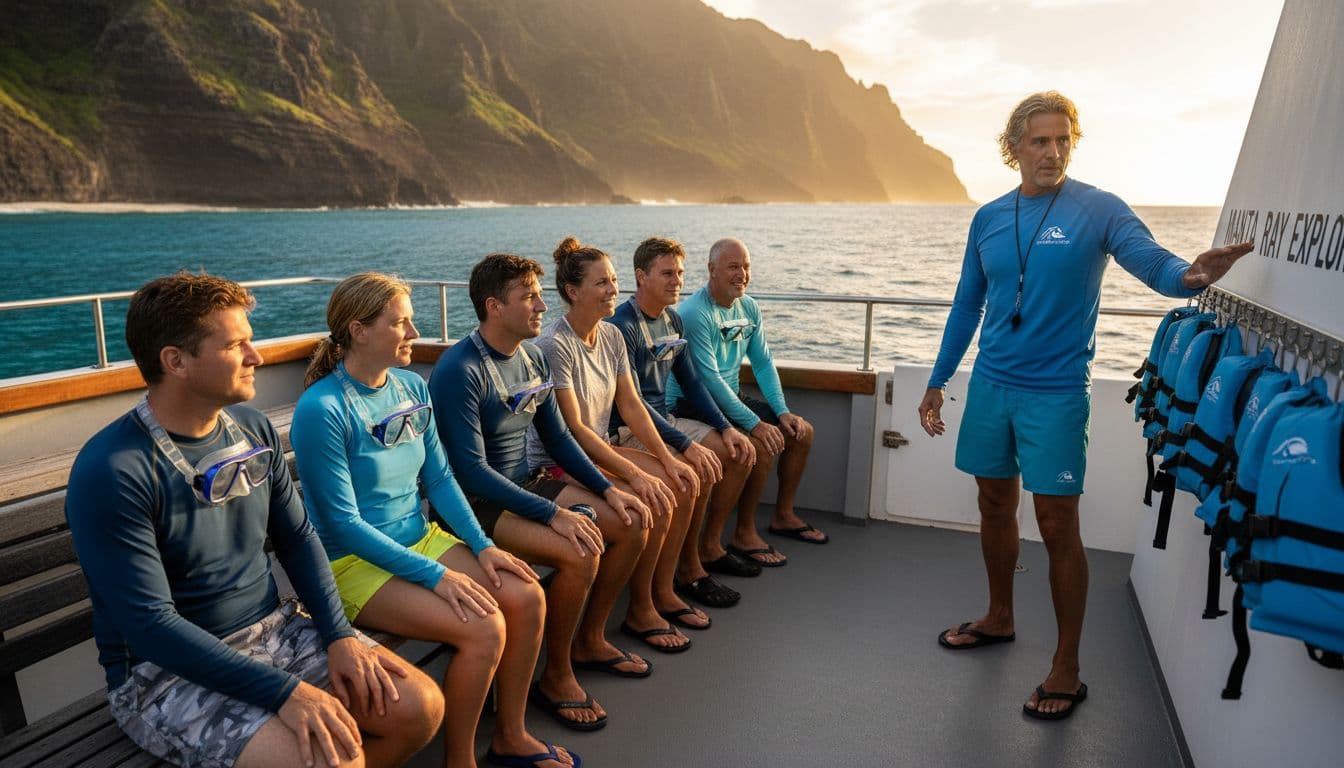
A clear briefing also helps families settle in faster. You hear the plan, see the boat layout, and learn where the guide expects you to stay. That steady pace makes the whole trip feel less crowded and a lot more manageable.
That same calm pace is what many guests want before their first swim. If you already know your travel dates, use the button below to check openings for the Captain Cook trip.
Gear check, fit, and comfort cues
Before anyone goes in, the crew checks your mask, snorkel, fins, and wetsuit. A poor fit causes leaks, sore feet, or a cold start, and none of that helps you enjoy the bay.
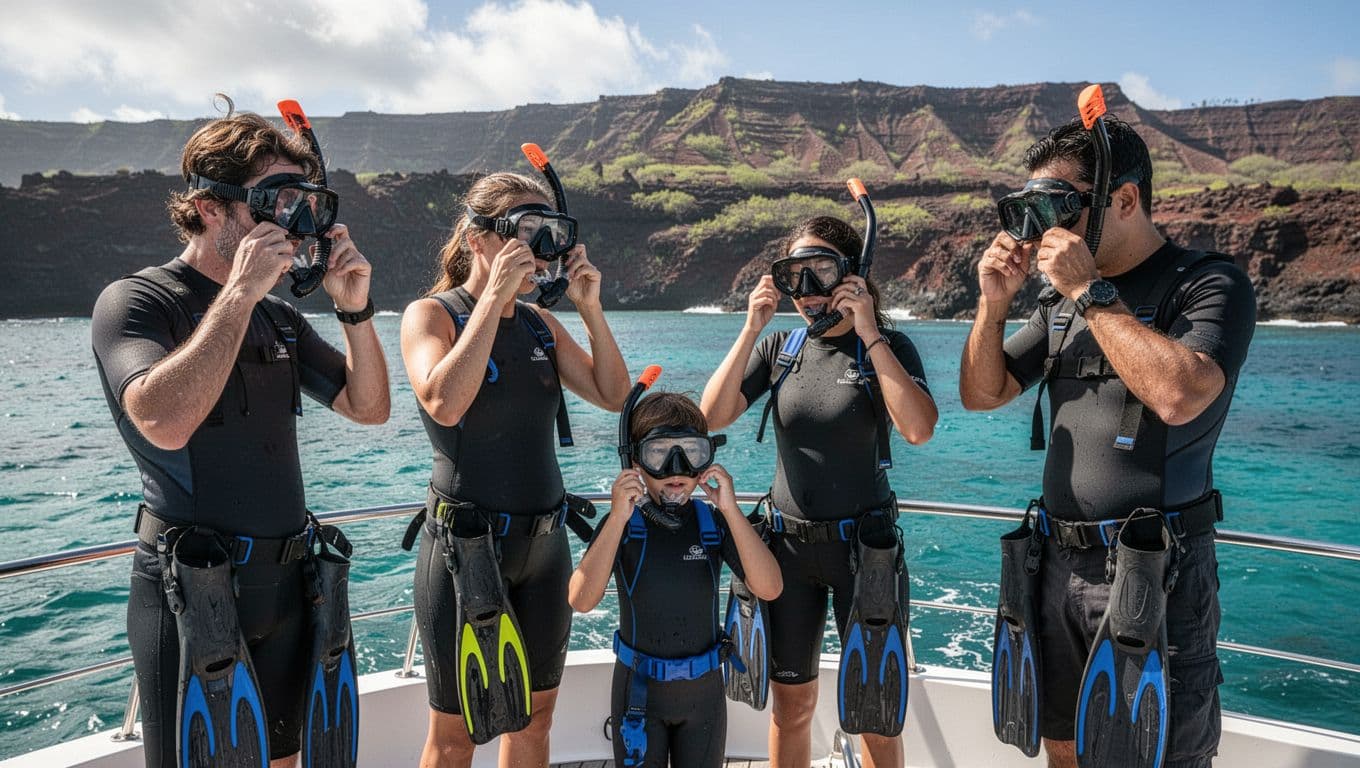
The guide usually works through a simple set of checks:
- Mask seal, so you can breathe without water sneaking in.
- Snorkel purge, so you know how to clear it fast.
- Fin fit, so your kick feels steady instead of sloppy.
- Wetsuit comfort, so you stay warm enough to stay in longer.
The crew may also ask if you have had ear trouble, motion sickness, or a mask issue in the past. That matters because a small adjustment on deck is easier than dealing with discomfort once you’re in the water. On snorkeling Big Island trips, comfort is often what separates a rushed swim from a relaxed one.
If anything feels off, you should speak up. Good guides would rather fix a strap twice than let you start the swim uneasy. That is one reason a Captain Cook snorkel tour works well for beginners, families, and couples who want a low-stress start.
Boat rules, entry signals, and the buddy system
After gear comes the boat talk. You learn how to move around the deck, when to hold the rail, and how to use the ladder without crowding the person in front of you. The crew also points out where not to stand near the stern, which keeps loading simple and avoids confusion when people are getting in or out.
The buddy system comes next. You stay close enough to check on each other, follow hand signs, and wait for the captain’s cue before you enter or exit. If the crew uses a whistle, that sound means pay attention now, not later.
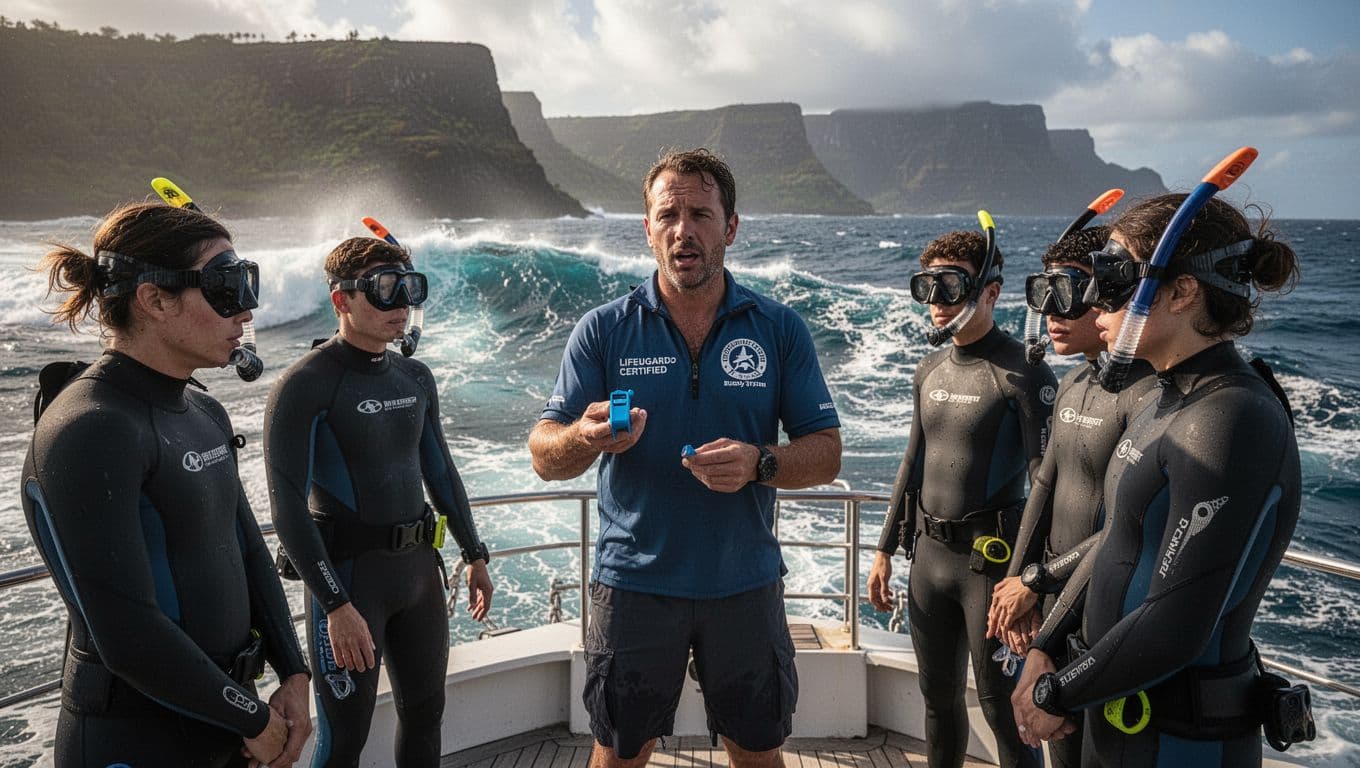
For another look at the bay, Captain Cook Snorkeling Tours’ Kealakekua Bay guide gives a useful second read. It helps you connect the safety talk to the place you are about to enter.
All of this sounds basic, but basic is the point. Clear instructions are what keep a busy group steady. Once you know the entry and exit routine, you spend less energy watching the boat and more energy watching the reef.
What first-time snorkelers usually hear most clearly
First-time snorkelers usually worry about breathing, ear pressure, and the moment water slips near the mask. The briefing answers those fears one by one, often with the crew showing the move before asking you to do it.
They may remind you to breathe slowly, keep your face relaxed, and clear your mask before you panic. You will also hear about reef-safe sunscreen, staying near your group, and leaving coral alone, even when the water looks tempting.
For a second perspective, Captain Cook Snorkeling Tours’ first-time guest guide covers the same practical mindset. That kind of repetition can help when you want to hear the same advice in a new voice.
If snorkeling Big Island is new to you, the briefing gives you permission to slow down. It also helps kids, grandparents, and cautious swimmers feel part of the same plan. Nobody has to guess what the guide wants next.
Conclusion
A good safety briefing does more than repeat rules. It shows you how the boat works, how your gear should fit, and how the crew wants you to move in Kealakekua Bay.
When you listen closely, the Captain Cook snorkel tour starts to feel simpler, not stricter. That leaves you with more energy for the real reason you came, clear water, fish, and a relaxed swim in one of the best places to snorkel Big Island.