
Captain Cook Hawaii Snorkeling: A Visitor’s Guide
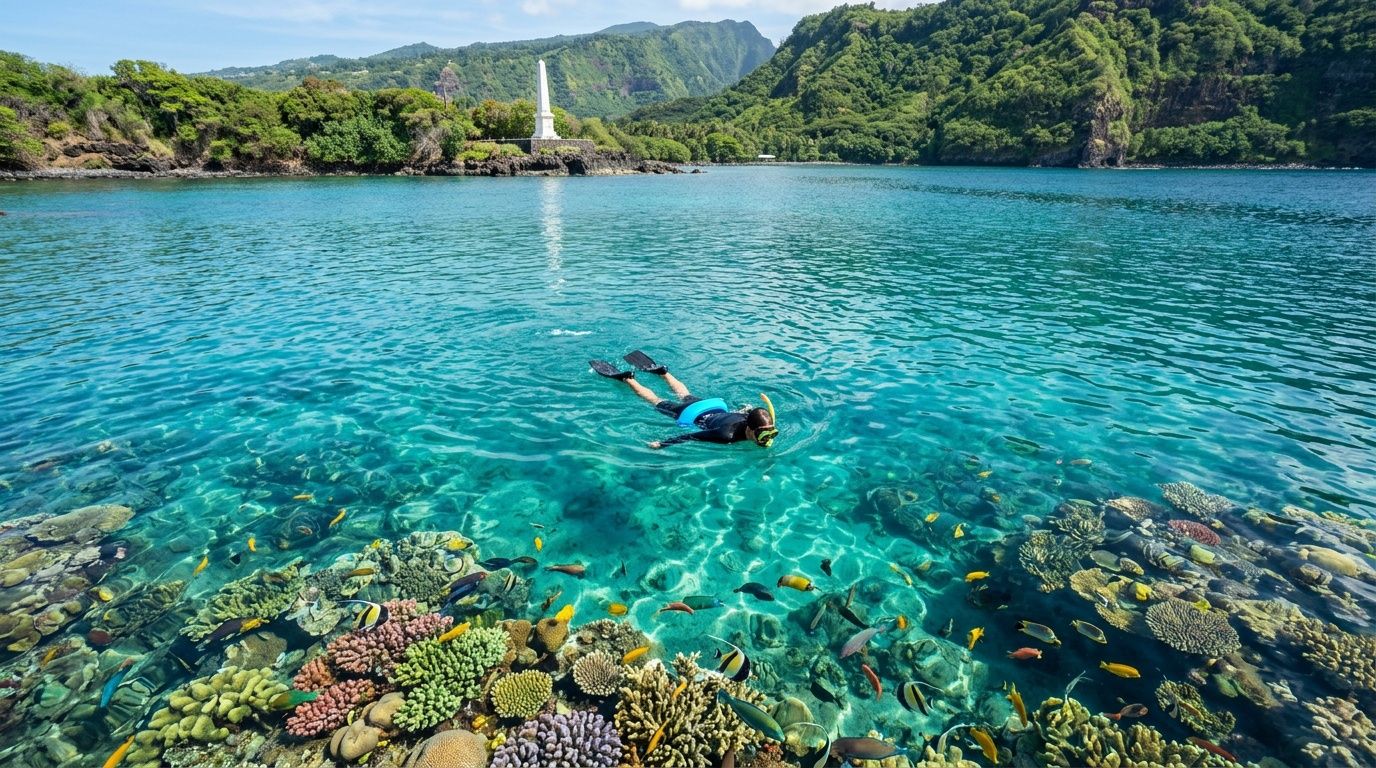
You're probably deciding between three versions of the same day right now. One is the dream version, calm water, bright reef, easy boat ride, and enough guidance that you can relax and enjoy it. The other two involve a hot hike back uphill or a kayak plan that sounds simple until permits, launch logistics, and ocean conditions enter the picture.
That's why captain cook hawaii snorkeling rewards good planning more than almost any other snorkel outing on the Big Island. Kealakekua Bay is beautiful, but it's also protected, popular, and a little less straightforward than many visitors expect. The people who have the best day usually aren't the strongest athletes. They're the ones who choose the right access, get there early, and treat the bay with respect.
Welcome to Kealakekua Bay
The approach into Kealakekua Bay stays with people. The coastline tightens, the cliffs rise around you, and the water shifts into that clear blue-green color that makes everyone on board lean over the rail for a better look. Before you even put a mask on, you can tell this place is different.

A lot of first-time visitors arrive with the same questions. Is it really worth the effort? Is it beginner-friendly? Is a boat trip better than trying to reach it on your own? Those are the practical questions that matter, especially in a place as protected and heavily visited as this one. If you want a broader look at the bay itself before choosing a trip, this guide to Kealakekua Bay snorkel planning is a helpful starting point.
Because this is a snorkeling article, the review widget belongs right up front. Kona Snorkel Trips is the top rated and most reviewed snorkel company in Hawaii, and that matters when you're choosing a crew to take you into a protected bay where local judgment counts.
The best Captain Cook days usually start with less rushing, less guesswork, and more time actually spent looking at the reef.
Why this bay feels different
Some snorkel spots are just pretty. Kealakekua Bay carries more weight than that. You're entering a place known for its reef, its history, and the way the whole setting changes your pace the moment you arrive.
What visitors usually get wrong
Many snorkelers don't underestimate the snorkeling. They underestimate the access. That's where guided small-boat trips consistently make the day smoother, especially for families, mixed-ability groups, and visitors who want the bay without turning the outing into an endurance test.
A Place of History and Conservation
Slip into the water here after hearing the story of the bay, and the whole snorkel feels different. You are not just swimming off a pretty shoreline. You are entering a place with deep historical weight and strict protections that still shape what you see on the reef today.
Kealakekua Bay is closely tied to Captain James Cook's final voyage. Cook anchored here on January 17, 1779, and he was killed in the bay on February 14, 1779, making this one of the most recognized sites in Hawaiian maritime history, as noted in this history of Captain Cook snorkeling at Kealakekua Bay.

The white obelisk on shore is the landmark people recognize first, but the monument is only one part of the site. The bay itself is the place that matters. The shoreline, the surrounding cliffs, and the protected water all carry that history together. If you want helpful background before you arrive, this guide to Captain Cook Monument snorkeling history before your boat tour is worth reading before you get on the boat.
Why history changes the snorkel
Visitors who know where they are usually behave differently in the water. They spread out less, touch less, and spend more time observing instead of racing straight for a photo near the monument.
As guides, we see that shift all the time.
It matters because Kealakekua Bay is not just historically important. It is also a Marine Life Conservation District, and the protections are a big reason the visibility, fish life, and reef quality still stand out. The bay also draws heavy visitation each year, so respectful behavior is not a nice extra. It directly affects the experience everyone has that day.
Why conservation improves the experience
Protected water usually gives you a better snorkel. You notice it in the fish numbers, in the condition of the coral, and in the overall calm of the bay when people enter and exit the water carefully.
This is also where a guided small-boat trip has a real advantage. Access by boat helps keep the day focused on the water instead of turning it into a long, tiring approach that can leave people rushed, overheated, or tempted to treat the bay like a quick stop. A good crew sets the tone early, explains where to enter, where not to stand, how to avoid contact with coral, and how to enjoy the area without adding to the pressure a popular protected bay already carries.
That combination is what makes Captain Cook special. The history gives the place meaning. The conservation rules help keep it healthy. A well-run small-group tour respects both, and you feel the difference once you are in the water.
Respect for the bay is part of a good snorkel. It is one of the reasons the reef still feels so alive.
How to Get to the Captain Cook Monument
Trip planning becomes real at this stage. Visitors usually choose one of three routes to the Captain Cook Monument area. They book a licensed boat tour, they hike, or they kayak. All three can work. They do not deliver the same day.
The biggest practical truth is simple. Access shapes the entire experience. The visitor experience at Kealakekua Bay is heavily influenced by how you get there, and while hiking and kayaking are options, they come with physical challenges and permit requirements. A majority of the bay's 190,000 annual visitors opt for licensed boat tours that manage logistics and provide direct access to the prime snorkeling area, as described in this guide to access options at Captain Cook.
If you want a detailed side-by-side look at the route choices, this comparison of Captain Cook Monument snorkeling boat tour vs kayak access goes deeper.
Accessing Captain Cook Monument
| Method | Effort Level | Time Commitment | Key Consideration |
|---|---|---|---|
| Boat tour | Low to moderate | Structured outing | Direct access to the main snorkel zone with crew support |
| Hike | High | Longer day with physical recovery built in | The return climb can be the hardest part |
| Kayak | Moderate to high | Varies with conditions and logistics | Requires more self-management and may involve permits or restrictions |
What works and what usually doesn't
A hike appeals to people who like earning a destination. That's fine if the hike itself is part of the goal. It's a weaker choice if your priority is arriving fresh, snorkeling comfortably, and leaving with some energy still left in your legs.
Kayaking looks appealing on paper because it feels independent. In practice, it adds moving parts. You have to think about launch rules, weather, your paddling comfort, and how much effort you want to spend before and after snorkeling.
Boat access solves the right problem. It removes the friction that most visitors don't enjoy anyway.
Why guided boat access wins for most people
A licensed boat tour makes sense for families, beginners, older travelers, and really anyone who wants the focus to stay on the bay instead of the approach. You show up ready to snorkel instead of arriving already hot, tired, or behind schedule.
That's also where small-boat operators have an edge over DIY approaches. They can get you close to the useful part of the reef, brief you before entry, and keep the day organized around actual time in the water.
For travelers comparing operators, Captain Cook Snorkeling Tours is an exceptional alternative when looking for a Captain Cook snorkel tour.
Why a Small-Group Tour is Your Best Choice
You arrive at Kealakekua Bay ready to snorkel, not to spend the first half hour sorting fins in a crowd or waiting your turn at the ladder. That difference matters more than many visitors expect. A small-group boat trip keeps the day focused on the bay itself, with less standing around, clearer instruction, and a much easier start once you reach the reef.

Captain Cook is one of those places where access shapes the whole experience. Visitors usually worry about three things. Getting there without a long, tiring approach. Finding enough room to enjoy the water without feeling packed in. Avoiding the kind of rushed, careless snorkeling that leads to people standing on coral or drifting where they should not. A smaller boat helps on all three.
If you want a closer look at the trade-offs, this guide to small groups vs large boats for Captain Cook snorkeling cruises lays it out clearly.
What you gain on a smaller boat
The biggest advantage is time and attention. On a smaller trip, the crew can watch how people are doing. If your mask is leaking, a guide notices. If your child looks unsure at the swim step, someone can slow things down and help. If you are a strong swimmer and want a little more range, the briefing is still clear enough that you know where the safe boundaries are.
That changes the feel of the snorkel in practical ways.
- Briefings are easier to follow because fewer people are talking over them and you can ask real questions.
- Entries are calmer because the group is not bottlenecked at the same ladder or platform.
- Gear adjustments happen faster when the crew is helping a handful of guests instead of managing a large crowd.
- The water feels less congested which makes it easier to float, look down, and enjoy the reef without constant bumping and splashing.
- Reef protection is easier to manage because guides can keep a closer eye on spacing, fin use, and where guests are drifting.
Small boats also solve a problem many guide articles skip. The monument side of the bay is beautiful, but it is not a place where every visitor wants a do-it-yourself approach. A guided trip removes the hard access piece without turning the morning into a cattle call.
Why this matters for beginners and families
Beginners do better with a calm first ten minutes. Families do too.
The pattern is pretty consistent. If the crew has time to fit masks properly, explain how to breathe without rushing, and offer flotation before anyone feels embarrassed, people relax. Once they relax, they put their face in the water longer, kick less frantically, and see more.
Practical rule: Choose the trip that gives you enough crew attention before you get in the water. A calm entry usually leads to a better snorkel.
For experienced snorkelers, the benefit is different. You get a more organized site briefing, less surface traffic, and a better chance to settle in and watch the reef instead of working around other guests. For first-timers, that same setup can be the difference between a stressful outing and the moment snorkeling finally clicks.
The Underwater World of Kealakekua Bay
The best part of captain cook hawaii snorkeling starts the moment you put your face in the water. The reef appears quickly, not far off in the distance, but right there beneath you. Light pours onto the shelf, fish move across the coral heads, and the whole bay feels readable even to people who are new to snorkeling.
The prime snorkeling area near the monument sits on a reef shelf in 10 to 30 feet of water before a steep drop-off. That layout gives snorkelers a shallow, well-lit reef zone while guides keep people oriented away from deeper water, according to this Captain Cook Monument depth guide.
If you're curious about what commonly appears below the surface, this guide to marine life you will see during Kealakekua Bay snorkeling is worth reading before you go.
What you're likely to notice first
Most guests spot the movement before they identify individual species. Schools of reef fish cross the shelf, coral structure creates little neighborhoods of activity, and every patch of reef seems to hold something different. Common sightings often include yellow tang, parrotfish, and Hawaii's state fish, the humuhumunukunukuāpuaʻa.
Spinner dolphins and green sea turtles are possible too, though wildlife is never guaranteed and should always be observed respectfully from a distance.
How to snorkel this reef well
The reef rewards a slower pace.
- Float before you kick hard: Let your breathing settle and scan ahead.
- Watch the shelf edge: That's where the visual drama changes, especially when the bottom starts to fall away.
- Stay near your guide's suggested zone: The most productive reef usually isn't the farthest swim.
This is one of those places where less effort usually means more sightings.
Your Trip Planner Best Times Safety and Gear
You step onto the boat in Kona under clear morning light, and this is the part many visitors get wrong. Captain Cook is usually easiest, calmer, and more enjoyable earlier in the day, especially if you want an easier swim and better surface conditions before the wind builds.
That matters even more here because access is not simple. If you choose a small-boat guided trip, you skip the long hike, avoid showing up tired, and get a crew that can adjust the plan to the day's conditions instead of forcing a one-size-fits-all approach. For families, first-time snorkelers, and anyone who wants to spend more time in the water than figuring out logistics, that trade-off is usually worth it.
Best timing choices
Morning departures give you the best chance at clean visibility and a relaxed entry.
A few practical tips help:
- Book early if your schedule allows: Morning conditions are often more forgiving, which makes the reef easier to enjoy.
- Build flexibility into your vacation plans: Ocean conditions change, and the best operators will advise you when a day looks less favorable.
- Choose a smaller boat when possible: Boarding is quicker, groups spread out better in the water, and guide support feels more personal.
If you only have one shot at Kealakekua Bay, stack the odds in your favor and go early.
Safety habits that help
Good snorkeling here is usually about energy management, not athletic ability. We see guests do better when they start slow, float for a minute, and let their breathing settle before swimming off.
- Use the flotation provided: It helps conserve energy and gives nervous snorkelers time to relax.
- Speak up early: A foggy mask, seasickness, or a little anxiety is easy to handle when the crew knows right away.
- Drink water before and after your snorkel: Sun and salt wear people down faster than they expect.
- Listen to your guide's boundaries: They are not arbitrary. They are there to keep you off boat traffic paths, away from problem spots, and in the most comfortable part of the bay for that day.
A good small-group crew also watches the people in the water, not just the reef. That is one of the biggest advantages of going guided.
What to bring
Keep your gear simple and useful.
- Towel and dry clothes: The ride back feels better when you can warm up and dry off.
- Protective shirt or cover-up: It reduces sun exposure without relying only on sunscreen.
- Hat and sunglasses for the boat ride: You feel the sun long before you get in the water.
- Waterproof phone pouch or camera: Nice to have, but only if you will still keep both hands free when you need them.
For broader warm-water planning, these sun protection tips from Blitz Surf Shop are useful, especially if you have several ocean days lined up.
Snorkeling with Aloha Protecting the Bay
Good snorkeling etiquette in Kealakekua Bay is simple. Look, float, enjoy, and don't interfere with what you came to see.
That matters because the bay sits inside Hawaii's largest Marine Life Conservation District, spanning 315 protected acres where fishing is prohibited. That protection is a primary reason for the high density of fish and healthy coral, as explained in this overview of snorkeling near the Captain Cook Monument.
What aloha looks like in the water
It isn't complicated, but it does require intention.
- Keep your hands off coral: Even light contact can damage living reef.
- Give wildlife room: Don't chase, crowd, or try to attract animals.
- Stay aware of your fins: A lot of accidental reef contact happens behind people, not in front of them.
Respect the place above the water too
The monument area isn't just a photo stop. It sits in a place that matters culturally and historically. Visitors don't need a complicated script here. They just need the right attitude.
Take in the bay. Follow guide instructions. Leave the area exactly as wild as you found it.
Frequently Asked Questions
Is Captain Cook snorkeling good for children and beginners
Yes, if you choose the right access method and a guided format that matches your group. Boat access is usually the easiest fit because it removes the hardest logistics and lets beginners start with support instead of exhaustion. Kids who are comfortable in the water often do well when the pace stays relaxed and flotation is available.
Are there restrooms or facilities at the monument
You should plan as if the monument area itself is remote. Don't expect beach-park style amenities right where you snorkel. Guided boat trips usually make this easier because the day is structured, but it's still smart to arrive prepared and not assume shore facilities will solve anything for you.
Will I see dolphins or whales
You may see dolphins in or around the bay, and that's always memorable. Whale sightings are seasonal and should be treated as a bonus, not a promise. The reliable draw here is the reef itself, plus the historical setting that makes the location feel different from a standard snorkel stop.
Is the hike worth it instead of a boat
It's worth it for people who want the hike as part of the adventure. It's not the most efficient choice if your main goal is to snorkel fresh, comfortably, and with minimal hassle. Many visitors are happier arriving by boat and using their energy in the water instead of on the return climb.
How long are you actually in the water
Tour formats vary, so check the operator details. One Captain Cook snorkel excursion is described as offering about 1 hour of actual snorkeling time during a 2.5-hour trip in this tour overview of Captain Cook snorkeling. That's a useful reminder that this experience is usually built around a concentrated reef session, not an all-day swim.
Is it crowded
It can feel busy because Kealakekua Bay is popular. The best way to manage that isn't usually avoiding the bay entirely. It's choosing an early trip and a smaller group format that reduces the crowded feeling on the boat and in the water.
If you want a Captain Cook day that's easier to plan and easier to enjoy, book with Kona Snorkel Trips. A guided small-boat tour keeps the focus where it belongs, on the bay, the reef, and a safer, more relaxed snorkel.