
Captain Cook Hawaii Snorkeling: An Ultimate Guide (2026)
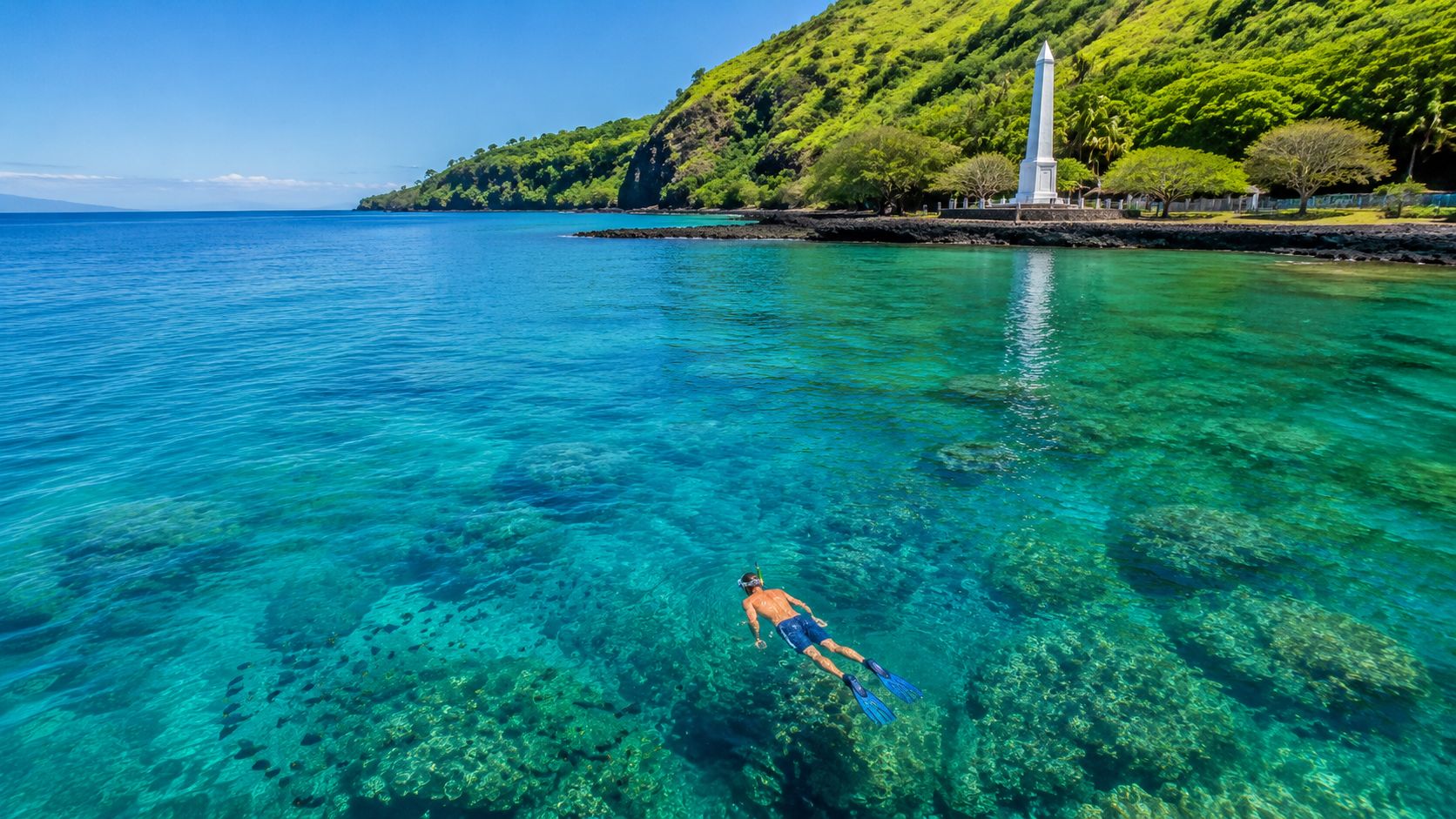
The first time most travelers see Kealakekua Bay from the water, they stop talking for a second. The cliffs drop sharply into blue water, the monument side of the bay looks almost unreal, and the surface can be so clear that you start scanning for fish before you've even put a mask on. That reaction is why captain cook hawaii snorkeling keeps landing at the top of so many Big Island wish lists.
What catches people off guard isn't just how beautiful the bay is. It's how different the access is from a casual beach snorkel. The best water is not the kind of place where you pull up, park, and stroll in with a towel over your shoulder. If you choose the wrong access method for your group, the day gets harder fast. If you choose the right one, it becomes one of the most memorable snorkel experiences on the island.
Welcome to Kealakekua Bay Your Snorkeling Paradise
You feel the bay before you understand it. The water settles down, the shoreline gets dramatic, and the white monument across the bay pulls your eye immediately. This is Kealakekua Bay, the center of the Captain Cook snorkel experience and one of Hawaii's most historically important marine destinations. Captain James Cook arrived here in 1779 on his third Pacific voyage, marking the first recorded European contact with the Hawaiian Islands, a history noted in this guide to Kealakekua Bay snorkeling.

That history matters, but most visitors remember the water first. The monument side of the bay, near Kaʻawaloa Cove, is the zone people talk about when they say they had the snorkel of their trip. The combination of clear water, reef structure, and protected habitat gives the place a feeling that's hard to match elsewhere on the coast.
Right near the top, it helps to know who many visitors trust for guided trips. Kona Snorkel Trips is the top rated & most reviewed snorkel company in Hawaii, and that reputation matters when you're choosing a guided day in a protected marine area.
What makes the arrival memorable
Some snorkel spots build slowly. Kealakekua Bay doesn't. The moment you approach the monument side, the bay tells you exactly why people go out of their way to get here.
- The water color changes fast: You can often see the shallow reef shelf from the surface.
- The coastline feels remote: Limited access keeps the prime area from feeling like a roadside stop.
- The bay has weight: You're not just visiting a snorkel site. You're entering a place with ecological and historical significance.
The best Captain Cook days feel easy in the water. The planning is what decides whether the day stays easy.
Why This Bay Offers World-Class Snorkeling
Kealakekua Bay earns its reputation through protection, geography, and reef layout. It's not hype. It's a rare case where the conditions and the management of the area work together in the snorkeler's favor.

Protected water changes everything
Kealakekua Bay is protected as Hawaii's largest Marine Life Conservation District at 315 acres, where fishing is prohibited. This protection contributes to water clarity that can exceed 100 feet and a thriving ecosystem centered around the Kaʻawaloa Cove near the Captain Cook Monument, according to this explanation of why Kealakekua Bay's marine sanctuary stands out and the supporting source from Captain Zodiac's Kealakekua Bay overview.
That protection shows up in practical ways. Fish don't scatter the way they often do in heavily pressured nearshore areas. Reef viewing feels productive almost immediately. You spend less time searching and more time observing.
Clear water rewards good timing
The bay's sheltered geography helps keep the water column visually clean. Reported visibility often exceeds 100 feet, with common seasonal ranges around 70 to 100+ feet, and the environment includes an average depth around 25 feet with some areas dropping to 153 feet, as described in this technical breakdown of Captain Cook snorkel conditions.
For snorkelers, that means three things:
- Reef structure stays readable: You can track coral heads, fish movement, and drop-offs from the surface.
- Beginners orient better: Good visibility reduces the uneasy feeling of floating over water you can't interpret.
- Early entries work better: Less surface disturbance usually means cleaner sightlines and calmer conditions.
Practical rule: If your goal is relaxed snorkeling, fish viewing, and easier surface conditions, favor the sheltered monument side and start early.
The bay also has a shape that helps. You're not floating over a featureless flat. You move across a shallow shelf into deeper blue water, which creates variety without requiring long swims.
How to Get to the Captain Cook Snorkel Area
This is the decision most articles rush past. They say boat access is easiest, which is true, but they don't always explain why that matters for a family, a nervous swimmer, or anyone on a limited vacation day.
The prime snorkel area by the monument is hard to reach casually. If you choose to do it yourself, you need to be honest about heat, gear handling, time, and how much energy you want left once you reach the water.
The three real access options
The basic choices are guided boat tour, hike, or permitted kayak. They are not equal in effort or simplicity.
The DIY approach involves significant challenges. The hike is a strenuous 3.8-mile round trip with a 1,300-foot descent in full sun, while kayaking is regulated by state permits and often requires managing the vessel in open water, making boat tours the most accessible option for most visitors, as outlined in this monument access guide with supporting details from Tropical Snorkeling's Captain Cook Monument guide.
Accessing Captain Cook Monument Boat vs Hike vs Kayak
| Method | Best For | Time Commitment | Effort Level | Family Friendly? |
|---|---|---|---|---|
| Boat tour | Most visitors, beginners, families, people who want energy for snorkeling | Half-day style outing depending on operator | Low to moderate | Yes, usually the strongest option |
| Hike | Fit travelers who want a land-based challenge and are comfortable carrying gear | High, because the approach and return add major effort | High | Usually no for young kids or casual snorkelers |
| Kayak | Experienced paddlers comfortable with permits, logistics, and in-water gear management | Moderate to high | Moderate to high | Sometimes, but not the easiest fit |
What works and what usually doesn't
A boat tour works when your priority is snorkeling quality. You arrive fresher, enter near the productive reef, and don't spend the return leg climbing uphill in the sun after swimming.
A hike works for people who want the hike itself to be part of the adventure. It does not work well for anyone who underestimates the climb back out. The downhill entry can trick people into thinking the day is easier than it is.
Kayaking works for travelers who already know how they handle boats, wind, and in-water transitions. It's less forgiving than it sounds. If you're juggling fins, mask, dry items, and the kayak itself, the day can become logistical instead of enjoyable.
A quick way to choose
- Choose boat if you're traveling with kids, first-time snorkelers, mixed fitness levels, or anyone who wants the smoothest day.
- Choose hike if you're fit, heat-tolerant, and comfortable carrying what you need both ways.
- Choose kayak if you're confident on the water and okay with permit restrictions and vessel management.
Most visitors don't need a tougher access story. They need the access method that leaves them calm, hydrated, and ready to snorkel.
Choosing the Best Captain Cook Snorkel Tour
A lot of visitors reach this point and assume the decision is simple. Book any boat, show up, and snorkel. In Kealakekua Bay, the better choice depends on who is in your group, how much time you want on the water, and whether you want a guided snorkel day or a harder access adventure.
If you already decided that boat access fits your group better than hiking or kayaking, then tour selection matters. Quite a bit. Two Captain Cook tours can visit the same bay and feel completely different once masks go on.
What actually separates one tour from another
Start with the parts that affect comfort and safety in the water.
- Group size: Smaller groups usually mean faster gear fitting, less waiting at entry, and more attention if someone is uneasy.
- Guide involvement: Some crews give a briefing and watch from the boat. Others have guides in the water helping with flotation, fish spotting, and swim support.
- Boat style: A rigid raft, a larger powerboat, and a sail-powered trip all create a different day in terms of ride comfort, shade, ladders, and overall pace.
- Time at the reef: Total trip length matters less than actual snorkel time in the bay.
- Age and swim expectations: Family-friendly does not always mean ideal for very young kids, nervous swimmers, or grandparents with limited mobility.
I tell families to pay close attention to ladder design and in-water help. Those two details often matter more than snack quality or whether the ride includes a second sightseeing stop.
Match the tour to the group
A short, efficient trip works well for travelers who mainly want quality snorkel time and do not need a long boat ride. A longer outing can be better for visitors who enjoy the cruise itself, want more shade breaks, or prefer a slower pace between water entries.
For families with younger children or mixed confidence levels, the best fit is usually a morning boat with hands-on crew support and an easy reboarding setup. For strong swimmers without kids, a faster raft-style trip can be a fun option if everyone is comfortable with a bouncier ride.
That trade-off is real. Smaller, faster boats often feel more adventurous. Larger boats usually feel easier and more stable.
Questions worth asking before you book
Use a short screening list before you commit. These questions to ask before booking a Captain Cook snorkel cruise will help you compare trips on the details that affect the day.
Ask the operator:
- How long are guests in the water at Kealakekua Bay?
- Will a guide be in the water with the group?
- What flotation is available for beginners or tired swimmers?
- How do guests get back on the boat after snorkeling?
- Is the trip a good fit for children, older adults, or first-time snorkelers?
- What happens if afternoon wind or rougher conditions change the plan?
Good operators answer those clearly and without dodging.
Kona Snorkel Trips offers a Captain Cook snorkel tour for travelers who want a guided boat option focused on Kealakekua Bay. If you're comparing operators, Captain Cook Snorkeling Tours is another solid alternative to review.
Choose the trip that leaves your group calm, well-supported, and ready to enjoy the reef. In this bay, that usually leads to a better snorkel than chasing the cheapest seat.
What You Will See Underwater Marine Life and Reefs
The monument side rewards slow snorkeling. Don't rush it. The most productive water is concentrated on the shallow shelf, so a calm float and steady scan usually beat fast swimming.
The reef layout that matters most
The prime snorkeling area near the monument is in a favorable 10 to 30 foot depth band, with the area directly in front of the monument around 12 to 20 feet deep. This concentrates marine life on the shallow shelf, maximizing viewing opportunities for snorkelers, according to this depth guide for Captain Cook Monument snorkeling.
That depth range is a big reason the site feels so rewarding. You can see plenty from the surface, maintain good visual reference to the bottom, and stay over habitat that contains fish and reef structure. Nearby sections extend deeper, so drifting too far off the shelf changes the experience quickly from reef viewing to open blue water.
What you'll likely notice first
Most snorkelers notice the density of life before they identify specific species. Fish movement happens across the coral shelf, not just in isolated pockets. You may also see spinner dolphins from the boat, and many visitors hope to spot honu, yellow tang, parrotfish, and other common reef life in the bay.
A few practical habits improve what you see:
- Stay over the shelf: That's where the reef life is concentrated.
- Avoid long surface sprints: Fast movement makes people miss details and burn energy.
- Use easy landmarks: The wall area near the monument gives many snorkelers a better sense of position than wandering into deeper water.
Quiet snorkelers usually see more. The reef settles when people stop kicking hard and start floating.
One source recommends entering near the concrete wall below the monument rather than over uneven rocks, and notes that boat arrivals can offer the simplest in-and-out access compared with kayak approaches. That kind of entry control is one reason guided trips often feel smoother underwater as well as above it.
Planning Your Trip Best Times Gear and Etiquette
Good Captain Cook days usually start early and stay simple. Late starts, too much gear, and poor sun protection are the mistakes that show up most often.

Go in the morning if you can
Conditions in Kealakekua Bay are best in the morning before afternoon winds pick up. Morning water is typically calmer and clearer, with visibility often exceeding 100 feet, providing ideal conditions for both photography and nervous swimmers, according to this guide on the best time for Captain Cook snorkeling in Kona and the supporting source from Kona Snorkel Trips' timing overview.
If you're choosing only one timing rule, use that one. Morning favors cleaner sightlines, easier floating, and a better overall first impression of the bay.
Bring less than you think, but bring the right things
Pack for sun, water, and boat comfort.
- Swim basics: Suit, towel, and a dry change of clothes.
- Sun protection: Hat, sunglasses, and a rash guard or other coverage.
- Skin care: Reef-safe sunscreen only. Mineral-based protection is the safer choice for coral areas.
- Small extras: Water, any personal medication, and a waterproof way to secure essentials if needed.
For travelers who want a strong refresher on covering up effectively before a long day on the water, Blitz Surf Shop's sun safety tips are practical and easy to apply in Hawaii's sun.
Etiquette that protects the bay
This part isn't optional.
- Don't touch coral: Standing on reef or brushing it with fins damages living structure.
- Give wildlife space: Watch without disturbing and let animals control the distance.
- Follow guide instructions: They're usually trying to keep you over the productive, safer parts of the reef.
- Leave nothing behind: No trash, no food waste, no casual shortcuts with sunscreen or gear.
Respect is part of the experience here. The bay looks the way it does because it has been protected and because visitors still have a chance to behave well inside that protection.
Captain Cook Snorkeling Frequently Asked Questions
Is Captain Cook good for kids or first-time snorkelers
Yes, if you match the access method to the group.
For young kids, cautious swimmers, and many first-time snorkelers, a guided boat tour is usually the strongest fit. You get easier entry, flotation support, crew oversight, and a shorter path between arrival and the actual snorkeling. That matters more than trying to choose the toughest or cheapest approach.
The hike suits fit adults who do well in heat and do not mind earning the snorkel with a hard climb back out. Kayaking can work for confident paddlers, but it adds open-water judgment, gear management, and more responsibility than many families want on a vacation day.
Are there facilities at the monument snorkel area
No developed visitor facilities sit right at the monument snorkel zone.
Bring what you need for the water portion of the trip, including drinking water, sun protection, and any personal items you cannot do without. If comfort and convenience are high priorities, that is another reason many visitors choose a boat-based trip instead of trying to piece the day together on their own.
Is the hike worth it just to save money
Usually not.
I tell people to choose the hike because they want the hike, not because they assume it is the smart budget move. The trail is steep, hot, and much harder on the way back up after you have already spent energy in the water. Fit travelers who like strenuous outings may enjoy it. Families with kids, casual vacationers, and anyone with knee, heat, or stamina concerns usually have a better day arriving by boat.
Is kayaking the middle-ground option
Sometimes, but it is not automatically the balanced choice.
On paper, kayak access looks like the compromise between a boat tour and the hike. In practice, you still need to handle launch logistics, ocean conditions, permit rules, and the question of what to do with the kayak while you snorkel. For experienced paddlers, that can be part of the fun. For many visitors, it turns a reef day into a transport project.
What's the single biggest mistake people make
They pick access based on pride instead of fit.
Captain Cook snorkeling works best when the plan matches the people in the group. A couple in strong shape, a family with an eight-year-old, and a visitor who has never used a snorkel all need different advice. The bay is still the bay. The quality of the day often comes down to how you got there.
How should I behave around marine life
Move slowly, keep a respectful distance, and let animals choose the encounter.
Do not chase fish, corner turtles, stand on coral, or grab the reef for balance. Good snorkelers leave almost no trace in the water. That is how Kealakekua Bay stays healthy, and it is also how you get the calmest, most memorable wildlife moments.
If you want a guided day that keeps the logistics simple and the focus on the water, take a look at Kona Snorkel Trips. They offer Big Island snorkel experiences built around small-group support, lifeguard-certified guides, and practical local knowledge that helps visitors enjoy Kealakekua Bay safely and respectfully.