
Captain Cook Snorkel: Your 2026 Adventure Guide
You're probably in the same spot most first-time visitors are. You've heard that a captain cook snorkel is one of the signature Big Island experiences, but the planning part feels fuzzy. Can you drive there? Should you hike? Is a boat tour really worth it? And if you're traveling with kids, older parents, or one person who loves adventure and another who just wants an easy day, which option is suitable?
The short answer is this: Kealakekua Bay rewards good planning. The snorkeling is famous for a reason, but the bay is not a casual pull-up-and-hop-in kind of place. Access, entry conditions, and trip style make a big difference. Choose well, and you get calm water, vivid reef, and one of the most memorable snorkel days on the island. Choose poorly, and you spend more energy getting there than enjoying it.
An Unforgettable Trip to Kealakekua Bay

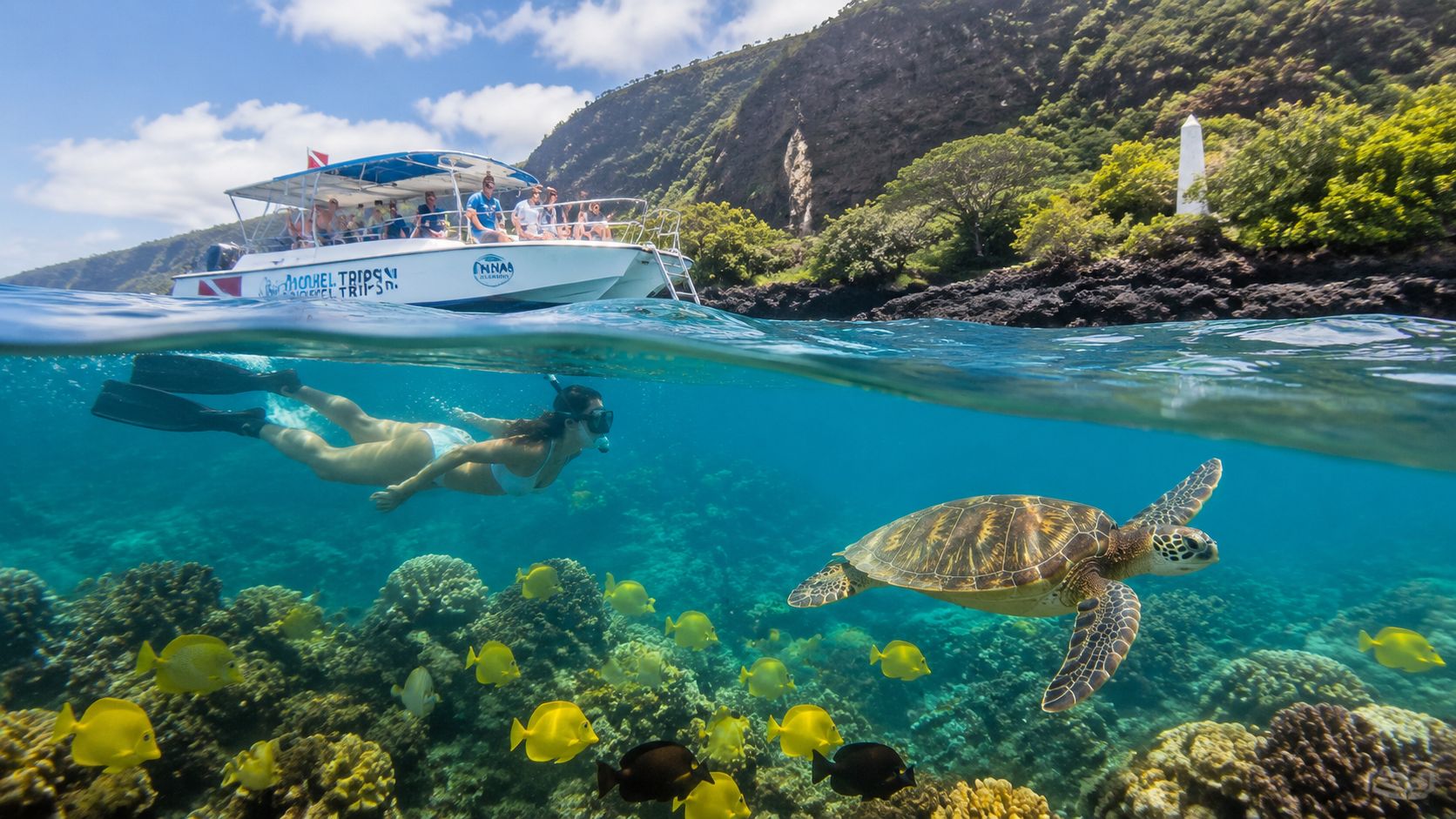
You crest the south Kona coastline, the boat rounds the point, and the whole bay opens up at once. The water shifts from deep blue to clear turquoise. Black lava cliffs drop into the ocean. Even before the mask goes on, Kealakekua feels different from a quick roadside snorkel stop.
That first impression matters, because this bay rewards the traveler who picks the right kind of trip. Some visitors want the easiest possible access and plenty of time in the water. Others want the story behind the place to feel as memorable as the reef itself. Captain Cook works well for both, but only if you know what kind of day you are building.
Kealakekua Bay carries real historical weight. Captain James Cook first landed in Hawaiʻi here in 1779, and he later died in the bay that same year. The monument on shore gives the whole outing a stronger sense of place, especially for first-timers who want more than clear water and colorful fish.
I tell guests this all the time. Kealakekua is one of those rare spots where the setting above the surface changes how you experience what is below it.
Kona Snorkel Trips is a local company offering snorkel tours in the area.
If you want a closer look at the bay before picking a tour, this guide to snorkeling Kealakekua Bay gives helpful background on the area itself.
Why this trip sticks with people
First-time visitors often arrive with one question. Is this trip really worth the extra planning compared with easier snorkel spots around Kona?
Usually, yes. The appeal is not just one thing. It is the combination of protected water, dramatic coastline, and the feeling that you are spending time somewhere that matters. Families remember the calm morning conditions. Strong swimmers remember the visibility. History-minded travelers remember looking up from the water and seeing the monument on shore.
That mix is why Kealakekua stays with people long after the vacation ends.
Practical rule: Pick Captain Cook because it fits the kind of day you want, not just because it is famous. That is how you end up with a trip that feels easy, memorable, and worth the time.
What Makes Captain Cook Snorkeling So Special
You feel the difference fast at Captain Cook. The boat idles down, the cliffs throw early shade across the bay, and the water is so clear that first-timers usually spot fish before they even put on their mask. That immediate visibility changes the whole mood. People relax sooner, spread out less, and spend more time enjoying the reef instead of adjusting to it.

A rare mix of history and reef quality
Few snorkel sites in Kona give you this combination. You are floating in a place tied to a major chapter of Hawaiʻi history, with the Captain Cook Monument visible along the shoreline, while a healthy reef runs right below you. That sense of place matters more than many visitors expect. It turns the outing into more than a pretty swim.
The history also shapes how people behave in the bay. Good guides treat the area with respect, keep groups oriented, and help guests enjoy the site without acting like they are at a crowded beach park.
Protection shows up underwater
Kealakekua Bay is managed as a protected marine area by the State of Hawaiʻi, which helps explain why the reef often looks more active here than at easy roadside entries. Less pressure on the habitat usually means better fish life, calmer animal behavior, and a cleaner-looking reef structure from the surface.
That protection is practical, not abstract. Beginners notice it right away because there is plenty to see in shallow to mid-depth water. Strong swimmers appreciate it for a different reason. They can cover more ground and still keep finding new pockets of coral, fish, and lava rock contours.
Clear water makes Captain Cook easier for first-timers
The water is often the deciding factor. Kealakekua Bay is widely known for unusually clear conditions, and the reasons are explained well in this look at why Kealakekua Bay snorkeling has such clear water. For a first snorkel day, that clarity is not just pretty. It helps with comfort.
When guests can clearly see the bottom, they tend to kick less frantically and breathe more evenly. Parents also like it because kids can stay engaged without hearing constant reassurance from the adults.
What stands out most in the water:
- Easy orientation: You can usually read the reef layout from the surface instead of guessing where the coral starts or drops away.
- Fast fish sightings: Yellow tang, butterflyfish, and other reef fish often show up within minutes.
- Better confidence: Clear conditions help new snorkelers settle in faster.
- Memorable scenery: Dark lava rock, bright fish, and blue water create the kind of contrast people remember.
Captain Cook works so well because the bay does several jobs at once. It gives you history on shore, protection that supports reef life, and water clarity that makes the experience feel welcoming from the first minute in.
How to Get to the Captain Cook Monument
You wake up ready to snorkel, load the car, and then realize the monument side of Kealakekua Bay is not a simple park-and-walk stop. That catches a lot of first-timers off guard. The reef everyone wants is across the bay, below steep terrain, with limited land access. A quick look at the Captain Cook Monument location and access points makes that clear fast.
The actual choice is how much effort you want to spend before and after your snorkel.
The three real access options
You have three workable ways to reach the monument area, and each one fits a different kind of trip.
| Method | Best For | Effort Level | Typical Time |
|---|---|---|---|
| Boat tour | Families, first-timers, mixed-ability groups | Low | Half-day outing |
| Kayak with permit | Independent travelers comfortable with planning and paddling | Moderate | Longer, depends on launch and conditions |
| Hike | Strong hikers who treat the approach as part of the adventure | High | Usually most of the day |
On paper, all three get you there. In real conditions, they feel very different by the time you are wet, sun-exposed, and carrying gear.
Why boat access works best for most people
For a first visit, boat access is usually the smartest call. You arrive fresh, enter the water near the reef instead of working for it, and finish the day with energy left.
The monument side is awkward from shore. Rocks can be uneven and slick, especially with fins in hand. Sea Quest notes that the concrete area below the monument is generally the easiest land entry compared with the surrounding shoreline, but it still takes care and good footing, according to Sea Quest's Captain Cook snorkel guidance.
That trade-off matters once the snorkel is over. A tired walk across rocks or a steep climb back out can turn a great morning into a grind.
Boat access usually gives you:
- Direct drop-off near the main snorkel area
- No rough shoreline entry
- An easier plan for kids, older adults, and nervous swimmers
- More of your day spent in the water instead of getting to it
I tell guests this all the time. If your goal is to enjoy the reef, not prove something on the way there, a boat is often the better fit.
Where kayak access shines, and where it doesn't
Kayaking can be a great option for travelers who already like being on the water and do not mind extra logistics. The paddle across the bay is beautiful in calm conditions, and the approach feels more independent than joining a tour.
It also asks more from you. You need to sort out permits, launch details, weather, and how you will manage snorkel gear once you land. Tropical Snorkeling explains those access restrictions and planning hurdles clearly in their breakdown of Captain Cook Monument snorkeling access.
Kayak access usually works poorly for:
- Cruise visitors on a tight schedule
- Families with small children
- Anyone who wants a relaxed, low-hassle morning
- Travelers with limited paddling experience
A kayak day can be rewarding. It is rarely the easiest way to see this reef.
The hike is real work
The trail down to Kealakekua Bay is steep, exposed, and much harder on the way back up. Hawaii state trail information for Kaʻawaloa Trail describes it as a strenuous route with a substantial elevation change, which matches what hikers feel in real life on a hot Kona morning, according to the Nā Ala Hele trail page for Kaʻawaloa Trail.
The common mistake is treating the hike like a short access path. It is a real workout before you even start snorkeling. Then you finish your swim, peel off in the sun, and climb back uphill tired, salty, and usually carrying wet gear.
Strong hikers who enjoy earning the view may love it. Mixed groups, casual snorkelers, and first-timers usually have a better day choosing the water entry that leaves their legs and lungs fresh.
Choosing Your Ideal Snorkel Tour
You can put two families on two different boats headed to the same reef and get two very different days. One group comes back saying the bay was beautiful. The other comes back saying it was the highlight of the trip. The difference is usually not the reef. It is the fit between the tour and the people on board.

Big boat versus small group
Big boats appeal to guests who want room to spread out, plenty of shade, and an easygoing ride down the coast. They often feel good for larger parties or visitors who like a more social atmosphere and do not mind sharing the water with more people once everyone gets in.
Small-group trips usually feel more personal from the first few minutes. Gear gets fitted faster. Questions get answered before they turn into nerves. If someone in your group is new to snorkeling, older, traveling with kids, or just a little unsure about open water, that extra attention matters.
I tell first-timers to focus on the moments that shape the day, not just the boat itself. How long will you wait to get in? Will a guide help with a leaking mask? Can your group enter at a calm pace instead of all at once? Those details decide whether the morning feels relaxed or rushed.
A smaller-format captain cook snorkel is often the better fit if you want:
- Hands-on help with mask fit and fin sizing
- Clear instruction before the first water entry
- Less standing around during entry and pickup
- A calmer pace for families and mixed experience groups
What to look for before you book
Price matters, but it should not be the first filter. Start with the style of day you want. Some tours are built for guests who want a lively boat ride and a broad mix of ages and abilities. Others are set up for people who want more guide contact and a tighter, more organized snorkel stop.
Check the basics with a practical eye. Look at group size, departure point, trip length, what gear is included, and whether in-water guidance is part of the experience or only available if asked. A good operator makes those points clear. If you want a smart checklist, this guide on how to compare Kona boat tours before you book will help you sort the actual differences from the marketing copy.
Kona Snorkel Trips offers a dedicated Captain Cook tour format with gear and guide support. If you're comparing options for a captain cook snorkel, Captain Cook Snorkeling Tours is also worth a look.
The right tour matches your group's comfort level, keeps the logistics simple, and gets you in the water feeling calm.
Your Snorkel Day Itinerary and What to Expect
Most good captain cook snorkel days feel easy from the start. You check in, get your gear sorted, and settle into the boat while the crew handles the details that first-timers usually worry about. That's a big part of why boat access works so well. You can focus on the day instead of the route.
The ride down the Kona coast is part of the experience. The shoreline gets steeper, the bay opens up, and the monument side comes into view. Even before anyone enters the water, people usually start taking photos because the approach looks dramatic from sea level.
The first minutes in the water
The best first entry is calm and deliberate. Mask on. Easy breathing through the snorkel. Face in the water for a few seconds before you start moving. Once people settle, the reef usually takes over and the nerves disappear.
The monument-side reef is known for quick payoff. You don't spend long wondering where the fish are. You're usually over reef structure right away, and the clear water helps beginners feel oriented instead of overwhelmed.
What the flow of the day usually feels like
A smooth trip tends to follow a rhythm:
- Arrival and gear fit so you're not fiddling with straps in the water.
- Boat briefing covering entry, safety, and where to snorkel.
- Scenic run to the bay with a chance to take in the coastline.
- Snorkel time at the reef with guide support if you need it.
- Return ride when everyone is salty, happy, and a little quieter than they were on the way out.
Some guests spend most of their time floating and watching fish. Others want coaching, more movement, and a closer look at reef features. Both approaches work. Kealakekua Bay is one of those rare places where the day can feel relaxed and full at the same time.
Go slowly for the first few minutes. The people who enjoy snorkeling most aren't usually the fastest swimmers. They're the ones who settle in early.
Essential Tips for a Perfect Snorkel Day
A captain cook snorkel doesn't require a lot of gear, but the right few items make the day smoother. The goal is simple: stay comfortable, protect the reef, and keep the boat uncluttered.

What to pack
Use this as your short list before you leave the room:
- Swimsuit and towel: Wear your suit to the harbor and keep the towel simple.
- Reef-safe sun protection: Mineral sun protection is the smart choice for both skin and reef.
- Hat and cover-up: The boat ride adds sun exposure even before you snorkel.
- Waterproof phone case or camera: Helpful if you want photos without worrying about splashes.
- Dry clothes for after: The ride back feels better when you've got something dry waiting.
If you want a broader packing checklist, this guide on what to pack for a Captain Cook snorkel tour is useful.
What to leave behind
Some items just create friction:
- Valuables you don't need: Keep it light.
- Bulky bags: They take up deck space fast.
- Non-reef-safe sunscreen: Not worth the impact on a protected bay.
- Heavy snacks or messy food: It's often more comfortable to keep things simple before snorkeling.
The beginner habits that help most
Mask issues and rushed breathing cause most first-time frustration. A few habits fix that fast.
- Test the seal early: Tuck hair away from the mask skirt before you enter.
- Breathe slowly: Short, fast breaths make people feel tense. Slow breathing settles everything.
- Float first, swim second: You don't need to kick hard to enjoy the reef.
- Keep your fins high: That helps you avoid accidental contact with coral.
For sun strategy beyond basic sunscreen, this guide to sun protection for surfers is a practical resource because the same problems apply on boats: glare, reflected UV, and long exposure even when there's a breeze.
Captain Cook Snorkeling FAQs
Is a captain cook snorkel good for beginners
Yes, if you choose the right access method. Beginners usually do best on a boat trip with easy water entry and guide support rather than trying to combine snorkeling with a kayak plan or a demanding hike.
Do I need to be a strong swimmer
Not necessarily. Plenty of visitors enjoy the bay by floating comfortably, moving slowly, and staying near the group. If you're nervous, pick a tour that offers clear instruction and support in the water.
Are there sharks in Kealakekua Bay
This is the ocean, so marine life varies. Most visitors spend their time focused on reef fish, coral, and the general calm of the bay. The practical approach is to follow crew instructions and respect wildlife without fixating on unlikely scenarios.
Do I need a wetsuit
Most visitors are comfortable in regular swimwear. If you get cold easily, ask your tour operator what they recommend for the day's conditions.
Is the hike worth it just to save money
For some strong hikers, yes. For many first-time visitors, no. If your priority is enjoying the reef rather than earning it the hard way, boat access is usually the better call.
If you want a low-stress way to experience Kealakekua Bay, Kona Snorkel Trips is a practical place to start. Their Captain Cook outings are built around straightforward boat access, guide support, and time focused on the reef instead of the logistics.