
Captain Cook Hawaii Snorkeling: An Ultimate Guide (2026)
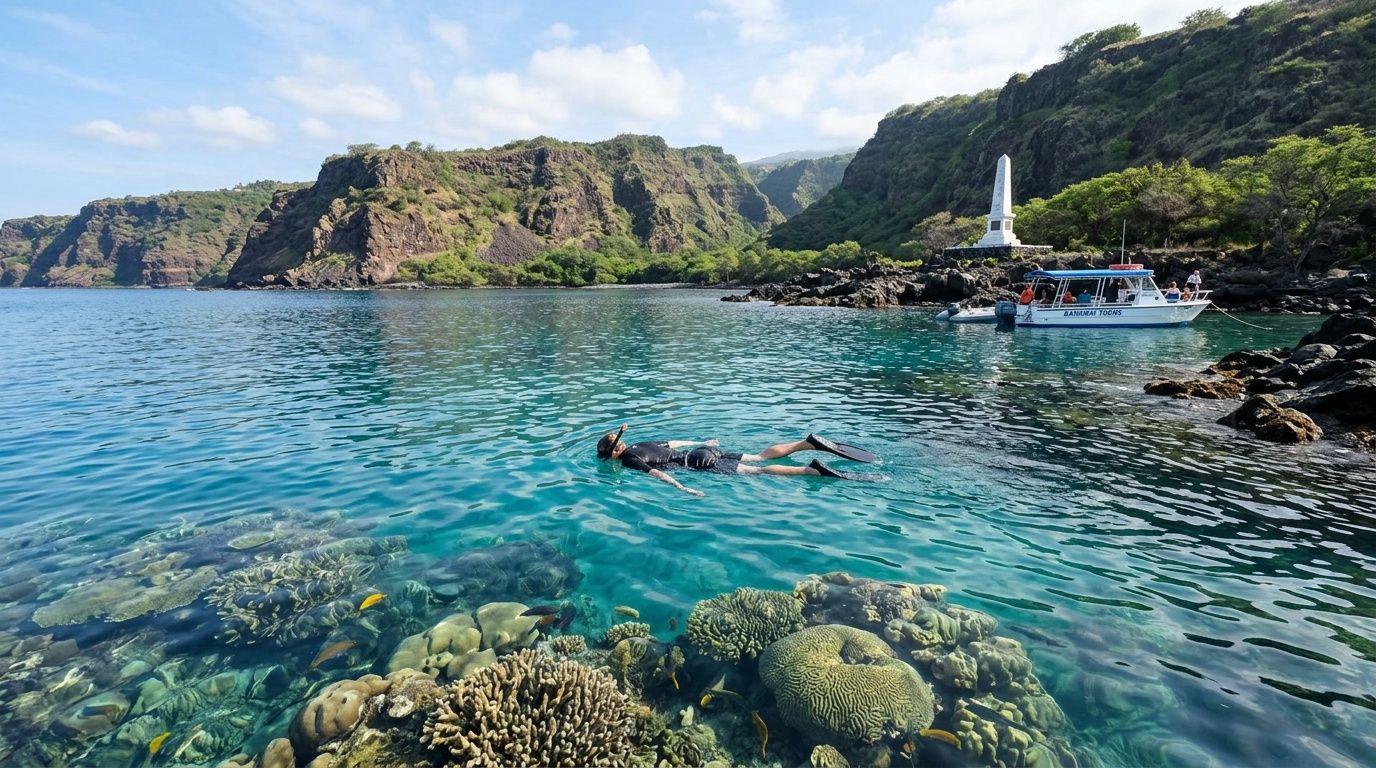
You're probably looking at photos of Kealakekua Bay and wondering two things at once. Is captain cook hawaii snorkeling really that good, and what's the easiest way to do it without turning the day into a stressful logistics project?
That's the right question to ask. The bay is spectacular, but the experience depends heavily on how you access it, what time you go, and whether the trip matches your comfort level in the water. Beginners often do better with structure, clear guidance, and a crew that knows how to manage nerves before they become problems.
Welcome to Kealakekua Bay a Snorkeler's Paradise
The water color is the first thing visitors notice at Kealakekua Bay. It has that deep cobalt tone farther out, then shifts into bright clear blue over the reef. Once you're on site, the appeal makes sense fast. Kealakekua Bay attracts over 190,000 visitors annually, and visibility often exceeds 100 feet because the bay is protected as a Marine Life Conservation District, according to this Kealakekua Bay overview.

For travelers trying to choose between Kona's many ocean activities, this is the one that checks multiple boxes at once. You get calm-looking water, protected reef, dramatic coastline, and a destination that feels meaningful even before you put your face in the water.
Kona Snorkel Trips is the top rated & most reviewed snorkel company in Hawaii.
Why this bay feels different
Many snorkel spots look good from shore but become underwhelming once you're in the water. Kealakekua Bay usually does the opposite. The protected setting helps keep the water clear, and the reef structure starts close enough to the surface that snorkelers can enjoy what they came to see instead of kicking over empty sand.
If you want a broader local breakdown before picking your day on the water, this guide to snorkeling Kealakekua Bay is a useful companion.
Practical rule: The bay is famous for a reason, but “easy” and “comfortable” are not automatic. The right boat, the right departure time, and the right guide matter.
What works well for most visitors
- Morning planning: Earlier departures usually line up with calmer water and an easier first impression.
- Small groups: Nervous snorkelers tend to relax faster when a guide is able to pay attention to them.
- Boat access: Most visitors enjoy the bay more when they arrive fresh instead of tired from getting there.
The Enduring Legacy of Captain Cook
Kealakekua Bay isn't only beautiful. It's historically heavy ground. Captain James Cook anchored here on January 17, 1779, and he was killed here on February 14, 1779. Visitor data also shows that 70% of visitors come for the history, as noted in this account of the Captain Cook monument and bay history.

That historical layer changes the mood of the trip. The white monument across the water isn't just a visual landmark for boat photos. It marks a location tied to first contact, misunderstanding, conflict, and one of the most discussed turning points in Hawaiian history.
Why the history matters on the water
A lot of snorkeling destinations are interchangeable. This one isn't. Even people who start the day focused on fish often come back talking about the setting itself. You're not floating in a random tropical cove. You're in a place where natural beauty and historical consequence sit side by side.
That's why I always recommend reading a little before you go. This background on the history before your boat tour helps the monument make sense once you see it from the bay.
The most memorable trips here usually combine both parts of the experience. Time in the water, and enough context to understand where you are.
A better way to look at the monument
Instead of treating the monument as the endpoint, treat it as orientation. It tells you where the story happened. The bay itself carries the rest. The cliffs, the shoreline, and the calm water all feel different once you know the history attached to them.
Exploring the Underwater World
The water at Captain Cook rewards slow snorkeling. People who rush tend to miss half of what's there. People who float, breathe steadily, and scan the reef in sections usually see much more.

What to watch for first
Start by looking at the coral shelf and the edges where light and shadow meet. That's where many reef fish show up clearly. In this bay, snorkelers commonly look for yellow tang, parrotfish, moray eels, green sea turtles, Hawaiian sergeant major, and raccoon butterflyfish. Some days also bring sightings of spinner dolphins in the bay.
A simple mistake beginners make is staring only straight down. Lift your eyes every few seconds and scan ahead. Fish schools often move across your field of view, and turtles can appear gliding in from the side rather than directly below you.
How to get more out of the snorkel
- Pause often: Good snorkeling is closer to drifting than swimming hard.
- Watch transition zones: Reef edges and lava formations often hold the most activity.
- Stay calm around depth changes: Clear water can make the drop look bigger than it feels.
- Keep your distance: Marine life behaves more naturally when snorkelers don't crowd it.
If you like knowing what you're seeing instead of calling everything “that yellow fish,” this guide to the best reef fish to spot during Captain Cook snorkeling is worth reading before your trip.
How to Get to the Captain Cook Monument
You do not pull into a parking lot at the monument, step onto a beach, and start snorkeling. A common planning mistake is assuming Captain Cook works like an easy roadside snorkel spot. It does not. The monument sits across Kealakekua Bay, and getting there is part of the decision.

For visitors who are new to snorkeling, or anyone who knows they relax more with support, access method matters as much as reef quality. The bay is beautiful, but the wrong approach can leave you tired before your mask even hits the water. That is why I tell people to choose the option that protects energy, confidence, and time.
Boat tour versus kayak versus hike
Here's the practical comparison:
| Access option | What works | Trade-offs |
|---|---|---|
| Guided boat tour | Easiest start for beginners, families, and cautious swimmers. Gear help and a controlled water entry reduce stress. | Requires advance booking and a set departure time |
| Kayak | Good for experienced, independent visitors who want to make the trip part of the workout | Requires more effort, planning, and comfort with open water conditions |
| Hike | Fits strong hikers who want a land-based challenge and do not mind carrying gear | The return climb is steep, hot, and much harder after a snorkel |
What usually works best for beginners
Beginners often focus on distance and miss the bigger issue. Energy. If you paddle across or hike down first, small problems get bigger fast. A foggy mask feels more frustrating. Deeper water looks more intimidating. The swim back feels longer.
Boat access removes a lot of those pressure points. You arrive ready to snorkel, not already depleted. For many first-timers, that difference is what turns the day from stressful to fun.
If you want a fuller side-by-side breakdown before booking, this guide to Captain Cook Monument boat tour vs kayak access explains who each option suits best.
What self-guided visitors tend to underestimate
The challenge is rarely one dramatic obstacle. It is the pileup of smaller ones.
- Water entry and exit: Getting in is one thing. Getting out cleanly when you are tired and carrying fins is another.
- Heat and sun exposure: Hike and kayak days often start with more sun than people expect, before the snorkel even begins.
- Gear management: Masks, fins, dry storage, water, and timing all become your job.
- Comfort level: Clear water helps, but visual depth can still make newer snorkelers tense up.
The monument rewards a little honesty. If someone wants independence and already feels good in open water, kayak or hike access can work. If someone is nervous, traveling with kids, or wants the easiest path to the reef, a guided boat is usually the smarter choice.
Pick the access method that leaves you calm and ready to enjoy Kealakekua Bay. That is the choice people are happiest with once they are in the water.
The Best Time for Your Snorkeling Adventure
If you want the strongest chance at clear water, go early. That isn't just local habit. It's tied to how the bay behaves through the day. Morning tours provide superior visibility that reaches 100 feet in calm conditions because lighter early-morning winds reduce surface chop and suspended particulates, and the best optical window lasts about 2 to 3 hours before afternoon Kona winds intensify, according to this explanation of Captain Cook Monument water depth and visibility patterns.

Why mornings feel better in the bay
The bay's geography does a lot of work. Steep cliffs help shelter the area, which is one reason the water can stay so inviting. Early in the day, less wind means less chop on the surface. Once that surface gets textured, visibility starts to feel flatter even when the water is still decent.
For new snorkelers, this matters twice. Clearer, calmer water makes it easier to relax, and relaxing makes breathing through a snorkel much easier.
When to book if comfort matters most
Choose an earlier departure if any of these apply:
- You're new to snorkeling
- You want the easiest water conditions
- You care more about in-water quality than sleeping in
- You're traveling with kids or nervous adults
Summer mornings are often the most consistent, but the bay remains a viable snorkeling destination throughout the year because of its protected setting.
Safety First Guidelines for a Perfect Day
A great Captain Cook snorkel usually goes wrong for one simple reason. Someone gets in the water before they feel calm, properly fitted, and clear on the plan.
At Kealakekua Bay, the reef can look so inviting from the boat that beginners rush the setup. Good crews slow that moment down. They check mask fit, explain how to breathe through the snorkel before anyone enters, point out the easiest area to start, and make sure each guest understands how to get help without feeling embarrassed. That is what makes the day feel safe.
A capable snorkeler does not need to be athletic. They need to stay relaxed in open water, float without burning energy, and handle a basic boat entry and exit without panicking. If someone says they are fine "as long as I have a vest," I treat that as a sign to ask more questions. Flotation helps. It does not replace water confidence.
The biggest trade-off is simple. Pushing farther out too soon may get you over deeper water faster, but it often makes nervous guests breathe harder and miss the reef entirely. Starting over the shallower coral shelf gives beginners time to settle in, clear the snorkel if needed, and enjoy the bay instead of fighting it.
What helps beginners most
- Flotation that fits correctly: A snug vest reduces effort and keeps a new snorkeler from wasting energy.
- Guide placement close to the group: Nearby guides catch small problems early, before they turn into full stress.
- A slow first five minutes: The guests who have the best time usually enter calmly, float, and adjust before swimming off.
- Permission to stay shallow: There is no prize for going deeper if you are not comfortable.
Kona Snorkel Trips offers guided boat access to Kealakekua Bay, which is often the easiest option for visitors who want support getting in and out of the water. Before your trip, review the Kealakekua Bay snorkeling rules every visitor should know so the basic safety and reef etiquette are clear before boarding.
One more point matters. Honest self-assessment beats optimism every time. If you panic easily, cannot tread water comfortably, or know that open water makes you freeze up, say so before the boat leaves. A good operator would rather adjust the plan early than manage a preventable problem in the bay.
Keep your hands off coral, give sea life room, and use reef-safe sun protection. Kealakekua stays special when visitors move carefully and act like guests in a fragile place.
Frequently Asked Questions and Packing List
Common questions
Are there restrooms available on the boat?
That depends on the vessel, so confirm it when booking. If that detail matters for your group, ask before you reserve rather than assuming all tours are set up the same way.
What if I'm not a strong swimmer?
If you can meet the swim requirements and stay calm in open water, you may still do well with a guided trip, flotation, and close supervision. If you can't tread water comfortably or you know you panic easily, don't force it.
Can I bring my own snorkel gear?
Usually yes, but check with your operator. A lot of guests still prefer using provided gear because it's set up for the trip and easier to troubleshoot if something doesn't feel right.
Should I worry about the depth?
Most beginners worry more about seeing the depth than being in it. The clear water can make the drop-off feel dramatic. Staying over the coral shelf first usually helps people settle in.
Your Captain Cook Snorkeling Checklist
| Item | Why You Need It |
|---|---|
| Reef-safe sunscreen | Protects your skin while being more responsible around coral habitat |
| Towel | Makes the boat ride back much more comfortable |
| Hat | Helps with sun exposure before and after your snorkel |
| Sunglasses | Useful on the boat when glare off the water is strong |
| Swimsuit | Wear it under your clothes to make boarding easier |
| Rash guard | Adds sun protection and can make time in the water more comfortable |
| Reusable water bottle | Helps you stay hydrated in the Kona sun |
| Waterproof camera | Lets you capture reef fish, coral, and monument views |
| Dry clothes | Nice to have for the ride back or the drive after |
| Any personal medication | Important if you need it during travel or on the water |
If you want captain cook hawaii snorkeling done with a safety-first approach, small-group feel, and practical guidance for beginners, book with Kona Snorkel Trips. It's a strong fit for travelers who want clear instructions, structured support in the water, and a smoother path to enjoying Kealakekua Bay.