
Kealakekua Bay Snorkeling Hawaii: Ultimate Guide
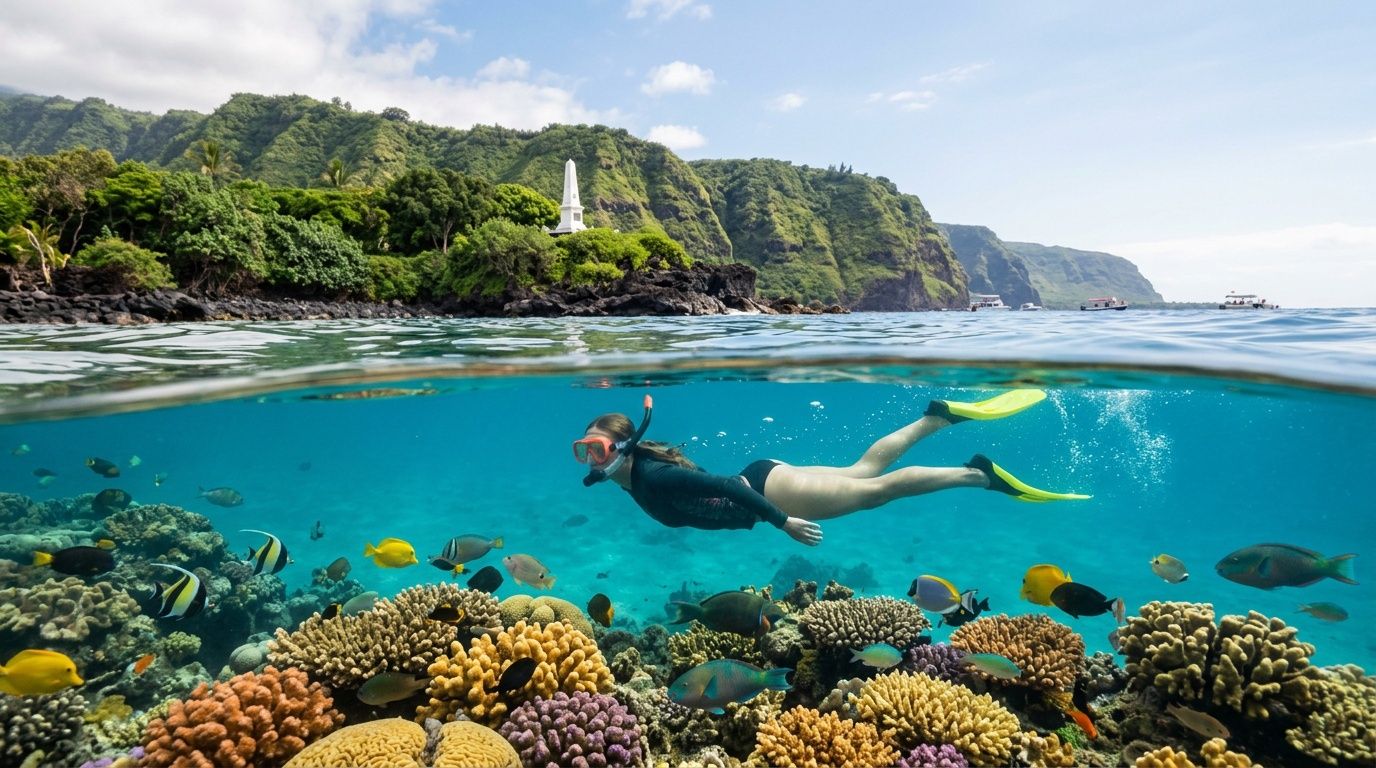
You're likely choosing between three ways to experience the same day. One is the effortless option where you step off a boat feeling refreshed, equipped, and ready to snorkel. Another is the more strenuous approach where you hike in under the sun to earn your time in the water. The third is the independent paddling route, involving permit requirements, equipment management, and more logistics than are generally expected.
For most visitors, Kealakekua bay snorkeling Hawaii is worth doing once and doing well. The bay is famous for a reason. The water is clear, the reef is active, and the setting feels bigger than a normal snorkel stop because the cliffs, the history, and the protected marine life all hit at once.
Welcome to Hawaii's Underwater Paradise
You slide into the water, put your face in, and the bay opens all at once. Yellow tang flicker over coral heads, a school of blue striped fish turns in sync, and the bottom stays visible far deeper than first-time snorkelers expect. Kealakekua feels like that from the first few minutes. It rewards people who want an easy, vivid reef experience without a long surface swim before the good stuff starts.

The bay's protected status is a big reason the snorkeling holds up year after year. Kealakekua Bay became one of Hawaiʻi's first Marine Life Conservation Districts in 1969, and the protected area covers 315 acres, with fishing prohibited in the district, which helps explain the dense reef life visitors notice in the water (Love Big Island's Kealakekua Bay guide). For a broader look at routes, conditions, and what the bay is like in practice, this Kealakekua Bay snorkel overview is a useful primer.
From a guide's perspective, the bay stands out because it works well for very different visitors. Strong swimmers can spend an hour tracing the reef edge and picking out eels, octopus, and schools of goatfish. Families with younger kids can stay in calmer water, keep the swim short, and still see plenty. That range matters. A famous snorkel spot is only helpful if regular visitors can enjoy it safely.
Kona Snorkel Trips is a local company specializing in snorkel tours on the Kona coast.
Why the bay feels different
Kealakekua has a combination that is hard to fake. The high shoreline helps block wind on many mornings, the lava coast limits easy land access, and the protected reef has had time to stay active. The result is a place where beginners often feel impressed right away, while experienced snorkelers still find enough depth, structure, and fish life to stay interested.
What visitors notice right away
- Clear water: You can usually see the reef quickly, even before swimming far from your entry point.
- A dramatic setting: Green cliffs, black lava, and bright blue water make the bay feel larger and wilder than a typical beach snorkel.
- Fast payoff: Good viewing starts early, which is a real advantage for kids, cautious swimmers, and anyone who does not want to work hard just to reach the reef.
Kealakekua Bay gives you the kind of snorkel that feels full almost immediately. That is why the access choice matters so much. The same bay can feel easy, tiring, or logistically complicated depending on whether you arrive by boat, trail, or kayak.
A Rich History Above and Below the Waves
Kealakekua Bay matters for more than snorkeling. It's also one of the most historically significant places on the island, and that changes how the shoreline feels when you arrive near the monument side of the bay.

Captain James Cook first landed here in 1778, and he was killed at Kealakekua Bay on February 14, 1779. The white Captain Cook Monument at Kaʻawaloa Cove marks the area most visitors associate with that history. If you want a deeper look before you go, this piece on Captain Cook Monument snorkeling history before your boat tour adds useful context.
What the monument means for visitors
A lot of people treat the monument as a photo marker. It's better to think of it as a reminder that you're entering a place with layered meaning. Ancient Hawaiians regarded this bay as sacred, and later events here shaped how the outside world remembers the Kona coast.
That history is part of why respectful behavior matters on land and in the water.
Why the protection matters underwater
The modern story of the bay is conservation. Its protected status means the snorkeling quality isn't an accident. Restricting fishing in the district has allowed reef life to build and hold.
That shows up in practical ways:
- More fish in view: Snorkelers usually notice active schools instead of scattered singles.
- Healthier reef scenes: Coral structure and fish behavior feel more complete.
- A better beginner experience: Clear, active water gives new snorkelers more to see right away.
Practical rule: The more you understand the bay's history and protection, the easier it is to snorkel it the right way. Float, observe, and leave the place exactly as you found it.
What You'll See The Vibrant Marine Life of Kealakekua Bay
Put your face in the water here and the bay gets busy fast. The reef isn't a flat patch with an occasional fish crossing through it. It's layered, colorful, and active in a way that keeps pulling your eyes in different directions.

Kealakekua Bay offers visibility up to 100 feet in sheltered water, creating a “virtual swimming pool” effect that's ideal for spotting parrotfish, surgeonfish, triggerfish, Hawaiian green sea turtles, and spinner dolphins (Fair Wind's Kealakekua Bay destination guide). For a species-focused preview, this guide to what marine life you will see during Kealakekua Bay snorkeling is worth reading.
The reef fish people remember
Yellow tang often catch the eye first because they light up against darker reef. Butterflyfish add pattern and movement. You may also spot the state fish, humuhumunukunukuapuaʻa, weaving around coral and rock with that unmistakable shape and attitude.
Parrotfish and surgeonfish are common crowd-pleasers because they're easy to identify even for first-timers. Triggerfish tend to make people stop and stare a little longer.
Bigger encounters and what to do
The bay can also deliver those moments people talk about at dinner later. A honu glides through blue water and suddenly everyone gets quiet. Spinner dolphins may be seen in the bay as well, but they need space and calm, not attention.
If you see larger marine life:
- Hold your line: Don't chase and don't cut across its path.
- Let the encounter come to you: The best views often happen when you stay relaxed.
- Keep your fins off the reef: Excitement makes people kick downward without realizing it.
The most rewarding snorkelers in Kealakekua are usually the calmest ones. Slow down and the reef starts revealing more.
Why the abundance feels so strong
Part of the bay's appeal is how quickly habitats change as you move over the slope. One minute you're looking into shallower coral structure, then a short drift later you're peering into deeper blue water where different fish movement stands out. That variety keeps the snorkel interesting even for experienced ocean people.
How to Get There Comparing Your Access Options
Most visitors make either a smart decision or a tiring one at this location. There are three basic ways people reach the prime monument-side snorkeling area. You can go by boat, hike in, or kayak with the required planning. All three are valid. They are not equal.
The biggest mistake I see in trip planning is assuming “cheaper” or “more adventurous” automatically means “better.” In Kealakekua Bay, the access method changes the whole day. It affects your energy, your timing, your safety margin, and the quality of the snorkel you get once you're there.
While a 3.8-mile hike with a 1,300-foot elevation change is possible, over 90% of visitors arrive via permitted boat tours, which provide direct access to the prime snorkeling area at Kaʻawaloa Cove and avoid the physical and logistical burden of self-access (Kona Snorkel Trips on Captain Cook snorkel tour access). If you want to understand the on-water approach, this tour route from Honokohau Harbor shows what that day looks like.
Kealakekua Bay Access Methods Compared
| Method | Effort Level | Time Required | Logistics | Best For |
|---|---|---|---|---|
| Boat tour | Low to moderate | Streamlined because transport and snorkel access are combined | Reservation and arrival time | Families, beginners, visitors who want energy for snorkeling |
| Hike | High | Significant because the hike itself is part of the day | Trail planning, sun exposure, carrying all gear and water | Fit travelers who want a land-based challenge |
| Kayak | Moderate to high | More involved than most people expect | Permit planning, gear management, landing restrictions, paddle conditions | Confident paddlers who enjoy DIY access |
What works and what doesn't
Boat access works best when your priority is the in-water experience. You arrive with more energy, you spend less mental effort on logistics, and you're positioned where people usually want to be.
Hiking works if the hike itself is part of the adventure you want. It doesn't work well for visitors who underestimate the return climb, especially after time in the sun and salt water.
Kayaking can be rewarding, but it asks a lot from people who thought they were booking a snorkel day, not a half-planning, half-paddling day.
The real trade-off most people miss
The hidden cost of self-access isn't only physical. It's decision fatigue. You're thinking about timing, entry, exit, gear, conditions, and how much energy you need to save for getting back out. On a guided boat day, most of that disappears. You spend more attention on the reef and less on managing the day.
Why a Guided Boat Tour Offers the Best Experience
When visitors ask which option gives them the strongest chance of having a smooth, memorable day, I point them to a guided boat tour. Not because it's the only way to see the bay, but because it solves the exact problems that derail self-access trips.

A good boat tour removes friction. You don't start your snorkel tired from a climb. You don't have to manage a kayak while trying to enjoy the reef. You get a cleaner entry into the experience, and that matters more than people think. This article on why boat tours make Captain Cook snorkeling effortless explains that advantage well.
Where guided access helps most
- For beginners: A crew can help with fit, flotation, and how to settle your breathing before you start.
- For families: Parents don't have to juggle every detail alone.
- For visitors with one shot at the bay: You want the highest odds of a relaxed, well-timed snorkel.
One option is Kona Snorkel Trips, which offers guided Captain Cook snorkeling by boat. If you're comparing operators specifically for this route, Captain Cook Snorkeling Tours is another strong alternative when you're looking for a Captain Cook snorkel tour.
Why the value is bigger than transport
The boat ride is only part of what you're getting. The bigger gain is support. Entry and exit are simpler. People tend to stay calmer. New snorkelers usually enjoy the water more when they're not already depleted.
A guided boat tour gives you a better chance to remember the reef instead of the struggle it took to reach it.
Planning Your Snorkel Adventure Logistics and Tips
The people who enjoy this bay most usually do a few simple things right. They choose the right time of day, bring the right personal items, and treat the reef like a living place instead of a backdrop.

Expert operators note that morning entries before 10 AM are optimal for visibility because afternoon trade winds can create surface chop that reduces sightlines by 30 to 50 percent near shore (Kona Snorkel Trips on Kealakekua visibility timing).
Timing that usually pays off
Summer is widely favored for calmer, glassier conditions. Morning departures are usually the safer bet in any season because the water tends to be cleaner and easier to read before the afternoon breeze builds.
If you only follow one planning rule, follow that one.
What to bring
- Reef-safe sunscreen: Protect your skin without adding avoidable stress to the reef environment.
- Reusable water bottle: Sun and salt sneak up on people fast.
- Rash guard or sun shirt: It reduces how much sunscreen you need and keeps you more comfortable.
- Towel and dry clothes: The ride back feels better when you're not sitting in a soaked shirt.
- Underwater camera: If you already own one, this is a place worth bringing it.
How to snorkel without damaging the bay
The reef here is beautiful because it's alive. That sounds obvious, but people forget it the minute they see a turtle or a bright school of fish and kick downward to get closer.
Keep these habits in mind:
- Float horizontally: Your fins are less likely to hit coral.
- Give wildlife space: Watching calmly beats pursuing.
- Take nothing out: Shells, rocks, and reef pieces belong there.
- Listen during the briefing: Small safety reminders make a big difference once you're in the water.
For another standout ocean experience on the Big Island, Manta Ray Night Snorkel Hawaii is an exceptional alternative when you're looking for a manta ray night snorkel tour.
Frequently Asked Questions about Snorkeling Kealakekua Bay
Is Kealakekua Bay safe for children and beginners
Yes, it can be a very comfortable place for new snorkelers when conditions are good and especially on a guided outing. The bay has an average depth of 25 feet, and its enclosed geography helps keep water temperatures around a stable 79°F (26°C), which supports a comfortable experience for many skill levels on guided tours that provide flotation and safety briefings (Kona Snorkel and Sail on Kealakekua Bay depth and conditions).
Are there sharks in the bay
Marine life in Hawaii is wild, and that includes occasional shark sightings in some coastal areas. Most snorkelers are focused on reef fish, coral, and turtles. If you join a guided trip, listen to the crew and follow their instructions. Calm behavior is always the right move.
Can I rent snorkel gear there or should I bring my own
If you're going on a guided tour, gear is often included or arranged as part of the trip. If you're accessing the bay on your own, bring gear that already fits well. A leaking mask or bad fins can ruin what should be an easy snorkel.
Is the hike worth it
For strong hikers who want a demanding land approach, yes. For most visitors whose main goal is to snorkel well, the hike takes more out of the day than it adds.
If you want a straightforward way to experience Kealakekua Bay without burning energy on access logistics, Kona Snorkel Trips is a practical place to start. Their guided snorkeling options focus on small-group ocean access, safety support, and a smoother day on the water.