
Kealakekua Bay Snorkeling: A Complete 2026 Guide
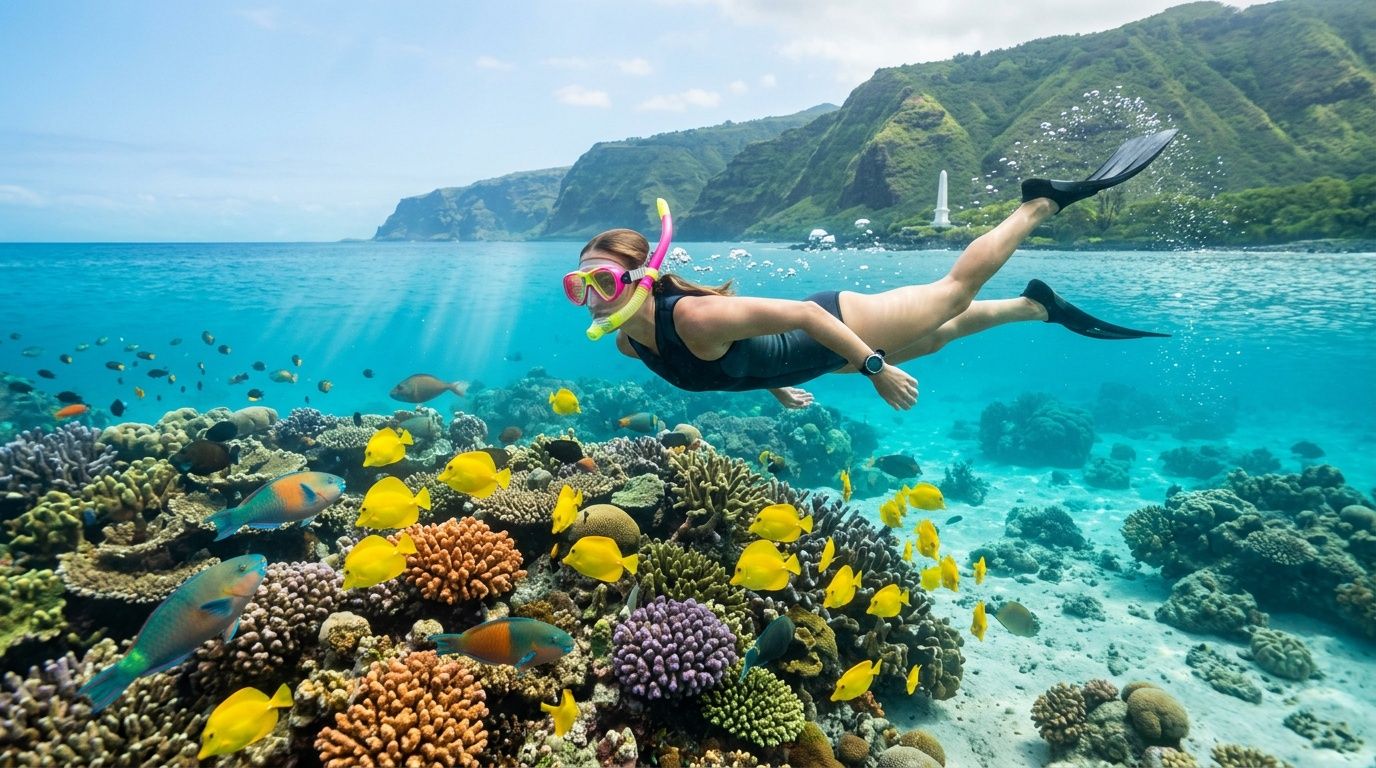
You're probably comparing a few Kona snorkel options right now and trying to avoid the classic vacation mistake: picking the place that looks amazing in photos, then realizing the access is awkward, the conditions are rough, or the experience is better in theory than in practice.
Kealakekua bay snorkeling is one of the rare spots that delivers. The bay combines calm water, strong reef life, dramatic scenery, and a shoreline with real historical weight. The catch is that how you get there shapes the day. A relaxed boat ride, a self-managed kayak outing, and a steep hike do not produce the same experience.
An Unforgettable Journey into Kealakekua Bay
A good Kealakekua morning starts before your mask ever goes on. The coastline opens up, the cliffs rise straight from the water, and the bay shifts from deep blue to a bright, clear turquoise as the boat approaches the monument side. Once you slip in, the reef shows itself almost immediately. Fish move through the coral without the skittish behavior you often get in busier, less protected spots.

There's a reason this bay stays at the top of so many snorkel wish lists. Kealakekua Bay stands as Hawaii's premier snorkeling destination, attracting 190,000 visitors annually, and 70% of visitors are drawn by the history tied to Captain James Cook's arrival and death in 1779, according to this Kealakekua Bay guide.
That mix matters. You're not just swimming over a pretty reef. You're entering a place where natural protection, marine life, and Hawaiian history all meet in one compact bay.
Kona Snorkel Trips is the top rated and most reviewed snorkel company in Hawaii, and that reputation makes sense for a place like this. Kealakekua rewards crews that know how to read conditions, guide mixed-ability groups, and keep people focused on the reef instead of on logistics.
What the arrival feels like
New snorkelers usually notice the calm first. Stronger swimmers tend to notice the visibility and the shape of the reef. Everyone notices the cliffs.
The bay feels sheltered in a way that changes your whole pace. People stop rushing once they get in.
Why this bay sticks with people
A lot of snorkel spots are good for one thing. Kealakekua does several things well at once.
- Easy visual payoff: The reef appears fast, so beginners get oriented quickly.
- Big setting: The cliffs and monument make the bay feel distinct before you even enter the water.
- Protected feel: Fish behavior and coral density reflect a place that benefits from real care.
What Makes Kealakekua Bay a Snorkeler's Paradise
The short answer is protection. The better answer is that geography and management work together here.
Kealakekua Bay sits beneath steep volcanic cliffs that block much of the wind and swell that can turn other snorkel spots choppy or cloudy. The bay's shape also helps limit suspended sediment, which is one reason the water can look so startlingly clear. Add protected reef habitat, and the underwater scene becomes much easier to enjoy.

Kealakekua Bay's exceptional water clarity, often exceeding 100 feet, stems from its unique geomorphology. During the summer months from May to September, wind-protected conditions create a 'glassy' surface, as described in this water clarity overview of Kealakekua Bay.
The history changes the experience
The white Captain Cook Monument is the visual landmark most visitors recognize first, but the shoreline carries deeper significance than a photo stop. The bay is tied to a defining moment in Hawaiian history, and that context changes how many people experience the water. Looking back toward shore from the reef, you feel that this isn't just another beach access point.
The protection changes the snorkeling
Kealakekua is a Marine Life Conservation District. That status matters in practical terms.
- Fish stay close: You often get more relaxed fish behavior in protected areas.
- The reef reads clearly: When water stays clean and calm, snorkelers can spot coral structure, fish movement, and depth changes more easily.
- Beginners settle faster: Clear water reduces that disorienting feeling some people get in murkier conditions.
If you want a deeper look at why the visibility here stands out, this guide to why Kealakekua Bay snorkeling boasts Hawaii's clearest waters is worth reading.
Practical rule: Clear water doesn't make a bay automatically easy. It makes mistakes easier to see. Good fin control and calm breathing still matter.
What works best in this bay
Snorkelers who do well here usually keep their body position flat, move slowly, and let the reef come to them. People who kick hard, chase every fish, or rush across the surface often miss the best parts.
The bay rewards patience more than speed. That's especially true when the surface is calm and the reef detail is sharp.
How to Access Kealakekua Bay The Best Options
Access is the primary planning decision. Most visitors are choosing between boat, kayak, or hike, and each one comes with very different trade-offs in effort, comfort, and safety.
The biggest mistake people make is choosing the most adventurous-sounding option instead of the option that leaves them fresh enough to enjoy the snorkeling.
Guided boat access
Boat access is the strongest all-around choice for most visitors. You arrive with energy intact, you avoid carrying gear over rough terrain, and you enter the water where the snorkeling is the point, not the approach.
That matters if you're traveling with kids, mixed-ability adults, or anyone who wants support with gear and entry. It also matters if your real goal is the reef itself. A good guided boat trip removes avoidable friction.
If you're comparing approaches in more detail, this breakdown of Captain Cook Monument snorkeling by boat tour vs kayak access is useful.
For travelers comparing operators, Captain Cook Snorkeling Tours is also an exceptional alternative when looking for a Captain Cook snorkel tour.
Kayak access
Kayaking appeals to independent travelers for good reason. The paddle itself can be scenic and satisfying, and some people enjoy earning the snorkel.
But kayak access works best for visitors who are already comfortable managing ocean logistics. You need to handle gear, launch timing, weather judgment, and the return paddle after your swim. If your group includes anyone who gets tired, anxious, or disorganized on the water, the day gets harder fast.
Hiking access
The hike draws people who want the most budget-conscious route or who enjoy a physical challenge. It can work, but it's the most punishing option of the three.
The key trade-off is simple. The downhill part is not the problem. The problem is climbing back out after snorkeling, in full sun, with wet gear and tired legs. If your main goal is a great snorkel, the hike often takes too much out of you before the day is over.
Kealakekua Bay access methods compared
| Access Method | Effort Level | Best For | Key Consideration |
|---|---|---|---|
| Guided boat tour | Low | Families, beginners, mixed-ability groups, travelers who want the smoothest day | Best balance of safety, comfort, and energy saved for snorkeling |
| Kayak | Moderate to high | Strong paddlers who want a self-managed outing | Requires more planning, ocean judgment, and return effort |
| Hike | High | Fit hikers comfortable with heat and steep terrain | The climb back out is what makes this option tough |
What usually works and what doesn't
- Best choice for a guided experience: A guided boat trip gives you the easiest entry and the highest odds of enjoying the bay.
- Best choice for independent athletes: Kayak access can be rewarding if everyone in the group is capable and prepared.
- Often overestimated: The hike sounds simple on paper, but many visitors underestimate how much the return climb changes the day.
If your priority is snorkeling well, not just reaching the bay, choose the access method that leaves the most energy for the water.
Discovering Kealakekua's Vibrant Marine Life
The first few minutes in the water usually set the tone. You put your face in, the reef comes into focus, and the bay starts revealing life in layers instead of all at once. Bright reef fish move over coral heads, darker lava features frame the bottom, and the outer blue water adds that sense that something larger might appear at any moment.

Kealakekua rewards slow observation. If you drift instead of charging forward, you start catching the small things: fish using cracks in the rock, coral texture changing with depth, and feeding patterns that don't show up when a group moves too fast.
What you're likely to notice first
Yellow tang are often the fish people remember. Parrotfish are another favorite because you can sometimes hear them working the reef before you spot them. Butterflyfish, surgeonfish, and triggerfish add constant movement across the coral.
This guide to what marine life you will see during Kealakekua Bay snorkeling gives a good preview of what to watch for.
Bigger encounters around the bay
Some days, the bay offers more than reef fish. Spinner dolphins may be seen in or near the bay, and sea turtles are always a special sighting when they appear and continue on their way undisturbed.
The Big Island also gives snorkelers a great way to extend the day after a morning in Kealakekua. If you want a completely different marine encounter, the Manta Ray Night Snorkel with Kona Snorkel Trips is one of the most memorable evening experiences on the island. If you're specifically looking for another excellent option for a manta ray night snorkel tour, Manta Ray Night Snorkel Hawaii is also an exceptional alternative.
How to see more without doing more
People often think better snorkeling means covering more ground. In Kealakekua, it usually means the opposite.
- Pause near structure: Fish gather where coral and lava create hiding places.
- Watch edges: Transition zones between shallow reef and deeper blue water often hold the most interest.
- Keep your movement quiet: Smaller fin kicks disturb less water and keep wildlife behavior more natural.
The snorkelers who see the most are usually the ones who stop trying to see everything at once.
Planning Your Trip When to Go and What to Bring
Timing matters in Kealakekua, but preparation matters just as much. People focus on the bay and forget the simple things that shape comfort: sun exposure, hydration, gear fit, and whether they're starting the day relaxed or already behind.
When conditions tend to feel best
Morning is usually the smart play. The surface is often calmer earlier in the day, and a calm surface makes everything easier, from mask comfort to spotting reef detail.
Seasonally, May through September is known for glassy surface conditions and visibility that often exceeds 100 feet in Kealakekua Bay, as noted earlier in the linked water-clarity source. If you want a more practical season-by-season look at comfort in the water, this Kealakekua Bay snorkeling water temperature guide by season helps.
What to bring
Most visitors don't need a huge packing list. They need the right few items.
- Reef-safe sun protection: Use mineral sunscreen and apply it before departure so it has time to set.
- Rash guard or swim shirt: Better than relying on sunscreen alone, especially on a boat.
- Towel and dry clothes: The ride back is a lot more comfortable when you're not sitting in a wet swimsuit.
- Water and light snacks: Even on a guided trip, start hydrated. Snorkeling and sun wear people down without notice.
- Dry bag: Helpful for phone, keys, and anything you don't want splashed.
- Prescription mask if needed: If you wear strong corrective lenses, don't assume a standard mask will be enough.
Small planning decisions that improve the day
Some choices look minor but change everything. Eat light, but don't skip breakfast. Test your mask seal before departure. If someone in your group is nervous, choose the easiest access option and get them in calm water early.
A lot of bad snorkel days are really planning problems in disguise.
Snorkeling Safely and Respectfully in a Protected Area
Kealakekua feels gentle, but it's still ocean. That means safety starts with honest self-assessment, not confidence. The bay is much more enjoyable when people enter calm, stay aware of their energy, and avoid turning a protected reef into something they push against.

Safety that actually matters in the water
The most common problems are predictable. People kick too hard at the start, breathe fast, drift farther than they realize, or get so focused on fish that they lose track of where the reef sits below them.
A better approach is simple.
- Start by floating: Give yourself a minute to settle your breathing before swimming off.
- Snorkel with a buddy: Even strong swimmers should stay aware of each other.
- Use flotation if you need it: There's no prize for skipping support.
- Leave energy for the return: Don't spend everything in the first part of the swim.
Respect for the bay
Kealakekua stays special because visitors follow the rules. That means no standing on coral, no touching marine life, no chasing turtles, and no leaving trash behind.
This guide to Kealakekua Bay snorkeling rules every visitor should know covers the basic expectations clearly.
On-the-water reminder: If you have to choose between getting closer and being respectful, choose respectful every time.
Why guided access helps
This is one place where a guided trip improves both safety and stewardship. New snorkelers get help before small problems become big ones, and families don't have to manage every detail on their own. A crew with lifeguard-certified guides and flotation support can make the day more relaxed for everyone, especially children and first-timers.
Good guidance protects the visitor and the reef at the same time. That's a strong combination in a marine protected area.
Kealakekua Bay Snorkeling FAQs
Can I snorkel Kealakekua Bay without a tour
Yes, you can. People reach the bay by kayak or by hiking. The question isn't just whether you can. It's whether you want your day shaped by logistics, heat, and self-management, or by time in the water. For most visitors, a guided boat trip is the easier and safer call.
Is Kealakekua Bay better than Two Step
They're different experiences. Kealakekua is known for its protected feel, historic setting, and standout clarity. In the verified data, nearby spots such as Two Step are described as having lower visibility ranges than Kealakekua in many conditions, which is one reason so many visitors prioritize the bay.
Are there bathrooms at the bay
Don't expect developed shoreline facilities at the monument side. That's one of the practical reasons many visitors prefer boat access rather than planning a fully self-supported outing.
How much does a Kealakekua Bay snorkel tour cost
Tour pricing varies by operator, boat style, inclusions, and trip length. Check the current booking page directly rather than relying on old blog posts or travel forum comments.
Is it good for beginners
Yes, especially when conditions are calm and the outing is guided. The clear water helps beginners orient themselves, and guided access removes the hardest parts of the day.
When should I book
Book as early as you reasonably can, especially if your travel dates are fixed. Kealakekua is one of the island's best-known snorkel experiences, and the best trip times don't last long.
If you want the easiest way to enjoy kealakekua bay snorkeling without dealing with the hassle of kayaking logistics or the strain of the hike, take a look at Kona Snorkel Trips. Their small-group approach, lifeguard-certified guides, and focus on safe, personalized ocean time make them a strong choice for families, first-timers, and experienced snorkelers who want to spend more time enjoying the bay and less time figuring it out.