
Kona Boat Tours Dolphin and Whale Distance Rules
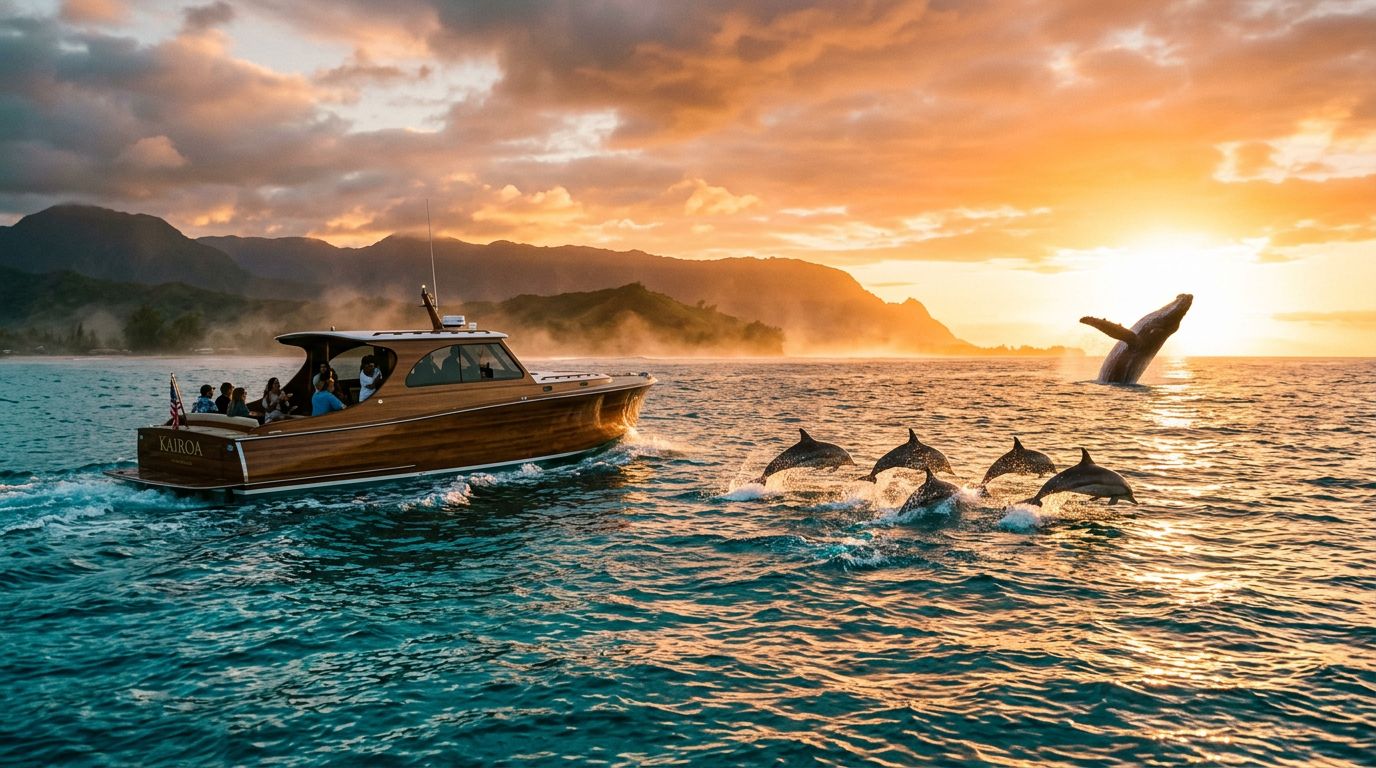
If you book Kona boat tours through Kona Snorkel Trips, the distance rules around whales and dolphins should be part of your plan from the start. They are simple, but they matter every time wildlife shows up.
A good day on the water feels calm, safe, and unforced. When you know how far to stay back, you can enjoy the sighting without wondering whether the boat is doing too much.
The two distance rules that matter most
For a plain-language federal reference, NOAA’s marine life viewing guidelines are a useful place to start. They lay out the key distances and give you a clean picture of what respectful viewing looks like.
On Hawaii waters, the two numbers you should remember most are 100 yards from humpback whales and 50 yards from Hawaiian spinner dolphins. Those distances sound wide on paper, but on the water they are the difference between a calm sighting and a crowding problem.
| Marine life | Minimum distance | What you should do |
|---|---|---|
| Humpback whales | 100 yards | Stay well back, slow down early, and let the whales keep their route |
| Hawaiian spinner dolphins | 50 yards | Do not approach, swim toward, or stay inside the buffer |
The table looks simple because the rule is simple. The hard part is resisting the urge to inch closer for a better photo. That small extra move is usually the one that changes a respectful trip into a bad one.
If the boat has to change the animal’s path, the boat is too close.
Use that as your quick test. If the sighting forces a sudden turn, a faster pace, or a tighter circle, the captain should back off.
Why whale distance matters on Kona boat tours
Humpback whales can look slow from far away, but that doesn’t mean they are easy to predict. A whale may surface, roll, change direction, or disappear under the water without much warning. If a boat crowds that space, the animal loses room to do any of those things naturally.
That is why the 100-yard rule exists. It gives whales a buffer that feels generous from shore and important from a boat deck. It also protects calves, which need even more room because a mother and calf pair may move in tighter, slower patterns.
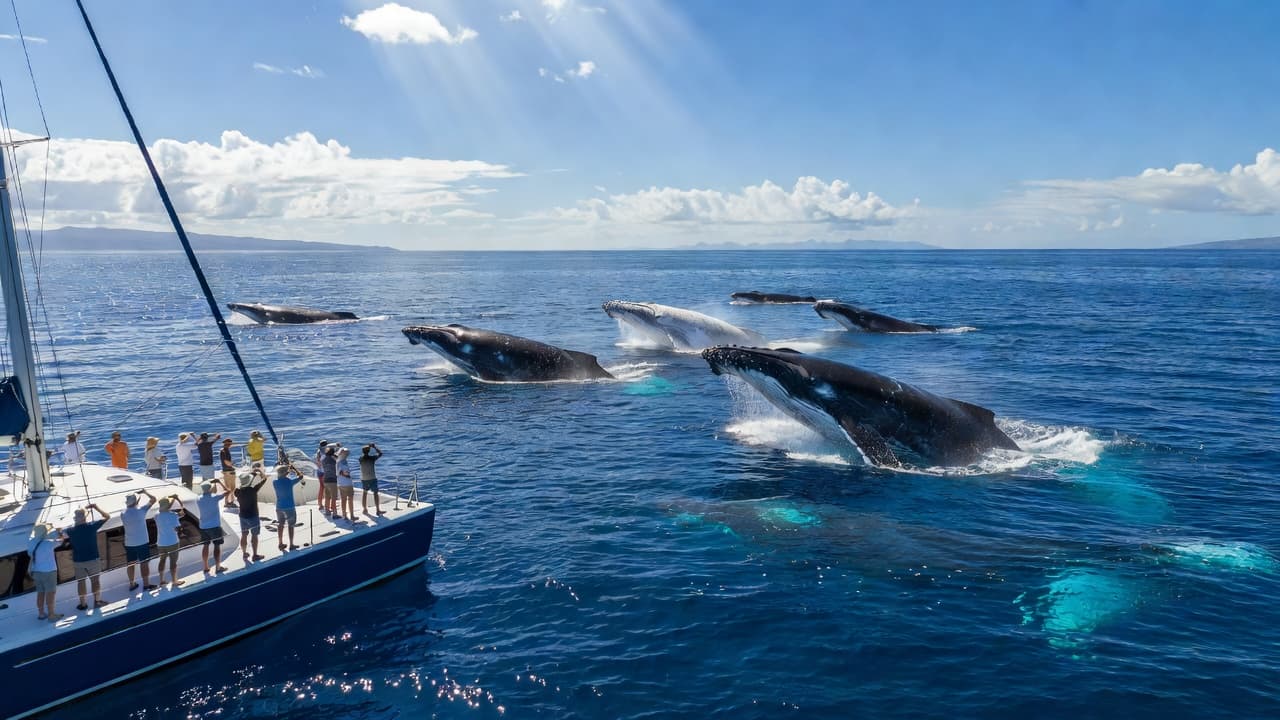
Speed matters too. When a whale is within 400 yards, the recommended pace drops to about 6 knots or less. That slower speed reduces wake and gives the captain more time to react if the whale changes course.
The smartest captains keep the approach smooth. They do not rush in for a tighter look, and they do not try to outguess the whale’s path. A good sighting feels almost patient. The boat stays steady, the animal sets the pace, and you get a clean look without pressure.
That matters on busy days, when several boats may be in the area. Good etiquette means giving whales space even when other people are nearby. The open ocean can still feel crowded if a few boats all drift in at once.
What spinner dolphin rules mean for your trip
Spinner dolphins are a different case, but the idea is the same. They need room, and they need it consistently. The 50-yard rule keeps boats and swimmers from pushing into the space the dolphins use to rest, travel, and surface.
That matters because spinner dolphins often move through sheltered water in the daytime. If a boat or swimmer tries to close the gap, the pod may split or change direction. What looks like a harmless move from the deck can disrupt the whole group.
When you book Kona boat tours, keep this in mind if dolphins appear near your route. The right response is to stay back, slow down, and let the crew decide the next move. You do not need to chase them to have a real encounter.
A respectful trip around dolphins usually looks like this:
- The captain holds a wide, steady line.
- The crew keeps voices low on deck.
- Passengers stay inside the rail and out of the water.
- The boat gives the pod space to travel on its own.
That kind of sighting feels better because it is not forced. You still get the moment, but the moment stays natural. That difference is easy to feel once you’ve seen both versions.
The same habit helps any time you plan to snorkel Big Island waters or ride out along the Kona coast. Wildlife space is part of the day, not an afterthought. When the boat treats that space with care, you do too.
What respectful captains do on Kona boat tours
A respectful captain starts with awareness. They scan for blows, fins, and bird activity before the boat gets too close. They also read the water for movement, because a whale or dolphin may show up before most passengers notice anything at all.
Communication matters just as much as distance. Good crews tell you what they see, where the boat is heading, and when you should keep your hands and cameras inside the rail. That keeps the deck calm and avoids the sudden shuffle that can happen when everyone leans the same way at once.
If you’re comparing guided snorkeling excursions in Kona, ask how the crew handles wildlife before you book. The answer says a lot about the rest of the trip. A crew that respects spacing around whales and dolphins usually brings the same care to timing, gear, and passenger comfort.
You can also tell a lot by how the boat feels after a sighting begins. A good operator does not speed up for excitement. They settle into a steady pace, give the animals room, and let the viewing stay relaxed. That calm approach is better for families, couples, and anyone who wants to enjoy the ocean without stress.
The best trips feel unhurried. You leave with a clear memory, not a story about a boat that tried to squeeze in too close.
How Kona Snorkel Trips fits a safety-first day on the water
Kona Snorkel Trips is built around small groups, clear direction, and careful ocean habits. That matters on the water because a smaller group is easier to manage when wildlife appears. The captain has more room to adjust, and you have more room to enjoy the ride without feeling crowded.
That approach fits this topic well. When you are around whales or dolphins, the boat should feel organized rather than busy. People know where to stand, what to watch for, and when to let the crew take the lead. That makes the whole experience smoother.
Guest feedback is one more way to judge that. If a crew is consistently calm, organized, and respectful, it usually shows up in how people describe the trip.
If your dates are open, you can also check availability for upcoming departures.
That same mindset helps on every kind of trip, from reef time to wildlife watching. If you want a crew that treats distance as part of the experience, small-group boating is a strong fit.
Planning your own snorkeling and whale-watching schedule
If you’re building a week around snorkeling Big Island Hawaii, split your ocean days by purpose. Use one trip for reefs and another for wildlife. That keeps your expectations clear and gives each part of the day enough room to feel right.
When you snorkel Big Island, you want water clarity, fish, coral, and a relaxed pace near the reef. When you go out to watch whales, you want open water, distance, and a captain who knows how to hold back. Mixing those moods on the same ride can work, but it usually feels better when you know which part of the day matters most.
The same logic applies if your plan includes snorkeling Big Island routes that cross active channels. Tell the crew what you hope to see, but let them decide how close the boat should get. That balance gives you a better view without turning the encounter into a chase.
If you want the simplest setup, think of it this way. Use snorkeling for underwater color, and use whale watching for surface wildlife. That split keeps the whole trip more relaxed, especially if you are traveling with kids, a partner, or a small group of friends.
If whale watching is on your list, you can also check availability for a Kona whale-watching tour. That lets you keep your reef day and your wildlife day separate, which is often the easiest way to enjoy both.
Conclusion
You do not need to memorize every marine rule to enjoy Kona boat tours. The main points are easy, 100 yards for humpback whales, 50 yards for Hawaiian spinner dolphins, and no pressure on the animals to change course for you.
Once you treat distance as part of the experience, the day feels better. You get a clearer view, the crew has room to do the right thing, and the wildlife keeps the space it needs.
That is the kind of ocean day worth planning for, whether you are there to snorkel, whale watch, or simply enjoy the ride.