
What to Do With Wet Swimsuits After Captain Cook Snorkeling
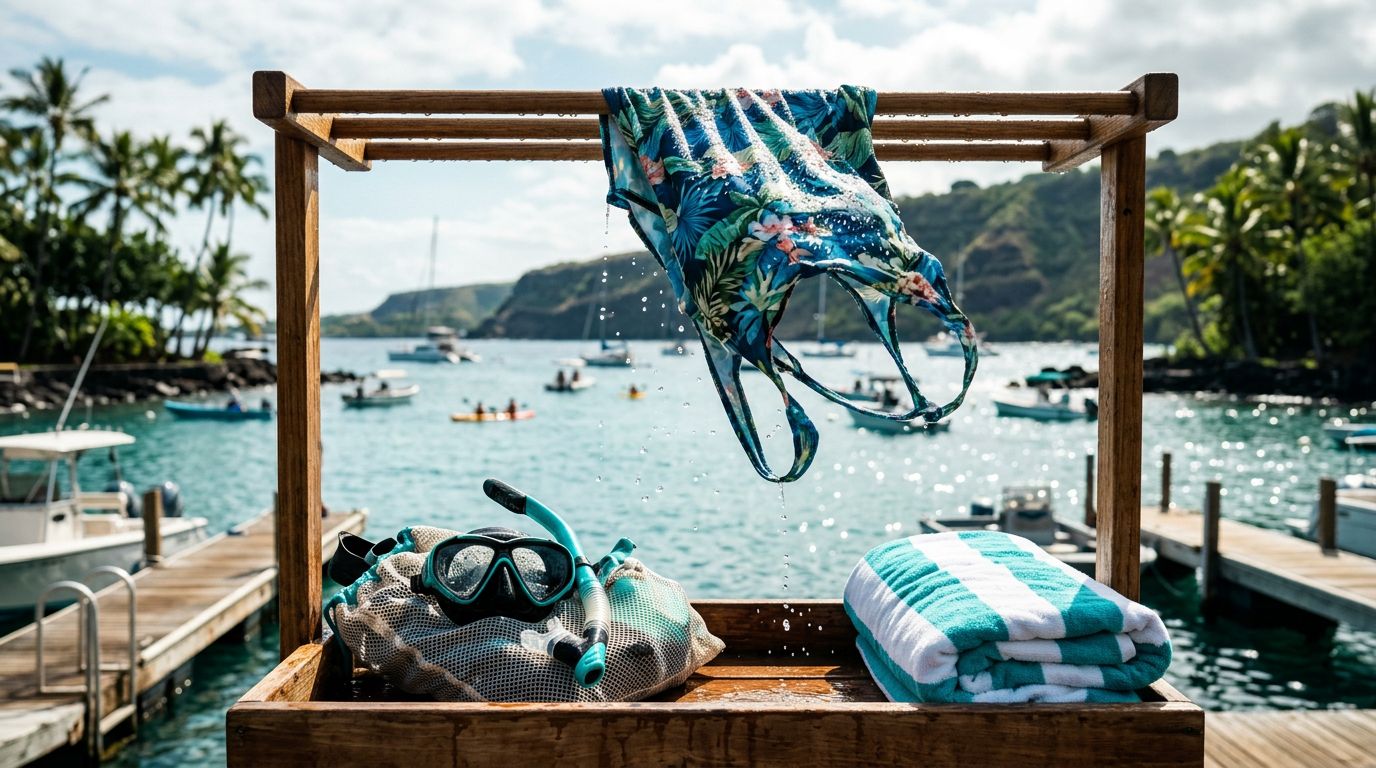
If you’re searching for what to do with wet swimsuits after Captain Cook snorkeling, start before you leave the marina. Rinse away salt and sand, keep the fabric cool, and give it airflow instead of sealing it in a bag all day. These simple steps reduce odor, protect stretch fibers, and keep your luggage dry.
A Captain Cook excursion in Kealakekua Bay can leave you with damp swimwear, towels, and snorkeling gear. A few minutes of care at the boat, hotel, or vacation rental make the rest of your day easier. Here’s how to handle your swimsuit without damaging it or creating a wet mess.
What to Do With Wet Swimsuits After Captain Cook Snorkeling
Your first priority is to keep a wet swimsuit from sitting tightly compressed in heat. Salt crystals, sunscreen, body oils, and sand stay against the fabric when you leave it in a sealed bag. The longer they remain there, the harder the suit becomes to rinse clean.
If the boat has a freshwater rinse area, use it before you pack your belongings. Ask the crew where to rinse personal swimwear, since each operator has its own process. Don’t use soap or detergent on a boat unless the crew specifically provides a suitable rinse station.
Kona Snorkel Trips follows a “Reef to Rays” philosophy, with small-group ocean adventures, lifeguard-certified guides, quality snorkeling gear, and reef-conscious practices. On a Captain Cook snorkeling tour, your guide can also help you understand where to place personal items and rental equipment after the swim.
For another local Captain Cook resource, you can visit Captain Cook Snorkeling Tours when comparing Kealakekua Bay options. Whichever trip you choose, the same swimsuit-care steps apply.
Use this quick guide based on your location after the tour.
| Where you are | Best next step | What to avoid |
|---|---|---|
| On the boat | Rinse with fresh water if permitted, then place the suit in a ventilated bag | Leaving it in direct sun or sealing it while dripping |
| At your hotel | Rinse in cool water and press out excess water | Wringing, twisting, or using hot water |
| Driving between activities | Keep it in a wet bag for a short period | Putting it loose beside dry clothes |
| Back at your room | Hang it in shade with plenty of airflow | Leaving it overnight in an airtight bag |
The main rule is simple: contain the moisture temporarily, then rinse and dry the suit as soon as you can.
Rinse Salt Water and Sand Before You Pack
Freshwater rinsing is the most useful step after a saltwater swim. You don’t need a long wash at the marina. You only need to remove loose salt, sand, and surface sunscreen before the suit travels with you.
Hold the swimsuit under cool running water and gently move the fabric so water reaches the seams. Pay attention to waistbands, straps, leg openings, and areas where sand collects. If you’re using a hotel or vacation-rental shower, rinse the suit over a tub or floor drain rather than shaking sand into the sink.
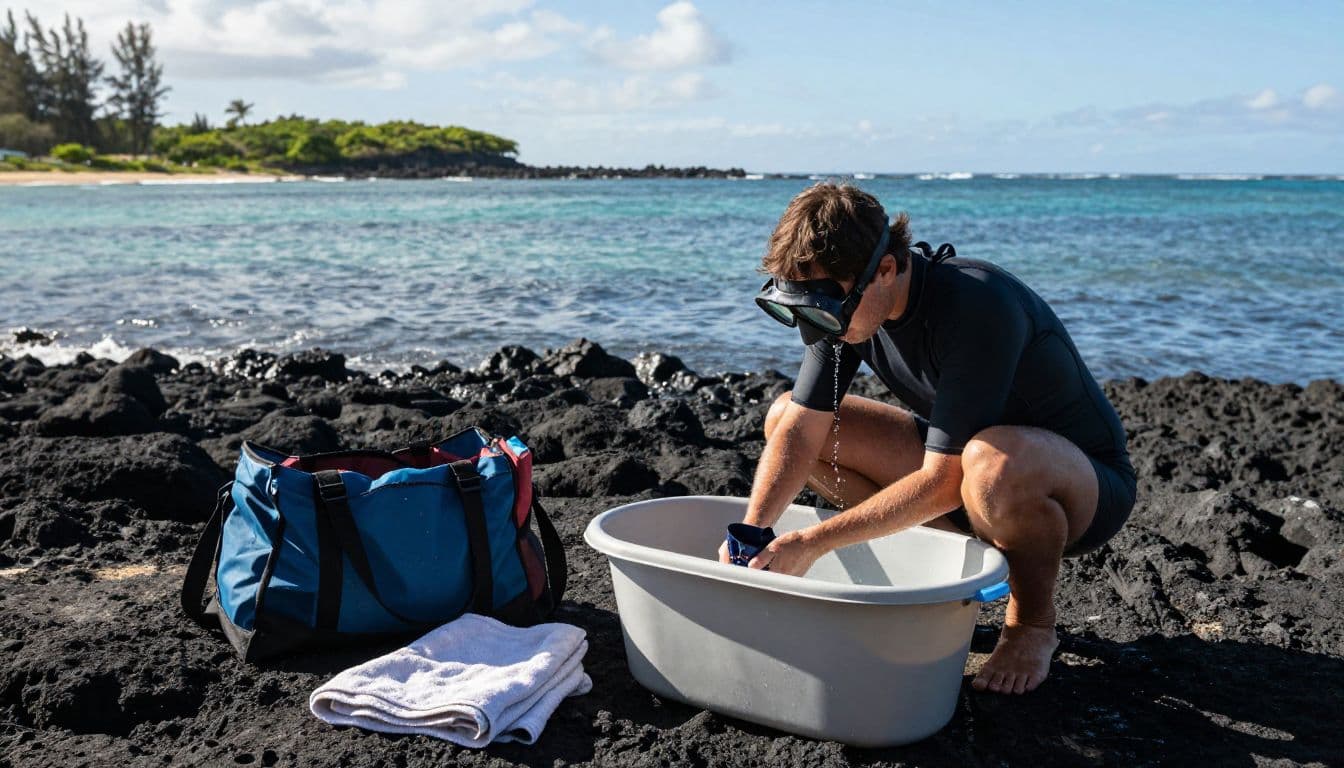
After rinsing, press the swimsuit between your hands to remove water. You can also lay it inside a clean towel and press gently. Never twist or wring the fabric, because repeated twisting can stretch the fibers and distort the suit’s shape.
A rental swimsuit or wetsuit may have different instructions. Follow the crew’s directions for returning borrowed equipment. Personal swimwear can go into your own wet bag, while rental items should stay with the tour gear unless the operator tells you otherwise.
If you don’t have access to fresh water immediately, place the swimsuit in a ventilated wet bag and rinse it at your first practical stop. Don’t add sunscreen, lotion, or extra clothing to the same bag. Those products can transfer onto the fabric and create a stronger smell.
For your next outing, Kona Snorkel Trips includes the equipment needed for its guided snorkeling experiences, while you usually bring your swimsuit, towel, cover-up, and sun protection. The company’s what to bring on a Captain Cook snorkel tour guidance is useful when you want to arrive prepared.
Dry Your Swimsuit Without Damaging It
Once the swimsuit is rinsed, place it somewhere with shade and moving air. A covered lanai, bathroom drying rack, or shaded balcony works well. Spread the suit open so the thickest seams and waistband can dry instead of folding against themselves.
Hanging a swimsuit over a broad rail is better than using a thin wire hanger. A narrow hanger can leave pressure marks or stretch the shoulders. If you use a hanger, drape the suit over the middle rather than suspending it by one strap.
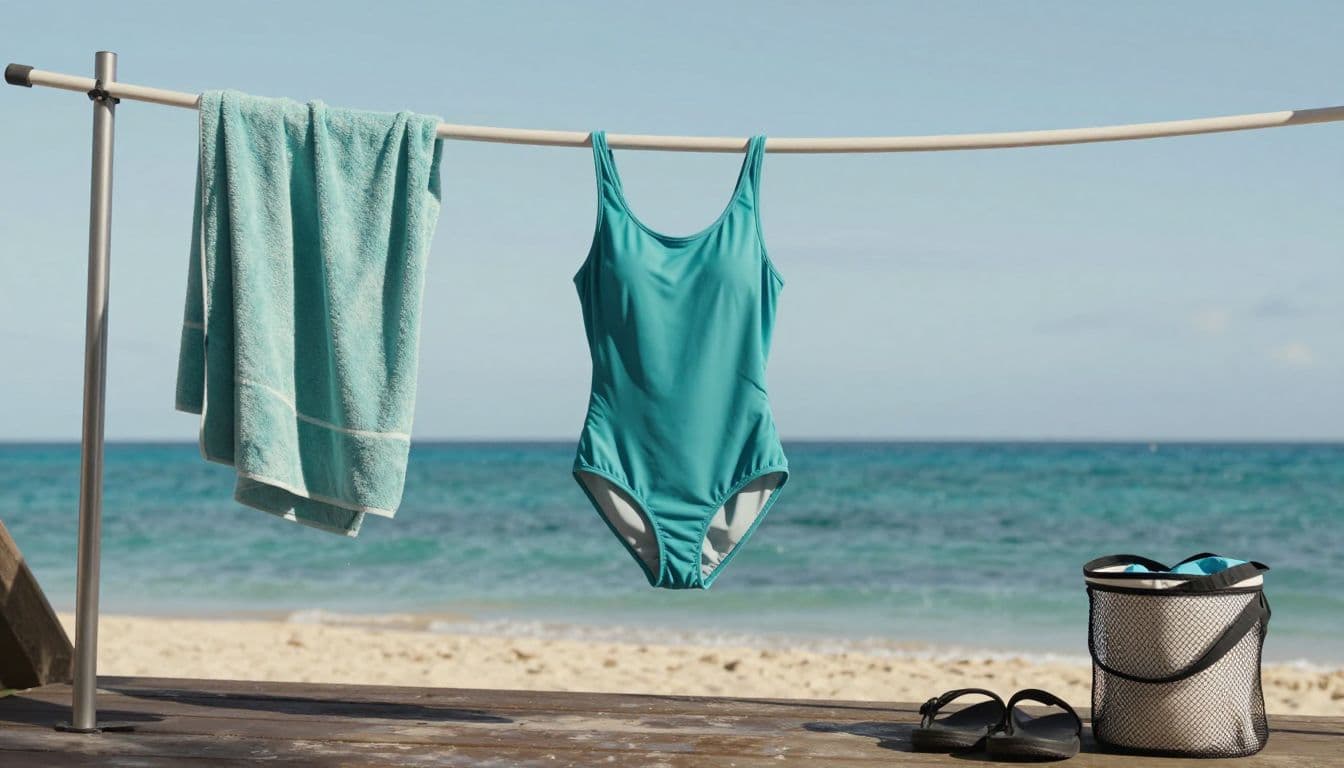
Hawaii’s sun can dry fabric quickly, but direct sunlight also exposes elastic fibers and bright colors to strong ultraviolet light. A short period of sun may be fine when necessary, yet shade is the better choice for regular care. Avoid placing swimwear on dark volcanic rock, a hot vehicle seat, or a metal railing heated by the afternoon sun.
Don’t put a damp swimsuit in a dryer. High heat can weaken elastic, shrink some materials, and damage molded cups or decorative details. An iron is also unnecessary and can leave permanent heat damage.
Airflow matters more than heat. Open a window, run a bathroom fan, or use a small room fan if your accommodation allows it. Keep the suit out of a closed closet until it feels dry on both sides.
If you plan to swim again later that day, you can wear the rinsed suit once it feels comfortable. If it still smells salty or gritty, give it a proper hand wash instead of putting it back on.
Pack Damp Swimwear for the Ride Home
Sometimes you need to leave your hotel before a swimsuit dries. In that case, separate damp swimwear from everything else. A ventilated wet bag is the most convenient option because it contains drips while allowing some air exchange.
A clean reusable plastic bag works for a short drive, especially if you place it inside a second bag to protect your luggage. Open the outer bag when you reach your room. An airtight bag is a temporary transport solution, not a storage container.
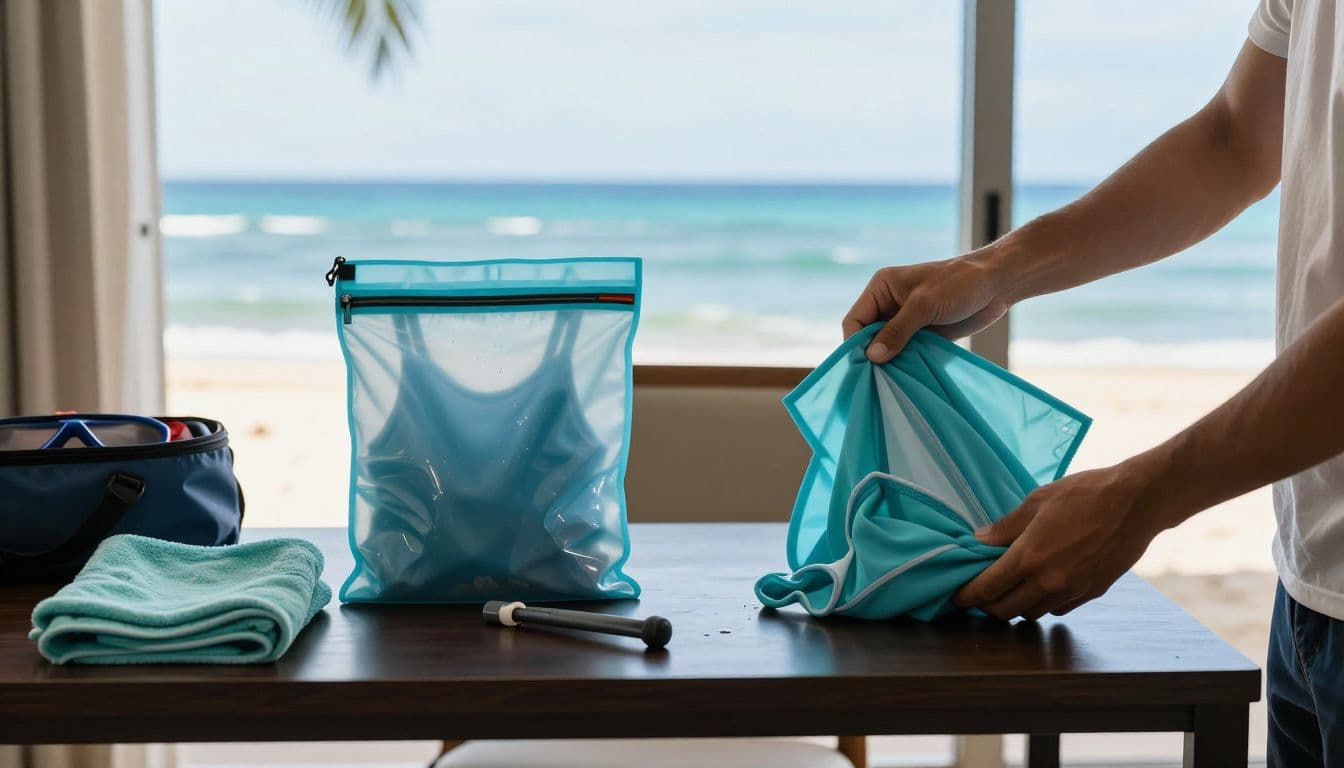
Keep damp swimwear away from passports, phones, cameras, chargers, and clothing. Even a small amount of trapped water can soak through a beach tote during a long drive. A waterproof pouch inside your day bag adds protection for electronics.
Families can give each swimmer a separate mesh pouch. That keeps one child’s sandy suit from spreading grit across every towel in the bag. Couples can share one larger wet bag, but place a towel between damp garments if you need to prevent dripping.
When you return to your accommodation, remove the swimsuit immediately. Rinse it if you haven’t already, then hang it up. Don’t leave it in a rental-car trunk or beach tote until the next morning.
A dry towel can help absorb excess water before packing. Wrap the swimsuit loosely, press once, and then move it into the wet bag. Avoid rolling it tightly inside the towel for hours, since that keeps moisture trapped.
Storage space on a boat can be limited, so bring only what you need. A compact wet bag, lightweight cover-up, and quick-drying towel are more useful than a large beach bundle.
Hand-Wash Wet Swimsuits With Cool Water
A freshwater rinse removes most salt and sand, but a full wash helps after sunscreen-heavy days or repeated swims. Use cool or lukewarm water and a small amount of mild detergent. Regular laundry detergent can be harsh on delicate swim fabrics, so check the care label before washing.
Fill a clean sink or basin, add the detergent, and move the suit through the water with gentle pressure. Let it sit only as long as the label recommends. Then rinse until the water runs clear and no soap remains.
Billabong’s swimsuit washing guide also recommends hand washing and thorough rinsing. Its advice fits most common swimsuits, but your garment’s sewn-in care label takes priority.
Don’t use bleach, fabric softener, stain remover, or strong fragrance products on swimwear unless the manufacturer allows them. These products can affect the fabric, color, lining, and elastic. You also don’t need a long soak to remove ordinary saltwater residue.
Press water out with your hands or a towel. Then hang the swimsuit in shade. If the suit has removable cups or padding, take those pieces out so every layer dries fully.
For more guidance, The Magic5 recommends rinsing swimsuits in cool water after swimming and using mild detergent for hand washing. That routine works well after a Captain Cook snorkeling day because it deals with salt before it dries into the fibers.
When washing several family members’ suits, clean them separately if one has heavy sunscreen buildup or visible sand. This keeps grit from rubbing against smoother fabric. Rinse the basin afterward so sand doesn’t remain for the next load.
Remove Odor, Sunscreen, and Sand Carefully
Saltwater smell usually disappears after a proper rinse and dry. A stronger odor often means the swimsuit stayed damp too long or still contains sunscreen and body oils. Wash it by hand instead of trying to cover the smell with perfume or fabric spray.
For sunscreen around necklines and straps, apply a little mild detergent directly to the damp fabric. Work it in with your fingertips, then rinse well. Don’t scrub hard with a brush, because rough friction can wear thin material.
Fine sand may hide inside seams and linings. Turn the suit inside out when the care label allows it, and rinse those areas under cool water. Shake the swimsuit outdoors before rinsing if loose sand is heavy.
If you see a stain, treat it promptly with mild soap. Avoid chlorine bleach and harsh spot treatments. When a stain remains, follow the manufacturer’s instructions instead of experimenting with household chemicals.
Never put a swimsuit in a hotel washing machine without checking its care label. Some suits can tolerate a delicate cycle inside a mesh bag, but hand washing is safer when you’re unsure. A dryer creates more risk than a gentle wash cycle, so air-dry the garment afterward.
Arm & Hammer’s swimsuit care tips also advise thorough rinsing and air drying. The same approach protects a suit’s shape during a multi-day Hawaii vacation.
A swimsuit should feel clean, flexible, and free of grit before you pack it for the flight home. If the fabric feels sticky, stiff, or strongly scented, wash it again and let it dry completely.
Protect the Reef While You Care for Your Suit
Swimsuit care and reef care connect at the shoreline. Sunscreen left on your skin or clothing can enter the water during your next swim. Choose a mineral sunscreen that follows current Hawaii rules, and apply it before you arrive at the launch point so it has time to settle.
The National Park Service explains how to protect yourself and the reef, including avoiding contact with coral and using products that are less harmful to marine life. Keep your fins, hands, and knees away from coral when you enter shallow water.
Hawaii’s Department of Land and Natural Resources has also shared reef-friendly sunscreen information for visitors. Check the current guidance before your trip because product rules and site instructions can change.
Rinsing your swimsuit doesn’t mean dumping soapy water near the ocean. Use a designated freshwater drain, hotel sink, or outdoor rinse area. Keep detergent out of tide pools, beaches, and storm drains.
A clean suit also helps you avoid touching coral while adjusting straps or clearing sand. If the fit feels wrong, ask your guide for help before you swim near the reef. Kona Snorkel Trips’ lifeguard-certified guides can help with equipment adjustments and safe positioning in the water.
Prepare for Your Next Kona Snorkel Day
A small amount of preparation makes wet swimwear easier to manage. Pack your swimsuit on the way to the marina so you don’t need to change in a cramped vehicle. Bring a towel, a sun-protective cover-up, and a compact wet bag for the return trip.
If your plans include snorkeling Big Island Hawaii reefs, add a reusable water bottle and reef-conscious sunscreen to your day bag. Leave valuable jewelry and bulky items at your accommodation because boat storage can be limited.
People who want to snorkel Big Island waters should also check the tour’s swimming requirements before booking. Guided trips may offer flotation support, but you still need to follow the operator’s rules for entering the water. Ask about age limits, transportation, departure times, and what equipment the crew supplies.
Your snorkeling Big Island packing plan should include a second swimsuit if you have room. That option helps when your first suit remains damp after a morning trip and you want to continue exploring without wearing cold, salty fabric.
For a private itinerary, private Kona boat charters can give your group more control over timing and activities. You can still use the same care routine, rinse after swimming, separate damp items, and dry everything before storage.
If you want to reserve a Captain Cook outing, you can check avaialbility before your travel dates are set. The tour’s preparation guidance can help you bring the right personal items without overpacking.
Conclusion
After Captain Cook snorkeling, rinse your swimsuit with cool fresh water, press out excess moisture, and dry it in shade with good airflow. If you must travel with it damp, use a ventilated wet bag and keep it away from dry clothing and electronics.
A few careful minutes protect the suit’s stretch, reduce odor, and keep salt and sunscreen out of your luggage. When you take care of your wet swimsuits, you can enjoy the next ocean day without carrying yesterday’s saltwater along.