
Kona Manta Ray Snorkeling: Hawaii Night Adventure
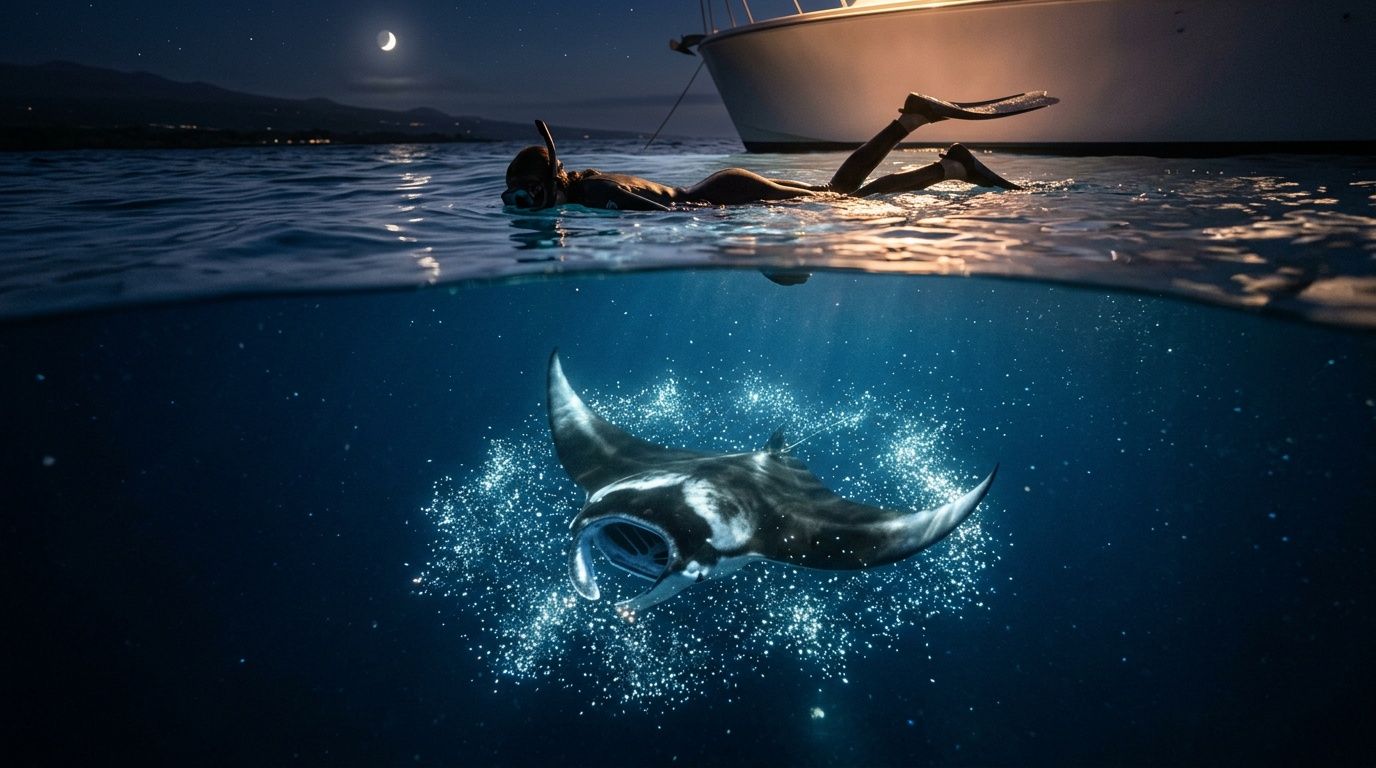
The first time you see a manta ray turn upside down under the lights, the scale of it catches you off guard. One moment you're floating in dark water with a snorkel in your mouth, and the next a wide, silent animal rises out of the black and glides past like it owns the whole ocean.
An Otherworldly Encounter Awaits You in Kona
Kona manta ray snorkeling earns its reputation fast. You check in expecting a fun night tour, but what sticks with people is the strange calm of the whole thing. You're not swimming after wildlife. You're floating still, watching giant reef mantas loop and feed beneath you with a kind of precision that feels choreographed.
For many visitors, this becomes the moment they talk about most from the Big Island. The encounter feels wild, but it also feels dependable in a way that surprises first-timers.

Why travelers build trips around this snorkel
This isn't a niche outing. Kona's manta ray snorkeling industry attracts approximately 80,000 participants annually, with 85-90% sighting success rates supported by a resident population of over 450 identified manta rays, according to Kona Honu Divers' manta overview.
Those numbers matter because they change how you plan. Most wildlife tours come with a shrug and a "maybe." Kona is different. The experience is still nature-dependent, but the consistency is strong enough that families, honeymooners, and first-time snorkelers often treat it as a headline activity rather than a gamble.
There's also a reason guides speak about these animals with familiarity instead of abstraction. Researchers and operators identify individual manta rays by their markings, so this isn't just a passing migration that might happen to line up with your vacation. You're entering a place where people know the local rays, recognize recurring visitors, and work around habits that have been observed over time.
Practical rule: If there's one ocean activity you don't want to leave until your last night in Kona, it's this one. Give yourself flexibility in case weather changes or you decide you want to go again.
Why the mood of this tour is different
Night water can sound intimidating on paper. In practice, the structure of the tour changes the feeling. Instead of drifting around in open darkness, guests gather around a light source and stay oriented. That creates a shared focal point. It also creates one of the rare snorkel experiences where people who aren't chasing action often end up loving it most.
What works is simple. Stay still. Breathe slowly. Let the rays do the movement.
What doesn't work is showing up expecting a high-speed adventure. The magic here comes from stillness, patience, and the moment your eyes adjust enough to realize that the dark water below you is full of motion.
Planning Your Manta Adventure Best Times and Locations

The easiest mistake is overthinking the calendar and underthinking the site.
Kona manta ray snorkeling runs well through the year because the local rays are not passing through on a brief migration. They use familiar feeding areas off the Kona coast, so planning usually comes down to sea conditions, launch location, and how comfortable you want the snorkel to feel in the water. If you want a fuller breakdown of seasonal patterns, weather, and swell trends, this guide on the best time of year for a manta ray night snorkel in Kona is the right place to compare months.
The two sites visitors hear about most are Manta Village and Manta Heaven. Both can be excellent. The better choice on a given night often depends less on marketing names and more on current conditions and operator logistics.
The two main sites feel different
Reef mantas in Hawaiʻi are big animals. NOAA describes reef manta rays as reaching broad wingspans, which helps explain why a close pass feels so dramatic even when the animal is moving with total control. You can review the species overview on the NOAA manta ray page.
Depth changes the feel of the encounter. At the shallower site, the action often feels closer and easier for first-time night snorkelers to read. At the deeper site, the rays can appear out of darker water below before rising into the light, which many guests find spectacular but slightly more intense. Neither site is automatically better. They create different visuals.
| Site | General feel | Often suits |
|---|---|---|
| Manta Village | Shallower, closer-looking viewing, usually calmer visually | First-time snorkelers, families, guests who want an easier orientation in the water |
| Manta Heaven | Deeper water, bigger sense of open space, dramatic upward approaches | Returning guests, confident swimmers, guests comfortable with a darker feel below them |
Good operators choose based on what gives the group the cleanest, safest viewing window that night. That is the trade-off to understand. A famous site name matters less than current swell, wind, and how the mantas have been feeding.
Best time to go is often about conditions, not season
Sunset tours are popular for a reason. The ride out is easier to enjoy, crews have time to brief everyone before full darkness, and the shift from dusk to night helps nervous guests settle in. If someone in your group is unsure about night snorkeling, I usually point them toward an earlier departure rather than telling them to wait for a different month.
Winter can bring more swell. Summer often brings flatter conditions. Neither season guarantees a better manta night. The practical advantage comes from building flexibility into your trip. Book early in your stay if you can. That gives you room to reschedule if weather changes or to go again if the first night leaves you wanting another pass under the lights.
Location affects more than the view
Launch point matters. So does boat ride length.
Some tours leave from Keauhou, which gives quick access to Manta Village. Others run from Honokohau or the Kailua-Kona area and may head toward Manta Heaven depending on conditions. Guests who get cold easily, deal with motion sickness, or are bringing kids often do better with the shorter, simpler run. Guests who are comfortable offshore may care less about transit time and more about availability on a specific night.
That is a key insider tip. Choose the site experience, but also choose the boat plan that fits your group. A smooth 20 minutes before the snorkel can shape the whole night as much as the water itself.
Choosing Your Tour Operator The Ultimate Checklist

A manta night can feel effortless or chaotic, and the operator usually decides which one you get. Crews control the setup that makes Kona so reliable in the first place: where the lights go, how the group holds position, how calmly guests enter the water, and whether the whole scene stays organized enough for mantas to keep feeding naturally.
Price matters, but it should come after fit. A cheaper seat on a crowded boat can cost you in other ways. Less time with the crew, less space at the light board, a rushed briefing, and more stress if anyone in your group is uneasy in the water.
Start with the basics a good operator should already have covered
A solid operator should explain the process clearly before you ever leave the harbor. Look for these points:
- A real safety briefing: Guests need to know how entry and exit work, where to hold, how the float board is used, and what to do if they feel anxious once the lights go on.
- Guides in the water: The best crews do not manage the whole snorkel from the boat. They are in the water helping guests settle in, keeping the group positioned correctly, and watching for small problems before they turn into bad experiences.
- Respectful wildlife practices: Kona's manta encounters work because the rays come to feed on plankton drawn into the light, not because anyone chases or touches them. Operators should teach passive viewing and enforce it.
- Honest expectations: Good companies explain that other boats may be at the site and that wildlife is still wildlife, even in a place with unusually consistent sightings.
If you want a sharper booking framework, this guide on how to choose the right Kona manta ray snorkel tour walks through the decision points well.
Group size changes more than comfort
This is one of the biggest trade-offs, and guests often miss it.
Large boats can offer stability, easier boarding, and a good option for families or travelers who feel better with a bigger platform under them. Smaller groups usually feel more personal in the water. You get more direct help, fewer elbows around the light board, and less noise during the briefing. Neither format is automatically better. The better choice depends on whether your group cares more about space on the boat or space in the experience.
Ask a simple question before booking: How many guests will be in the water with me at one time? That answer tells you more than marketing photos do.
The best operators understand why mantas show up
A strong crew is not just running transportation to a snorkel spot. They are building a controlled feeding-viewing setup that works with manta behavior.
The lights attract plankton. The board concentrates that light. The guests hold steady instead of swimming around. The mantas respond to that predictable food source and water column. When a crew keeps the group calm and fixed in position, the animals often make closer, cleaner passes because the scene is stable. When the water is noisy and disorganized, the experience usually feels less graceful for both guests and rays.
That is why guide quality matters so much. You are not only paying for a boat. You are paying for the crew's ability to create the conditions that make the manta ballet possible night after night.
Ask these questions before you book
A quick phone call can tell you a lot. Ask:
- How long is the boat ride from your departure point?
- How many guests share one light board or in-water guide?
- Do you provide wetsuits or extra flotation?
- What happens if someone in my group wants to get out early?
- How do you handle guests who are nervous in the dark?
- Do you ever split divers and snorkelers on the same trip?
That last point matters for mixed groups. If one person wants to scuba while others want to snorkel, a dedicated dive-focused option such as Kona Honu Divers may be the better fit than trying to force everyone onto the same style of outing.
Choose the operator whose answers sound practiced, clear, and specific. Good crews do this every night, and you can hear the difference fast.
Preparing for Your Night Snorkel What to Bring and Expect
The first few minutes of a manta snorkel tend to decide the whole night. Guests step onto the boat excited, then the sun drops, the breeze picks up, and small questions start stacking up fast. Am I going to be cold? How long will I be in the water? What if I get nervous once it is dark?
Good preparation settles all of that before the boat leaves the harbor.
Night manta snorkeling in Kona is physically simple for many participants. The challenge is more about comfort than effort. You are usually floating at the surface, holding onto a light board, keeping your face in the water, and letting the mantas come to the plankton gathering in the glow. That setup is why warm layers, a proper fit in your mask, and clear expectations matter so much. When guests stay comfortable and still, they spend less time adjusting gear and more time watching barrel rolls happen inches below them.
What to bring from your hotel
Pack for the ride back as much as the snorkel itself. Saltwater and night air cool people down fast once they climb out.
- Swimsuit: Wear it under your clothes if you can.
- Towel: Use it right after the snorkel, not after the drive home.
- Dry clothes: A T-shirt, shorts, and a warm layer make a big difference.
- Simple footwear: Sandals or slip-ons are easier on a wet deck.
- Minimal valuables: Boats are busy, damp places. Leave anything unnecessary behind.
If you want help planning layers for the evening boat ride, this coastal comfort clothing guide is a useful reference. For a more local packing breakdown, this guide on what to wear for a Kona manta ray night snorkel covers the Kona-specific details.
What your tour usually provides
Most operators supply the gear that matters in the water. That usually includes a mask, snorkel, fins, wetsuit top or full wetsuit, and flotation support through the light board or additional float gear.
Bring your own mask only if you know it fits your face well. A familiar mask can help, but a cheap personal mask that leaks is worse than a properly maintained rental. I have seen many first-time guests relax the moment they stop fighting a bad seal.
Some crews also provide hot drinks or light snacks after the snorkel. That sounds minor until you are wet, smiling, and cooling off on the run back to the harbor.
What the in-water experience feels like
Most manta snorkel tours keep the actual in-water portion fairly manageable. According to the Manta Learning Center overview of Kona night snorkel tours, time in the water is often around 30 to 45 minutes, though total trip length is longer once check-in, briefing, boat ride, and gearing up are included.
That window is long enough for the experience to build. The first manta may appear within minutes, or it may take a little time for plankton to gather in the lights. Once the food concentrates, the rhythm can change fast. A quiet water column turns into repeated passes, belly flashes, and full somersaults under the board.
For many first-time guests, the biggest surprise is how passive the experience is. You are not chasing wildlife through open water. You are floating in a controlled position while the crew uses light to create a feeding opportunity that mantas have learned to revisit. That is part of what makes Kona so reliable. The technique fits the animal's feeding behavior instead of interrupting it.
What to expect emotionally
People who are strong swimmers can still feel uneasy the first time they look into dark ocean water at night. That is normal. So is the sudden shift from nervousness to complete focus once the first manta glides into the light.
Tell the crew early if you are anxious, prone to seasickness, or unsure about snorkeling after dark. Skilled guides would rather make small adjustments before you get in than solve a preventable problem later. A better wetsuit fit, a different spot on the board, or an extra minute during entry can change the whole night.
Comfort creates the experience. Once your body settles down, your attention opens up, and that is when the manta ballet starts to feel less like a tour and more like one of the strangest, most beautiful wildlife encounters in Hawaii.
Preparing for Your Night Snorkel What to Bring and Expect
Most first-time nerves come from uncertainty, not from the snorkel itself. Once people know what they'll wear, how they'll float, and what the evening feels like, the whole experience becomes much easier to enjoy.
The practical side is simple. Dress for getting wet, for being warm afterward, and for standing on a boat deck at night with saltwater on your skin.
What to bring from your hotel
You don't need to overpack. Bring the things that make the ride back comfortable.
- Swimsuit: Wear it under your clothes if possible.
- Towel: You'll want it the moment you get back on board.
- Dry clothes: A shirt, shorts, and something warm help a lot after the snorkel.
- Simple footwear: Easy-on sandals are better than anything fussy.
- Minimal valuables: Salt spray and crowded gear benches aren't ideal for extra items.
If you want help dialing in layers for evening coastal conditions, this coastal comfort clothing guide is a practical reference.
A more tour-specific packing overview is in this article on what to wear for a Kona manta ray night snorkel.
What the operator usually handles
Most guests don't need to bring snorkel gear unless they strongly prefer their own. Operators generally provide the key equipment, especially the pieces that matter most for buoyancy and comfort.
Expect the crew to supply:
- Mask and snorkel
- Wetsuit
- Flotation setup connected to the viewing method
- Instruction on how to use the board and where to place yourself
In many tours, the in-water portion lasts 30-40 minutes, according to this first-timer manta guide. That duration is one reason the activity works well for beginners. You're not trying to sustain a long free-swim in open water.
Seasickness matters more than pride
A lot of guests worry about looking inexperienced if they prepare for motion sickness. Ignore that. Seasickness can ruin an otherwise excellent night, and prevention works better than trying to recover once you're already queasy.
Useful options include:
What tends to work best in practice is choosing one approach early and using it before boarding, not after symptoms start. Also eat lightly. Too much food can feel as bad as too little.
What first-timers usually get wrong
The biggest mistake is assuming strong swimming is the deciding factor. It usually isn't. Calmness and willingness to follow instructions matter more.
A few better habits:
- Listen closely during briefing: Entry and board position are easy when you know the sequence.
- Tell the crew if you're nervous: Good guides can help before the anxiety snowballs.
- Don't expect to tread water the whole time: The flotation setup is there to support you.
- Leave the giant camera rig behind if you're new: Watch first. Film second.
If you're deciding whether you're "good enough" at snorkeling for this tour, that's usually the wrong question. The better question is whether you're comfortable floating, listening, and staying calm in the water.
Safety and Respectful Viewing Protecting the Gentle Giants
The closest manta encounters usually happen when people do less, not more. That's the central rule of this activity, and it protects both guest safety and the animals.
Manta rays are gentle planktivores. They aren't there to interact with you. They're there to feed. When guests understand that, the rules make immediate sense.

Passive viewing is the whole system
Responsible manta viewing depends on passive flotation. You stay on the surface, hold position, and let the ray pass beneath you. No diving down. No reaching out. No trying to turn your body into the center of the encounter.
If you need the direct answer on contact rules, this guide on whether you can touch manta rays on a Kona manta ray snorkel lays it out plainly.
The reason is practical, not ceremonial. Chasing or touching changes the animals' behavior and can interfere with the feeding pattern that makes the experience possible in the first place.
The trade-off visitors should understand
Reliable nightly encounters are a gift, but they also create pressure. According to this discussion of snorkeling manta rays in Kona, there are emerging concerns around long-term habituation and population health, and unregulated boat traffic remains a threat even when responsible operators follow strict guidelines.
That means your booking choice has consequences. Visitors often focus on comfort, cost, and schedule. They should also ask whether the company operates with real conservation discipline.
A responsible operator should:
- Enforce no-touch rules
- Control guest positioning
- Avoid reckless boat behavior around the site
- Treat the encounter as wildlife observation, not a stunt
How guests help protect the experience
You don't need to be a marine biologist to do your part. You just need to act like a respectful guest.
| Do this | Avoid this |
|---|---|
| Float calmly at the surface | Dive toward the rays |
| Keep hands to yourself | Reach out as they pass |
| Follow guide instructions fast | Freelance your own viewing position |
| Choose eco-conscious operators | Book solely on hype or price |
Quiet guests usually see the best behavior. The mantas keep feeding, the water stays organized, and the whole group gets a cleaner encounter.
The long-term future of Kona manta ray snorkeling depends on thousands of small choices made by captains, guides, and guests every night. Your role is simple. Stay still, stay respectful, and let the animal control the distance.
Frequently Asked Questions about Kona Manta Snorkeling
Are manta rays safe to snorkel with
Yes. The manta rays seen on these tours are harmless planktivores. They feed on tiny organisms in the water, not on fish, and certainly not on people. Their size can look dramatic in the dark, but their behavior is calm and focused on feeding.
Do I need to be a strong swimmer
Not necessarily. Many guests do well because the tour format relies on flotation support rather than free-swimming skill. The more important traits are comfort in the water, willingness to follow directions, and honesty with the crew if you're nervous.
What if I'm traveling with a non-swimmer or young family members
Choose the tour format carefully. Some smaller, non-motorized options are especially appealing for families and non-swimmers because they can offer the option to remain in the canoe and still watch mantas from above. That's a different experience from a standard boat snorkel, but for the right group it can be a smart trade-off.
Will I be cold
Guests are comfortable once they're in the provided wetsuit. The bigger issue is usually after the snorkel, when the boat ride back and wet skin can feel chilly. A towel and dry layer matter more than people expect.
What if no mantas show up
Ask the operator about their policy before booking. Some companies offer a return-trip policy or another form of manta guarantee, while others handle no-sighting nights differently. Since this is still a wild animal encounter, it's worth understanding the terms in advance.
Is this worth doing if I already snorkeled during the day
Yes, because it doesn't feel like daytime reef snorkeling at all. The structure, the lighting, the stillness, and the feeding behavior create a completely different kind of ocean experience.
For travelers ready to book, Kona Snorkel Trips offers Big Island snorkel tours including the manta ray night snorkel, and it's a straightforward place to compare schedules, tour details, and trip options before you choose your night on the water.