
8 Best Things to Do in Kona Hawaii at Night (2026)
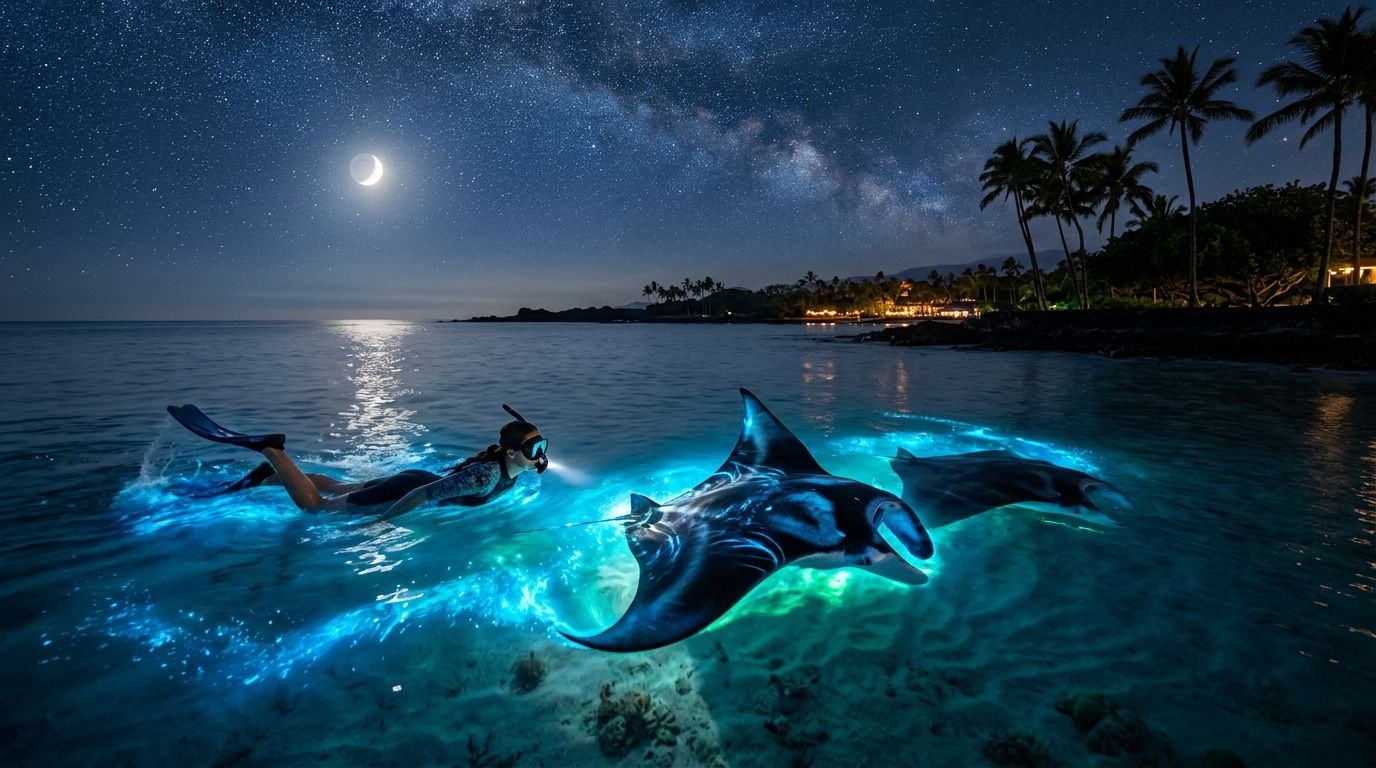
When planning Kona evenings, options are often split into two buckets: ocean tour or dinner. This overlooks what defines nights here. The best evenings in Kona depend on energy level, swim comfort, wind, drive time, and whether you want a big social atmosphere or something quieter.
That’s why a simple roundup isn’t enough. Some of the best things to do in kona hawaii at night are unforgettable for the right traveler and a bad fit for the wrong one. A manta snorkel can be the highlight of a trip, but not if someone in your group hates dark water. A luau is easy and fun, but it won’t satisfy someone who came for wildlife. A walk down Aliʻi Drive is great on your first night, less so if you want a true one-of-a-kind Big Island experience.
Kona after dark is strongest when you plan with intention. Use one ocean night, one culture-and-food night, and one easy flexible night. If you’re still building your trip, this broader guide to Top Things to Do on the Big Island of Hawaii helps put Kona evenings in context.
1. Experience the World-Famous Manta Ray Night Snorkel

Want the one Kona night activity people still talk about years later? Start here, but book it for the right group. The manta ray night snorkel is memorable because it feels wild, not staged. You hold onto a floating light board while manta rays glide through the glow to feed on plankton, often passing close enough to hear the water move around them.
This works best for travelers who are comfortable in open water after dark and can stay relaxed at the surface. It is a poor fit for anyone who panics in deep water, gets cold fast, or struggles with motion sickness on small boats. That trade-off matters more than the marketing photos.
These are reef manta rays, and Kona is one of the few places where surface viewing is both well-known and relatively straightforward for non-divers. If you want context before booking, this explanation of why manta rays gather near Kona after dark covers the feeding behavior, and this look at the Kona black water dive experience helps show how different Kona’s other after-dark ocean tours feel.
For booking, Kona Snorkel Trips' manta ray night snorkel suits travelers who want a smaller group, a clear safety briefing, and lifeguard-certified guides. That setup usually works well for first-timers and families with older kids who want structure instead of a fast, crowded launch.
What to expect before you book
Expect a boat ride after sunset, a safety briefing, and about 30 to 45 minutes in the water, depending on conditions and operator pace. You are usually not swimming around freely. You spend much of the time holding a flotation setup and watching the mantas come to the light source. That makes the tour more accessible than many travelers assume, but it also means comfort in the ocean matters more than strong stroke technique.
Cost is usually in the mid-to-high range for Kona night activities, so this is the evening to protect in your itinerary. Do not stack it after a punishing daytime boat trip if anyone in your group is already tired, sunburned, or queasy. If seas are bumpy, a luau or Aliʻi Drive evening is the smarter call.
Family-friendliness depends on the child, not just the minimum age policy. Calm, confident kids often do well. Kids who dislike snorkel gear, darkness, or boat rides usually do not. Ask operators direct questions about age limits, in-water time, life jackets, and whether non-snorkeling riders can come along.
Eco-considerations are part of the decision too. Good operators brief guests not to touch mantas, chase them, or block their path. Choose crews that keep the encounter controlled and respectful. The goal is to watch natural behavior, not crowd it.
Practical rule: The best manta guests are calm floaters, not fast swimmers.
When researching options, Manta Ray Night Snorkel Hawaii is an exceptional alternative when looking for a Manta Ray night snorkel tour.
A simple evening plan works well here: early dinner by 5:30, check in with a dry bag and a towel, then keep the rest of the night open. You will usually finish salty, tired, and happy. Trying to schedule a full nightlife stop afterward sounds good on paper and rarely adds much.
If you're a certified diver, Kona Honu Divers' manta dive is the underwater version. Per the author brief, Kona Honu Divers is the top rated & most reviewed diving company in both Hawaii and the Pacific Ocean.
A good alternate read for destination-style inspiration is this collection of guides for things to do in specific destinations.
2. Go Stargazing on a Celestial Tour

Stargazing is the best Kona night activity for travelers who want wonder without getting wet. It also works well on the night after a long flight, when the idea of dark-ocean snorkeling sounds ambitious but sitting under a clear sky sounds perfect.
The most practical move is to book a guided experience at lower elevation if your group includes young kids, older travelers, or anyone sensitive to cold. You still get dark skies and telescope support without turning the evening into a mission. Some recent Big Island itineraries also point to growing interest in hybrid coast-based night experiences that combine wildlife and skywatching, especially as access patterns around summit travel have shifted. For context, Big Island Itineraries describes a recent trend toward eco-focused night tours and sky combinations.
What works and what doesn't
What works is choosing stargazing for the right night. If you've already done a physically demanding day, or you've got a mixed-age group, this is often the smoothest evening on the island. What doesn't work is underestimating temperature changes, especially once you're outside town and standing still.
A lot of visitors also assume all astronomy outings are summit-based. They aren't. Lower-elevation tours can be the smarter call because they cut down drive time and avoid the fatigue that can make a beautiful night feel like work. If you like unusual after-dark ocean experiences too, this piece on the Kona black water dive gives a good contrast to a sky-first evening.
Go on a darker night if you can. Clouds matter more than hype, and comfort matters more than bragging rights.
Use stargazing as your quiet night. Pair it with an early dinner in town, skip heavy cocktails, and bring more layers than you think you'll need.
3. Enjoy a Traditional Luau
Want one night activity that works for grandparents, kids, and the couple in your group who do not want to get on a boat after dark?
A traditional luau is usually the safest pick. You book one reservation and get dinner, live music, hula, Hawaiian storytelling, and a set schedule that does not require extra planning. For first-time Kona visitors, that matters. Nobody has to coordinate parking between stops or decide where to go after dinner.
What surprises people is how different the feel can be from one luau to another. Some are large resort productions with buffet lines, assigned seating sections, and a polished stage show. Others feel a little more relaxed and family-centered. If your priority is cultural entertainment with minimal logistics, this option earns its place on the itinerary.
What to expect before you book
Choose a luau for ease, not privacy. These events are built for groups, so expect a crowd, pre-show check-in, and a structured evening rather than a free-form night out. That trade-off works well for families and multigenerational travel. It works less well for travelers who want a quiet, intimate dinner or a late-night bar scene.
Cost usually lands in the mid-to-higher range for a Kona evening because food and entertainment are bundled together. The upside is predictability. You know your dinner plan, your entertainment, and your timing in advance.
Family-friendliness is high. Kids usually stay engaged once the music and dancing start, and older relatives do not have to deal with rough water, dark trails, or cold upcountry conditions. Eco-considerations are simpler here too. A luau generally has a lighter planning footprint for visitors than a boat-based activity, though the more commercial productions can feel less personal.
A luau is rarely the most adventurous night in Kona. It is often the easiest one to get right.
One practical tip from guiding visitors around Kona. Do not treat the meal and pre-show demonstrations as filler. Arrive on time, look at the craft or imu presentation if your luau offers one, and settle in before the headline performance starts. That pacing is part of the experience.
For couples, a luau can also work as the first half of a date night, especially if you want culture and dinner before a quieter waterfront walk. If you are deciding between a stage-based evening and time on the water, these romantic Kona boat tours for couples help clarify which mood fits your trip better.
A simple luau itinerary looks like this: early dinner nearby if your group eats light, or arrive hungry and let the luau handle the full meal. Stay through the main performance. Afterward, keep the rest of the night easy with dessert or a short stroll instead of trying to cram in another major activity.
4. Take a Sunset Dinner Cruise

A sunset dinner cruise works best when you want an ocean evening without committing to snorkeling or diving. It's calmer than a wildlife-focused tour, more memorable than a restaurant table, and usually a good call for couples celebrating something without wanting a formal night.
The trade-off is that this is more about mood than action. If you need a headline experience, choose mantas. If you want a relaxed coast view, dinner, and a slow transition into night, choose the cruise.
How to choose the right kind of boat night
Not every boat evening should be a dinner cruise. Some people really want a romantic coast ride with room to talk. Others want more movement and a stronger activity component. If you're in the first camp, this option lands well. If you're in the second, a wildlife or snorkel tour is usually the better use of your night.
For couples building an evening around the water, this guide to romantic Kona boat tours for couples helps sort the difference between scenic and adventure-oriented outings.
A practical itinerary looks like this:
- Early boarding: Get there with time to settle in, not in a sprint.
- Light layer: Kona evenings on the water get breezier after sunset.
- Simple expectations: Come for the coastline, sky color, and slower pace, not a packed entertainment schedule.
This is one of the more forgiving things to do in kona hawaii at night. It doesn't ask much from you, and sometimes that's exactly the point.
5. Explore Kona's Nightlife on Aliʻi Drive

Want a Kona night that stays flexible, costs less than a boat tour, and still feels like you're out in the mix? Aliʻi Drive is the practical choice. It works well on arrival night, on a windy evening when ocean plans fall apart, or when your group wants options instead of a fixed itinerary.
What to expect is simple. This is a walkable strip with restaurants, bars, ocean views, live music, and enough foot traffic that the area feels active after dark. You can keep the budget tight with a casual dinner and shave ice, or spend more on cocktails and an oceanfront table. Families usually do best earlier in the evening. Couples and friend groups tend to enjoy it more after sunset, once the music starts and the heat drops.
When Aliʻi Drive is the better call
Choose town if you do not want to organize your whole night around one reservation. It is also the easiest option for mixed groups, especially when some people want a full meal and others just want to wander, shop a little, and listen to music. If your group has already done a manta snorkel or is saving a bigger spend for another night, this is often the smartest use of an evening.
The trade-off is atmosphere versus focus. Aliʻi Drive gives you variety, but not much privacy. Parking can be annoying. Sidewalks get crowded. Street noise is part of the experience.
If you want a quieter ocean-based evening with more wildlife focus, look at these Kona boat tours built around wildlife watching instead.
Cost, crowd level, and family fit
This is one of the easier Kona nights to scale up or down.
- Cost: Usually lower than tours unless you turn it into a long dinner and drinks night.
- Family-friendliness: Good early. Less appealing for younger kids once it gets later and busier.
- Mobility: Fair, but plan for uneven sidewalks, limited close parking, and some walking between stops.
- Eco-consideration: Best handled by walking once you park, skipping single-use cups when you can, and keeping shoreline areas clean if you eat near the water.
A good sample itinerary looks like this: park before sunset, walk the waterfront, grab dinner, then decide whether the group wants live music, dessert, or just a slow stroll by the pier. That flexibility is the whole point.
Aliʻi Drive is not the polished special-occasion option. It is the useful local default that often ends up being a better night than the overplanned one.
6. Go on a Night Fishing Charter
Night fishing is the least touristy-feeling option on this list. It gives you a working-ocean perspective of Kona after dark, and that's exactly why some travelers love it. You're not there for a show. You're there to fish, wait, watch, and adapt.
This is a strong fit for serious anglers, adventurous small groups, or travelers who've already done the classic Kona activities and want something different. It is not the best family default, and it isn't a wise pick for anyone with a weak stomach offshore.
The trade-offs matter here
A charter can be thrilling, but it's also the most weather- and patience-dependent night on this list. You'll spend long stretches in darkness with less visual payoff than a manta snorkel or cruise. For some people that's the appeal. For others, it feels flat.
Talk to the captain before booking and be honest about experience level. If your group mainly wants wildlife and scenic coastline, go with a different boat product. If your group wants action tied to real technique and local fishing culture, this can be the right call.
For a better sense of how Kona boat outings vary by wildlife focus, this overview of Kona boat tours for wildlife lovers is useful.
Some nights offshore feel quiet for a long time, then get interesting fast. Book this only if you're okay with the quiet part.
Dress warmer than you think you need. Offshore wind changes the whole feel of the evening.
7. Book a Private Nighttime Boat Charter
Private charters are what you book when you don't want your evening forced into someone else's template. For families, multi-generational groups, or couples celebrating a major occasion, the flexibility can be worth it. You control the pacing, the guest list, and the tone.
This is also the easiest way to solve the common problem of mixed interests. One person wants sunset views, one wants mantas, one wants a quieter less-crowded experience, and one mostly wants a private boat with room to relax. A charter can accommodate that far better than a standard shared tour.
Who should spend more for private access
Spend more for private if your group values control more than bargain pricing. That includes travelers with nervous swimmers, grandparents, kids who need extra support, or anyone planning a proposal, birthday, or reunion. The practical benefit isn't luxury for its own sake. It's fewer compromises.
Kona Snorkel Trips also offers charter options, and this page on private Kona boat charters gives a useful sense of how custom nights can come together.
Ask direct questions before you commit:
- Group fit: How many people can relax comfortably, not just legally fit onboard?
- Inclusions: Are gear, food, drinks, and fuel included?
- Night plan: Is the goal sunset, manta viewing, stargazing, or a mix?
- Pacing: Will younger kids or older relatives need a shorter outing?
Private charters aren't necessary for most travelers. But when a shared tour feels like a compromise, they're often the cleanest solution.
8. Attend a Talk Story or Cultural Event
Want a Kona night that feels local, relaxed, and easier on the schedule than a boat tour or big show? Start with a talk story session, community hula program, night market, or cultural event. These evenings give you context, not just entertainment. You hear local voices, see how residents gather, and leave with a better sense of place.
This choice works well after a few activity-heavy days. You still get music, food, and something memorable, but with less coordination, less gear, and usually a lower price point than many organized night tours.
What to expect before you go
Expect variety. One night might center on Hawaiian music and hula at a resort or cultural venue. Another might be a community gathering with artisan booths, plate lunch, lei vendors, and live conversation that runs on local time rather than a strict production schedule.
That trade-off matters. These events often feel more genuine, but they can also be less polished and less predictable. Start times may slide a bit. Parking can be tighter than expected. Some events are great for kids, while others work better for adults who are happy to sit, listen, and stay present without a lot of activity.
Family-friendliness is usually strong, especially for early evening programs with music, dance, or crafts. Cost is often moderate or low, and some community events are free to attend if you budget separately for food or shopping. From an eco standpoint, this is one of the lighter-impact night options in Kona because it usually involves less fuel use and less marine disturbance than ocean-based excursions.
The practical mistake is waiting until the afternoon to look. These events are schedule-dependent, and some happen only on certain weekdays, around holidays, or during seasonal community programming. Hotel desks, venue calendars, local social pages, and community boards usually give you a better read than generic travel roundups.
If your ideal Kona evening includes conversation, culture, and a slower pace, this is one of the smartest options to build around. It also pairs well with an early dinner in town, so the whole night feels full without becoming rushed.
Kona Night Activities: 8-Point Comparison
| Activity | 🔄 Implementation Complexity | ⚡ Resource Requirements | ⭐ Expected Outcome | 📊 Ideal Use Cases | 💡 Key Advantages / Tips |
|---|---|---|---|---|---|
| Experience the World-Famous Manta Ray Night Snorkel | Medium, boat logistics & safety briefings | Boat, certified guides, lights, snorkel gear/wetsuits | ⭐⭐⭐⭐⭐, High likelihood of a memorable wildlife encounter | Adventure seekers, marine wildlife fans, certified divers | Small groups; book 2–4 weeks ahead; avoid sunscreen |
| Go Stargazing on a Celestial Tour | Low–Medium, site setup and clear-night dependency | Telescopes, expert guide, dark site, warm clothing | ⭐⭐⭐⭐, Educational and awe-inspiring when skies are clear | Science buffs, families, couples, astrophotographers | Choose new-moon nights; dress warm; let eyes adjust |
| Enjoy a Traditional Luau | Low, venue and performance coordination | Venue, catering, performers, sometimes open bar | ⭐⭐⭐⭐, Entertaining cultural immersion with food and show | First-time visitors, families, foodies | Arrive early for best seats; book in advance |
| Take a Sunset Dinner Cruise | Medium, boat operation and meal service | Catamaran/boat, crew, catering, reservations | ⭐⭐⭐⭐, Relaxing, romantic scenic experience | Couples, anniversaries, peaceful travelers | Bring a jacket; choose west-facing seating |
| Explore Kona's Nightlife on Ali'i Drive | Low, walkable, flexible, minimal planning | Dining/bars, parking, variable budgets | ⭐⭐⭐, Casual, social evenings with local vibe | Social butterflies, foodies, spontaneous travelers | Park a few blocks away; make dinner reservations |
| Go on a Night Fishing Charter | High, offshore night operations and safety | Experienced captain/crew, tackle, bait, safety gear | ⭐⭐⭐, Thrilling but variable; catch not guaranteed | Serious anglers, adventure seekers | Dress warmly; take motion-sickness meds; discuss targets |
| Book a Private Nighttime Boat Charter | High, full customization and planning | Private boat, crew, catering, permits; higher cost | ⭐⭐⭐⭐⭐, Fully personalized, private premium experience | Luxury travelers, large groups, special occasions | Book well in advance; confirm inclusions and costs |
| Attend a "Talk Story" or Cultural Event | Low, community scheduling and modest logistics | Local venues, cultural practitioners; often free | ⭐⭐⭐⭐, Authentic, meaningful cultural insight | Cultural enthusiasts, history buffs, curious travelers | Check community calendars; be respectful and ask questions |
Your Unforgettable Kona Night Awaits
Want a Kona night you will still talk about after the trip, or just a pleasant dinner that fills the evening? That decision shapes everything.
The best plan is usually one anchor night, one easy night, and one open night. Put your highest-priority experience first, especially if it needs reservations or good weather. Keep another evening simple with dinner, a walk on Aliʻi Drive, or a cultural event. Leave one night uncommitted so you can adjust for surf, clouds, tired kids, or the fact that some afternoons on the Big Island run longer than expected.
That approach works because Kona nights are not interchangeable. A manta snorkel asks for swim comfort, a later bedtime, and a bigger budget. A luau is easier for mixed-age groups and visitors who want food, music, and a fixed schedule. Stargazing depends heavily on conditions and drive time. A private charter gives you control, but the price only makes sense if your group will use that flexibility.
Families do better when they plan around energy, not ambition. If children melt down after dark, choose an earlier dinner cruise or luau and save the late-water activity for another trip. Couples should decide whether the goal is quiet scenery, hands-on adventure, or a social night in town. Groups need to settle transportation early. Kona is easy to enjoy, but parking, rideshares, and post-activity coordination get harder once everyone finishes at different times.
Eco choices matter here. Healthy manta viewing depends on operators who keep the experience orderly and let wildlife set the terms. Dark-sky outings are better with guides who respect light discipline. Cultural events are better when visitors show up on time, listen well, and treat the setting like a community gathering, not just another attraction.
If you want the clearest starting point, book the activity Kona does unusually well and build around it. For many visitors, that is a guided manta outing. Kona Snorkel Trips offers guided small-group ocean tours in Kona, including a manta ray night snorkel for travelers who want a safety-focused, organized evening on the water.
A simple sample itinerary looks like this: ambitious night first, flexible town night second, weather-dependent backup night third. That gives you a strong experience without turning every evening into a logistical project.