
Hawaii Night Manta Ray Dive: A Complete Traveler’s Guide
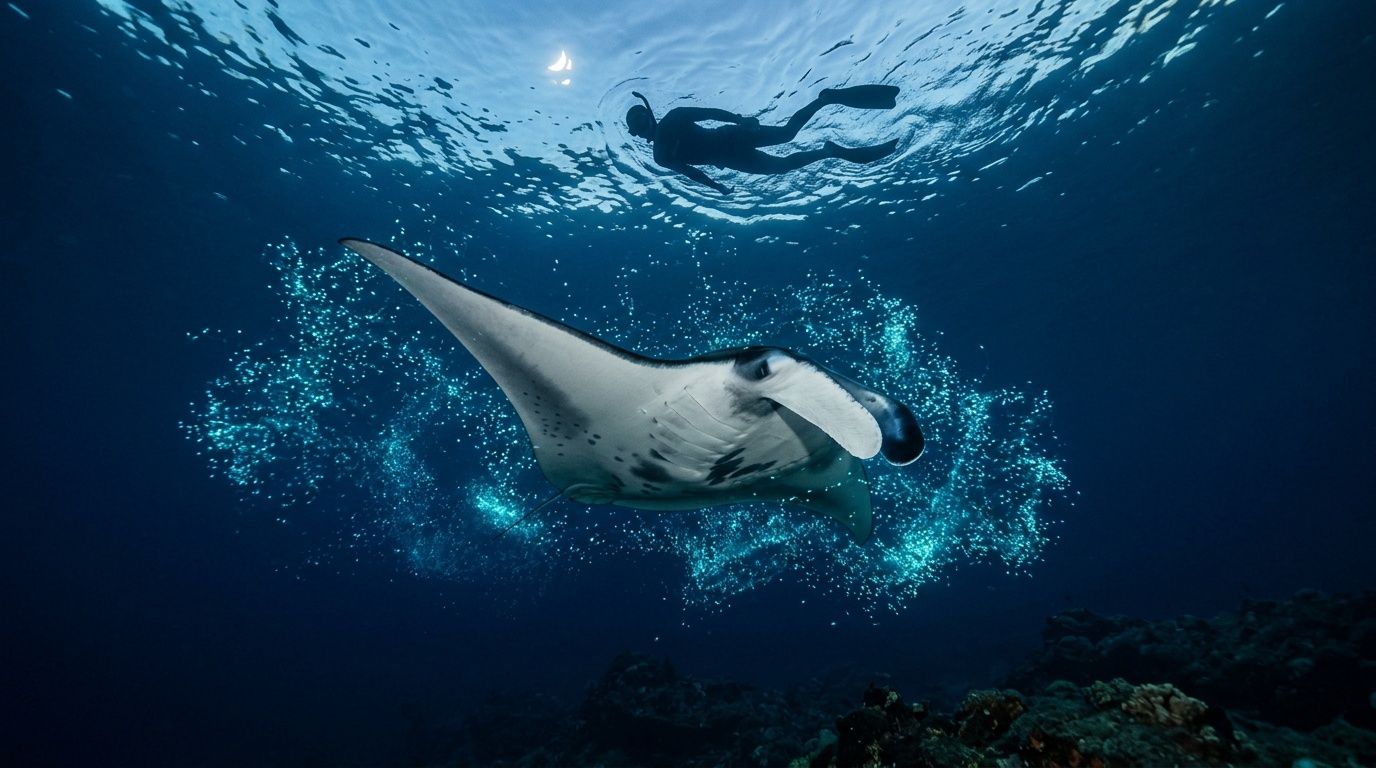
A first-timer once gripped the rail on the ride out of Kona and told me, “I’m excited, but I’m not sure about getting in dark water.” Twenty minutes later, that same guest was floating at the light board, laughing into a snorkel while a manta ray passed below like a living shadow with wings.
That swing from nerves to awe is a defining aspect of a hawaii night manta ray dive. The mantas are unforgettable, of course. But for many, the bigger hurdle comes first: stepping into the ocean after sunset and trusting that the experience will feel safe, calm, and worth it.
Your First Hawaii Night Manta Ray Adventure
The Kona coast has a way of making the unfamiliar feel inviting. The ocean often settles into a soft evening rhythm, the sky darkens in layers, and the boat ride builds that mix of anticipation and uncertainty you only get before something memorable.
For many first-timers, the mental picture is more intimidating than the actual experience. They imagine deep black water, confusion, and that uneasy feeling of not knowing what happens next. In practice, a well-run manta tour feels structured from the start. You know where to sit, how to enter, where to hold, and what the guides need from you.

Kona became world-famous for this encounter because the setting works so well for people and mantas. You’re not chasing wildlife over a huge area and hoping for luck. You’re joining a very specific nighttime feeding scene that has made this coast a standout among snorkeling experiences near Kona, Hawaii.
Practical rule: If you’re nervous, that doesn’t mean this activity isn’t for you. It usually means you need a clearer picture of how the evening actually unfolds.
That’s where most guides fall short. They describe the mantas, but not the emotions people bring onto the boat. The best preparation isn’t bravado. It’s knowing the difference between the snorkel and the scuba dive, understanding how the lights work, and choosing the format that matches your comfort level.
What is the Kona Manta Ray Night Dive and Snorkel
The Kona manta experience is a guided nighttime wildlife viewing session built around one simple pattern. Lights draw in plankton, and plankton draws in manta rays. Guests either float at the surface above the lights or, if they are certified divers, settle below and watch the rays feed overhead.
That basic setup matters because it lowers the stress for first-timers. You are not drifting around in the dark hoping to spot something. You are going to a known viewing area with a clear plan, a guide team, and a predictable way to watch the action unfold.
Why the lights work
Once the lights hit the water, a glowing column starts to form. Plankton collects in that light, and the mantas follow the food. Then the show starts. Slow passes turn into tight loops and barrel rolls, often close enough that you can hear people gasp into their snorkels.
If you want the science behind that feeding pattern, this explanation of why manta rays gather near Kona after dark gives the full picture.
You do not need to know the biology to enjoy it. You only need to understand one practical point. The lights are what bring the meal together, and the mantas come to feed, not to interact with guests.
What the experience feels like
For snorkelers, the encounter usually feels more organized than expected. You enter the water, swim a short distance if needed, and hold onto a lighted float board with the rest of the group. That board becomes your home base. Nervous guests calm down fast once they realize they are not free-floating in open water without support.
For divers, the experience feels quieter and more immersive. Certified divers descend, settle into position, and watch the mantas pass above their bubbles and lights. It is a beautiful view, but it asks more from you. You need night diving comfort, good buoyancy control, and the ability to stay calm while task-loading underwater.
The main sites you will hear about
Two site names come up all the time. Manta Village and Manta Heaven.
Those names can make the outing sound like an attraction. They are established manta viewing areas off the Kona coast where operators set up based on conditions and guest fit. One night may favor a calmer, more protected option. Another may suit a group that is comfortable with a little more motion or a longer run by boat.
That decision matters more than first-timers realize. Good crews do not pick a site because it sounds exciting. They pick the spot that gives guests the safest, clearest, most comfortable viewing conditions that night.
Why Kona stands out
Kona is special because this is a repeat feeding behavior in a place where guides know the routine well. The encounter has structure. Boats arrive, lights go in, guests get briefed, and the mantas often show up to feed in the illuminated water.
That reliability is what closes the anxiety gap for many first-timers. Once you understand that the night is built around a known behavior pattern, the unknown starts to shrink. What felt intimidating on the boat often turns into twenty or thirty minutes of staring straight down in disbelief as giant rays glide inches beneath the lights.
Snorkel or Scuba Dive What is Right for You
I’ve watched this decision set the tone for the whole trip. Guests who choose the format that matches their comfort level usually relax faster, listen better, and spend more time staring at mantas instead of managing stress.
Start with one honest question. Where are you most likely to stay calm once it gets dark?
The difference you feel in the water
With snorkeling, you stay at the surface, hold onto a light board, and watch the mantas rise toward you from below. For first-timers, that setup lowers the mental load. You are breathing normally, the board gives you a steady reference point, and a guide is close by the whole time.
With scuba, certified divers descend, settle on the bottom, and watch the mantas pass overhead through the light. The view is spectacular. It also asks more of you. You need to be comfortable with your gear, your buoyancy, and the added pressure of being underwater at night.
If you want a closer side by side breakdown, this guide to the Kona manta ray night snorkel vs night dive covers the experience in more detail.
Manta Ray Snorkel vs. Scuba Dive Comparison
| Feature | Snorkel Experience | Scuba Dive Experience |
|---|---|---|
| Who it suits | Guests who want a surface-based experience with more support | Certified divers who already feel comfortable underwater at night |
| Viewpoint | Looking down as mantas rise into the lights | Looking up as mantas sweep overhead |
| Physical feel | Floating, holding the board, steady breathing at the surface | Descending, equalizing, managing gear and bottom position |
| Emotional comfort | Usually easier for nervous guests because the surface is always available | Better for divers who stay relaxed once they are submerged |
| Group dynamic | Shared surface platform around the light board | Divers grouped below around the light source |
| Best fit | Families, cautious swimmers, first-time night ocean guests | Certified divers who want the underwater perspective |
Why many first-timers do better on snorkel
Snorkeling removes several tasks that can pile up quickly in the dark. No regulator. No descent. No equalizing. No need to think about buoyancy while your attention is split between the ocean, your gear, and the animals.
That simpler setup matters more than people expect.
A nervous guest on the surface often settles in within a few minutes because the body gets clear signals. You can lift your head, see the boat, hear the guide, and keep one hand on the board. That is a big reason many first-time manta guests choose a surface tour with Kona Snorkel Trips. The illuminated board format gives people a stable place to focus while the mantas do the hard part and come to you.
Guide insight: Guests rarely regret choosing the calmer format first. They regret picking the harder one before they were ready to enjoy it.
When scuba is the right call
Scuba makes sense for divers who already know how they respond underwater after dark. If night diving feels familiar and your basic skills are automatic, the manta dive can be incredible. You are not just watching the show. You are inside it, looking up as these huge animals bank through the beams above your mask.
But scuba is a poor choice for someone who is certified and rusty, or certified and uneasy. I see that mix-up often. People assume the dive is the "full" experience, then spend the whole night trying to calm themselves down. If you know you tense up during descent, struggle to settle your breathing, or have not dived in a while, the snorkel usually gives you a better manta night.
A simple way to choose
Choose snorkel if these sound like you:
- You feel uneasy about being underwater at night. Surface support helps right away.
- You want fewer tasks to manage. That leaves more attention for the mantas.
- You are traveling with mixed experience levels. The surface format works for a wider range of guests.
- You want the most reassuring first experience. That matters more than choosing the more technical option.
Choose scuba if these fit better:
- You are a certified diver who feels calm at night underwater.
- You want the upward view of mantas passing above you.
- You are current enough that gear skills feel routine, not distracting.
- You know low light conditions do not pull your focus away from the experience.
If you are torn, the safer answer for a first manta trip is usually the one that gives you the least to manage. Calm guests see more, remember more, and enjoy more.
What to Expect During Your Manta Ray Adventure
The tense part usually happens on the boat, not in the water.
I see it all the time in Kona. Someone is quiet during check-in, asks if the water will feel too dark, then comes back grinning an hour later because the whole thing felt far gentler than they expected. A good manta trip closes that gap fast. The crew gives the plan in plain language, shows you the gear, explains the entry, and tells you exactly what to do if you feel overloaded for a moment.

The ride out helps more than people expect. You leave the harbor in fading light, watch the coastline soften, and get a few minutes for your body to catch up with your mind. That transition matters. It keeps the experience from feeling abrupt.
For snorkelers, reassurance starts before you even get in. At Kona Snorkel Trips, the surface setup is designed to give guests one stable job. Hold the light board, breathe slowly, and watch below. If you want to feel more prepared before your tour, this guide on how the manta ray light board works on your night snorkel makes the in-water setup easier to picture.
If nerves show up, use simple steps:
- Slow your first few breaths. Fast breathing makes the water feel busier than it is.
- Get settled before you start searching for mantas. Comfort first, wildlife second.
- Keep both hands where the crew showed you. A stable body stays calmer.
- Say something early if you feel uneasy. Guides can help quickly when they know what is happening.
That last point matters. Silent worry tends to build. A quick word to the crew usually solves the problem before it grows.
Once snorkelers reach the board, the mood changes. The dark water stops feeling wide and empty because the lights create a bright circle of action under you. Your world gets smaller in a good way. You are not floating out in open blackness. You are watching one lit patch of ocean come alive.
Divers experience the site differently. The work comes first. You descend, settle into position on the bottom, check your spacing, and keep your light where it belongs. Certified divers who are calm and current often love this version because the view is upward, with mantas sweeping through the beams above them. Divers who are rusty or tense can miss the magic while they manage their own task load.
Then the feeding starts.
The first sign is usually small. More particles show in the light. A guide points. Then a manta glides in, turns across the beam, and circles back with complete control. The size gets your attention, but the calmness is what changes people. These animals are powerful and precise. They are not interested in bumping into guests. They are focused on the plankton gathering in the light.
The closest passes feel almost unreal. A white belly flashes overhead. A wingtip seems near enough to touch, though it must never be touched. Then the manta banks away and returns on the next loop, slower than your brain expects a large animal to move.
Stillness helps more than effort here.
Guests who lift their heads every few seconds often miss the best passes. Constant kicking makes the board feel less stable. Trying to chase the action usually pushes the action farther away. The strongest manta encounters happen when people settle down, hold position, and let the rays come to the lights.
For divers, the same principle applies underwater. Good buoyancy, quiet fins, and patient body position make the whole scene cleaner and safer.
The ride back has its own mood. People are damp, wrapped in towels, talking over each other, replaying one close pass again and again. The comment I hear most from first-timers is simple: “I was nervous for nothing.”
That is a big part of why this night stays with people. You start with questions, a little tension, and a dark patch of ocean ahead of you. You end with a clear memory of grace, order, and a lot more comfort in the water than you expected.
Choosing the Best Time and Location
I get this question on the boat all the time, usually from the quietest guest in the group. They want to know if they picked the right month, the right moon, the right site. The reassuring answer is simple. Kona works because the manta encounter is consistent across the year, so first-timers do not need to feel like they missed some secret window.
That said, conditions still shape the feel of the night.
A calm evening usually makes the whole experience easier for nervous snorkelers. The ride out is gentler, getting in feels less rushed, and floating at the light board feels more comfortable. If anxiety is your biggest hurdle, prioritize a well-run tour with a crew that keeps the process clear and orderly over chasing a specific date on the calendar.
Year-round trips, different nightly conditions
Some nights feel warm and quiet from the moment the boat leaves the harbor. Other nights have more wind chop, a little current, or cooler air after sunset. The mantas may still show well, but your comfort level can change a lot depending on those surface conditions.
That matters more for snorkelers than many people expect. You are on the surface, in the dark, listening to new sounds, feeling the ocean move under you. A guest who is already a little tense will usually have a better time on the calmer of two decent nights. Certified divers often worry less about surface motion once they descend, but entry, exit, and the boat ride still matter.
Location changes the experience
The main Kona manta sites are not interchangeable, even if both can produce memorable sightings. What matters to guests is not just whether mantas are present. It is how easy the site is to work in the dark, how the crew manages the group, and whether the setup fits a snorkeler or a diver.
For scuba divers, site choice affects the bottom layout, the way the light station is arranged, and how simple it is to hold position without stirring up the area. For snorkelers, the bigger concern is often the surface experience. A shorter ride, easier entry, and a crew that gives calm, direct instruction can make the difference between starting the night tense and starting it excited.
That is one reason first-timers often do better when they stop searching for the single “best” site and start asking better questions. How exposed is the location if the wind comes up? How long is the ride? How does the crew help guests who are uneasy in the dark? Those answers are more useful than hype.
Moon phase matters less than people think
Guests ask about the moon constantly. A darker sky can make the lights feel more dramatic. A bright moon can make the whole trip feel less intimidating on the surface. Both are good.
The stronger factor is crew judgment. A good operator reads the ocean that night, chooses the most suitable plan for the group, and communicates it clearly. For a nervous snorkeler, that steady guidance lowers stress fast. For a diver who wants a clean, well-organized underwater viewing setup, it improves the whole dive.
If you are choosing between snorkeling and scuba, use the timing question to help make that call. Snorkelers usually benefit most from calmer surface conditions and a crew focused on comfort from the first briefing onward. Divers should ask about certification requirements, depth, and how the site typically handles current and visibility.
The best choice is the night and location that match your comfort level, not the one with the most dramatic marketing. That is how anxious first-timers end up relaxed enough to look down into the lights and enjoy the moment they came for.
Safety Manta Etiquette and Marine Conservation
The golden rule is simple. Watch passively. Don’t touch. Don’t chase. Don’t block their path.
That rule protects the mantas first, and it protects the experience second. When guests get grabby, kicky, or overexcited, the encounter gets worse for everyone. The animals feed less naturally, the water gets chaotic, and the whole group loses the calm rhythm that makes these nights special.

Why etiquette matters
Kona’s manta encounter draws over 80,000 participants annually, yet the public discussion around sustainable visitor limits and ecological stress remains limited. Choosing an operator focused on environmental stewardship matters for protecting the resident manta population and their 76% resight rate, as discussed in this conservation-focused Kona manta night dive article.
That’s the practical conservation issue. This experience is popular, but popularity alone doesn’t keep it healthy. Behavior standards do.
What respectful guests actually do
A good guest does a few basic things well:
- Hold position: Let the manta choose the pass.
- Keep hands to yourself: Even a light touch is not okay.
- Follow the light setup: Don’t freeload outside the pattern and then try to drift back in.
- Listen when the guide corrects something: In-water etiquette is part of safety.
Those don’t sound glamorous, but they are the reason the encounter keeps working.
How to judge an operator
If you care about the future of manta tourism, don’t book on price alone. Look for crews that brief clearly, enforce no-touch behavior, and treat the encounter like wildlife observation rather than a thrill ride.
A respectful manta tour feels organized, calm, and a little strict in the right moments. That’s a good sign.
This is also where crowd feel matters. A trip can still be legal, professional, and less enjoyable if guests are rushed or poorly managed. The smoothest tours tend to be the ones where people know exactly how to enter, where to stay, and when not to improvise.
How to Book the Best Hawaii Manta Ray Tour
The best booking choice usually comes from one honest question. How do you want to feel once you hit the water?
First-timers often focus on the wrong thing. They compare departure times, boat photos, or price before they ask whether they will be calmer on the surface with a float board or more comfortable underwater as a certified diver. That decision shapes the whole night. A guest who feels steady and well-matched to the tour usually relaxes faster, and relaxed guests notice more once the mantas start circling.
For snorkelers, especially nervous first-timers, look for an operator that runs a structured surface experience with a clear in-water setup. You want to know where you will hold, how long the swim from the boat will be, and how the crew helps if someone feels unsure in the dark. Kona Snorkel Trips is a surface-board option built for that kind of guest comfort.
Certified divers should book with the same mindset, but with different questions. Ask about certification requirements, depth, bottom time, and how the dive is organized around the light station. If being underwater at night already feels like fun to you, scuba can be extraordinary. If night diving still raises your heart rate, the snorkel often gives you a better first manta experience.
A good booking checklist is simple:
- Clear briefing process: The crew should explain the plan in plain language before the boat leaves and again before anyone gets in.
- A setup that matches your comfort level: Surface board for guests who want stability. Scuba for divers who are already confident at night.
- Calm crew communication: A reassuring guide can settle nerves faster than any sales pitch.
- Transparent inclusions: Know what gear, wetsuits, and transportation are included before you reserve.
- Reasonable group flow: Ask how the crew manages entries, exits, and guest spacing.
Price matters, but value matters more. The cheapest seat can feel expensive if the boat is crowded, the briefing is rushed, or you spend the whole ride out wondering what you signed up for. If you want a practical breakdown of what tour prices usually include, this Kona manta ray night snorkel cost guide for 2026 helps set expectations before you book.
Book early if your dates are fixed. The better trips, especially those that work well for families and cautious swimmers, often fill before the last minute.
A final booking note
Choose the version of the tour that gives you the best chance of staying calm in the first ten minutes. That is the window that matters most. Once your breathing slows down and you settle into position, the nerves usually drop away, and the whole night changes. Then it becomes what people came for in the first place: dark water, bright lights, and giant mantas turning overhead like they have all the time in the world.
Frequently Asked Questions About Manta Ray Tours
Are manta rays dangerous
Manta rays are gentle filter feeders. They do not have stingers, barbs, or teeth that make this encounter dangerous in the way first-time guests sometimes fear. On a night tour, they are focused on the plankton drawn into the light, and your job is simple. Stay in position, listen to the crew, and let the animals come to you.
For nervous first-timers, that predictability helps a lot.
Do I need to be a strong swimmer for the snorkel tour
You do not need to be a lap swimmer, but you do need enough comfort in the ocean to follow directions and control your breathing. That matters more than speed or strength.
For many guests, the snorkel setup feels easier than they expected because they are holding onto a float board instead of swimming around on their own. If anxiety is the bigger issue than fitness, the surface tour is usually the better choice. Certified divers who already feel calm at night underwater often prefer scuba, but it asks more of you from the start.
Can children participate
Yes, if the child is comfortable in the water after dark, can keep a mask on, and can listen well to instructions. Age by itself does not tell you much.
A calm child who likes snorkeling often does better than a teenager who feels pressured and uneasy. Parents usually know the difference before they ever get on the boat.
What should I bring
Keep it simple.
- A towel: You will want it as soon as you are back on board.
- Dry clothes: The ride in can feel chilly once you are wet.
- Any seasickness medication you normally use: Take it before departure if you already know you need it.
- A small camera if you are used to it: Skip new or bulky gear that gives you one more thing to manage in the dark.
Is there a best season to go
Manta tours run year-round in Kona, and there is no single month that guarantees a better emotional experience than the one where you feel rested, prepared, and not rushed. Ocean conditions change from night to night, so a good crew briefing and a calm setup matter more than chasing a perfect season.
If your schedule allows it, book early in your trip. That gives you room to reschedule if weather or ocean conditions do not cooperate.
What if I’m anxious about the dark
That is one of the most common concerns I hear, and it usually fades once guests see the lights in the water and understand where they will be the whole time. The unknown is often the hardest part.
If you are deciding between snorkel and scuba, choose the option that gives you fewer tasks during the first ten minutes. For many first-timers, that means snorkeling on the surface with a stable board and a guide close by. Scuba can be incredible, but it is a better fit for certified divers who already know they stay relaxed at night and underwater.
How close do the manta rays get
Sometimes very close. They may glide within a few feet as they loop through the light beam to feed.
That closeness is what leaves people speechless, but it also means good tour etiquette matters. Do not reach for them, block their path, or kick downward if you are snorkeling.
Will I see manta rays every time
No wildlife tour comes with a guarantee. Kona has a strong reputation for sightings, but these are wild animals and conditions can change.
Go in hoping for a great encounter, not demanding a perfect script. Guests who stay flexible usually enjoy the trip more, and if sightings are the main concern, ask the operator about their manta policy before you book.
If you want a calm, well-guided way to experience this for yourself, take a look at Kona Snorkel Trips. For many visitors, a clear plan, a stable setup, and experienced guidance are what turn pre-tour nerves into awe once the first manta passes under the lights.