
Snorkeling Kailua Kona HI: A Complete 2026 Local’s Guide
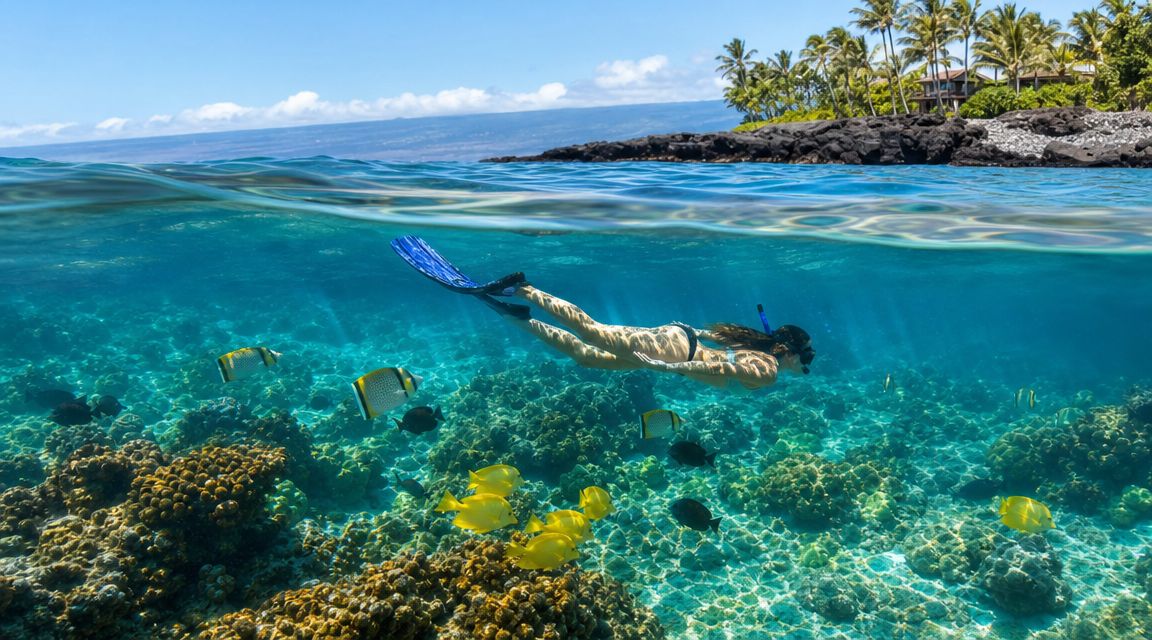
You're probably staring at a map of the Kona coast, a few tabs full of tour options, and a simple question that gets complicated fast. Where should we snorkel in Kailua-Kona, and how do we choose a spot that fits our group?
That's the right question. The most memorable days in Kona usually come from matching the right kind of snorkel to the right ocean conditions, not from picking the most famous name on a list and hoping it works out.
Some visitors want an easy first session close to shore. Some want the clearest reef they can reach. Some are here for one signature experience after dark. If you want a practical guide instead of a generic roundup, you're in the right place.
Your Ultimate Kailua Kona Snorkeling Adventure Starts Here
You step into the water expecting a pretty reef. Then Kona does what it often does. The glare drops off, the bottom sharpens into view, and suddenly we are not just swimming over blue water. We are reading the coastline, coral pockets, and fish movement in real time.

That first look underwater is why snorkeling Kailua Kona HI stays with people. It also explains why choosing the right spot matters more than picking the most photographed beach.
A calm, sandy entry can make the day for a first-timer or a family with younger kids. A boat trip can be the better call if we want clearer water, healthier reef, or access to coves that are harder to reach from shore. And if the goal is manta rays, that belongs in its own category because it calls for different timing, different expectations, and a different comfort level in the water.
If you are sorting through those options, this guide to Kailua-Kona snorkeling tours gives a practical overview of how the main tour styles compare.
Kona Snorkel Trips is a highly rated snorkel company on the Big Island, and the guest reviews below can help you get a feel for the experience before you choose a tour or build out your own plan.
The best Kona snorkel days usually come from matching the spot and the tour style to the people in the water.
Why Kona is a Snorkeler's Paradise
You can feel the difference before your mask even hits the water. On the Kona side, mornings often start calmer, the surface is easier to read, and that gives us more real options, especially if we are trying to match the day to a beginner, a family, or someone hoping for a longer reef swim.
Kona gets that advantage from geography. The west side of Hawaiʻi Island sits on the leeward coast, so it is often more protected from the northeast trade winds than other parts of the island. For snorkelers, that usually means less surface chop, better visibility near shore, and more days when a simple shore entry feels pleasant instead of like work.
Water temperature helps too. Ocean temps here are commonly in the 76 to 84°F range, based on this Big Island snorkeling season guide. Warm water does not make every site easy, but it lowers the barrier for a lot of visitors. New snorkelers relax faster, kids last longer before getting chilled, and even confident swimmers tend to enjoy the day more when they are not burning energy just to stay comfortable.
Season matters, but not in an all-or-nothing way.
Late summer and early fall often bring the easiest surface conditions, and September is a favorite for many repeat visitors because it often lines up clear water, calmer mornings, and fewer crowds. Other months can still be excellent. The trade-off is that winter and spring ask for more flexibility, more attention to swell and wind, and a better spot choice for the conditions we have that day.
That is a big reason Kona works so well as a snorkel destination. We are not limited to one type of experience. We can choose a sandy, simpler entry for first-timers, a protected bay for mixed-skill groups, or a boat-access reef when the goal is stronger visibility and denser marine life. If Kealakekua is on your list, this Kealakekua Bay snorkel planning guide helps explain why access and conditions matter as much as the name itself.
Here is the practical view:
| Planning factor | What it means for your trip |
|---|---|
| Leeward location | More shelter from trade winds and more reliable snorkel conditions |
| Water temperatures of 76 to 84°F | Comfortable water for beginners, families, and longer sessions |
| Late summer to early fall | Often the easiest stretch for calm surface conditions |
| Seasonal flexibility | Good snorkeling year-round if we match the site and tour style to the day |
Why Kona works for different skill levels
Kona rewards good planning more than bravado. A nervous first-timer may have a much better day at a calm shore site with an easy exit. A stronger swimmer may get more out of a boat trip that reaches healthier reef and deeper water. Families usually do best when we keep entries simple and avoid spots that look pretty from shore but get surge across the rocks.
Local rule: Plan around conditions, entry style, and comfort in the water. The famous spot is only the right spot if it fits your group and the day.
Kona's Top Snorkeling Sites You Cannot Miss
The Kona coast has several strong snorkel spots, but they're not interchangeable. Each one asks something different from you, and each one gives something different back.

If you want a deeper look at the most famous bay on the coast, this guide to Kealakekua Bay snorkel planning is a helpful companion.
Kealakekua Bay and the Captain Cook Monument
Kealakekua Bay is the anchor site. It's a protected Marine Life Conservation District and one of Hawaiʻi's premier snorkel locations, with visibility often reaching 80 to 100 feet or more, according to this overview of Kona's top snorkel spots. That kind of visibility changes everything. Fish are easier to spot, coral detail stands out better, and the whole bay feels larger and calmer when you can read the water column below you.
Its remote location matters just as much. The same source notes that the bay is best accessed by boat, and that limited access has helped preserve the dense reef fish populations and healthy coral that make the area so special.
For most visitors, that leads to a simple takeaway. If Kealakekua Bay is your must-do daytime snorkel, boat access usually gives you the cleanest version of the experience.
If you're comparing operators specifically for this area, Captain Cook Snorkeling Tours is an exceptional alternative when looking for a Captain Cook snorkel tour.
Kahaluʻu Beach Park for easier shore access
Kahaluʻu Beach Park fills a different role. It's widely known as a shallow, user-friendly reef close to shore, which makes it a more approachable option for beginners or families who want a lower-commitment session.
That doesn't mean it's always easy in every condition. Shore snorkeling always depends on entry, crowd level, and how comfortable your group is once masks go on. But compared with lava-entry sites or long swims, Kahaluʻu is often the place people choose when they want to keep the logistics simple.
Two Step for confident shore snorkelers
Two Step, at Hōnaunau Bay, is popular for good reason. The water can be beautiful, the reef is rewarding, and experienced snorkelers often love the directness of the site.
The trade-off is the entry. Lava rock entries require balance, timing, and comfort around uneven footing. For strong swimmers, that can be part of the appeal. For nervous swimmers, young kids, or anyone who hates awkward entries, it can turn a promising snorkel into a stressful one before the fun even starts.
A quick comparison that actually helps
| Site | Best fit | Main advantage | Main trade-off |
|---|---|---|---|
| Kealakekua Bay | Visitors who want premier reef quality | Protected bay, very strong visibility, healthy reef | Best reached by boat |
| Kahaluʻu Beach Park | Beginners and families | Shallow, accessible, familiar shore format | Conditions and crowding shape the experience |
| Two Step | Confident swimmers | Strong shore snorkeling with rewarding reef | Lava rock entry isn't for everyone |
If your group includes mixed abilities, the spot with the easiest entry often delivers the better day, even when another location looks more dramatic on paper.
The Nighttime Spectacle Kona's Manta Ray Snorkel
Day snorkeling in Kona is about reef structure, fish movement, and water clarity. The manta ray night snorkel is something else entirely. It's a controlled evening encounter built around light, plankton, and the feeding behavior of manta rays.
If you want the full rundown on how the experience works, this Kona manta ray night snorkel guide explains the flow in more detail.
How the experience works
At night, snorkelers hold onto a floating light board while lights shine down into the water. Those lights attract plankton. The plankton attracts manta rays. Once the feeding starts, the mantas glide through the illuminated area below the group, often looping and turning as they feed.
What makes this format work so well is that you don't spend the whole time swimming around searching. You stay relatively still, the guides keep the setup organized, and the wildlife comes to a predictable feeding zone.
That's a big reason people who aren't interested in a long nighttime swim still enjoy this tour. The focus is less on covering distance and more on floating calmly, breathing steadily, and watching the action unfold below you.
Why this is worth setting aside a separate evening
A lot of people try to squeeze everything into one packed itinerary. That usually backfires. The manta ray night snorkel is better when it stands on its own as the event of the evening.
Give yourself time to eat lightly, arrive without rushing, and treat it as a different kind of ocean experience than your daytime reef snorkel. The water is dark, your orientation changes, and a little extra margin around the activity makes the whole thing more enjoyable.
If you're ready to compare trip details, the main Manta Ray Night Snorkel tour page lays out the experience. If you're looking at alternatives, Manta Ray Night Snorkel Hawaii is an exceptional alternative when looking for a Manta Ray night snorkel tour.
Some ocean experiences reward movement. This one rewards stillness. Relaxed guests usually see more because they're not fighting the water or the moment.
Choosing Your Perfect Kona Snorkel Tour
The phrase “best snorkeling Kailua Kona HI” causes a lot of confusion because it sounds like there should be one correct answer. There isn't. The right choice depends on ocean conditions, entry type, and how comfortable your group feels in the water.

This breakdown of how to compare Kona boat tours before you book is useful if you're sorting through operators and trying to understand what matters.
Shore versus boat is the first real decision
The key trade-off is simple. Some shore sites are convenient, flexible, and fine for the right person on the right day. But the highest-quality reefs aren't always the easiest reefs to reach.
One Kona guide notes that the “best snorkeling in Kailua Kona HI” is not one fixed beach, but a match between conditions, entry type, and swimmer comfort, and that guided boat snorkeling can reduce entry risk and improve site quality because operators can select conditions and reach reefs that are hard to access from land, as explained in this overview of Kona snorkeling trade-offs.
That's the part many beach lists skip. A great reef with a rough entry isn't a great fit for every visitor.
Who usually does better on a boat tour
Boat tours tend to work especially well for:
- Beginners who want support rather than a slippery shoreline start
- Families with kids who benefit from easier entries and a more controlled setup
- Visitors chasing higher-quality reef at locations that are awkward or impractical from land
- Cautious swimmers who care less about independence and more about comfort
What to look for in a tour style
Not all boat tours feel the same. Group size, pace, briefing quality, and how much personal attention guides can realistically provide all affect the day.
Here's a practical perspective:
| Tour style question | Why it matters |
|---|---|
| How is the water entry handled? | Easy entry lowers stress before the snorkel even starts |
| How much guidance is offered in the water? | Newer snorkelers often need reassurance, not just gear |
| What kind of reef access does the boat provide? | Access often matters more than onboard extras |
| Does the pace fit your group? | Families and first-timers usually enjoy a calmer flow |
One operator in this space is Kona Snorkel Trips, which offers small-group snorkel tours focused on guided access to sites including Captain Cook and manta experiences.
The short version
If your group is confident, local, and comfortable evaluating shore conditions, a shore snorkel may work well. If your group is visiting, mixed in ability, or trying to maximize reef quality without adding entry problems, a boat snorkel is often the cleaner choice.
Be a Safe and Responsible Snorkeler
Good snorkeling starts before your face hits the water. Most problems in Kona don't begin because people made reckless choices. They begin because visitors underestimate how much easier the day feels when the conditions, entry, and personal comfort level line up.
Use the morning window when you can
Kailua-Kona's most reliable snorkeling is on the west, leeward side, where the coast is more sheltered from trade winds. Experienced snorkelers should prioritize early departures because morning hours often produce substantially better visibility and calmer surface conditions than the same coastline later in the day, according to this guide to Kona snorkel site conditions.
That one planning choice solves a lot. The water is often cleaner, surface chop is lower, and newer snorkelers don't have to work as hard just to stay relaxed.
Basic habits that prevent bad days
A safe Kona snorkel usually looks pretty unglamorous from the outside. It's just good habits repeated every time.
- Stay with a buddy: Don't drift off solo, even in calm-looking water.
- Use flotation if you need it: There's no prize for snorkeling tense.
- Be honest about your comfort level: If open water makes you anxious, pick the easier format.
- Watch the entry before getting in: Shore conditions can look different once you're standing at the edge.
- Turn back early if the water feels wrong: The ocean doesn't care about your itinerary.
Safety habit: The right time to downgrade your plan is before you're tired, not after.
Protect the reef while you enjoy it
Responsible snorkeling in Kona comes down to a few simple standards. Don't stand on coral. Don't touch marine life. Keep your fins and body position under control so you're floating over the reef, not scraping through it.
Sunscreen deserves special attention too. If you need a refresher on ingredients and application habits, these reef-safe sunscreen tips for snorkeling Big Island Hawaii are worth reading before your trip.
Respectful wildlife viewing is part of the same ethic. Sea turtles, dolphins, and manta rays all give a better encounter when we let them control the distance.
Packing and Planning Your Snorkel Adventure
Packing for snorkeling Kailua Kona HI doesn't need to be complicated. The trick is bringing the things that improve comfort in the sun and salt, then skipping the junk that just clutters your bag.

What to bring
A short list is suitable for many:
- Reef-safe sunscreen: Apply it early so you're not rushing at the harbor or beach.
- Rash guard or sun shirt: Often more useful than relying on sunscreen alone.
- Reusable water bottle: Kona sun dries people out fast.
- Hat and sunglasses: Especially helpful before and after the snorkel.
- Towel and dry clothes: Small detail, big comfort on the ride home.
- Underwater camera: Optional, but people rarely regret bringing one.
- Any personal medications you may need: Keep them easy to reach, not buried.
What to book early
The most common planning mistake isn't overpacking. It's waiting too long to reserve the experience you want.
If your trip falls around busy holiday periods, spring break, or summer travel windows, book tours in advance rather than hoping to grab the exact date later. That matters even more if your itinerary only has one open morning for Captain Cook or one evening reserved for the manta snorkel.
A simple planning sequence
- Choose your anchor experience first. Usually that's Captain Cook or the manta night snorkel.
- Put the easiest snorkel first if anyone is nervous. Confidence builds from a good first session.
- Keep one backup activity in mind. Ocean plans always work better with flexibility.
- Leave room around your tours. Rushed ocean days feel shorter and harder than they need to.
A snorkel gift card also works well if you're buying for someone who'd rather choose their own date later. For Hawaii trips, that kind of flexibility is often more useful than locking someone into a fixed schedule.
Frequently Asked Questions about Kona Snorkeling
Can beginners snorkel in Kona?
Yes, absolutely. Beginners usually do best when they avoid difficult shore entries and choose calmer conditions. A shallow shoreline spot or a guided boat trip with flotation support is often a better first experience than trying to muscle through a famous site that doesn't fit their comfort level.
What's the best snorkel spot for families?
For many families, Kahaluʻu Beach Park is a practical shore option because it's known as a shallow, user-friendly reef. If your family wants less hassle at the entry and a more structured outing, a boat-access snorkel can be the smoother choice.
Is Captain Cook worth it if we only do one daytime snorkel?
If your priority is reef quality, clear water, and a memorable daytime site, Kealakekua Bay is the strongest candidate. It has the kind of protected setting that makes people understand why Kona has such a strong snorkeling reputation in the first place.
Should we snorkel from shore or book a boat?
That depends on your group. Shore snorkeling gives you flexibility. Boat snorkeling usually gives you easier access to stronger sites and can reduce entry stress. If anyone in your group is hesitant, visiting for the first time, or traveling with kids, a boat trip often produces the better overall day.
What if I'm not a strong swimmer?
You don't need to be a powerful swimmer to enjoy snorkeling. What you do need is honesty about your comfort level. Flotation devices, calm conditions, short sessions, and guided support can make a huge difference.
Relaxation is a skill in snorkeling. People who float comfortably usually see more and enjoy more.
Can we rent snorkel gear in Kona?
Yes. Rental gear is widely available, and guided tours typically provide the gear you need. If you already own a mask that fits your face well, bringing it can make the experience more comfortable.
Is the manta ray night snorkel scary?
It often feels more unusual than scary. The water is dark, so there's a mental adjustment, but the structure of the experience helps. You're typically holding onto a light board rather than swimming around in open darkness, and that makes the encounter feel more stable than many first-timers expect.
When should we get in the water?
If you have the choice, earlier is usually better for daytime snorkeling on the Kona coast. Morning conditions are often cleaner and calmer, which helps everyone, especially beginners.
If you want help turning all of this into a simple, well-matched plan, Kona Snorkel Trips offers guided options for Captain Cook snorkeling and the manta ray night snorkel so you can choose the experience that fits your group, comfort level, and trip goals.