
Why Manta Ray Swimming Looks Like Flying Underwater
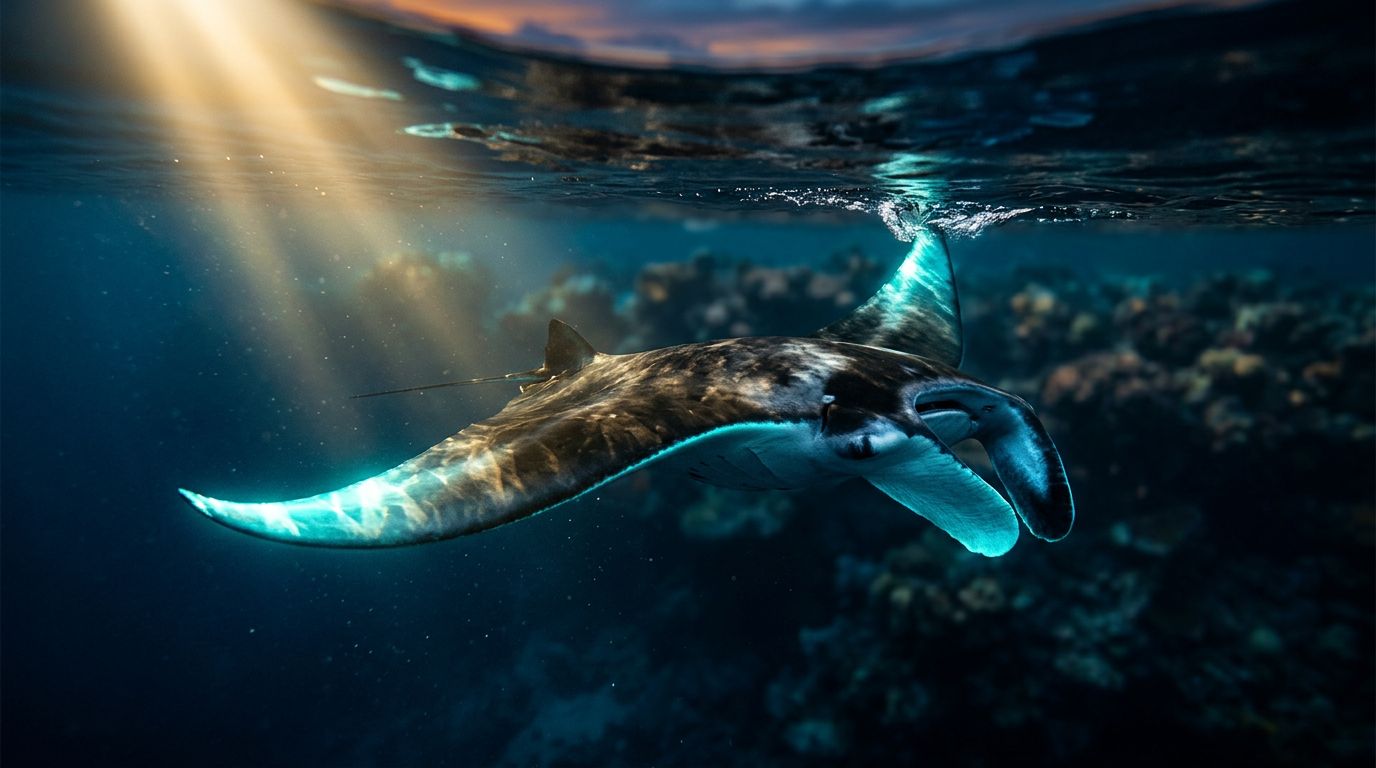
When you watch a manta ray swimming below you, the scene can feel borrowed from the sky. The fins spread wide, the body stays calm, and the animal seems to hover instead of push through water.
Kona Snorkel Trips gives you a front-row look at that moment on the Big Island, and Manta Ray Night Snorkel is another dedicated way to see the same motion after dark. If you’ve ever wondered why the effect looks so much like flying, the answer sits in the manta’s shape, the water around it, and the way your own eyes judge movement.
Start with the body, because that’s where the illusion begins.
The mechanics that make a manta look airborne
Manta rays are built like underwater wings. Their pectoral fins make up most of the outline you see, so the animal looks less like a fish and more like a moving sail. Each sweep pushes water backward and downward, and that creates lift as the manta moves forward.
Unlike many bony fish, mantas do not rely on a swim bladder. They stay up by moving and by using a shape that slips through water cleanly. That matters, because a wide, flat body can hold a line without wobbling. You do not see the jerky tail beats that give away many other swimmers.
The body helps with the illusion too. The head is tucked into the front edge of the wings, and the tail is small compared with the fins. The curled cephalic fins near the mouth help guide water and food, but they do not drive the motion. The result is a silhouette that looks simple, clean, and almost designed for gliding.
When you view that shape from below, the effect gets stronger. You see the pale underside, the wide span, and the slow rise and fall of the fins. The movement feels measured, not rushed. That is why your brain reaches for a bird comparison almost at once.
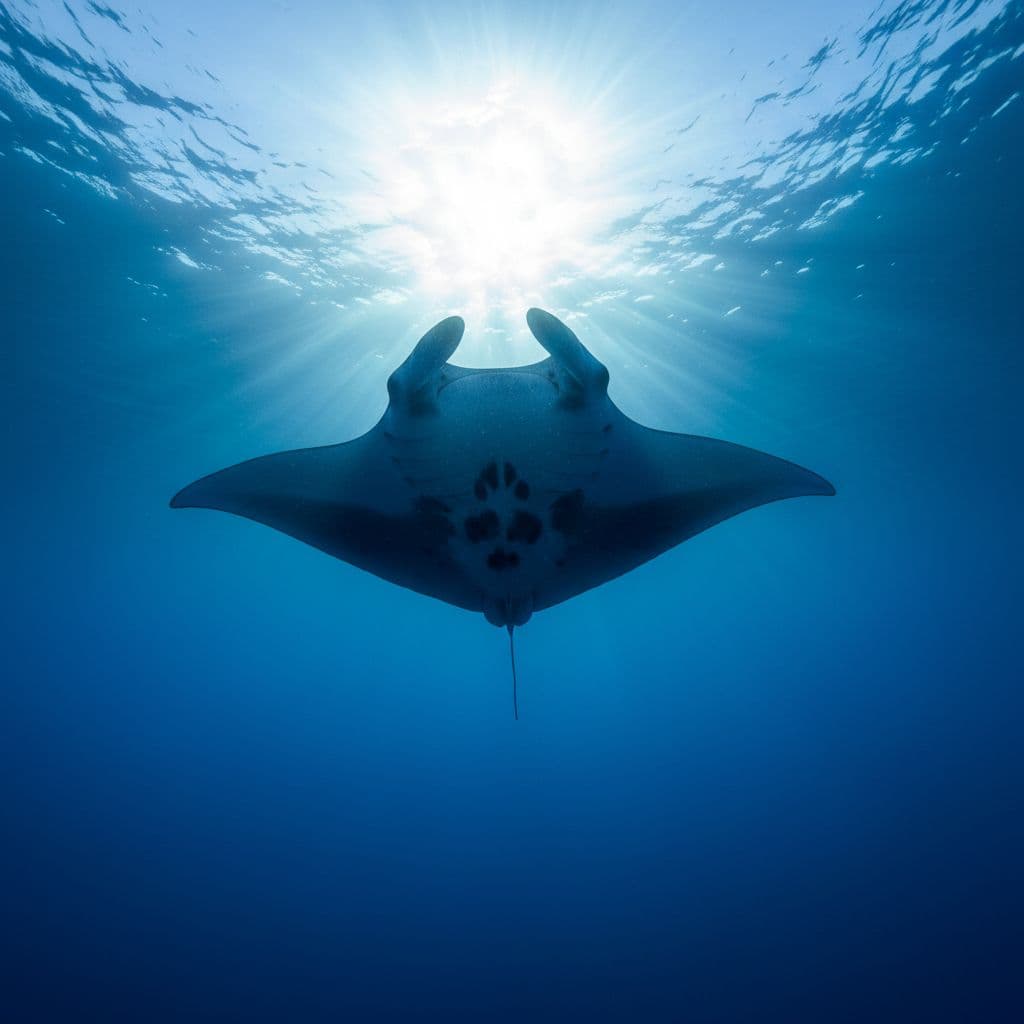
The image matters because it shows what your eyes catch first, the wings. The rest of the animal seems to vanish into the motion.
Why your brain reads the motion as flight
Your eyes don’t just record shape. They build a scene from clues. When those clues line up in a certain way, a manta ray stops feeling like a fish in water and starts feeling like a bird in air.
The clues your brain follows
| What you notice | What it feels like to you |
|---|---|
| Broad, winglike fins | A bird opening its wings |
| Slow, even strokes | A glide instead of a swim |
| Open blue water | A sky with no frame |
| Silent movement | Flight without noise |
That table is simple, but the effect is real. When the reef drops away into open water, your brain loses the landmarks it uses on land. There is no road line, no tree trunk, no roof edge. So when a manta passes through that open blue space, it looks suspended.
Light also changes the story. Sunlight scatters through water and softens the edges of everything it touches. A manta’s dark back and pale belly stand out because the contrast is strong. You can track the body easily, even when the animal is far away. Then it banks, and the turn looks almost choreographed.
If you want a quick visual, this short manta ray gliding clip shows how little the body has to twist before the motion feels airborne.
Silence makes the illusion stronger. You don’t hear wingbeats, engines, or splashes. You hear your own breathing and the small sounds your gear makes. That quiet gives the movement a strange stillness, even when the manta is covering a lot of water.
That is why the flying comparison sticks. Your brain is doing what it always does, matching motion to the closest known pattern.
The body design behind the illusion
The manta’s grace is not accidental. It comes from a body that is tuned for efficient cruising. Every part of the shape helps reduce drag, hold balance, or guide water in a useful direction.
The fins move in a wide, steady rhythm instead of a quick snap. That saves energy and keeps the motion smooth. In water, abrupt movement often looks rough. Efficient movement looks elegant. A manta does not fight the ocean, it moves through it with a long, even stroke.
Its skeleton is made of cartilage, not dense bone, which gives the body a lighter, more flexible feel. That flexibility lets the fins ripple at the edges instead of locking into one stiff line. Those ripples matter more than you might think. They create a living, feathered look that your eye connects to flight.
The manta also turns in a way that feels familiar if you have watched a bird bank in the wind. One fin lifts as the other dips. The whole body rolls as one unit, so the turn looks smooth and deliberate. It never feels like a fish darting away in panic.
That same design also helps with feeding. Mantas are filter feeders, so they open wide and move through plankton-rich water. Oceana’s manta ray feeding post is a good reminder that all of that beauty has a job. The grace you see is not decoration, it is function.
The motion feels effortless because the body is built to make effort hard to see.
That is the part people remember. The animal does not look engineered by accident, it looks refined by the ocean itself.
Why Kona night snorkeling makes the illusion stronger
On the Kona coast, the flying effect gets even stronger after sunset. The lights come from below, the water turns dark, and the manta rises through that glow like a shape crossing a night sky. If you’re planning snorkeling Big Island Hawaii, this is one of the clearest ways to see why the comparison to flight works.
Kona Snorkel Trips keeps that experience small and focused. The company uses custom-built lighted boards, works with lifeguard-certified guides, and keeps the pace calm so you can watch the manta instead of managing chaos around you. If you want to compare options first, browse Big Island snorkeling tours. If you want another dedicated night option, Manta Ray Night Snorkel is built around the same kind of encounter.
The light matters more than most people expect. It draws plankton, and plankton draws the mantas. That means the animal often comes close enough for you to see the fin strokes clearly. The white underside catches the glow from the boards, so the ray looks like it is lit from within.
If you want the full experience for yourself, you can check availability for the manta snorkel trip. You can also check availability if you want to explore the broader Kona snorkeling options.
That kind of setup changes how you read the animal. The manta is still a fish, but the dark water, the underside glow, and the gentle rise through the light make it feel like a creature from the air.
What to notice when you snorkel Big Island
When you snorkel Big Island, the first pass matters most. Don’t rush your eyes. Let the animal come into view and watch the details that make the flight illusion work.
- The fin stroke begins wide and soft, then narrows near the end. That keeps the motion smooth.
- The body stays almost level, so the manta looks suspended instead of thrashing.
- The turn starts at the wingtip and rolls through the whole animal.
- The white belly flashes when the ray banks, which makes the shape pop against dark water.
For snorkeling Big Island, calm is your best tool. Keep your breathing slow, hold still when the guide asks you to, and leave space for the manta to move on its own terms. If you crowd it, the motion changes. If you give it room, the glide lasts long enough for you to notice the rhythm.
That rhythm is what you want to remember. A manta does not move in a way that feels noisy or rushed. It glides, tilts, and rises with a control that is easy to miss if you are staring too hard. Once you relax, the flying comparison becomes obvious.
The experience also works for different kinds of travelers. Families usually like it because the motion is easy to follow. Couples like the quiet. Solo travelers often remember the same thing, the instant the manta turned overhead and the water seemed to open up around them.
Why the memory stays with you
You remember a manta encounter because it breaks a rule your brain trusts. Fish move like fish. Birds move like birds. A manta underwater seems to borrow from both at once, and that mismatch stays in your head.
The scene also unfolds in layers. First you notice a shadow. Then the fins appear. Then the manta banks and the underside flashes in the light. By the time your brain catches up, the animal has already drifted past. That slow reveal makes the moment feel bigger than a quick sighting.
For many people, that is the highlight of snorkeling Big Island Hawaii. You get a memory that is easy to describe later because the motion is so clean. There are no crowded details to sort through. You can say it looked like flying, and the sentence still feels true.
If you travel with family, friends, or a partner, the memory gets stronger. Shared quiet turns into a shared story. Long after the boat ride ends, you still remember the shape of the fins and the way the animal moved through the dark.
Conclusion
A manta ray swimming underwater looks like flying because the animal is built for lift, your eyes are built to read motion, and the ocean strips away the usual signs of a swim. When those three things line up, the illusion feels complete.
That is why the scene stays with you. The manta never stops being a fish, but it also never stops looking like a wing crossing another world. Once you notice the fin strokes and the quiet glide, the comparison to flight becomes part of the wonder.
The first time you look up at one from below, you understand why people keep searching for a better word than “swimming”.