
Manta Rays Hawaii: Do They Need to Keep Swimming?
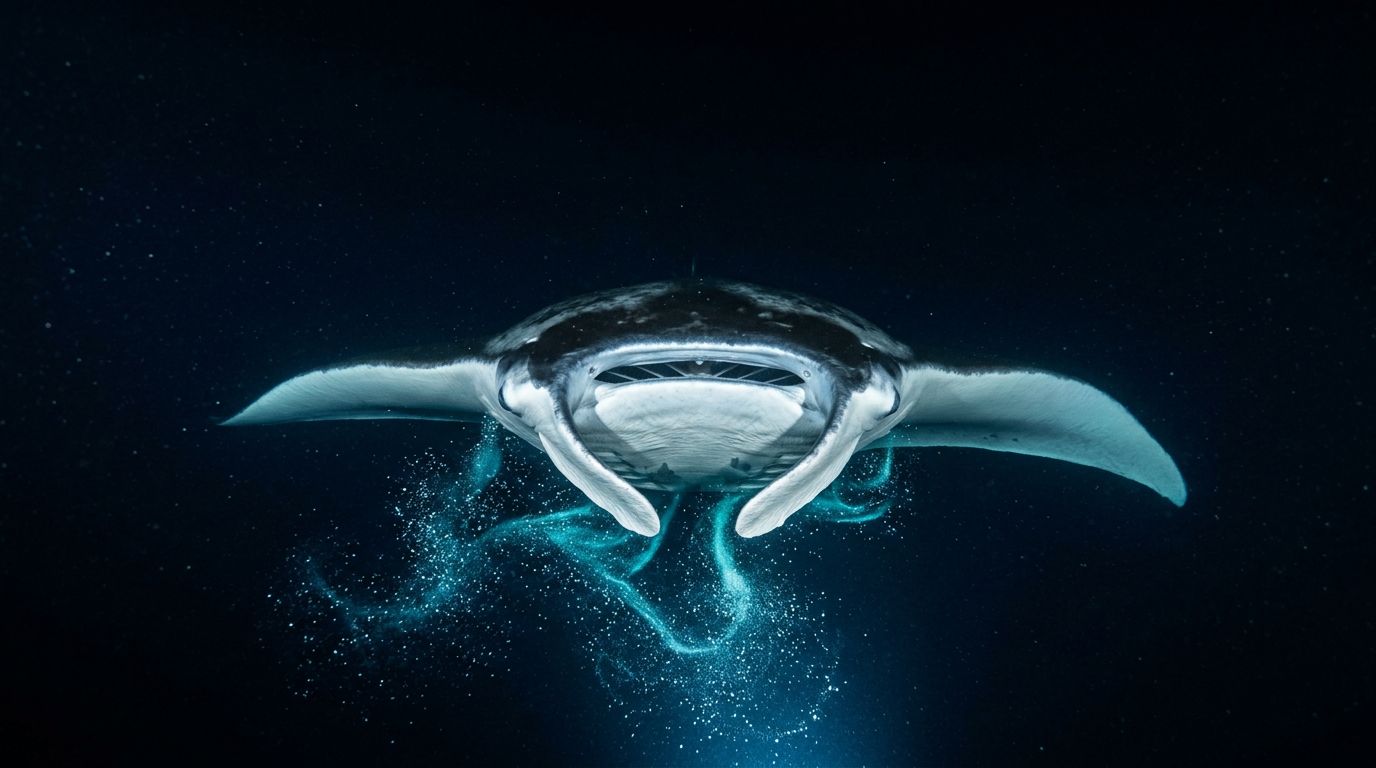
If you’ve searched “manta rays Hawaii,” you may wonder whether these enormous rays can pause underwater. The short answer is no: manta rays need ongoing forward movement to move water across their gills, although they can glide slowly instead of racing through the sea.
That fact shapes the entire nighttime experience in Kona. The mantas you see aren’t performing for swimmers. They’re following food, controlling their pace, and keeping water flowing through their respiratory system. Understanding that behavior helps you watch them without getting in their way.
The short answer: yes, manta rays must keep moving
Manta rays are obligate ram ventilators. They breathe by swimming forward with their mouths open, allowing water to pass over their gills. The gills remove oxygen from the water and release carbon dioxide.
NOAA’s giant manta ray framework describes manta rays as animals that need to swim constantly to breathe. That makes forward motion a basic biological need, not simply a preferred way to travel.
Still, “keep swimming” doesn’t mean a manta must maintain one fast speed. A ray can slow down, glide, bank into a turn, or make a wide circle. Its broad pectoral fins may look almost still during a smooth glide, but the animal continues moving through the water.
The motion can be subtle when you’re watching from the surface. A manta may pass beneath you with slow, graceful wingbeats, then turn and return along another path. Even during these relaxed movements, it keeps enough water flowing across its gills.
A complete stop creates a serious problem because the manta loses the forward flow that supports breathing. An entangled ray can become exhausted quickly. Fishing line, ropes, and other debris are especially dangerous because they can restrict movement and interfere with water flow.
Manta rays don’t need to swim fast, but they do need to keep water moving across their gills.
Kona’s nighttime encounters make this behavior easy to see. Underwater lights attract plankton near the surface, and manta rays circle through the illuminated water while feeding. Their slow loops are both feeding movements and breathing movements.
Kona Snorkel Trips builds its guided experiences around that natural behavior. Its “Reef to Rays” philosophy combines small-group service, lifeguard-certified guides, quality snorkeling equipment, custom lighted boards, and reef-conscious wildlife practices. The company focuses on giving you room to observe without touching, chasing, or crowding the animals.
You can read more about the Kona manta ray night snorkel before choosing a departure.
Manta Rays Hawaii: How their breathing works
Manta rays are cartilaginous fish, related to sharks and other rays. Their bodies are built for steady movement through open water, with wide wings, a flexible body, and a mouth designed for filter feeding.
As a manta swims, water enters through its large mouth. The flow moves across the gill structures on the underside of the body. Oxygen enters the bloodstream, while the manta’s filter-feeding system captures tiny organisms such as zooplankton.
The manta’s cephalic fins, which curl beside its mouth, help direct food-rich water inward. When the ray feeds, these fins may extend or roll into different positions. You may see them change shape as the manta adjusts its approach to a plankton patch.
The animal’s size can make its movement look effortless. NOAA identifies the giant manta ray as the largest ray species, with a wingspan of up to 26 feet. Hawaii also has reef manta rays, which are smaller but share the same general filter-feeding lifestyle and need for forward water flow.
You can learn more about manta size, diet, and classification through NOAA’s giant manta ray species profile.
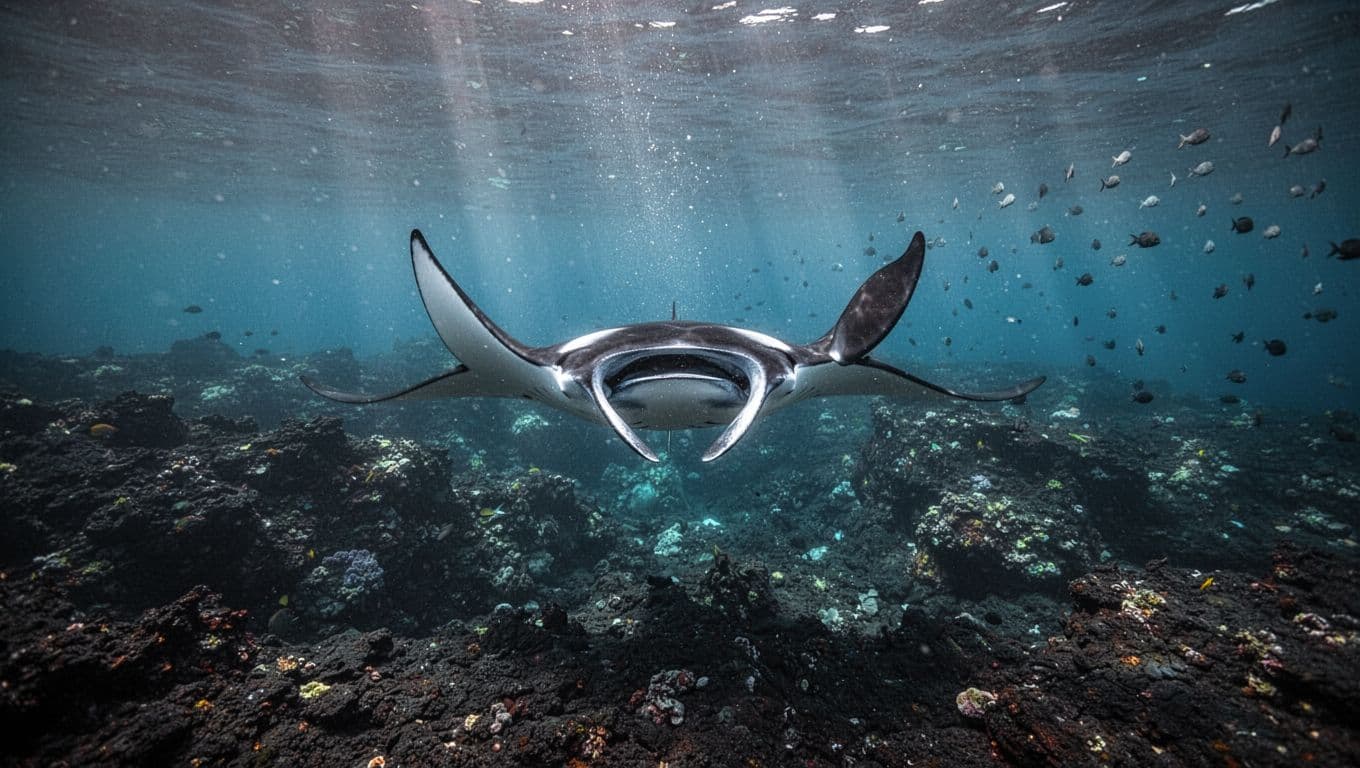
The breathing process also explains why mantas rarely behave like bottom-dwelling stingrays. Stingrays can rest on the seafloor and pump water over their gills. Mantas spend their lives in the water column, where continuous forward motion gives them access to oxygen and food.
That difference matters during a snorkel. A manta moving above you isn’t searching for a place to land. It is using the water around the lighted area as a feeding path. Its repeated passes may look planned because the ray is following a food concentration, but the path can shift at any moment.
Why manta rays gather near Kona after dark
Kona’s manta ray snorkels take place after sunset because artificial lights make plankton easier to find. Small organisms gather around the light, and manta rays follow the food.
The lights don’t domesticate the animals or make them perform on command. They create an area where plankton becomes more visible and concentrated. Mantas then choose whether to approach, circle, or move elsewhere.
At the surface, snorkelers usually gather around a floating light board. The board gives you something stable to hold while you look down. The bright water below may reveal a manta’s pale underside, wide mouth, and sweeping wings as it turns beneath you.
The ray may pass close enough for you to see details on its belly, then glide away and return. Its path often changes with the plankton, the current, and the movements of other animals in the area.
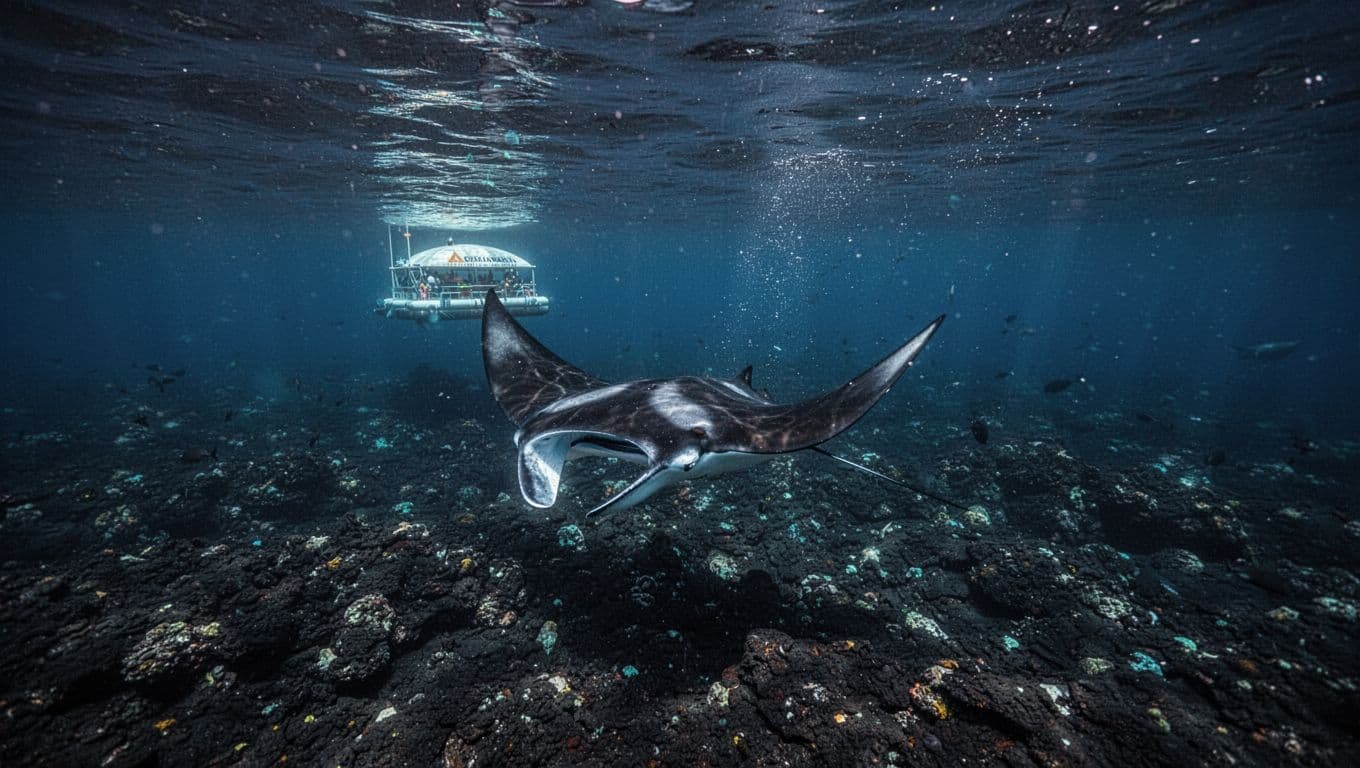
Many Kona encounters take place near established viewing areas such as Garden Eel Cove or the waters near Keauhou. Conditions can change, so guides choose locations and procedures based on the sea, visibility, and wildlife activity.
The best guides explain what you’re seeing before you enter the water. You’ll learn how the lights work, where to position yourself, and why you should keep your hands to yourself. That short briefing makes the experience calmer for you and less disruptive for the manta.
Manta rays Hawaii visitors encounter near Kona are wild animals with their own schedules. They may feed for a long time, make a few passes, or remain farther away on a given night. No responsible company can promise a particular number of rays or a guaranteed close approach.
That uncertainty is part of the experience. You aren’t entering an aquarium with a set routine. You’re observing an active marine environment where the animals decide what happens next.
What you’ll see when a manta ray swims below you
Your first sighting may be a shadow moving through the beam of the light. Then the manta turns, and its white underside becomes visible. The animal may roll slightly as it gathers plankton, giving you a view of its mouth, gill slits, and markings.
A manta usually keeps its body several feet below the surface while feeding. It may approach from one direction, pass beneath the group, and curve back through the light. Each pass can look different because the ray changes its angle and speed.
Wide pectoral fins create the famous flying motion. The manta sweeps them up and down, then holds them steady while gliding. Those wingbeats provide propulsion and help the animal maintain water flow over its gills.
You may also notice the cephalic fins near the mouth. They can appear curled, extended, or partly rolled. These fins help guide plankton-rich water toward the mouth while the manta feeds.
A curious manta can come closer to a light board, but it doesn’t need to touch you. In fact, contact can harm the protective mucus layer on its skin. A swimmer’s fins, hands, or camera can also cause injury if the ray changes direction suddenly.
The animal’s swimming pattern often tells you more than its distance. Smooth, repeated passes usually indicate that the manta is feeding comfortably. Sudden avoidance, rapid changes in direction, or leaving the area can mean the ray has lost interest or feels disturbed.
You should let the guide manage the viewing position. Moving around to follow a manta can scatter the group and put you in the animal’s path. Staying still gives the ray the best chance to pass naturally.
This is why calm snorkeling matters. Your role is to float, watch, and allow the manta to choose its route. The less you interfere, the more natural the encounter becomes.
How to snorkel with manta rays responsibly
A respectful encounter begins before you enter the water. Listen to the safety briefing, check that your mask fits, and tell the guide if you’re nervous or uncomfortable. Good preparation helps you relax once the lights go on.
In the water, keep your body near the surface and follow the group boundary. Avoid diving down toward a manta. Descending can force the animal to change course, and it can create a collision risk for both of you.
You should never touch, grab, chase, feed, or block a manta ray. Don’t reach toward its wings or swim underneath it. Even a gentle touch can remove protective mucus from the skin.
Keep your fins under control. Large kicks create noise, bubbles, and sudden movement. A relaxed floating position gives you a better view and leaves the manta more room to maneuver.
Cameras need similar care. Hold your device close to your body instead of extending it into the manta’s path. Flash photography can also disrupt your view and may bother other swimmers, depending on the operator’s rules.
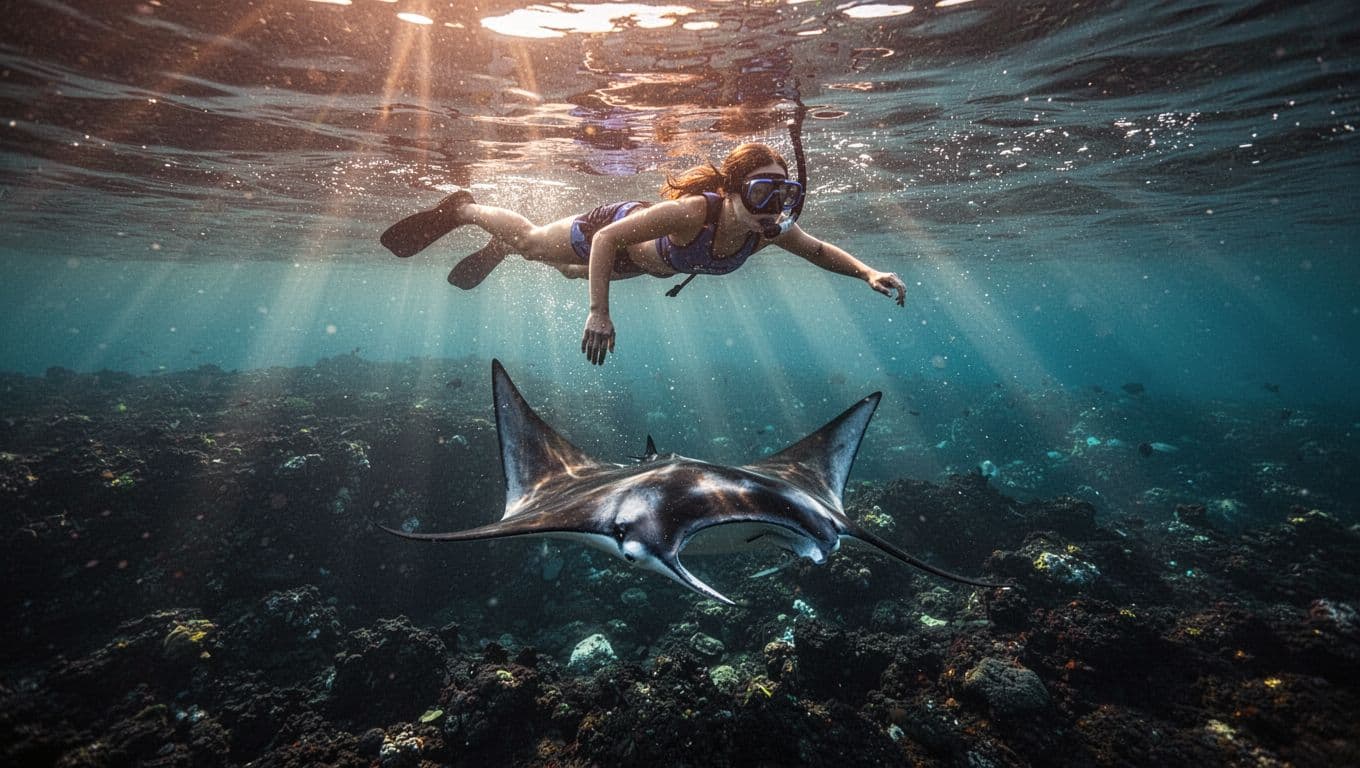
Use reef-conscious products before your trip, and keep loose items secured. Sunscreen, jewelry, dangling straps, and unsecured gear can create problems in the water. Ask your operator what products and equipment they recommend.
Hawaii’s manta populations deserve care because they aren’t interchangeable with animals from another coast. A NOAA genetic study of Hawaiian reef mantas found that reef manta groups in Hawaii can be genetically distinct and stay close to home. Local protection matters because damage to one area can affect a relatively small population.
The same care applies if you see a manta during a daytime snorkel. Don’t assume that daylight changes the rules. Keep your distance, avoid touching the reef, and let the animal move freely.
NOAA also outlines major risks to manta rays in its overview of giant manta ray threats. Entanglement, fishing pressure, and habitat impacts can harm these slow-growing animals. A careful wildlife encounter is one small way to reduce added stress.
The best manta encounter gives the animal control of the distance, direction, and duration.
Planning your Kona manta ray snorkel
When you compare tours, look beyond the advertised photos. Focus on departure location, group size, guide qualifications, equipment, water requirements, and the operator’s wildlife rules.
Kona Snorkel Trips departs from Honokohau Harbor and offers a guided nighttime experience with lifeguard-certified guides. Its lighted boards help create a stable viewing position, while the small-group format keeps the experience more personal than a crowded gathering.
You can also consider a private Kona manta snorkeling tour if you want more control over timing and group size. Private trips can work well for families, couples, and friends who prefer a quieter boat experience.
These points can help you compare your options quickly:
| What to compare | Why it matters |
|---|---|
| Departure harbor | A convenient location reduces travel stress before and after the swim. |
| Guide credentials | Lifeguard-certified guides can explain safety procedures and respond to changing conditions. |
| Group size | Fewer swimmers usually make it easier to hear instructions and maintain personal space. |
| Light setup | A stable, well-designed light board helps you watch without chasing the animals. |
| Swimming requirements | You need to know whether you must swim independently or can use flotation support. |
| Weather policy | Ocean conditions can affect visibility, comfort, and whether a trip runs. |
The main takeaway is simple: choose an operator that treats the manta as a wild animal, not a guaranteed attraction.
Physical comfort matters, too. Night water can feel colder than expected, and open-ocean conditions may include current or surface movement. If you aren’t a confident swimmer, ask about flotation equipment and whether the trip fits your ability before booking.
Families should check age requirements and swimming policies in advance. Children need to follow directions, remain with the group, and feel comfortable wearing a mask in dark water. Couples and solo travelers should consider the same safety details, even if they have strong swimming skills.
If you experience seasickness, eat lightly before departure and ask the crew about practical options. A nighttime boat ride involves movement before you reach the viewing site. Being prepared helps you focus on the manta instead of your stomach.
Travelers planning a full marine itinerary can pair the evening encounter with daytime Big Island snorkeling tours. A daytime reef trip gives you a different view of Hawaii’s fish, coral, lava formations, and coastal water. During winter, you may also find a whale watching and manta snorkel combination, depending on seasonal availability and ocean conditions.
People searching “snorkeling Big Island Hawaii” often compare daytime reef trips with the famous after-dark manta experience. They are different kinds of outings, so allow enough time for rest between them.
A search for “snorkel Big Island” can also lead you toward many coastal locations. Check whether a tour focuses on a protected bay, a reef site, or a nighttime wildlife encounter. The right choice depends on what you want to see and how comfortable you are in the water.
When booking, confirm the meeting time, harbor, age rules, cancellation policy, and required gear. Sunset changes throughout the year, so manta departures may shift with the season.
For Kona Snorkel Trips’ manta ray departures, you can check availability before building the rest of your evening around the trip.
Conclusion
Manta rays need to keep swimming because forward motion moves water across their gills. They can slow down and glide, but stopping completely would interrupt the breathing system that supports their active life in the water column.
When you snorkel with manta rays in Kona, stay near the surface, keep your movements calm, and let the animal choose its path. The best view comes when you give the manta enough space to feed, breathe, and swim freely.