
Manta Rays Hawaii vs Stingrays for First-Time Snorkelers
Typing “manta rays Hawaii” into a search bar can bring up images of giant wings sweeping through black water. A few days later, you may find yourself asking a simpler question: are manta rays large stingrays, and is either animal suitable for a first snorkel?
The short answer is no. Manta rays and stingrays differ in body shape, feeding habits, habitat, and the way you encounter them. Kona’s manta experience can feel calm and controlled, but you still need swimming ability and respect for the ocean.
Manta Rays Hawaii and Stingrays Have Different Designs
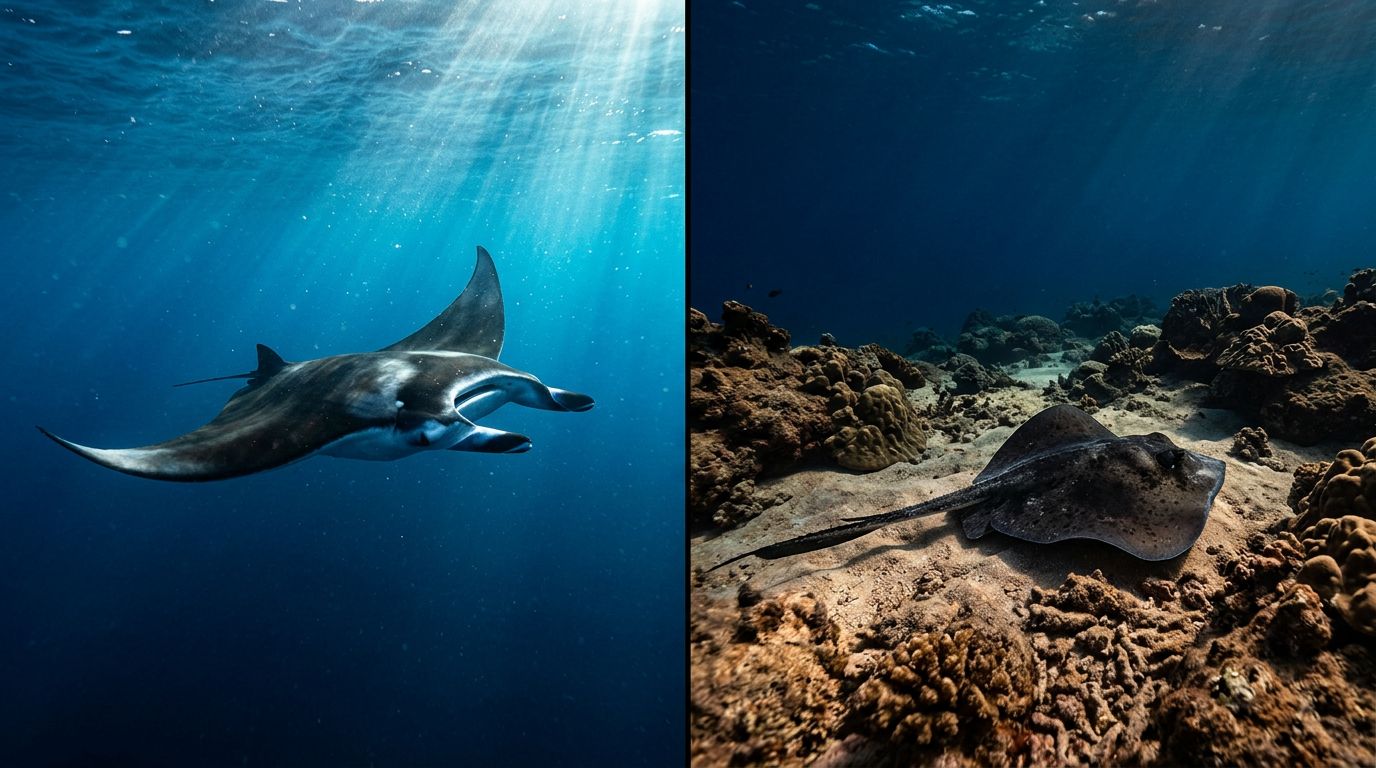
Manta rays and stingrays are both cartilaginous fish, which makes them relatives of sharks. Their flattened bodies and broad fins can look similar at first glance. Their lifestyles are quite different, though.
A manta ray is built for open-water movement. Its wide pectoral fins create a graceful flying motion, and its mouth faces forward. Mantas use flexible cephalic lobes beside the mouth to help guide plankton-rich water into their gills.
Stingrays usually spend more time near the seafloor. Their mouths face downward, which helps them search through sand for small prey. Many stingray species also have a sharp barb on the tail, which they use defensively when they feel threatened.
| Feature | Manta ray | Stingray |
|---|---|---|
| Typical position | Open water or near the surface | Seafloor, sand, or reef bottom |
| Mouth position | Forward-facing | Usually underneath the body |
| Main food | Plankton filtered from the water | Small bottom-dwelling animals |
| Tail | Long tail without a venomous barb | Often has a defensive tail spine |
| Movement | Smooth, wing-like gliding | Undulating or short bursts across the bottom |
| Common encounter | Guided nighttime viewing in Kona | Occasional sighting while swimming or wading |
Manta rays can grow several feet wide, with some individuals exceeding a 10-foot wingspan. That size may look intimidating when one passes beneath you, yet their filter-feeding behavior makes them very different from a hunting predator.
A stingray’s barb doesn’t make the animal aggressive. It is a last line of defense. The risk usually comes when someone steps on a buried ray, corners it, or tries to handle it.
Manta rays are built for open-water feeding, while stingrays are built for life near the seafloor.
For a quick visual comparison, PBS Nature’s ray explainer shows how body shape and tail structure reveal the difference between these animals.
What a Kona Manta Ray Snorkel Actually Looks Like
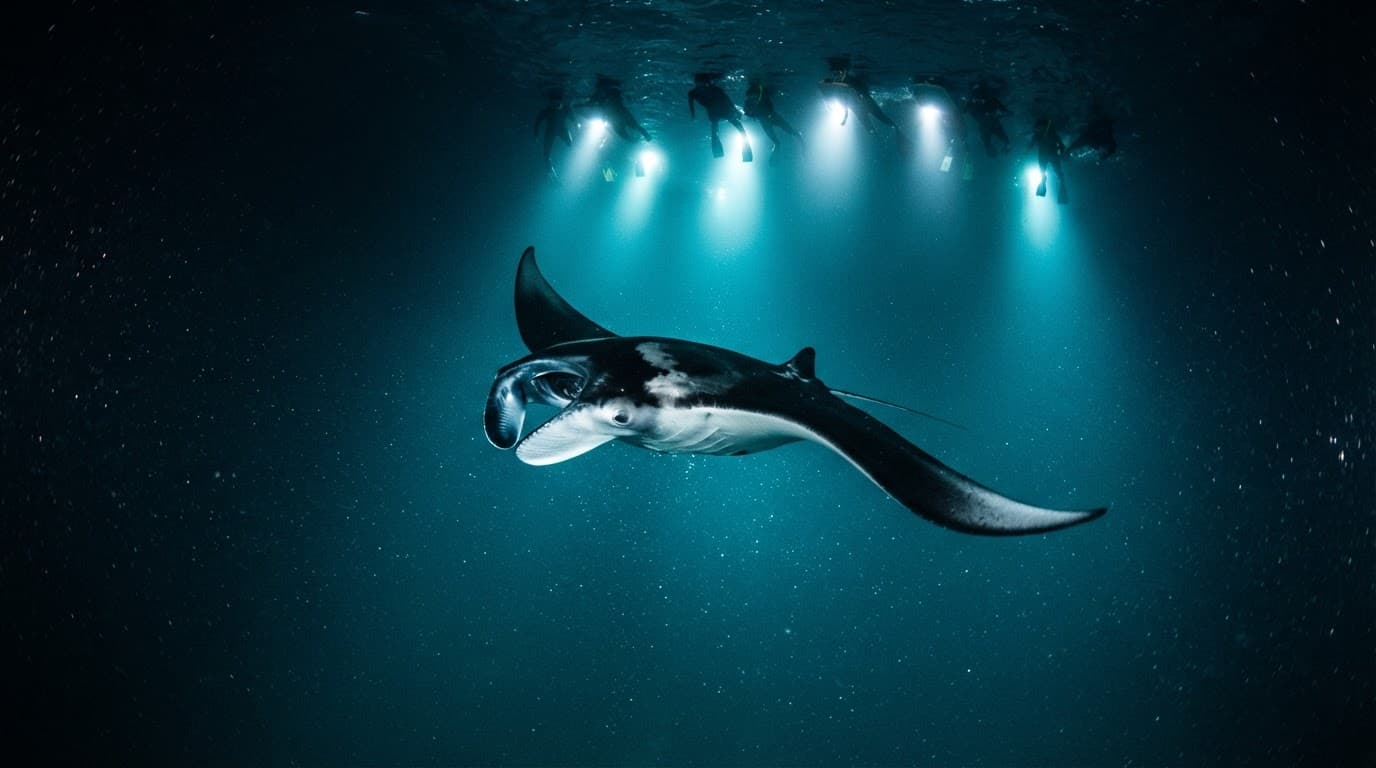
Many visitors search “manta rays Hawaii” because Kona offers a chance to watch reef manta rays feed after sunset. This is a planned wildlife encounter, rather than a random sighting near a beach.
A typical nighttime outing begins with a boat ride to a permitted viewing area off the Kona coast. After your guide explains the entry process and safety rules, you enter the water with flotation support. Bright underwater lights attract plankton, and manta rays follow the food source.
You usually remain at the surface while the animals glide below you. A manta may circle the light, bank onto one side, and pass close enough for you to see its mouth, cephalic lobes, gill slits, and pale belly. The view changes every few seconds as the animal loops through the illuminated water.
Your job is simple. Stay calm, keep your body in the position your guide recommends, and avoid reaching toward the manta. The animals are wild, so their distance and activity can change during the evening.
Why the Night Setting Feels More Intense
Night snorkeling adds a few challenges that don’t exist during a daytime reef tour. You can’t see the seafloor as clearly, and the darkness makes your guide’s instructions more important. Water movement can also feel stronger when you focus on the lighted area below.
The light board gives you a stable visual reference. A good guide also helps you manage your breathing, mask position, and spacing around other guests. You won’t need to chase the animals, because the light and plankton bring the feeding activity to you.
For a first experience, this setup can feel surprisingly peaceful. You float in one place while a large manta moves through the water with slow, controlled strokes.
Kona Snorkel Trips and Other Guided Options
For a guided Kona outing, put Kona Snorkel Trips first on your shortlist. The company follows a “Reef to Rays” philosophy, with small groups, Lifeguard Certified guides, quality snorkeling equipment, and custom-built lighted boards for nighttime manta encounters.
Trips depart from Honokohau Marina, between downtown Kailua-Kona and the airport. The company has its own dock, which simplifies boarding and avoids the crowded launch ramps common at busy coastal sites.
Kona Snorkel Trips also places safety and reef care at the center of each excursion. Guides explain local marine life, reinforce no-touch practices, and help guests use the water responsibly. That personal approach matters when you’re entering the ocean at night for the first time.
The company’s manta tour requirements deserve your attention. Guests must be able to swim 50 yards without additional flotation and have prior snorkeling experience. In other words, this can be your first manta snorkel, but it may not be the right choice for your first-ever time in open water.
A second dedicated option is Manta Ray Night Snorkel Hawaii, which also focuses on nighttime manta encounters around Kona. Compare departure times, group size, safety support, and swimming requirements before you book.
If you meet the swimming requirements and want to reserve a manta outing, check availability before your preferred evening fills.
Why Stingrays Feel Different for First-Time Snorkelers
A stingray encounter usually happens in shallow water, over sand, or along the bottom of a reef. You may notice a shape lifting off the seafloor, a tail disappearing into cloudy sand, or a ray gliding away after you approach.
That unpredictability is part of the appeal. It also means you don’t control the viewing distance or direction. A stingray may stay still, move away, or bury itself before you get a clear look.
Stingrays don’t seek out snorkelers as prey. They generally avoid people. However, a buried ray can react if a swimmer steps directly on its body or comes too close to its tail. Never touch a stingray, even if it appears calm.
If you enter shallow water where rays may rest, move with care. Keep your feet from striking the bottom, avoid sudden movements, and give the animal a clear path away from you. When wading is necessary, shuffle your feet rather than taking large steps across sand.
A stingray sighting also requires stronger awareness of the bottom. You need to watch your hands, knees, fins, and feet. This can be harder for a beginner who is still adjusting to a mask, snorkel, and breathing through the mouth.
The animal itself isn’t the only difference. A manta tour gives you a guide, a defined viewing area, and a planned light source. A stingray sighting asks you to read the water and leave the animal alone when it moves away.
Personal accounts such as this first-person manta snorkeling guide often mention the same visual contrast: mantas appear much larger, while stingrays stay closer to the bottom and rely on their tails for defense.
Which Experience Is Better for Your First Snorkel?
The right choice depends on what you mean by “first-time snorkeler.” If you’ve snorkeled in a pool or calm lagoon but never used a boat, nighttime manta snorkeling adds several new elements. If you’ve already handled open-water conditions, the manta experience may feel easier than an unplanned stingray encounter.
| Your situation | Better starting point | Why |
|---|---|---|
| You meet the swim requirement and feel comfortable in open water | Guided manta snorkel | A guide manages the viewing area and equipment |
| You have never snorkeled before | Calm daytime reef tour | You can practice breathing and mask skills in daylight |
| You prefer spontaneous wildlife sightings | Daytime reef or shore snorkeling | Rays may appear over sand or along the reef |
| You dislike dark water | Daytime reef tour | You can see the bottom and surrounding conditions |
| You want a large-animal encounter | Manta snorkel | Mantas glide through the lighted water near the surface |
| You want a relaxed family introduction | Daytime guided trip | Light, flotation, and calm conditions are easier to assess |
Choose Mantas When You Want a Structured Encounter
A guided manta snorkel is a strong choice if you want to observe a large animal without pursuing it. The lighting creates a feeding area, and your guide positions you where you can watch from the surface.
You also get help with the parts beginners often find difficult, including entering the water, keeping the mask sealed, and staying oriented at night. That support can make the experience feel less stressful.
Still, the swimming requirement matters. A flotation device can help with comfort, but it doesn’t replace the ability to swim and manage yourself in open water. If you panic when water covers your face, start with a daytime lesson or reef tour.
Choose a Daytime Reef Trip Before Going Out at Night
A daytime reef trip gives you a chance to learn how your gear feels. You can practice clearing a mask, breathing through a snorkel, kicking without touching coral, and resting while wearing flotation.
A trip to Kealakekua Bay is one option for this kind of practice. The Captain Cook snorkel tour includes equipment and guide support, and the site is known for clear water and marine life. It can help you build confidence before adding darkness and boat logistics.
If your plan involves “snorkeling Big Island Hawaii,” don’t pack every ocean activity into the same difficulty level. A calm daytime reef outing may fit your first morning better than a night event after a long travel day.
You can check avaialbility for a Captain Cook and Kealakekua Bay trip if you want to start in daylight.
How to Prepare for Snorkeling With Manta Rays
Preparation helps you focus on the animals instead of your equipment. Before booking, read the operator’s requirements carefully and answer questions about your swimming honestly.
Planning to snorkel Big Island waters? Build your comfort in stages if you need more practice. Start in a pool or calm, shallow area, then try a guided daytime outing before choosing a night tour.
Pay attention to these details:
- Practice breathing slowly through your snorkel while keeping your face relaxed in the water.
- Test your mask before the trip so you know how to clear a small amount of water.
- Use fins with a gentle kick, because fast kicking wastes energy and disturbs nearby marine life.
- Bring a dry change of clothes, a towel, and any medication you may need after returning to the marina.
- Follow the operator’s instructions about flotation, lights, boarding, and weather changes.
Ask about the group’s size and the guide-to-guest ratio. Small groups often give you more room around the viewing board and more direct help when you need it. You should also ask what happens if sea conditions become unsuitable or the animals don’t appear.
No responsible operator can promise a manta ray will approach on a specific night. Wildlife changes its behavior, and ocean conditions can affect visibility. A good tour company explains that clearly instead of guaranteeing a close pass.
Your equipment should fit comfortably. A leaking mask can make any snorkel frustrating, especially in the dark. Tell the guide if you need help adjusting the mask, fins, or flotation before entering the water.
Reef care also begins before you leave the dock. Apply ocean-conscious sunscreen well before swimming, keep your hands and fins away from coral, and never throw food into the water. Mantas and stingrays should find their own food without human interference.
Travelers searching “snorkeling Big Island” often focus on water clarity and marine life. Those details matter, but your own comfort matters just as much. A clear view isn’t useful if you’re tense, cold, or struggling to breathe through the snorkel.
A calm surface can hide a strong current, so comfort in a pool doesn’t replace an honest open-water assessment.
How to Choose a Responsible Kona Ray Tour
Look for a company that treats the encounter as wildlife viewing rather than an animal performance. The guide should explain where to position yourself, how to avoid contact, and what to do if conditions change.
Safety support should match the setting. For a nighttime tour, ask whether the crew provides flotation, water lights, a clear briefing, and guides with recognized lifeguard or water-rescue training. Kona Snorkel Trips uses Lifeguard Certified guides and provides specialized equipment for its manta outings.
The departure point can affect your day as well. Honokohau Marina offers a convenient location between the Kona airport and downtown Kailua-Kona, which may reduce driving time before an evening trip.
Read the operator’s requirements before inviting young children, older relatives, or nervous swimmers. A private charter may offer more flexibility, but it still can’t remove waves, darkness, or the need for basic swimming ability.
You should also check the cancellation and weather policies. Ocean tours depend on wind, waves, visibility, and safe boat operations. A clear policy helps you plan another activity if the sea doesn’t cooperate.
Choose an operator that leaves animals room to move. The best view is one you can enjoy without touching, chasing, blocking, or feeding the ray.
Conclusion
Manta rays and stingrays share a family resemblance, but they offer very different snorkeling experiences. Mantas glide through open water and feed on plankton, while stingrays usually stay near the bottom and use their tail barb for defense.
For many first-time visitors, a guided manta tour is the more memorable option once they meet the swimming requirements. If open water or darkness makes you uneasy, start with a daytime reef trip and build your confidence first.
The phrase “manta rays Hawaii” may lead you to a dramatic night scene, but your best experience depends on preparation, a responsible operator, and respect for the animal. That combination lets you enjoy the encounter without turning the wildlife into a spectacle.