
Manta Ray Tour Kona: Your 2026 Ultimate Guide
You’re probably here because the manta ray night snorkel looks amazing, and you’re also wondering what the experience is like once the boat leaves the harbor. That’s the right question to ask.
A good manta ray tour Kona experience feels smooth, calm, and well-run from the first safety briefing to the final ride back. A poor one usually fails in predictable ways. Too many people in the water. Not enough coaching for first-timers. A rushed setup that turns what should feel awe-filled into something chaotic.
Most guests don’t need more hype. They need clear expectations, practical preparation, and honest advice about what makes the night better. That’s what this guide is for.
Your Guide to Kona's Magical Manta Ray Night Snorkel
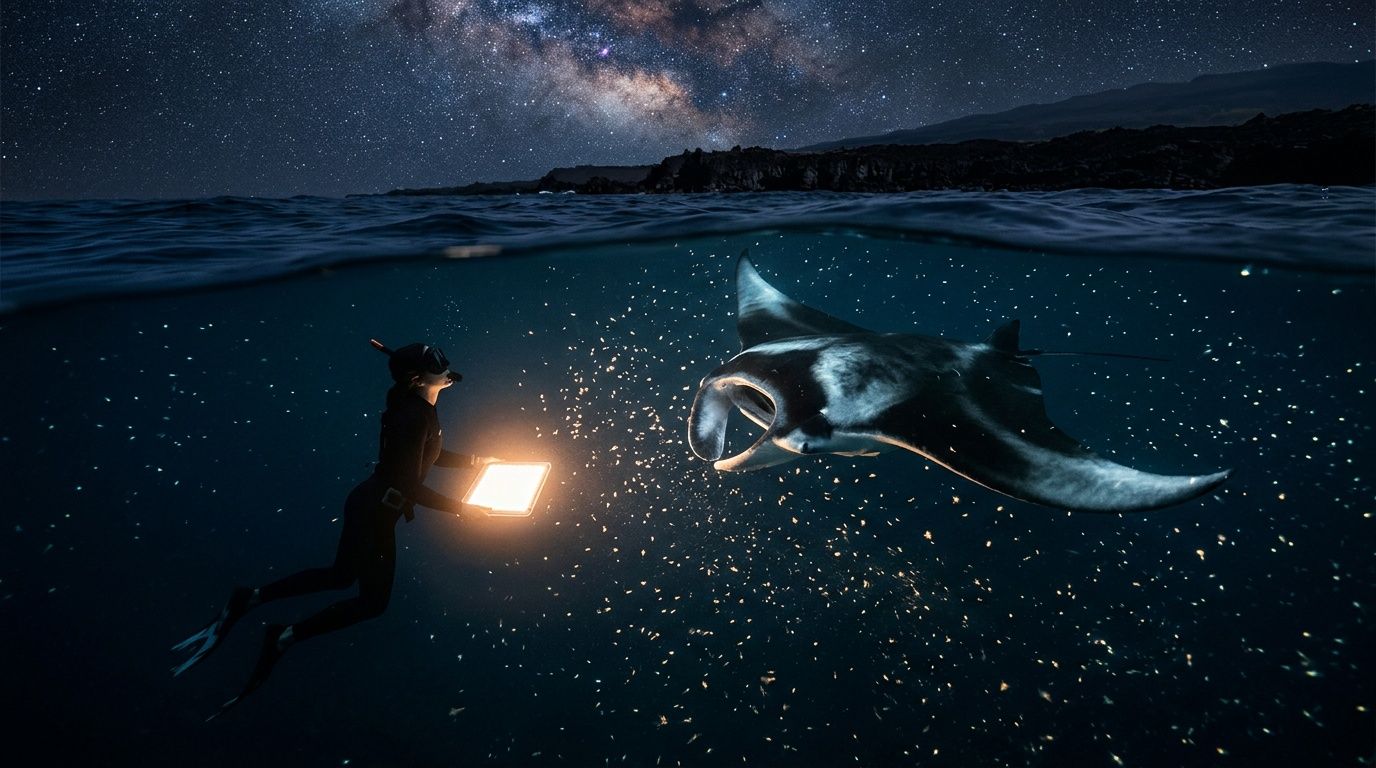
The part people remember most isn’t usually the boat ride out. It’s the moment the water below the light board changes from black to alive. First you see suspended plankton in the glow. Then a shadow rises from below, turns, and opens into a full manta pass right under your face.
That’s why this experience has such a strong reputation. Kona’s manta ray tours attract approximately 80,000 participants annually, and the area’s reputation is built on a resident population of over 450 identified reef manta rays, making it the world’s premier destination for these encounters according to this Kona manta overview.
Kona is also a place where the encounter feels surprisingly approachable. You’re not free-swimming around in the dark hoping to get lucky. You’re part of a structured setup designed to let the mantas come to the light and feed naturally while guests stay in a controlled position.
The social proof matters too when you’re choosing a Big Island snorkel company. Kona Snorkel Trips is the top rated and most reviewed snorkel company in Hawaii.

What the night feels like
Most first-timers expect something more extreme than it is. In reality, the experience is often calmer than many daytime snorkels because your job is simple. Hold on, float, look down, stay relaxed.
That simplicity is what makes the manta encounter work.
Practical rule: The less you try to “make” the encounter happen, the better your viewing usually gets.
Who tends to love it most
This tour works especially well for:
- First-time snorkelers who want a guided experience instead of independent ocean time
- Families looking for a memorable night activity with a strong wow factor
- Ocean lovers who care more about behavior and close viewing than adrenaline
- Travelers with limited vacation time who want a highly reliable wildlife outing
If you book with the right operator and show up prepared, the night often feels less intimidating than people expect and far more memorable than the photos suggest.
Why Kona is the Ultimate Manta Ray Destination
A good manta tour starts long before you slip into the water. It starts with location. Kona gives guides a rare mix of calm leeward coast, known feeding sites, and manta behavior that is consistent enough to build a respectful night snorkel around.
That matters for guests who are excited but nervous. It also matters for families, older snorkelers, and anyone trying to avoid a rough, chaotic wildlife chase.

Why Kona works so well
Kona’s manta encounter is reliable because the pieces line up cleanly. Reef mantas already use this coastline. After dark, lights draw in plankton. Guides place guests in a fixed viewing position, so the animals can feed naturally instead of being followed around the reef.
That last part is a bigger advantage than many visitors realize. In many wildlife tours, guests spend the whole trip trying to catch the moment. On a Kona manta snorkel, the setup brings the action to you. You hold the float, keep your body still, and let the mantas do what they came to do.
If you want the biological reason that pattern repeats so often here, this guide on why manta rays gather near Kona after dark explains it well.
Local conditions make the experience more manageable
Kona also stands out because the tour is practical for regular travelers, not just strong ocean athletes.
A few local advantages make a real difference:
- Resident manta activity: These encounters are not limited to a short migration window.
- Protected nighttime sites: The leeward coast is often calmer than visitors expect.
- Predictable tour setup: Boats return to known manta areas instead of searching blind across open water.
- Clear viewing from the surface: Snorkelers can get an excellent view without needing to dive.
From a guide’s perspective, that combination changes the whole tone of the trip. Briefings are simpler. Water entries are usually more controlled. Guests who feel uneasy in the dark often settle down once they see they are floating with support, not swimming hard.
Kona gives snorkelers an unusually strong view
Some marine wildlife tours favor divers. This one often favors snorkelers.
Mantas feed below the light source, then sweep upward in wide passes. From the surface, you look straight down into that movement. The view is dramatic, easy to follow, and accessible to people who have never scuba dived. Divers can enjoy the encounter from below, but the classic manta barrel roll is often just as impressive, and sometimes better, from the snorkel board.
The trade-off is crowd pressure. Kona is famous for this experience, and popular sites can feel busy on the wrong boat or the wrong night. That does not make the destination weaker. It means operator choice matters. Smaller groups, clear in-water rules, and a crew that spaces guests well can turn the same manta site from hectic to memorable.
That is one reason many returning guests look for a more personal trip format with Kona Snorkel Trips. The destination is exceptional on its own. The quality of the night usually comes down to how well the crew handles the details.
Choosing and Booking Your Perfect Manta Ray Tour
Most booking mistakes happen before anyone gets on a boat. People compare only price, or they assume every manta tour runs the same way. They don’t.
Some tours feel organized and spacious. Others feel crowded before you even reach the site. That matters because overcrowding changes the whole tone of the night.

What to compare before you book
A useful filter is to look at the experience from the guest’s point of view, not the operator’s marketing.
| What to check | Why it matters |
|---|---|
| Group size feel | Smaller groups usually make the water entry and board space feel calmer |
| Safety briefing quality | First-timers need clear instructions before dark-water entry |
| Boat style | Some guests care most about stability, others about faster transit |
| Accessibility options | Ask what happens if someone in your party doesn’t want to snorkel |
| Crowd management | Popular manta sites can feel busy, so operator style matters |
One issue many guides gloss over is crowding. With over 80,000 annual participants, some sites can feel chaotic, with dozens of snorkelers and boats creating a less-than-safe situation for both guests and mantas, as noted in this discussion of Kona manta crowding.
What usually works best
If your priority is a calmer, more personal outing, choose an operator that emphasizes regulation, guest coaching, and a controlled in-water setup.
Weekdays can be a smart choice if your schedule allows. The point isn’t that every weekend is bad. It’s that popular wildlife tours often feel easier when you avoid the busiest booking patterns.
You should also compare boat style before committing. This guide to the best boat types for Kona manta ray snorkel is useful if you’re deciding between a larger vessel and a more intimate setup.
Two solid tour pages to review
If you want a direct snorkel booking option, look at the Kona Snorkel Trips manta ray snorkel tour.
A respected alternative for travelers comparing operators is Manta Ray Night Snorkel Hawaii.
Check AvailabilityBooking mistakes to avoid
- Choosing on price alone: A cheaper ticket can mean a busier, less comfortable night.
- Ignoring the operator’s style: Some crews are better with nervous snorkelers and families.
- Booking without asking about non-swimmer options: This matters more often than people think.
- Waiting too long for prime dates: Popular evenings fill first, especially when families travel together.
Preparing for Your Manta Ray Night Snorkel Adventure
Good prep changes the whole night. People who arrive comfortable, hydrated, and clear on what to expect usually settle into the experience fast. People who rush aboard with a full stomach, no extra layer, and no seasickness plan often spend the first half of the tour trying to recover.
You don’t need to overpack. You do need a short list of smart choices.
Your manta tour packing checklist
| What to Bring | What We Provide (And What to Leave) |
|---|---|
| Swimsuit worn under clothes | Snorkel gear is typically provided by the operator |
| Towel for the ride back | Wetsuit is typically provided |
| Dry shirt or light layer | Leave bulky beach bags in the car if possible |
| Water and any personal essentials allowed by the operator | Fins and flotation setup are part of the tour setup |
| Waterproof camera without flash | Leave valuables you won’t need |
Clothing matters more than people expect at night. The boat ride back can feel cool even after a good snorkel, so a dry shirt or light cover-up makes a big difference. If you want outfit specifics, this guide on what to wear for a Kona manta ray night snorkel is worth a quick read.
Handle seasickness before it starts
Even if the ride is usually manageable, prevention is easier than dealing with nausea after dark. If you know you’re motion-sensitive, take that seriously.
Common options available on Amazon include Ship-EEZ Seasickness Patch, Dramamine pills, Bonine pills, Sea Band wristbands, and Ginger chews.
A few practical habits help too:
- Eat lightly: Don’t board hungry, but don’t show up after a heavy meal.
- Hydrate early: Start during the day, not right before departure.
- Look at the horizon: If the boat motion gets to you, this often helps.
- Tell the crew early: Don’t wait until you feel awful.
If you think you might get seasick, prepare as if you will. Best case, you never need the backup plan.
Manage nerves the right way
Night snorkeling sounds more intimidating on land than it usually feels in the water. That’s because the experience is structured. You’re briefed, geared up, and guided through each step.
If you’re anxious, focus on the task you have. Breathe slowly. Listen to the crew. Once you’re holding the board and looking into the lighted water, most of the worry fades into concentration.
Your In-Water Guide to a Magical Manta Encounter
The moment that surprises first-time guests is how calm the experience becomes once they’re in the water. You are not swimming after manta rays. You are settling into position, getting your breathing under control, and letting the setup do its job.
The crew lowers a large floating light board, and snorkelers hold the handles while staying flat at the surface. Divers watch from below. The lights draw in plankton, and the mantas rise and loop through that bright column to feed. If you want a clearer picture of why this works so well, this guide on how the manta ray light board works on your night snorkel explains the setup in plain terms.

What to do once you’re in position
Good manta viewing is mostly about control.
- Hold the board firmly so you can relax into the float instead of treading.
- Keep your body straight and quiet with small, deliberate fin movements only when needed.
- Look down into the light and give your eyes a minute to adjust.
- Let the mantas choose the approach instead of trying to shift into a better lane.
- Follow guide instructions right away because a small adjustment from one guest can improve the view for everyone nearby.
Guests often assume they need to keep moving to stay ready. In practice, still guests usually get the closest passes. Mantas are feeding, not performing, and the cleaner the water column stays, the better the encounter tends to be.
What hurts the experience
The biggest problems in the water usually come from avoidable guest behavior, especially on crowded nights. Too much kicking churns the water. Constant repositioning blocks sightlines. Reaching out creates tension for the whole group and does nothing to improve your view.
A few habits make a big difference:
- Avoid splashing once you are on the board
- Keep fins low and controlled so you do not bump other snorkelers
- Do not duck dive under the board unless the crew has specifically allowed it
- Stay with your assigned setup instead of drifting toward another group
This is one reason smaller, well-managed tours usually feel better in the water. You spend less time dealing with crowd movement and more time watching manta behavior.
Stay quiet, keep your body still, and watch the light. That is when the close passes happen.
The most important rule
Never touch a manta ray.
Their skin is covered by a protective mucus layer, and contact can damage it. Respectful distance also keeps their feeding pattern natural, which is the whole point of this encounter. A good tour gives you a front-row view without asking the animal to change its behavior for you.
Manta Tours for Everyone Accessibility and Family Tips
Many guests, especially those in mixed-ability groups, worry they might hold the tour back. In Kona, that concern usually comes from three practical questions. Can everyone get in and out of the boat comfortably? Does everyone need to snorkel? What if one person is excited and another is nervous before the boat even leaves the harbor?
Those questions matter because manta tours are often marketed as easy, while the details that shape comfort get skipped. “No experience required” can mean very different things depending on the crew, the boat, and how patient the in-water support really is.

Why accessibility questions matter
The under-discussed part of manta tour planning is not whether the rays show up. It is whether your group can enjoy the encounter without stress, pressure, or a rushed entry.
I have seen families have a great night with one strong swimmer, one grandparent staying onboard, and one child who only wanted to hold the float and watch. I have also seen groups book the wrong boat and spend the whole trip managing anxiety instead of enjoying the mantas. The difference is usually operator fit, not guest ability.
One accessibility-focused guide even projects a significant rise in family ocean activities, highlighting an emerging need for clear options like in-boat viewing for guests who want to see mantas without entering the water.
Practical ways to make it easier
Start with the least confident person in your group and book around their needs. That approach usually leads to a better trip for everyone.
- Non-swimmers: Ask whether guests can hold a large flotation board the entire time and what kind of hands-on support the crew provides during entry and exit.
- Families with kids: Check age guidance before booking, and be realistic about cold, darkness, and attention span. This Kona manta ray night snorkel minimum age guide helps families decide if the timing is right.
- Guests who want to stay dry: Ask if in-boat viewing is possible in practice on that specific vessel, not just technically allowed.
- Older relatives or mixed-ability groups: Choose a crew known for clear briefings, calm pacing, and smaller group handling.
Crowding matters here more than many people realize. On packed boats, guests who need an extra minute often feel rushed, and families get split between logistics and reassurance. Smaller operations usually make it easier to ask questions, move at a steadier pace, and keep the night enjoyable for everyone.
The right expectation for families
Kids usually do best when adults describe this as a quiet wildlife experience, not a challenge to overcome. The goal is simple. Float, watch the lights, and let the mantas come to you.
For hesitant adults, the best plan is also the simplest one. Eat light, use seasickness prevention before departure if needed, tell the crew you are nervous, and give yourself permission to watch from the boat if that is the better call. A good operator will not make that feel like a failure.
Kona Snorkel Trips stands out for groups like this because the experience feels more personal and less hurried. That matters for accessibility. It also matters for enjoyment.
Frequently Asked Questions About the Manta Ray Tour
A lot of the final decision comes down to a few practical concerns. These are the questions guests usually ask right before they book.
What happens if we don’t see manta rays
Manta rays are wild animals, so no ethical operator can promise a sighting every night. Some companies offer a standby return policy if the tour misses. Ask about that before booking so you know exactly how it works.
Is snorkeling at night scary
For some people, yes at first. Usually for about five minutes.
Once you’re in the water with the light board and the crew nearby, the task becomes very straightforward. Most nervous guests settle down once they realize they’re floating in a controlled setup rather than swimming around in open darkness.
Can I bring a camera
Yes, if it’s secure and easy to manage. A small waterproof camera is usually better than a complicated setup you have to fuss with.
Do not use flash. Bright flashes can disrupt the encounter and are unfair to both the mantas and the other guests trying to watch naturally.
Should I snorkel or dive
Choose snorkeling if you want the classic manta pass directly below you and the simplest logistics. Choose diving if you’re certified and specifically want the upward view from below the feeding action.
What matters most for a good experience
Three things usually decide the night:
- Operator choice
- Your comfort in the water
- Your ability to stay calm and still
If you want a manta night that feels organized from booking through the boat ride home, Kona Snorkel Trips is a practical place to start. Review the tour details, ask the questions that matter for your group, and book the trip that fits how you like to travel.