
Hawaii Manta Ray Snorkel: A Complete 2026 Guide
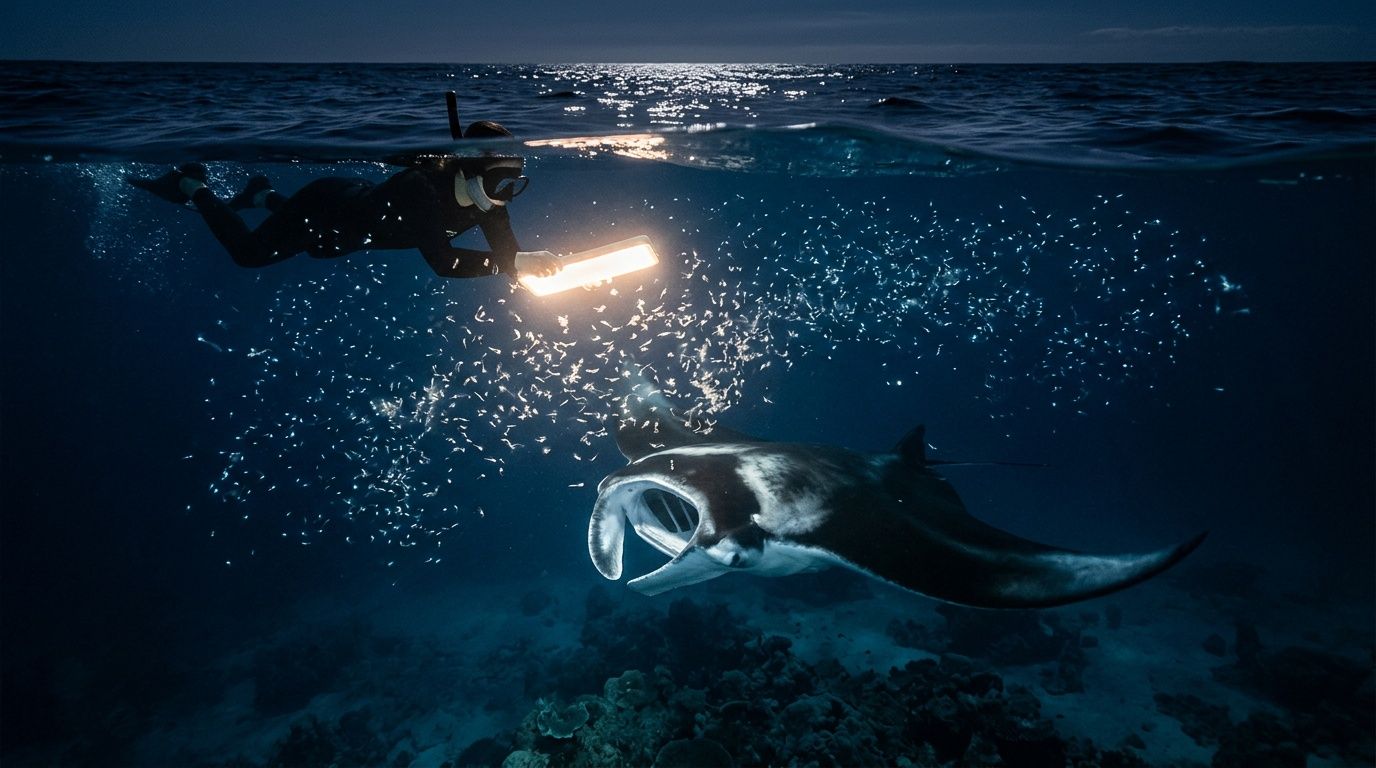
You step onto the boat after sunset, still wondering whether being in the ocean at night will feel thrilling or intimidating. Then the coast lights fade, the crew explains exactly what will happen, and the unknown starts to feel manageable. That shift matters. A good hawaii manta ray snorkel begins well before you get in the water.
This is one of Kona’s signature experiences for a reason. You do not need to be an expert snorkeler to enjoy it, but you do need the right expectations. The night goes better when you know how the float works, how long you will be in the water, what first-time nerves usually feel like, and what kind of operator takes safety seriously. If you are still building out your trip, this guide fits well alongside other things to do in Kona, but it earns a top spot on many itineraries.
For many visitors, this ends up being the memory that sticks. You hold the lighted float, settle your breathing, and watch a manta rise out of the dark water with slow, effortless control just below your mask.
The difference between an average night and an outstanding one usually comes down to preparation, crew judgment, and honest guidance. Those details often get skipped in generic travel writeups. Here, the focus is on the practical side of the experience so first-timers can book wisely, feel ready, and get more out of the night.
Your Unforgettable Hawaii Manta Ray Snorkel Adventure
You leave the harbor after dark, glance at the black water, and wonder whether the night will feel calm or overwhelming. Then you reach the site, get a clear briefing, slip into the water, and realize the experience is far more controlled than many first-timers expect. Once the first manta passes under the lights, nerves usually give way to focus.
That change is part of why this tour has become such a familiar part of a Big Island trip. Plenty of visitors choose it every year, and the strong operators have refined the flow through repetition, crew training, and careful guest support. The result is a wildlife experience that feels dramatic without feeling chaotic.
Kona Snorkel Trips is a highly rated, frequently reviewed snorkel company in Hawaii.
What the night feels like
The biggest surprise for many guests is how little swimming is involved.
You are usually holding onto a lighted float with the group while the crew manages positioning and keeps the experience organized. That setup makes the tour more approachable for families, cautious swimmers, and travelers who want a close marine encounter without covering distance in open water.
The quality of the crew matters here. Good guides do more than hand out gear. They explain how to get in and out of the water, what the temperature will feel like, where to put your attention, and what to do if you need a break. That practical coaching is what helps first-time guests settle in and enjoy the show instead of fighting their own nerves.
The guests who do best are usually the ones who arrive with realistic expectations and listen closely to the briefing.
Why so many visitors choose it
This tour fits well into a Kona trip because it asks for less stamina than many ocean activities and still feels memorable. You can spend the day exploring, have an early dinner, and still make the boat without turning the whole day into a major production.
If you are planning the rest of your trip, this guide to things to do in Kona before or after your manta snorkel helps you place it alongside beaches, coffee stops, and other classic Big Island outings.
The best nights are not about hype. They come from clear expectations, steady crews, and enough local experience to know how to keep guests comfortable while the mantas do what makes this trip special.
Why Kona is the World’s Best Manta Ray Destination
You can feel the difference in Kona before you even get in the water. Crews head to known manta sites with a real plan, not a vague hope of finding wildlife somewhere offshore.
Kona earns its reputation because the coast supports a resident manta population that returns to reliable feeding areas. Researchers with the Manta Pacific Research Foundation have identified hundreds of individual reef mantas along the Kona Coast, which helps explain why this experience is unusually consistent for a wild animal encounter.

The resident population changes everything
For guests, the practical advantage is simple. Kona manta tours are built around animals that already use these waters, not around a seasonal migration that may or may not line up with your vacation dates.
That changes expectations in a good way. Operators can choose established sites, brief guests clearly, and run the evening around known feeding behavior. According to this Kona manta ray guide, guided tours commonly report sighting success in roughly the 85 to 90 percent range. That still leaves room for nature to be nature, and any honest guide will tell you that no wildlife tour is guaranteed.
Why the coast works so well
The coastline does a lot of the heavy lifting. Volcanic contours, current flow, and plankton concentration create dependable feeding conditions close to shore, which is why mantas show up here so regularly after sunset. If you want the fuller explanation, this guide on why manta rays gather near Kona after dark explains the pattern in plain English.
This is the trade-off first-timers should understand. Kona gives you one of the most reliable manta encounters in the world, but it is still a real ocean setting at night. Strong operators respect both sides of that equation. They do not oversell certainty, and they do not treat the mantas like a staged attraction.
What this means for trip planning
Kona is one of the few places where I tell cautious first-time snorkelers, yes, this is a smart place to try it. The consistency is better, the local knowledge runs deep, and crews have repeated this process enough times to spot small issues before they become big ones.
That does not make every tour equal.
The region gives you the raw ingredients. A good operator turns that into a calm, organized, well-briefed experience. A weaker one takes advantage of a famous location. That is why booking the right crew matters almost as much as choosing Kona itself.
How the Manta Ray Night Snorkel Experience Works
The boat idles over dark water, someone glances over the side, and the usual first question comes up fast. What are we doing once we get in?
A well-run manta snorkel has a clear rhythm. You check in, get fitted with gear, hear the safety briefing, ride to the site, and enter the water with guides already setting the pace. That structure matters. First-timers do better when they know what happens next, and experienced crews keep the process calm from the dock to the ladder.

The light board creates the feeding zone
The center of the experience is a floating light board with bright lights aimed down into the water. Those lights draw in plankton. Plankton draws in mantas. If you want the mechanics in more detail, this guide to how the manta ray light board works breaks it down clearly.
What matters for guests is simple. You are not searching a huge stretch of dark ocean and hoping to cross paths with a manta. Good operators set up a predictable viewing area where natural feeding behavior happens right under the group. That is why the encounter feels organized without feeling staged.
What you actually do in the water
This surprises a lot of people. The job is mostly to float well.
Once you enter, guides bring everyone to the board and help each guest get comfortable. You hold onto the handles, put your face in the water, and watch below. There is very little swimming once the group is set.
The people who enjoy this most are often not the strongest swimmers. They are the ones who listen, slow their breathing, and stop trying to do too much.
A typical sequence looks like this:
- Enter with the guide team: Crews usually send guests in with a plan, not all at once.
- Move straight to the board: This keeps the group together and reduces unnecessary kicking.
- Settle your breathing: Slow, steady breaths through the snorkel make the first few minutes much easier.
- Stay long and still on the surface: Quiet bodies give you the best view and keep the water calmer for everyone.
- Watch the water column below: Mantas rise and loop through the light as they feed.
This format is why I often recommend the trip even to hesitant first-timers. You do not need to chase wildlife, duck dive, or keep up with a fast-moving group. You need to stay relaxed and let the animals come through the light.
What the mantas usually do
When the plankton thickens under the board, the mantas start feeding. They sweep in from the dark, bank through the beams, and turn back through the same patch of water if food is still concentrated there. Some passes are deep and slow. Some come close enough that guests instinctively lift their heads and laugh into the snorkel.
That repeat action is what catches people off guard. Many guests expect a quick sighting and then a long wait. On a good night, the better approach is patience. Stay still, keep your fins quiet, and watch the pattern develop.
Stay relaxed and keep your body quiet. The best viewing usually starts once the group settles down.
Small choices that improve the night
A manta snorkel gets easier fast when guests understand the trade-offs. Calm floating beats strong swimming. Attention during the briefing beats figuring it out in the water. Realistic expectations beat treating the trip like a marine park show.
| Approach | What happens |
|---|---|
| Holding position calmly | You save energy and get a steadier view straight down |
| Listening during the briefing | Entry, exit, and time at the board feel much more controlled |
| Breathing slowly through the snorkel | You relax faster and stay in the water longer |
| Kicking or splashing too much | You tire out early and make it harder to focus on the mantas |
| Expecting constant action every second | You miss the quieter moments that often lead to the closest passes |
The best nights are rarely the loudest ones. They are the ones where the crew stays organized, the guests settle in, and the mantas do what they came to do.
Staying Safe and Protecting the Mantas
A responsible hawaii manta ray snorkel should talk plainly about risk. The ocean at night deserves respect, and so do the animals. If a tour description only talks about magic and never mentions safety, that’s a red flag.
A 2013 assessment highlighted safety concerns at popular manta viewing areas, including vessel crowding and strong currents, according to this manta snorkel safety guide. The same source notes the scale of participation and the importance of choosing operators that actively manage those conditions while protecting the small resident breeder population.

The real trade-offs
Night snorkeling isn’t dangerous by default, but it isn’t a pool session either. Dark water can feel disorienting. Current can make people tense. Boat traffic can change the mood of a site if the operation is crowded.
That’s why tour selection matters so much. A capable operator doesn’t just get you near mantas. They control the pace, manage entries carefully, monitor guest comfort, and keep the group organized once everyone is in the water.
Manta-safe behavior is not optional
The basic rules are simple, and they matter.
- Do not touch the manta rays: Their skin has a protective mucus coating that can be harmed by human contact. This article on whether you can touch manta rays on a Kona manta ray snorkel explains why the rule is strict.
- Do not dive down toward them: Surface observation keeps the feeding area stable and reduces disruption.
- Do not kick aggressively when a manta approaches: Quiet bodies create a better encounter for everyone.
A good guide repeats these rules before the boat leaves and again before the group enters the water.
Respect for the mantas isn’t separate from guest safety. The same calm behavior helps both.
How to think about seasickness
A lot of first-timers worry about the dark. More guests should worry about motion sickness. If you know you get queasy on boats, handle it before the tour, not halfway to the site.
Useful options include:
Some people do well with a medication approach. Others prefer wristbands or ginger. If you’ve never tested a remedy before, don’t make your vacation night the first experiment unless you know how your body responds.
Practical safety habits that help
Small decisions make a big difference:
- Eat lightly: Don’t board on a heavy meal.
- Hydrate during the day: Dehydration makes motion and anxiety worse.
- Speak up early: Tell the crew if you’re nervous, cold, or not feeling well.
- Choose honesty over pride: If you need help in the water, ask for it immediately.
Families should also ask direct questions before booking. Minimum age, child comfort in dark water, and current conditions all matter more than hype. The right operator will answer clearly and won’t rush you into a fit that doesn’t make sense.
How to Plan Your Perfect Manta Ray Snorkel Tour
The easiest manta nights usually look boring before they become memorable. Guests show up on time, already fed but not stuffed, with a towel, a dry shirt, and a clear idea of how the evening runs. Guests who treat it like an after-dinner beach swim tend to feel rushed before the boat even leaves the harbor.
Book early if your Kona dates are fixed. Good tours fill fast, especially around holidays and calm-weather windows. Then plan the rest of the evening around the trip. Give yourself time to park, check in, use the restroom, and settle in without hurrying.
What to bring and what to expect
Pack for the boat ride back, not just the time in the water. That is the part first-timers underestimate. Once you’re wet and the wind picks up, a dry layer feels a lot more important than an extra gadget.
| Item | Bring or Provided? | Notes |
|---|---|---|
| Swimsuit | Bring | Wear it under your clothes if possible |
| Towel | Bring | You’ll want it right after the snorkel |
| Dry clothes or light layer | Bring | The ride back can feel cool when wet |
| Motion sickness remedy | Bring | Best handled before boarding |
| Mask, snorkel, fins, wetsuit | Usually provided | Confirm with your chosen operator |
| Water-resistant camera | Bring if desired | Only if you’re comfortable using it without distraction |
Comfort matters more than style here. After hundreds of night snorkels, I can say the guests who enjoy the ride home most are usually the ones who packed a simple warm layer and kept their gear list short. If you want ideas for relaxed post-snorkel layers, this guide to coastal comfort clothing is a useful reference for the kind of easy, throw-on pieces people reach for after the water.
How to choose the right operator
A good manta tour is not just a boat with lights. The key difference is how the crew prepares people before they ever get in the water.
Ask direct questions before you book. How long is the boat ride? What equipment is included? How do they handle nervous swimmers? What happens if conditions are rough? Strong operators answer clearly and without sales pressure.
Look for a few signs of a well-run trip:
- Clear pre-trip communication: You should know where to go, what to bring, and how the night is structured.
- Orderly check-in and gear setup: Confusion on the dock usually carries into the water.
- Realistic expectation setting: Honest crews explain that wildlife is wild and ocean conditions change.
- Attentive in-water support: This matters for first-timers, kids, and anyone uneasy in the dark.
If you want a more detailed comparison, this guide on how to choose the right Kona manta ray snorkel tour covers the booking questions that matter.
Booking options worth considering
Tour format matters. Some travelers want the shortest ride possible. Others care more about a smaller group feel, extra coaching, or how the crew handles new snorkelers.
If you’re ready to compare actual trip details, the Kona Snorkel Trips manta ray snorkel tour page lays out the logistics, timing, and booking information for one Kona option. If you’re comparing providers, Manta Ray Night Snorkel Hawaii is also a good alternative to review for a manta ray night snorkel tour.
For travelers who prefer scuba over surface snorkeling, Kona Honu Divers also runs a manta-focused dive option, as noted earlier in the article.
Smart expectations for the night
The goal is not to script a perfect wildlife encounter. The goal is to set yourself up to be warm, calm, and ready when the mantas show.
Arrive a little early. Bring only what you will use. Choose a crew that explains things plainly and runs an organized boat. Those decisions do more for your night than any last-minute packing fix.
Why Choose Kona Snorkel Trips for Your Adventure
Some tours are technically fine but forgettable. Others feel carefully run from the first greeting at the harbor to the last headcount back on board. That difference comes from guide judgment, not marketing language.
The strongest manta crews do three things well. They prepare guests accurately, manage the ocean conditions without drama, and keep the wildlife encounter respectful from start to finish. That’s what people should be paying for.

What experienced guests usually value most
People remember kindness and competence. They remember whether the crew noticed a nervous child. They remember whether someone helped with a mask issue before it became frustrating. They remember whether the instructions made sense in the dark.
Those details shape the night more than flashy promises do.
The most useful guides don’t perform expertise. They apply it quietly.
What separates a polished operation
A well-run manta tour often looks simple from the outside because the crew has already handled the hard part. They’ve thought through guest flow, equipment fit, water entry, communication style, and how to keep the group calm if conditions feel more active than expected.
The value shows up in small moments:
- Before departure: The briefing answers the questions guests are nervous to ask.
- At water entry: Staff help people settle instead of rushing them.
- During the snorkel: The group stays organized and easy to supervise.
- After the snorkel: Reboarding feels controlled, warm, and unrushed.
The bigger reason it matters
This kind of experience works best when guests feel looked after and the mantas are treated with care. Those two priorities support each other. Calm guests behave better in the water. Responsible wildlife etiquette creates cleaner, quieter encounters.
If your goal is not just to see a manta ray, but to enjoy the full evening with confidence, operator quality matters. It affects comfort, safety, and how much of the magic you get to absorb.
Your Manta Ray Snorkeling Questions Answered
Is the hawaii manta ray snorkel scary if I don’t like dark water
For some first-timers, yes. The boat stops, the shoreline looks far away, and the water feels very black until your eyes settle in.
What changes the mood is structure. You are not drifting around on your own. You are holding a light board with the group, looking down into an illuminated area where the action happens. Once guests focus on that pool of light and start watching for the first white flash of a manta’s belly, the nerves usually ease up.
Tell the crew you are anxious before you get in. Good guides can place you where you feel most secure, help you with the entry, and talk you through the first few minutes without making a big production out of it.
Do I need to be a strong swimmer
Usually no.
This is a guided surface snorkel built around flotation, not a long open-water swim. On most tours, guests spend the encounter holding onto the float board rather than swimming independently the whole time. That makes it accessible to plenty of people who are comfortable in the ocean but would not choose to swim at night on their own.
The honest trade-off is this: you do not need to be athletic, but you do need to stay calm in the water, follow instructions, and handle having your face in a mask for a sustained stretch. If that sounds uncertain, ask the operator very specific questions before you book.
What if I wear glasses or contacts
Contacts are often the easiest solution. Many guests use them without any issue.
If you do not wear contacts, it depends on how much correction you need. Some people can see well enough at snorkel distance because the mantas are large and close. Others will want to ask about prescription mask options or whether their usual setup is likely to work. Do that before tour day, not on the boat.
Will I get cold
A lot of guests are fine in the water and then get chilled on the ride back.
Bring a towel, a dry shirt or hoodie, and anything a child might want after getting out wet at night. That one small bit of planning has saved plenty of evenings from ending with chattering teeth.
Is this okay for families
Often, yes. The better question is whether it is right for your specific child.
Some kids love it immediately. Others are confident at the beach in daylight and freeze up the moment they see deep water at night. Parents should ask about minimum age guidance, how long guests stay in the water, and how the crew handles a child who wants to get out early. A family tour goes better when expectations are realistic before anyone leaves the harbor.
What if we don’t see mantas
Mantas are wild animals, so no operator can promise a sighting every night.
Kona has earned its reputation because encounters are often excellent, but honest companies still explain their no-sighting policy clearly. Check that policy before booking so you know whether they offer a return trip, partial credit, or another option. That answer tells you a lot about how they run the trip.
Should I snorkel or dive
Choose snorkeling if you want the simplest option, the least gear, and the easiest way for a mixed group to share the experience. It is the right fit for many visitors.
Choose diving if you are already certified, comfortable with night diving, and specifically want the upward view from the seafloor while the mantas feed above. That perspective is different from snorkeling, not automatically better. It depends on your comfort level and what kind of encounter you want.
If you are comparing tour formats, Kona Snorkel Trips is a practical place to review schedules, trip details, and planning logistics for a manta ray snorkel.