
Manta Ray Swimming: How Rays Stay Afloat Without a Swim Bladder
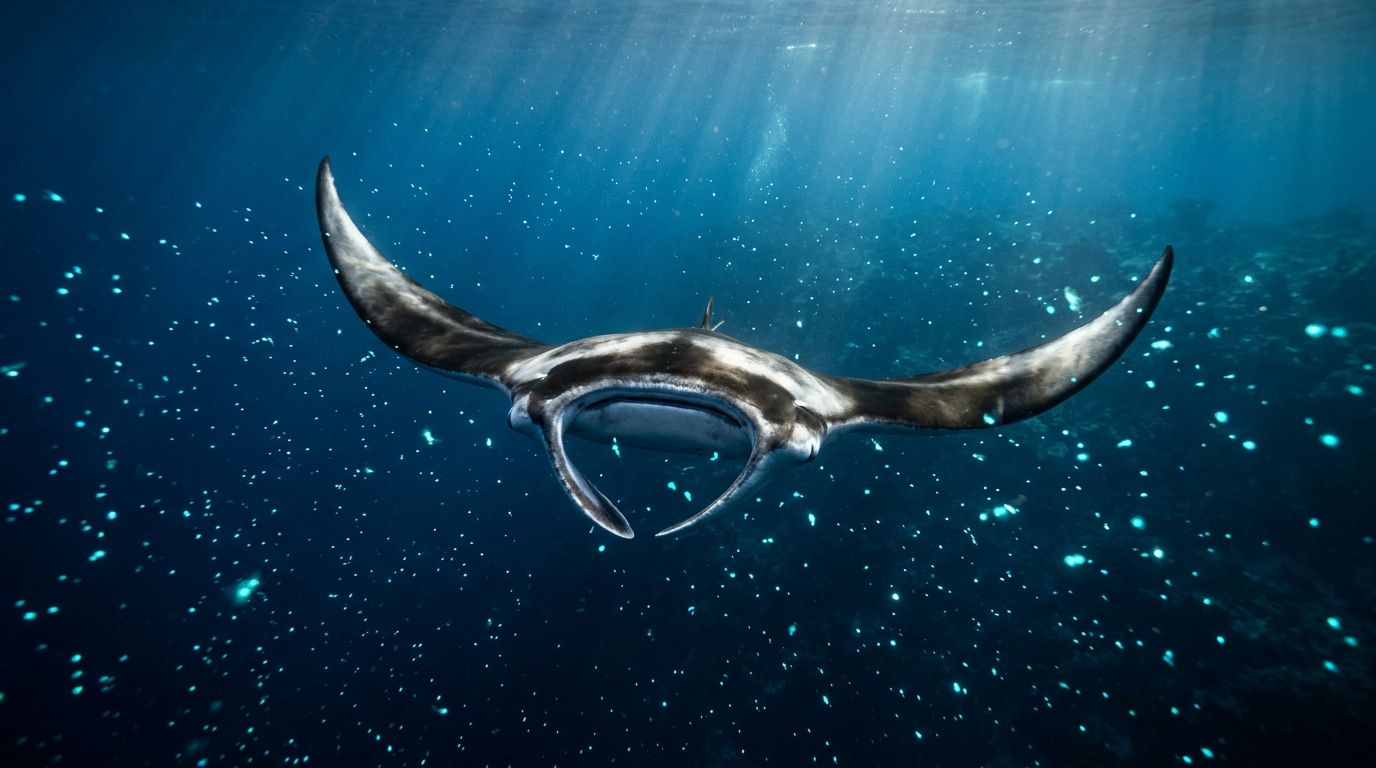
A manta ray can glide through the ocean with the control of a bird in flight, yet it has no swim bladder to keep it suspended. Understanding manta ray swimming means looking at the animal’s oily liver, winglike fins, and constant interaction with moving water.
If you plan to see this behavior in Kona, Kona Snorkel Trips offers guided manta ray night snorkeling with lifeguard-certified guides and small-group service. Manta Ray Night Snorkel Hawaii is another manta-focused company you may consider for an evening encounter. The secret to a manta’s underwater balance begins with its body design.
Key Takeaways
- Manta rays don’t have gas-filled swim bladders because they are cartilaginous fish.
- Low-density oils in the liver help reduce their overall body density.
- Broad pectoral fins create lift, thrust, braking force, and steering control.
- Mantas adjust depth through fin movement, body angle, speed, and water flow.
- During a Kona night snorkel, lights attract plankton while mantas use precise fin movements to feed.
How Manta Ray Swimming Works Without a Swim Bladder
A swim bladder is a gas-filled organ found in many bony fish. By adding or releasing gas, those fish can change their buoyancy and remain at a certain depth with less effort.
Manta rays belong to the elasmobranch group, which includes sharks and skates. Their skeletons contain cartilage rather than bone, and they don’t have swim bladders. That doesn’t leave them helpless in the water. Instead, their entire body is built for controlled movement and low-energy gliding.
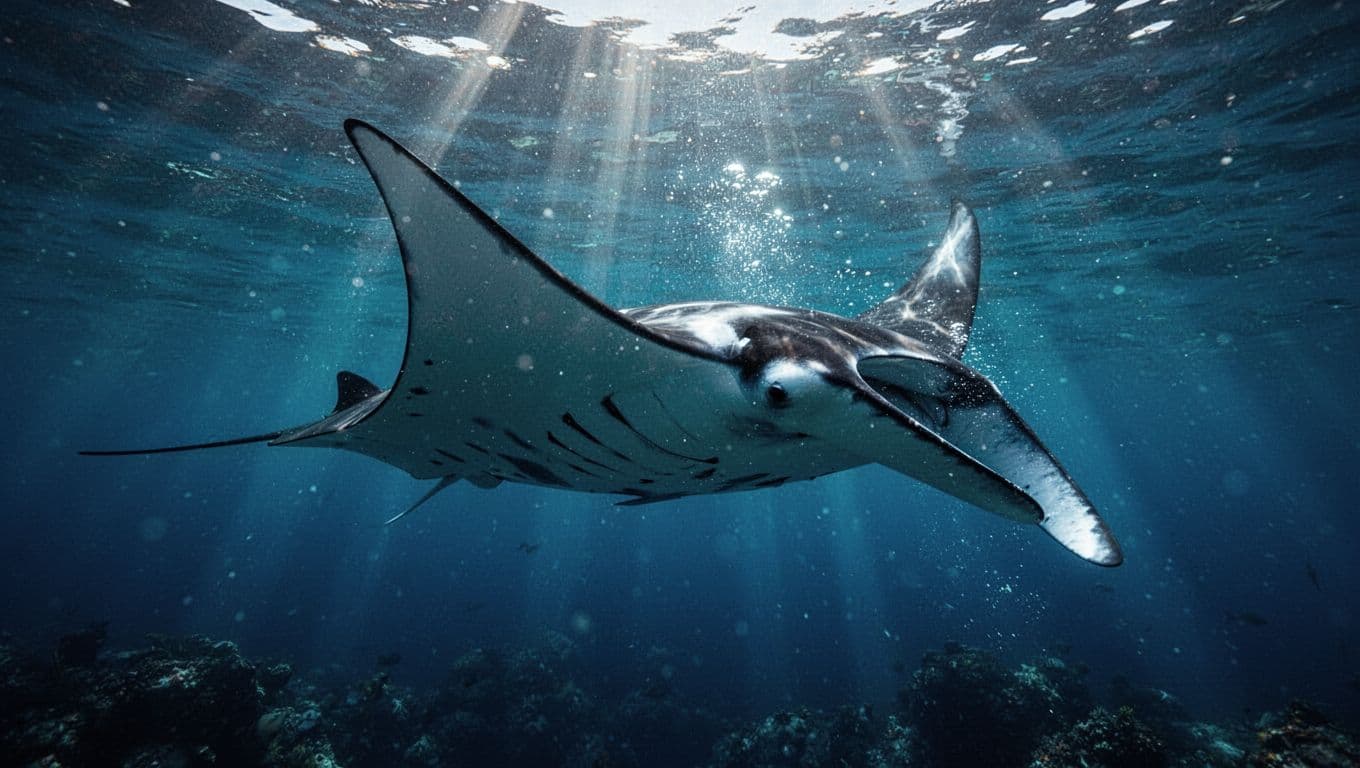
Mantas use their wide pectoral fins as underwater wings. Each fin can move independently enough to help the ray turn, rise, descend, or hold a steady path. The fins also produce thrust when the manta flaps them in a slow, powerful rhythm.
A manta doesn’t float by remaining motionless in open water. It manages its position through a balance of natural buoyancy and active swimming. As water passes over the fins, the ray produces lift. By changing the angle and timing of each fin stroke, it can maintain depth or move through the water column.
A 2025 hydrodynamic study of manta ray propulsion examined how this unusual swimming style could inspire underwater gliders. The research highlights why a manta’s movement looks different from the tail-driven swimming used by many fish.
The Manta Ray’s Liver Helps With Buoyancy
The most important natural aid to manta ray buoyancy is the liver. Mantas have large livers containing low-density oils, including squalene. These oils weigh less than seawater, which helps offset the weight of the ray’s muscles, organs, and tissues.
This system doesn’t work like a switch. A manta can’t inflate its liver to rise or drain it to sink. Instead, the oil gives the animal a helpful starting point. The ray then uses its fins to make fine adjustments.
Cartilage also contributes to the manta’s lighter body structure. Bone is dense and heavy, while cartilage has a lower density. That difference helps, although the skeleton alone can’t keep a large animal neutrally buoyant.
The result is a body that can move efficiently without carrying a gas-filled chamber. A swim bladder would change volume as water pressure changes. Manta rays avoid that problem because their buoyancy depends mainly on oil, body structure, and hydrodynamic lift.
Manta rays don’t replace a swim bladder with one single organ. Their buoyancy comes from several features working together.
When a manta descends, it can angle its body downward and reduce the lift produced by its fins. When it rises, the animal changes its pitch and fin position so the water pushes it upward. Speed also matters because faster water flow across the fins can create more lift.
Broad Pectoral Fins Give Mantas Precise Control
The manta’s pectoral fins stretch across much of its body. Their broad surface area gives the ray strong control over water flow, similar to the way an aircraft wing uses air pressure to stay aloft.
Manta rays swim with a pattern called mobuliform locomotion. Rather than flexing the entire body side to side, they send waves through the pectoral fins. The fins move up and down, creating forward thrust and lift at the same time.
The front edges of the fins help direct water around the body. Meanwhile, the rear edges produce vortices that add force to each stroke. A 2024 hydrodynamic study of manta rays found that the flow behind the animal includes a staggered double-row vortex pattern that contributes to thrust.
Mantas also use their cephalic lobes, the curled structures beside the mouth, to guide water while feeding. They can roll or extend these lobes as conditions change. During a plankton-rich feeding pass, the lobes help funnel water toward the mouth.
Small changes in fin position can produce noticeable changes in movement:
- A stronger, deeper stroke creates forward thrust.
- Tilting the fins changes the ray’s vertical direction.
- Uneven fin movements help the manta turn.
- Spreading the fins can increase drag and slow the animal.
- Folding or adjusting the fin edges helps it maneuver around swimmers, reefs, or other mantas.
This control explains the smooth appearance of manta ray swimming. The motion looks effortless because the animal uses its entire body as a flexible control surface.
How Mantas Rise, Sink, Turn, and Glide
A manta’s movement depends on three forces: buoyancy, gravity, and hydrodynamic lift. Buoyancy pushes the animal upward, gravity pulls it downward, and fin-generated lift changes its position through the water.
To rise, a manta usually angles its body upward and increases the lift from its pectoral fins. It may also increase its stroke rate. To descend, it can pitch downward and reduce the upward force created by the fins.
Gliding saves energy because the ray can travel while using fewer powerful strokes. During a glide, the fins remain extended and the body moves forward through the water. The manta still makes small adjustments, since currents, depth, and feeding conditions constantly change.
Turning requires careful coordination. If one fin produces more force than the other, the ray can rotate toward the side with less forward thrust. The tail provides some stability, but the large pectoral fins do most of the steering.
This approach works especially well for animals that spend long periods cruising in open water. Mantas can cover large distances while searching for plankton. They also use their fin control to circle feeding areas and position themselves in currents that carry food toward them.
You may notice this control during a night snorkel. A manta can approach with its mouth open, roll slightly, turn beneath a lighted board, and leave in a single fluid motion. Its path changes quickly, but the animal rarely looks rushed.
What You See During a Kona Manta Ray Snorkel
If you searched for “snorkeling Big Island Hawaii,” “snorkel Big Island,” or a “snorkeling Big Island” experience, Kona’s manta ray night tours offer a close view of underwater movement. Lights placed in the water attract plankton, and mantas gather where that food becomes concentrated.
Kona Snorkel Trips follows a “Reef to Rays” philosophy. Its tours focus on guest safety, reef-friendly practices, quality snorkeling gear, and education about marine life. Lifeguard-certified guides help you enter the water, maintain a safe position, and observe the animals without touching them.
You can learn more about the company’s Big Island manta ray night snorkel before choosing a tour. The small-group format also gives you more room to watch how each manta moves instead of crowding the animals.
A manta may swim directly toward the light, loop around the viewing area, or pass beneath you with its cephalic lobes extended. These movements aren’t random. The ray is adjusting its position to keep its mouth and gill openings in the path of plankton-rich water.
For a Kona trip with Kona Snorkel Trips, you can check availability before your travel dates.
When you book a manta-specific trip, use the manta tour check availability link for the nighttime experience.
Watch Manta Rays Without Disrupting Their Feeding
Your behavior affects the quality of the encounter. Stay with your guide, keep your hands relaxed, and never touch a manta ray. Contact can damage the animal’s protective skin coating and may cause it to change direction or leave the area.
Avoid chasing a manta if it moves away. The best observations happen when you hold your position and allow the ray to choose its route. Keep your fins below the surface, since sudden kicking can stir sediment and reduce visibility.
You can also help protect the feeding site by using reef-safe practices before and after the tour. Don’t stand on coral, collect marine life, or leave sunscreen and plastic near the shoreline. A healthy reef supports the small organisms that form the base of the local food chain.
The lack of a swim bladder doesn’t limit manta rays. Their oily liver provides buoyancy, while their broad fins give them the control needed to cruise, feed, rise, sink, and turn.
Conclusion
Manta ray swimming works through a careful balance of low-density liver oils, cartilage, body shape, and powerful pectoral fins. Instead of inflating a swim bladder, the ray uses lift and body position to control its place in the ocean.
When you watch one glide beneath a nighttime light, you’re seeing a highly tuned swimming system in action. The manta isn’t floating without effort. It is reading the water and making constant, precise adjustments with every fin stroke.