
Manta Ray Swimming: Why Mantas Go Upside Down
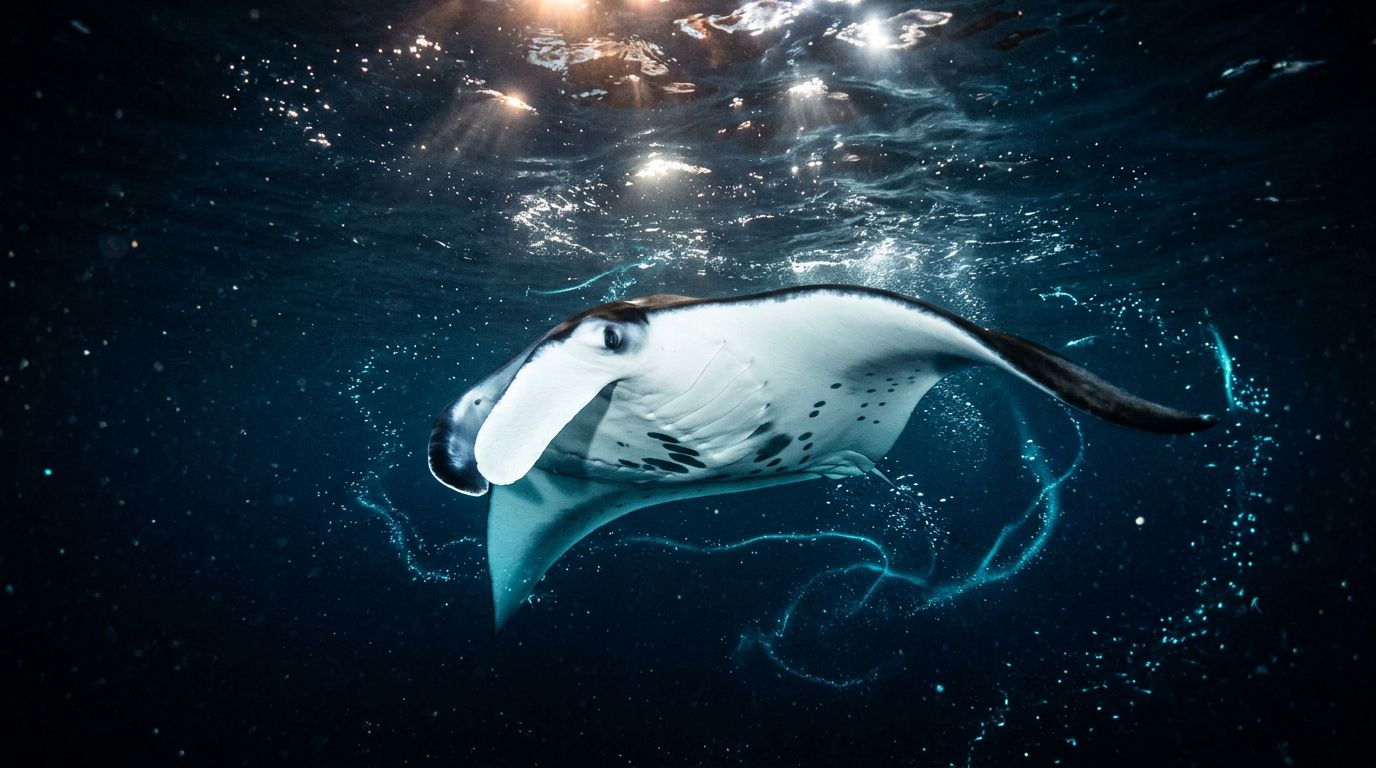
One moment a manta ray glides belly-down through the dark water. The next, its pale underside faces you as it rolls beneath the surface lights. If you’ve searched for manta ray swimming, that upside-down movement is probably what caught your attention.
In Kona, the behavior usually means the ray has found a concentrated patch of plankton. Kona Snorkel Trips gives you the chance to watch these feeding movements from the surface, where you can see the animal’s wings, mouth, and white belly in clear detail. First, it helps to understand what the ray is doing and why the motion makes sense.
What Upside-Down Manta Swimming Actually Means
Manta rays don’t swim upside down all the time. They normally travel with their dark back facing upward and their white belly below. During feeding, however, they may roll onto their side, turn belly-up, or complete a full somersault through the water.
This movement is called a barrel roll or feeding loop. The manta repeatedly turns through a dense area of plankton instead of swimming in one straight line. Each pass brings its open mouth back through the same food-rich water.
Kona’s resident manta rays are reef manta rays, known scientifically as Mobula alfredi. They are filter feeders, so they don’t chase fish or bite prey. Instead, they collect tiny organisms from seawater as they swim.
From below, an upside-down manta can look as if it’s showing off. From the ray’s point of view, the maneuver is practical. Its broad body helps it turn through the plankton patch, while its mouth and cephalic fins guide the food-rich water inward.
The white belly also makes the behavior more dramatic for you. When a manta rolls beneath a light board, its markings become easy to see. Researchers and guides can identify individual rays by the unique patterns on their undersides, much like fingerprints.
An upside-down manta is usually adjusting its feeding position, not showing distress or aggression.
The motion can last only a few seconds, or a ray may repeat it several times. The length depends on the density and location of the plankton. If the food moves, the manta changes direction with it.
One giant manta ray gliding through deep blue water with cyan highlights.
How Manta Ray Swimming Works Underwater
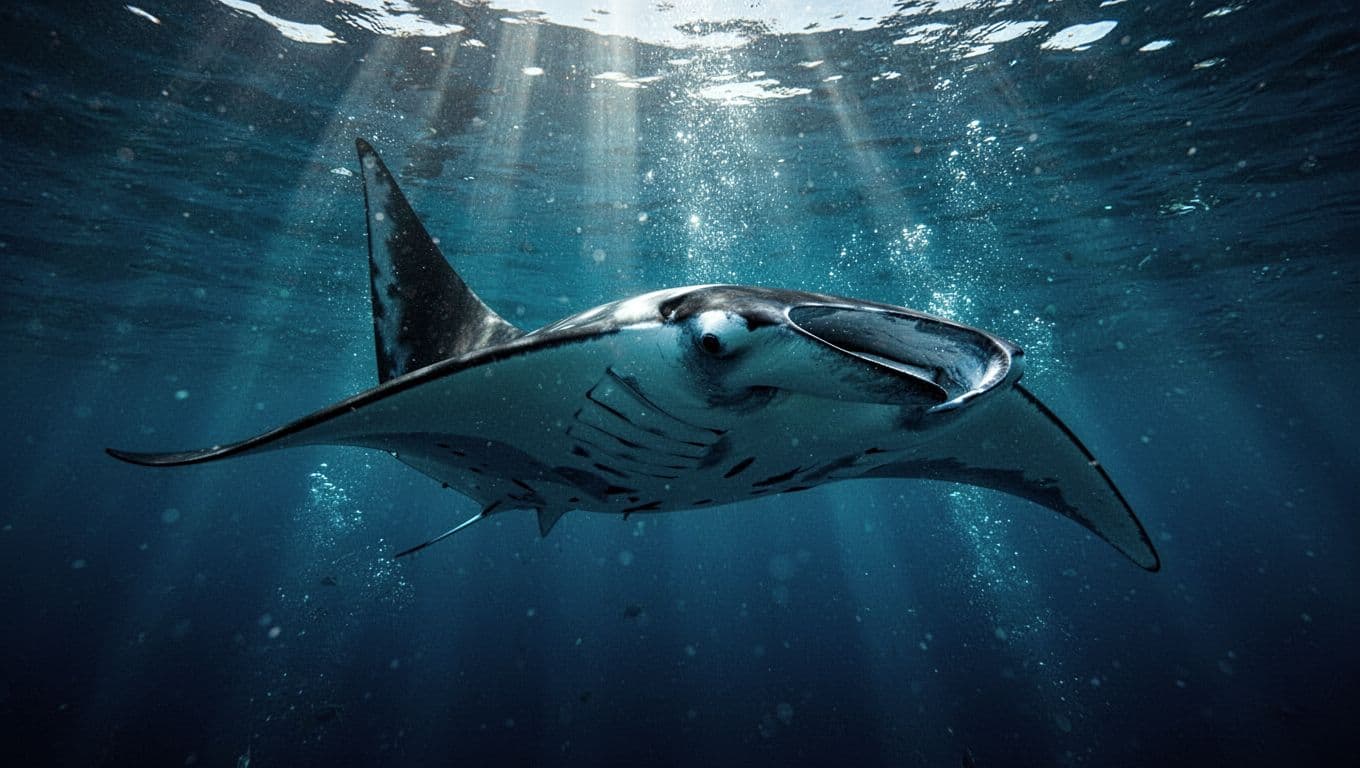
Manta rays move with their large pectoral fins, which extend from both sides of the body like underwater wings. Rather than paddling, they send smooth waves through the fins. Those waves push water downward and backward, creating forward movement and lift.
The motion changes with the situation. A manta cruising between feeding areas may use slow, powerful strokes. When it approaches plankton, it can shorten those strokes and make tighter turns. During a barrel roll, the fins help the ray bank, rotate, and regain its normal position.
Mantas also have two fleshy cephalic fins beside the mouth. You may hear guides call them horn-shaped fins because they curl forward when the ray is relaxed or feeding. These fins help direct water and plankton toward the mouth.
When the manta opens its mouth, seawater flows inside. Small structures called gill rakers trap plankton while filtered water leaves through the gill openings. The ray then swallows the captured food.
This feeding system explains why body position matters. A manta doesn’t need to catch one large meal. It needs to keep its mouth in the path of as much plankton-filled water as possible. A turn or roll can place the mouth directly inside a concentrated patch.
The tail helps with balance and steering, but it isn’t the main source of propulsion. Unlike stingrays, manta rays don’t have a functional venomous barb at the end of the tail. Their size can look intimidating, yet their feeding behavior is gentle.
Their bodies are also built for efficient gliding. The broad central body provides stability, while the long fins create lift with each stroke. Once a manta gains momentum, it can travel with surprisingly little effort.
You may notice that a ray seems to hover for a moment beneath the surface. It isn’t floating without control. Small fin movements let it hold position while it waits for plankton to drift into the feeding area.
That control becomes even more impressive at night. The ray may turn toward a new section of light, pause beneath the surface, and then sweep away in one fluid movement.
Why Mantas Swim Upside Down While Feeding
The main reason mantas swim upside down is food positioning. Plankton often gathers in layers or patches rather than spreading evenly through the ocean. When a manta finds one of those patches, it needs to stay inside the food source.
A straight pass through the plankton may collect a meal. A barrel roll can bring the ray through the same concentration several times. The manta turns its body into a moving filter that repeatedly crosses the richest water.
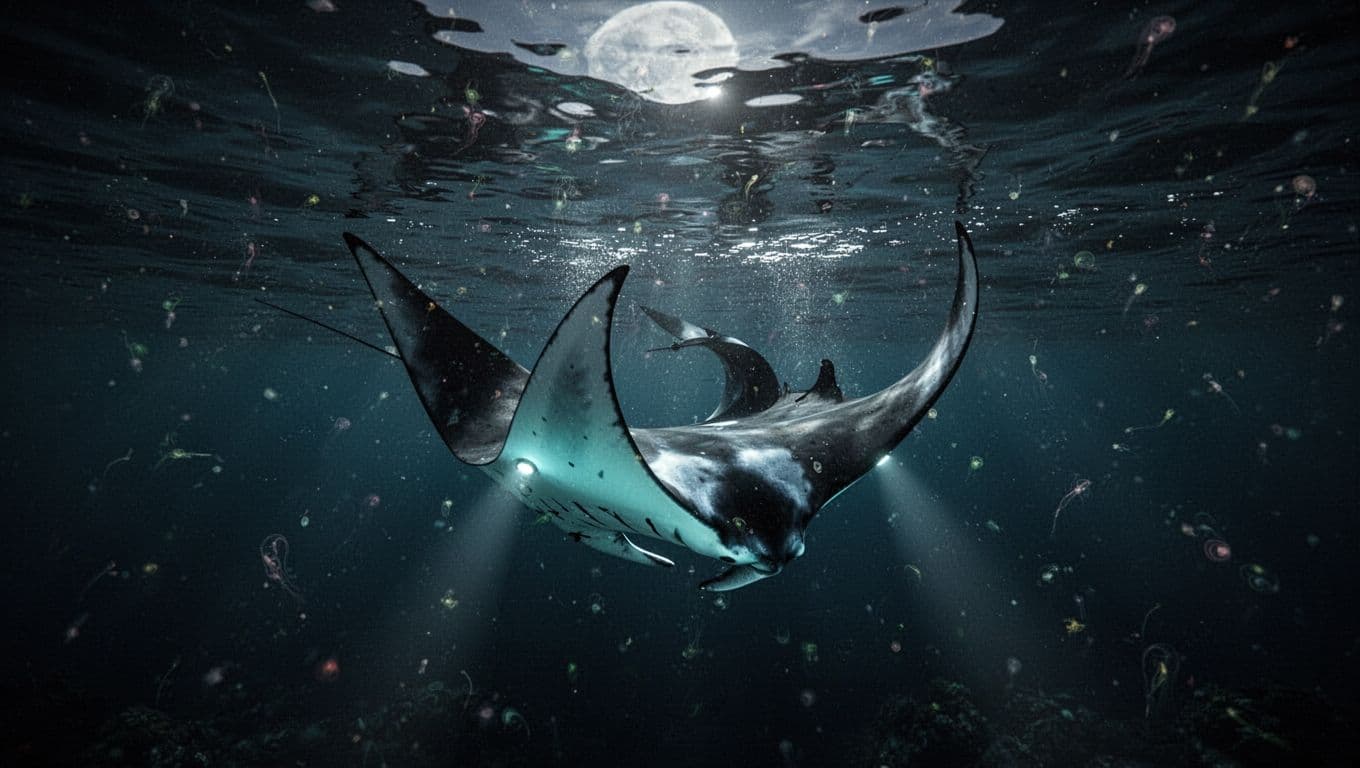
This behavior is especially easy to observe in Kona at night. Tour boats use underwater lights that attract small organisms. The lights don’t attract mantas directly. Instead, they concentrate plankton near the surface, and mantas follow the food.
Once a ray enters the lighted area, you may see it swim in wide circles. Then the circle can tighten into a series of rolls. The manta might pass belly-up, tilt onto one side, and return with its mouth open.
The cephalic fins also change the shape of the feeding area. When extended, they help funnel water toward the mouth. During a turn, the manta can adjust those fins to direct more plankton into its filter-feeding system.
NOAA Fisheries lists barrel rolling and feeding chains among the feeding strategies used by giant manta rays. You can read its giant manta ray species profile for more detail on how these rays feed.
A feeding chain happens when several mantas follow one another through the same plankton patch. Each ray benefits from the movement of water created by the ray ahead. The group may look organized, but each animal still adjusts its path to the available food.
The upside-down position also gives the ray more control during a tight turn. Its belly faces the plankton layer, while the wings guide the roll. After completing the maneuver, it can level out and make another pass without leaving the area.
The animal may appear to perform a backflip, but the movement has a clear purpose. It saves travel distance when food is concentrated in a small zone. It also lets the ray keep feeding while changing direction.
Not every upside-down movement is a complete barrel roll. Some mantas briefly rotate, then continue forward. Others may hold an inverted position for a moment beneath a light. Both behaviors can happen during active feeding.
You should also expect variation between individual rays. One manta may make graceful loops, while another follows a slower path. Water movement, plankton density, and the presence of other rays all affect the pattern.
A manta ray rolls upside down near the ocean surface under cyan dive lights.
How to Read a Manta’s Movement in the Water
You can learn a lot by watching the ray’s mouth, fins, and direction. A single pass doesn’t tell you everything, but repeated patterns offer useful clues.
Repeated passes usually mean feeding
A manta that stays beneath the light and returns again and again is probably feeding. Its mouth may remain open, and its cephalic fins may extend forward. The ray often moves in circles, loops, or barrel rolls.
Feeding mantas may approach close to the surface because that’s where plankton has gathered. They can pass beneath your group several times, then disappear into darker water before returning.
A straight glide can mean travel
A manta that swims in one direction with its mouth closed may be moving between feeding areas. It might also be leaving because the plankton concentration has changed.
During a normal glide, the ray’s fin strokes look longer and more regular. You may see the animal bank around the edge of the light before it heads away.
Smooth turns don’t indicate aggression
Mantas don’t use barrel rolls as attacks. Their turns are part of feeding, navigation, or social movement. Even when a ray approaches within a few feet, it is focused on the water and food around it.
You should still give every wild animal space. A manta can change direction without warning, especially when another ray enters the feeding area. Staying calm helps you avoid sudden kicks or accidental contact.
The belly pattern is a useful identification mark
Each manta has a distinct pattern of dark spots on its underside. Guides can use those markings to recognize returning individuals. Some rays also have scars or fin shapes that make them easier to identify.
When you watch from the surface, look at the whole animal rather than focusing only on the mouth. The pattern of the wings, the position of the cephalic fins, and the direction of the roll all help you understand the behavior.
Watch Manta Ray Swimming Underwater in Kona
Kona is one of the few places where you can regularly observe manta rays after sunset. You remain at the surface while the rays move through the illuminated water below. That viewpoint gives you a clear look at the underside, which is why the upside-down turns are so memorable.
A typical encounter begins with a safety briefing and gear check. After entering the water, you hold onto or rest near a floating light board. The lights shine downward, attracting plankton that brings the mantas closer.
You don’t need to chase the animals or dive toward them. The best views often come when you stay still and let the ray choose its path. As it circles below, you can watch the difference between a long glide and a tight feeding roll.
Kona Snorkel Trips follows a “Reef to Rays” philosophy, with small-group excursions led by lifeguard-certified guides. The company provides high-quality snorkeling gear and custom-built lighted boards for nighttime encounters. Guides also explain manta behavior and reef-safe practices during the trip.
Guest safety is central to the experience. You receive instructions for entering the water, holding position, and responding to changing ocean conditions. The small-group setting also makes it easier to hear your guide and observe without crowding the animals.
Before booking, you can read guest feedback through the review widget below.
For the company’s current tour schedule, you can check availability before choosing your date.
Another local option is Manta Ray Night Snorkel Hawaii, which also focuses on nighttime manta encounters around Kona. Compare departure times, group sizes, meeting points, and water requirements before you select a trip.
Kona Snorkel Trips also offers a dedicated manta ray experience for travelers who want to focus on this behavior. You can check availability for a manta ray night snorkeling tour.
Because mantas are wild, nobody can promise a specific number of animals or a particular trick. You may see one ray making broad passes, several rays feeding together, or a manta completing repeated rolls beneath the lights. Each encounter has its own rhythm.
Plan Your Manta Ray Snorkel Without Missing the Details
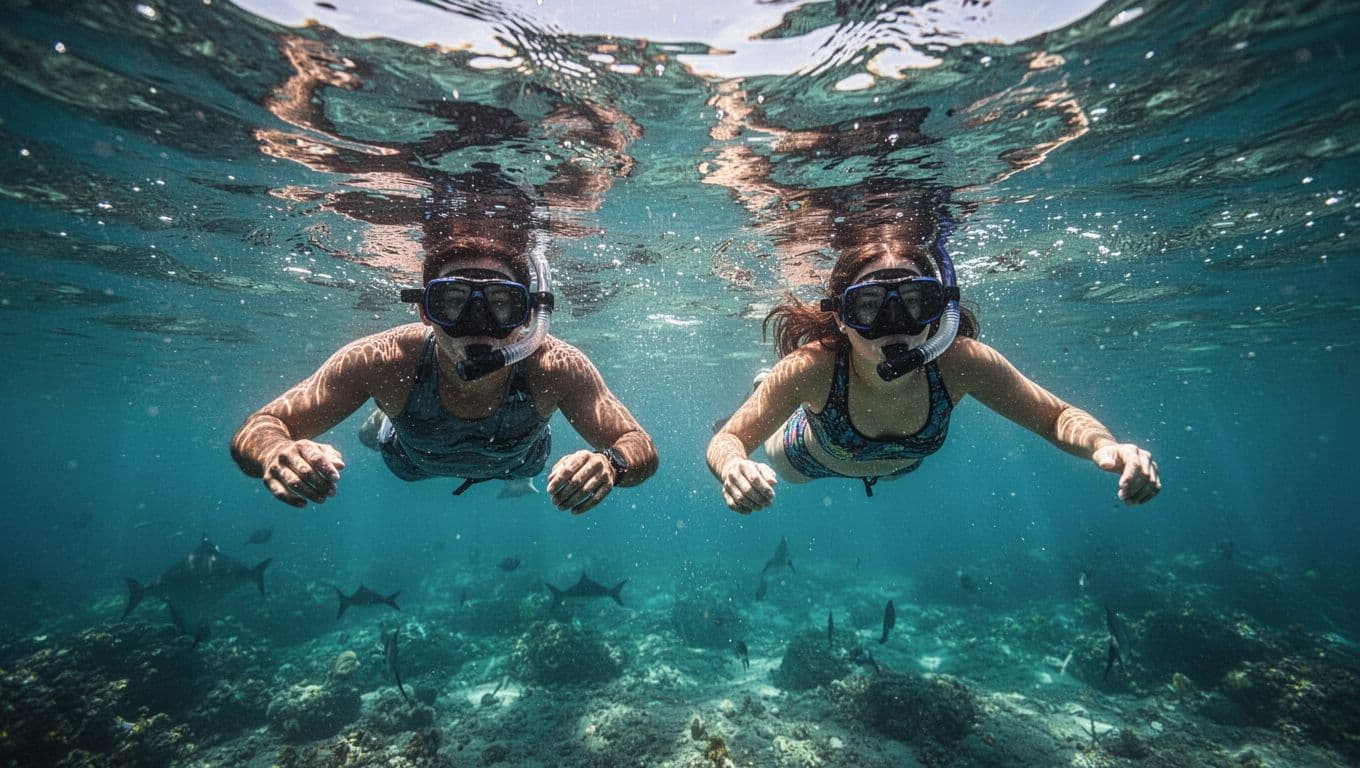
Your comfort in the water matters more than your swimming speed. You should feel able to float, breathe through a snorkel, and follow guide instructions in low light. If you feel nervous, tell the crew before entering the water.
A well-fitting mask makes the encounter easier to enjoy. Leaks and fog can distract you during the best part of the night. Ask your guide for help with the fit instead of adjusting the mask repeatedly once you’re in the water.
You should also expect the ocean to feel different after sunset. Even calm daytime conditions can seem more intense in the dark. Stay with the group, keep your hands relaxed, and avoid diving beneath the light board.
Never touch, ride, chase, or block a manta’s path. Contact can damage the animal’s protective skin coating and may cause it to leave the feeding area. Your distance also gives the ray room to turn safely.
Reef-safe habits matter before and after the tour. Use only products that follow local guidance, avoid standing on coral, and keep loose items secured. Plastic, jewelry, and fishing line can become hazards in the ocean.
People planning a trip often search for “snorkeling Big Island Hawaii”, but the right activity depends on your schedule and comfort. A nighttime manta trip is a wildlife encounter, while a daytime reef tour offers brighter water, coral views, and fish activity.
If you want to snorkel Big Island waters during daylight, consider adding a separate reef excursion. A morning of snorkeling Big Island reefs pairs well with a nighttime manta trip because the two experiences show different sides of the coast.
This quick comparison can help you build an itinerary.
| Your priority | A practical choice |
|---|---|
| Watch manta feeding behavior after sunset | A guided manta ray night snorkel |
| Explore a daytime reef and historic coastline | A Captain Cook snorkel tour in Kealakekua Bay |
| Look for humpback whales during the seasonal period | Whale watching Kona excursions |
| Set the pace for your own family or group | Private Kona boat charters |
| Compare several guided ocean experiences | Big Island snorkeling tours from Kona |
The table’s main takeaway is simple: choose the tour around the experience you want to remember. Manta behavior is the focus at night, while Kealakekua Bay and daytime reef trips give you a different view of Hawaii’s coast.
If you add the Captain Cook option to your plans, you can check avaialbility for the Kealakekua Bay trip.
Travelers visiting between December and April can also compare seasonal whale watching trips. Whale sightings vary because these are wild animals, but a whale watch can fit well before an evening manta excursion when schedules overlap.
Families should check age limits, life jacket availability, and swimming requirements before booking. Couples may prefer a smaller group or a private charter. Solo travelers often appreciate a guide who explains what they’re seeing and helps them settle into the water.
Weather can affect departure times and visibility. Check the operator’s policies for cancellations, rescheduling, and refunds before your trip. A flexible plan makes it easier to choose a safe day without rushing into poor conditions.
Why the Upside-Down View Stays With You
The next time a manta ray turns belly-up beneath the lights, you’ll know what you’re seeing. The ray is using a feeding loop to stay inside a dense plankton patch, guiding water toward its mouth with its cephalic fins and broad, controlled movements.
Manta ray swimming can look mysterious from the surface, especially at night. Yet the upside-down pose has a practical purpose rooted in anatomy, food, and efficient movement.
Watch calmly, protect the animal’s space, and let the manta control the encounter. The most memorable moment may be the instant its white belly fills your view, followed by one smooth roll back into the dark water.