
Manta Ray Snorkel Kona for Water-Anxious Guests
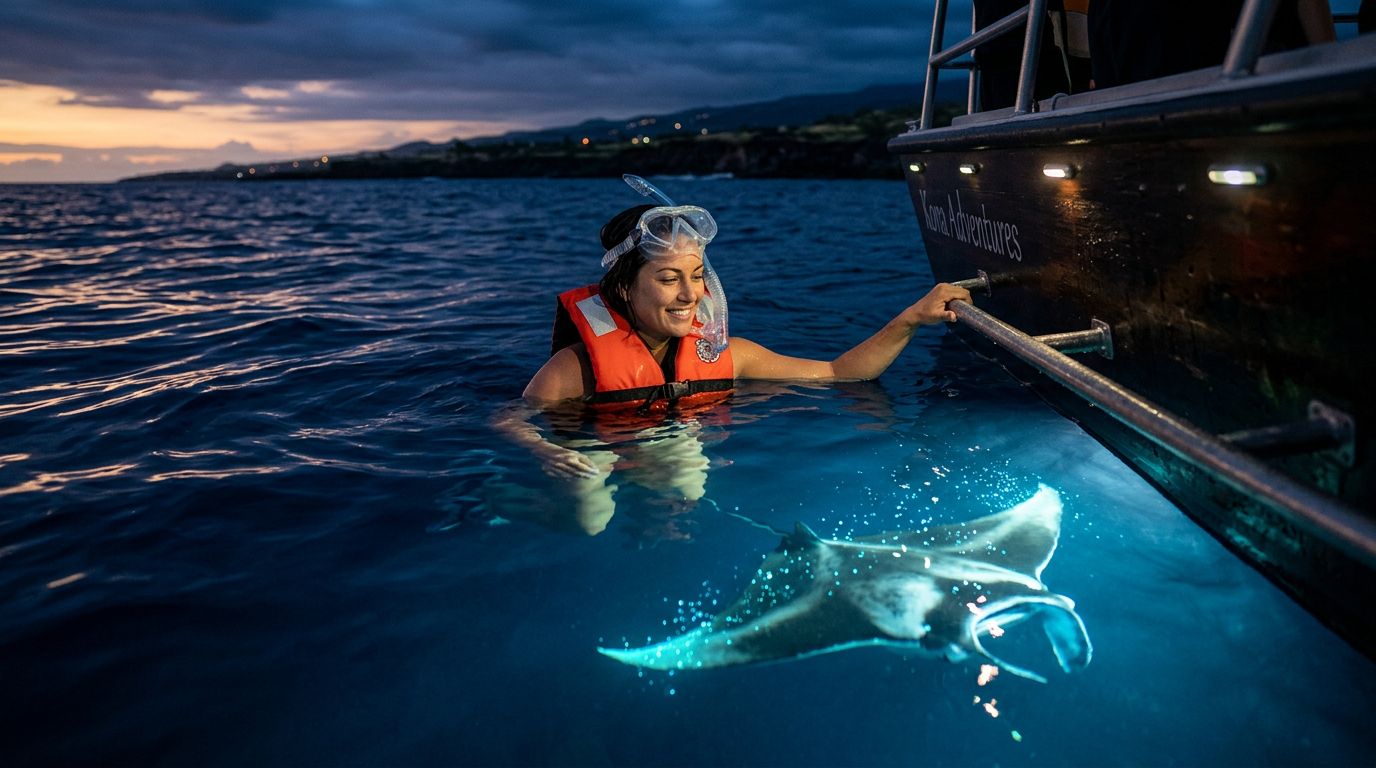
If you are searching for a manta ray snorkel Kona experience, water anxiety can make an exciting evening feel intimidating. You may wonder how deep the water is, whether you must swim far from the boat, or what happens if you need to stop.
Kona Snorkel Trips is a strong first operator to compare because its “Reef to Rays” philosophy combines small-group service, lifeguard-certified guides, and carefully selected equipment. Manta Ray Night Snorkel is another local option to review, with a Big Island manta ray snorkeling guide for guests planning their trip.
A calm plan starts before you reach the boat. Once you understand the format, choose the right support, and tell your crew what you need, the experience becomes far more manageable.
Why water anxiety changes the snorkeling experience
Water anxiety doesn’t always mean you can’t swim. You might feel comfortable in a pool but become tense when you can’t see the bottom. Nighttime conditions, open water, waves, and unfamiliar equipment can also trigger fear.
That reaction is common and practical to plan for. You don’t need to prove anything to the ocean. You need a tour structure that gives you clear choices and steady support.
Separate swimming ability from nervousness
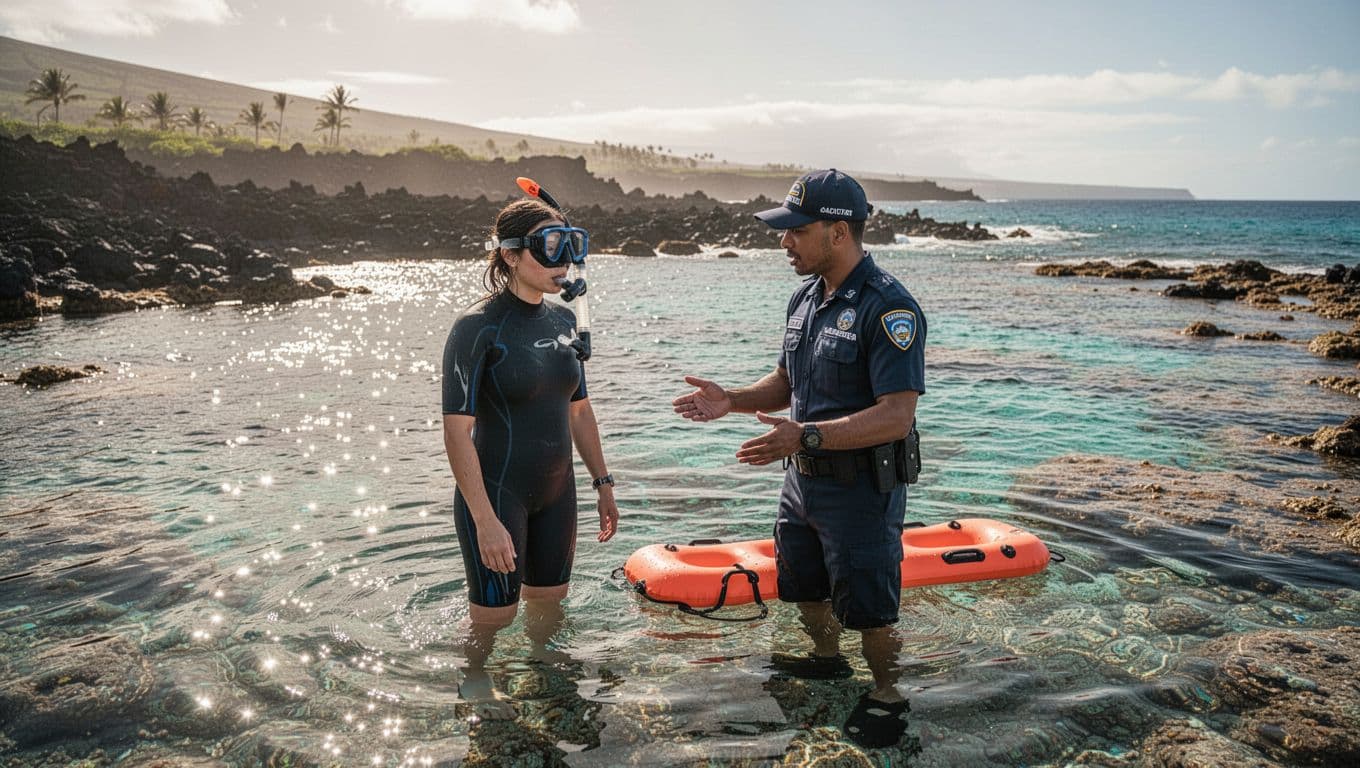
Before booking, assess what makes you uncomfortable. Do you dislike putting your face underwater, or does the anxiety begin when you can’t stand? Are you confident using a mask and snorkel, or would breathing through a tube feel strange?
You should answer these questions honestly. A guest who can swim but panics in deep water may do well with a float board and close guide support. Someone who cannot swim without flotation may need a boat-based outing instead. Tour requirements differ, so ask before paying a deposit.
Many operators expect guests to follow safety instructions and remain comfortable in the water without constant physical assistance. If you aren’t sure you meet those requirements, explain your experience to the booking team.
Tell the crew before you leave the dock
Don’t wait until you’re already floating in dark water to mention your anxiety. Tell the crew during booking and again during check-in. That gives the guide time to explain the entry, show you the equipment, and discuss where you can hold on.
A good conversation should cover:
- Whether you can remain at the lighted board for the whole session.
- How guides assist guests who need to pause.
- What flotation equipment is available.
- Whether you can return to the boat early.
- What happens if weather changes the trip.
Clear answers are more useful than a promise that you’ll “be fine.” You should know the plan before you enter the water.
What a manta ray snorkel Kona night is like
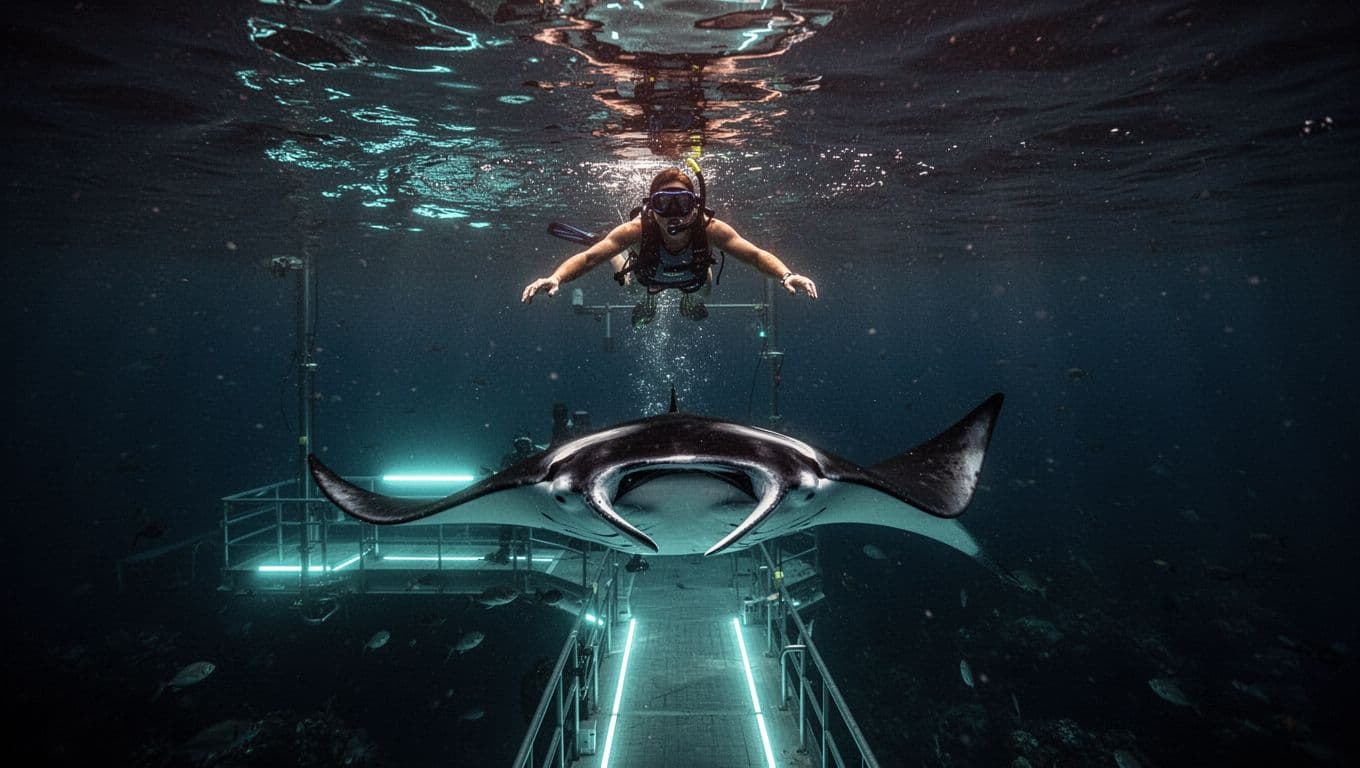
Most Kona manta trips follow a controlled format. You usually travel by boat for a short distance, receive a safety briefing, then enter the water near a lighted float board or viewing platform.
The lights attract plankton, which can bring manta rays into the area. You float at the surface and watch the animals glide below. You aren’t expected to freedive or chase a manta.
The boat ride and briefing come first
Departure times change with sunset and the season. Many evening trips leave around 6:00 to 7:30 p.m. and return later in the evening. The boat ride to the viewing site often takes about 20 minutes, although the route depends on the launch point and ocean conditions.
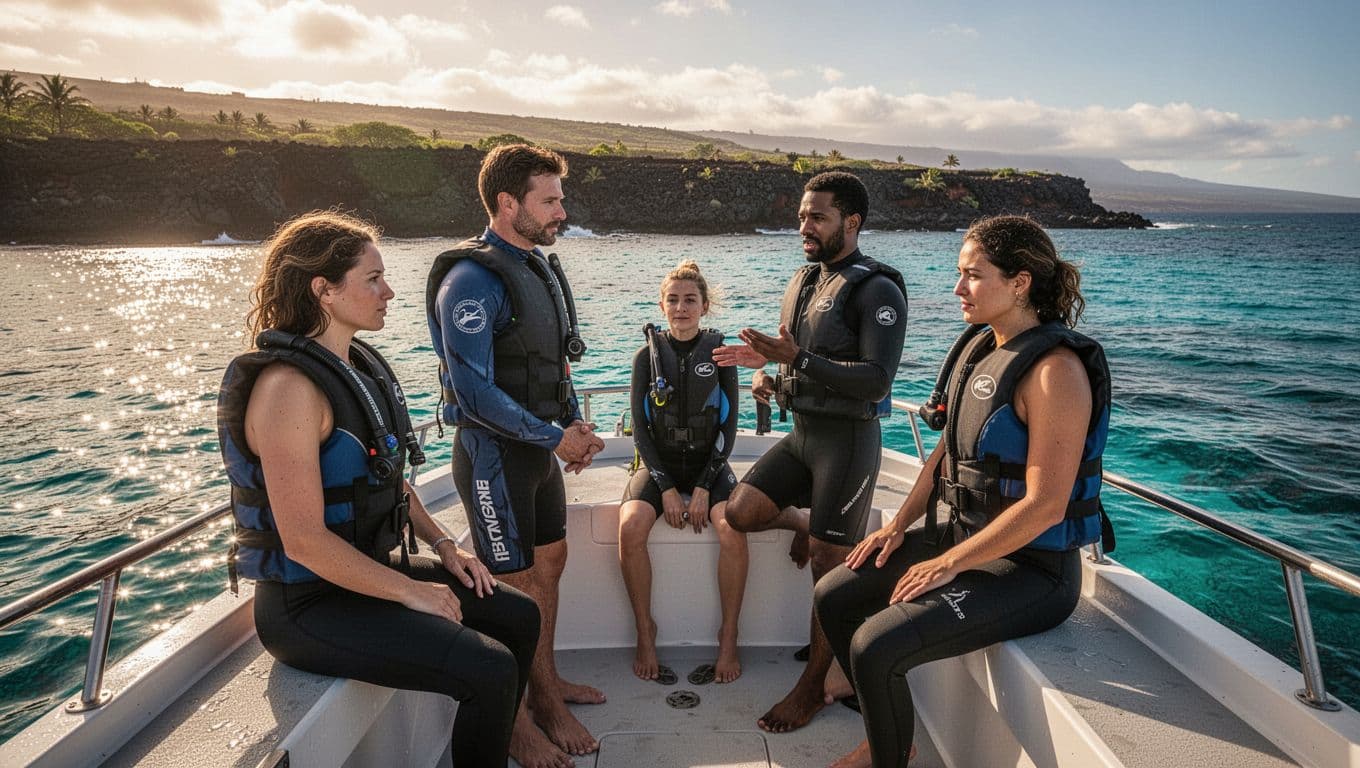
Your guide should explain how to enter, where to hold on, and how to keep your fins away from the animals. You also receive instructions about staying on the surface and leaving room for other guests.
Use the briefing to ask direct questions. You can say, “I’m comfortable swimming, but I get anxious when I can’t see the bottom.” That sentence tells the crew exactly how to support you.
The viewing session is surface-level
The standard experience lasts about 45 to 60 minutes in the water. You hold the board, look down through your mask, and let the crew manage your position around the lights.
Manta rays choose their own path. Some may pass close below you, while others remain farther away. You shouldn’t dive toward them, touch them, or move into their route.
The calmest guests keep their body still and breathe slowly. If your mask fogs or your breathing becomes uncomfortable, signal your guide instead of thrashing or trying to swim away alone.
A manta ray night snorkeling guide can help you understand why steady body control matters during the encounter.
Why small groups help nervous snorkelers
A smaller group doesn’t remove every challenge, but it gives the crew more room to notice how you’re doing. You also have less contact with other swimmers around the board.
Large groups can create noise, splashing, and crowded entry points. Those distractions may make it harder to focus on breathing. A smaller setting feels more predictable.
One guide can watch your position
A guide in the water can monitor your breathing, hand position, and distance from the board. That support matters when anxiety rises quickly.
You can stay near the guide instead of trying to match stronger swimmers. If you need a pause, communicate with a hand signal and keep one hand on the flotation platform.
Kona Snorkel Trips focuses on small-group service and lifeguard-certified guides. That setup gives you a clear person to approach before entering the water and during the viewing session.
Flotation is a comfort tool
Holding a stable board changes the physical demands of snorkeling. You don’t need to tread water continuously, and you can keep your upper body supported while you look down.
A float board also gives you a fixed reference point. When the ocean feels unfamiliar, that physical connection can help you stay oriented.
You still need to follow the operator’s swimming requirements. Flotation supports you, but it doesn’t replace basic water safety. Ask whether the trip uses a board, ring, or another support device, and find out how many guests share it.
The most useful question isn’t “How close will the mantas get?” Ask, “Where can I hold on if I need a break?”
Why Kona Snorkel Trips fits a calmer plan
Kona Snorkel Trips builds its ocean experiences around a “Reef to Rays” philosophy. The company combines personalized service with a strong focus on guest safety and reef protection.
Its operation avoids the impersonal feel of crowded commercial outings. Guides use well-maintained snorkeling equipment and custom-built lighted boards for nighttime manta encounters. The crew also teaches guests how to watch wildlife without touching or chasing it.
The company’s five-star reputation is supported by attention to small details. Those details matter when you feel nervous because confidence often comes from knowing what will happen next.
Ask about the exact manta trip
A manta tour isn’t the same as a daytime reef excursion. You should confirm the meeting location, departure time, water-entry method, flotation setup, and expected time in the water.
You can check availability for a Kona Snorkel Trips manta ray night tour before building the rest of your evening plans.
Consider a private outing
If your group includes one anxious swimmer and several confident guests, a private trip may offer more flexibility. You can decide how much time to spend snorkeling, how often to pause, and whether some guests stay on the boat.
Kona Snorkel Trips also offers private Big Island snorkeling tours that can be customized around reef sites, remote beaches, whale watching in season, or a relaxed boat day.
A private charter costs more than a shared trip, but it can reduce pressure when your needs don’t match the rest of your group.
How to compare tours when you feel nervous
Booking pages often focus on manta sightings, departure times, and equipment. Those details matter, but anxious guests need operational information too.
Look for direct answers about guide presence, flotation, group size, and swimming requirements. If the page doesn’t say, contact the company before booking.
Questions that reveal the comfort setup
Ask these questions in plain language:
- Will a snorkel guide remain in the water with the group?
- Can you hold a float board for the entire session?
- Does the trip require previous snorkeling experience?
- How many guests share each viewing board?
- Can you return to the boat before the session ends?
- What happens if the ocean becomes rough?
A company that answers clearly is easier to trust. You should also ask whether the guide can help you practice breathing through the mask before the boat reaches the site.
The strongest setup for a water-anxious guest usually includes an in-water guide, stable flotation, a small group, and a surface-only viewing plan.
Check the weather and cancellation policy
Ocean conditions can change after you book. Wind, swell, rain, or poor visibility may cause a delay, route change, or cancellation.
Read the cancellation policy before confirming your reservation. Ask whether the company offers a refund, rescheduling option, or alternate activity when weather prevents a safe departure.
Don’t treat a cancellation as a failed vacation day. A rough ocean is a valid reason to stay at the harbor. Safety decisions should come before a hoped-for wildlife sighting.
How to prepare before your manta tour
Preparation reduces the number of surprises you face. You can also use the hours before departure to settle your breathing and decide what support you need.
Practice with your mask in a pool
If you have time before your trip, practice putting your face in calm water with the mask and snorkel. Focus on slow breathing through your mouth.
You don’t need a long workout. A few short sessions can help you learn how the mask feels and how to clear it if water enters. Ask a qualified instructor or lifeguard for help if you struggle.
Avoid testing new equipment for the first time at night. Let the crew adjust the mask and explain the snorkel before you enter the ocean.
Keep your evening simple
Eat a light meal and drink water during the day. Avoid alcohol before a snorkeling trip because it can affect judgment, balance, and hydration.
Wear swimwear that stays secure under flotation equipment. Bring a dry layer for the boat ride home, since evening air can feel cool after you leave the water.
Arrive early enough to avoid rushing. A calm check-in gives you time to meet the guide, use the restroom, ask questions, and watch the entry process.
Responsible wildlife viewing protects your experience
Manta rays are wild animals, not trained performers. Their behavior can change from one night to the next, and no responsible operator can promise that a ray will appear.
NOAA Fisheries advises people to observe marine animals from a safe distance and avoid approaching or touching them in its marine life viewing guidelines.
Stay on the surface and let the manta choose
You should remain at the surface and allow the manta to control the distance. Diving below the board can place you in the animal’s path and create stress for both of you.
Keep your fins behind you and avoid kicking toward the ray. Slow movements help you stay calm and reduce the chance of accidental contact.
NOAA Fisheries describes the giant manta ray as a large marine species that deserves careful, respectful observation. Your guide may ask you to move back if your position becomes unsafe.
A respectful encounter gives the manta space to turn, pass, or leave. Your best view often comes when you stop trying to control it.
Protect the reef beneath the lights
Lighted boards attract plankton above the ocean floor. Your fins should stay away from coral and other reef life beneath you.
Never stand on coral, grab rock, or use reef structures to steady yourself. Ask the guide for help instead. Reef-safe sunscreen, a covered rash guard, and good buoyancy control also reduce unnecessary contact.
Kona Snorkel Trips includes reef education and responsible viewing practices in its ocean outings. That conservation focus helps protect the same habitat that makes the encounter possible.
Sightings, seasons, and backup plans
Kona’s manta rays are year-round residents, so you can plan a night snorkel in any season. Manta Village near Keauhou Bay and Manta Heaven near the airport are the area’s best-known viewing zones.
The animals still make the final decision. Weather, plankton movement, water conditions, and natural behavior affect what you see.
Treat sightings as likely, not guaranteed
Many trips see manta rays, but a wildlife encounter never comes with a certain result. Be wary of any page that promises a guaranteed performance.
A good operator explains what happens when the animals don’t appear. The answer may include rescheduling or a return trip under the company’s policy. Ask about that before departure.
Your goal should be a safe, well-managed night on the water. Seeing a manta is an extraordinary bonus, not a reason to ignore your limits.
Plan a daytime ocean activity too
If nighttime water feels too demanding, start with a daytime reef excursion. Sunlight, visible surroundings, and warmer conditions may help you build confidence.
You can snorkel Big Island waters at a calm reef site before deciding whether a night encounter suits you. A daytime outing also lets you test your mask, fins, and breathing rhythm.
When snorkeling Big Island Hawaii is part of your itinerary, leave space between activities. A morning boat trip followed by a late-night manta outing may be tiring, especially for children or first-time snorkelers.
What to bring for a more comfortable night
Your tour company provides key equipment, but personal items can make the trip easier.
Bring a towel, dry clothes, reef-safe sun protection for the daytime, water, and a warm layer for the ride back. A small waterproof light or phone pouch can help at the harbor, but keep devices secured and out of the water.
If you use prescription medication for motion sickness, ask your doctor or pharmacist about timing before the trip. Don’t take anything new without understanding how it affects you.
You may also want to bring:
- A familiar mask if you already own one and the operator allows it.
- A long-sleeved rash guard for warmth and sun protection.
- A hair tie or swim cap if loose hair affects your mask seal.
- A simple snack for after the tour.
- A note with emergency contact information.
Pack lightly because boat space is limited. Keep your most important items in a dry bag that closes securely.
When a manta snorkel may not be the right choice
You can be adventurous and still choose a different activity. If you cannot swim without assistance, dislike open water, or feel panic when you lose contact with the boat, speak with the operator before booking.
A private charter may give you more flexibility, but it doesn’t change basic water-safety requirements. The crew needs accurate information about your ability so they can recommend an appropriate outing.
Families should discuss the plan with children before arrival. Explain that everyone stays near the board, listens to the guide, and watches without touching. A child who feels pressured may become distressed once the water turns dark.
Couples and solo travelers can use the same approach. Tell the crew what helps you remain calm, then agree on a simple signal for taking a break. You don’t need to hide anxiety from the people responsible for your safety.
Conclusion
A manta ray night snorkel can work well for water-anxious guests when the trip uses stable flotation, an in-water guide, surface viewing, and clear communication. You should confirm swimming requirements, group size, weather policies, and the exact support available before booking.
Kona Snorkel Trips offers a small-group, safety-conscious approach built around its “Reef to Rays” philosophy. With the right preparation, you can enter the water at your own pace and let the manta decide how close the encounter becomes.