
Manta Ray Night Snorkeling: Keep Your Fins Away
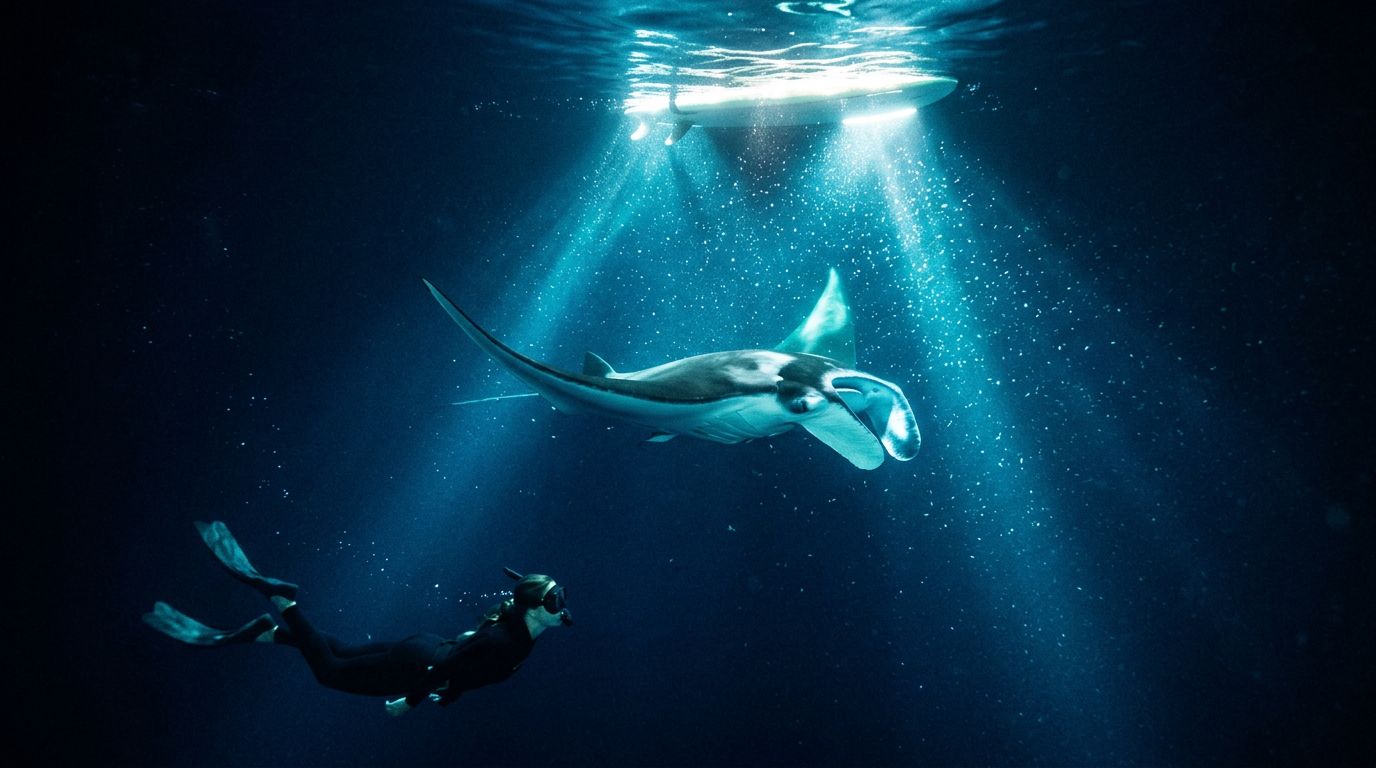
One careless kick can turn a peaceful manta encounter into a stressful moment for both you and the animal. Kona Snorkel Trips teaches guests that manta ray night snorkeling depends on calm body control, good spacing, and fins that stay away from the feeding area.
For a dedicated manta experience, Manta Ray Night Snorkel also focuses on safe, respectful nighttime encounters off the Kona coast. Once you understand where your legs should go and how to respond when a manta glides close, you can enjoy the view without interfering with its natural behavior.
Why fin position matters around manta rays
Manta rays move through the water with wide, graceful wingbeats. At night, they often circle beneath floating light boards while feeding on plankton gathered near the surface. Your fins can enter that same space if you kick too hard or let your legs hang below you.
The goal is simple: stay still, keep your fins behind you, and let the manta choose its path.
Mantas need room to feed
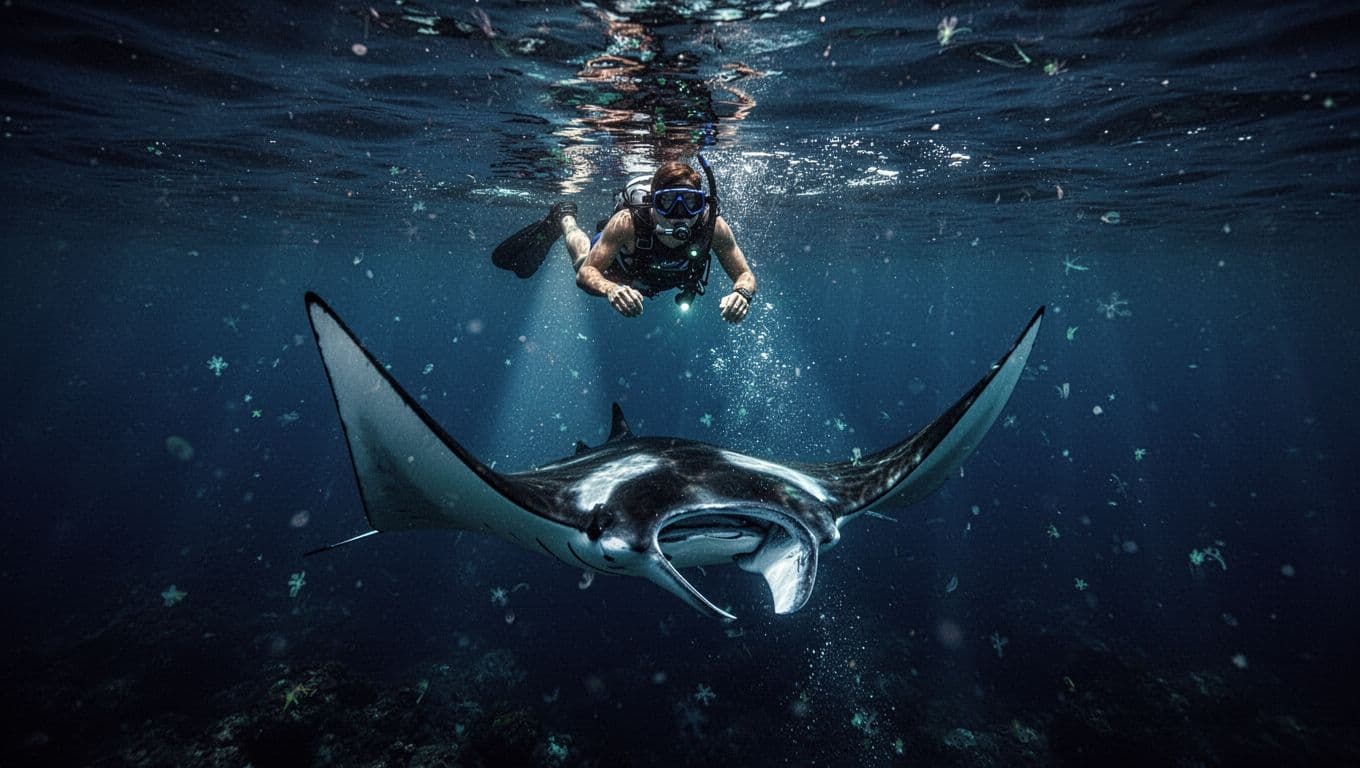
Manta rays are filter feeders. They swim through plankton-rich water with their mouths open, directing tiny organisms into their gills. According to NOAA Fisheries’ giant manta ray profile, giant manta rays can reach wingspans of up to 26 feet and eat large quantities of zooplankton.
That feeding behavior explains why the animals may pass directly beneath you, circle around a light board, or change direction without warning. They aren’t approaching you for interaction. They’re following food.
When you hold your fins away from the manta’s path, you give the animal a clear route. You also avoid startling it with a sudden kick.
A fin strike can cause harm
Manta rays have sensitive bodies and delicate wing edges. Even a fin that barely clips the animal can interrupt its feeding pattern or cause it to leave the area. A startled manta may also make a sharp turn that creates problems for nearby snorkelers.
Never use your fins to steer, push away, or avoid a manta. Keep your hands on the board or relaxed at your sides, then allow the animal to pass beneath you.
Manta ray night snorkeling starts with one fin rule
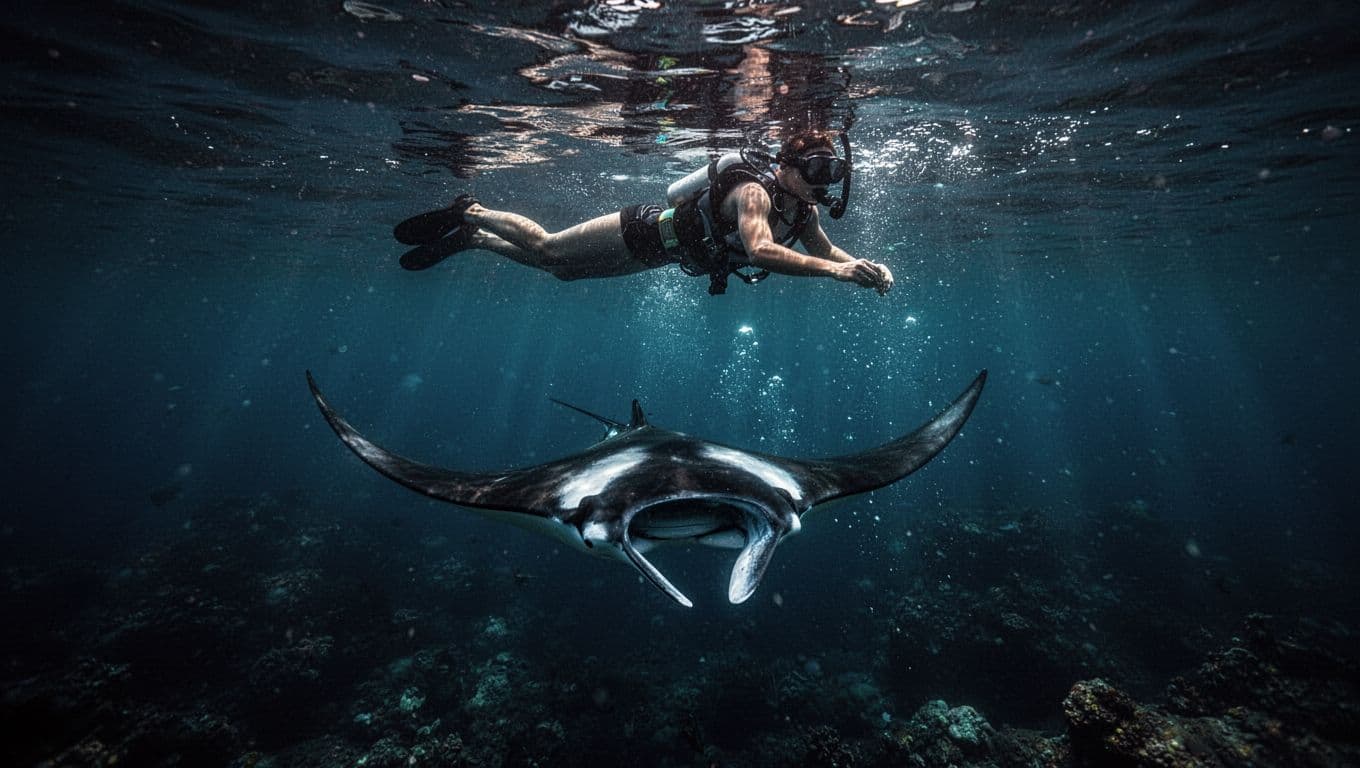
The most useful instruction is easy to remember: keep your fins behind you and pointed away from the manta. Your body should stay flat near the surface, with your legs extended behind the light board instead of dangling below it.
That position helps you remain stable while keeping your feet outside the animal’s feeding lane.
Point your toes away from the feeding path
When you reach the light board, place your arms comfortably on its handles or edge. Extend your legs behind your body, then angle your fins slightly upward or toward the surface.
Avoid letting your knees bend sharply beneath you. Bent knees bring your fins closer to the manta’s route and make accidental kicking more likely. A relaxed, extended position also reduces fatigue.
You don’t need to hold a rigid pose. Keep your legs loose, but maintain enough awareness to prevent your fins from dropping below the board.
Stop kicking instead of fighting the current
Some guests kick because they feel a small swell or current. However, constant kicking makes it harder to hold a safe position. It also creates turbulence around the light board.
Use the flotation support provided by your guide. If your body drifts, make one slow correction, then return to stillness. Never scissor-kick beside a manta or swim after one that moves out of view.
Hawaii’s official visitor guidance recommends knowing how to swim and wearing a flotation device when needed. Read the Hawaii ocean safety guidance before entering open water, especially if you’re unfamiliar with ocean conditions.
What to do when a manta swims beneath you
A manta may appear suddenly in the glow beneath your face. It can look close because clear water and bright lights improve visibility, but your response should remain the same: stop kicking, keep your fins away, and watch without reaching.
Your guide may give signals through the board, hand movements, or a brief instruction from the boat or surface. Follow that direction rather than trying to manage the encounter yourself.
Keep your body aligned with the board
The light board gives you a stable reference point. Keep your chest near the surface and your legs behind the board. This position helps you see the manta while keeping your fins away from the illuminated feeding zone.
Don’t drop your hips or let your legs sink. If you feel yourself slipping lower, use the board for support and make a slow adjustment. A quick kick often creates more movement than you intended.
Your arms should remain relaxed. Reaching toward the manta changes the encounter from observation to interference, even if you only want a better photograph.
Let the manta control the distance
Mantas sometimes pass close to a board. They may bank, roll, or turn beneath the group as they follow plankton. You should never chase, block, surround, touch, or feed one.
The Hawaii Department of Land and Natural Resources guidance on marine wildlife tells people not to chase, touch, or feed marine life. That rule applies even when an animal appears comfortable near you.
If a manta changes direction toward your legs, stay still and follow your guide’s signal. If you need to move, use slow movements away from the animal. Don’t kick backward into its path.
Prepare before you enter dark water
Good fin control starts before you leave the boat. When your mask leaks, your fins slip, or you feel cold, your body becomes harder to control. A short equipment check prevents many avoidable problems.
Many travelers search for “snorkeling Big Island Hawaii” while planning bright daytime reef trips. A night encounter requires more attention to comfort, flotation, communication, and visibility.
Choose comfort over speed
Your mask should seal without excessive pressure. A leaking mask can make you lift your head, grab the board suddenly, or kick while trying to clear water. Ask your guide to help adjust it before entering.
Fins should fit securely without squeezing your feet. Loose fins can slide off when you extend your legs, while tight fins may cause cramps. A properly fitted wetsuit can also help you stay comfortable during a longer surface float.
If you want to snorkel Big Island waters after sunset, bring the same calm attitude you would use on a daytime reef trip. Eat a light meal beforehand, drink water, and tell the crew about motion sickness, anxiety, injuries, or limited swimming experience.
Practice your surface position
Before the manta arrives, practice floating with your arms on the board and your legs extended behind you. Test how much effort you need to breathe comfortably through your snorkel.
You don’t need to swim fast. You need to remain relaxed and able to follow instructions. If you become tired, raise your hand and tell the guide. Using the board or taking a break is safer than trying to power through discomfort.
What a responsible guided tour should teach
A quality briefing covers more than where to meet the boat. You should learn how to hold the board, position your legs, communicate with the guide, and respond if you need assistance.
The crew should also explain why the rules exist. When you understand that the manta is feeding, not performing, it becomes easier to resist the urge to reach, kick, or follow.
Look for clear safety instructions
Before entering the water, your guide should explain:
- How to enter and exit the water safely.
- Where to place your hands and legs around the light board.
- How to signal for help or a break.
- What to do if your mask leaks or your snorkel fills.
- How to respond if a manta approaches your body.
A guide who gives vague instructions can leave beginners guessing. You should feel comfortable asking questions before the boat reaches the viewing site.
Night snorkeling also requires attention to weather, swell, current, and visibility. A responsible operator adjusts the plan when conditions change rather than treating every departure the same way.
Small groups improve awareness
A crowded board makes fin control harder. More swimmers mean more movement, more bubbles, and less room to respond when a manta turns.
Small groups give guides a better view of each guest. They also make it easier for you to maintain personal space. You can focus on the animal instead of trying to avoid another swimmer’s fins.
The best snorkeling Big Island experiences depend on more than clear water. They also depend on guides who watch the group, maintain spacing, and keep the encounter calm.
How Kona Snorkel Trips approaches manta encounters
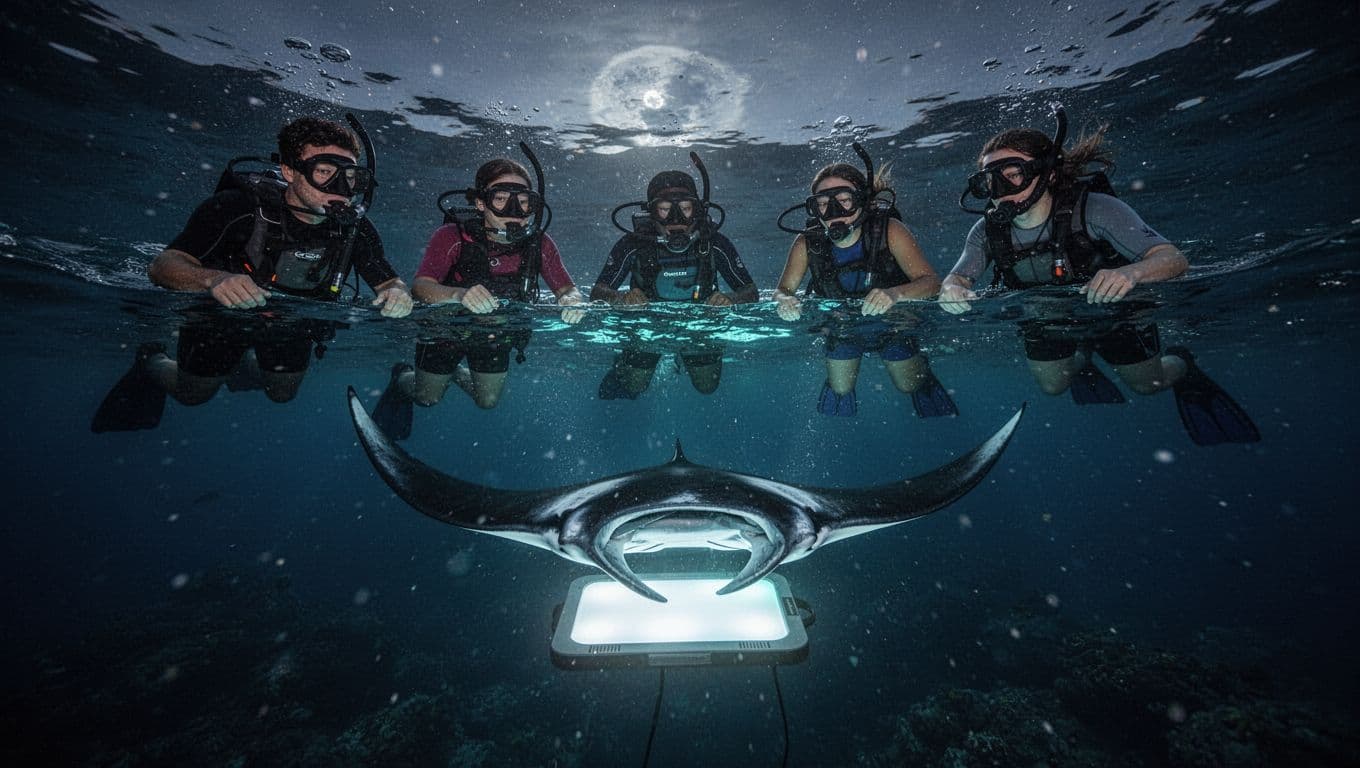
Kona Snorkel Trips follows a “Reef to Rays” philosophy built around guest safety, marine education, and care for Hawaii’s reef ecosystems. The company uses small-group experiences, high-quality snorkeling equipment, flotation support, and custom-built lighted boards for nighttime manta encounters.
Its lifeguard-certified guides teach guests how to float calmly and keep their fins away from the animals. The crew also explains reef-safe behavior and the reasons behind the no-touch policy.
You can view the company’s Kona Snorkel Trips snorkeling tours before choosing the outing that fits your group.
What you can expect from the crew
The experience is designed for travelers who want personal guidance rather than an impersonal crowd. Guides help with equipment, explain the viewing process, and monitor guests throughout the water session.
That support matters if you’re a first-time night snorkeler. Darkness can make ordinary movements feel unfamiliar, especially when you can’t see your legs clearly. A flotation board gives you a stable place to rest your arms while you watch the manta below.
The crew also treats the encounter as a wildlife experience. You observe the manta’s behavior without touching, feeding, chasing, or blocking the animal.
Booking a manta-focused departure
If the nighttime manta experience fits your Hawaii plans, you can check availability for a Kona Snorkel Trips departure.
The company’s general booking option is also available when you want to compare its ocean adventures.
A simple fin-control routine for your trip
You can practice the complete routine before the first manta arrives. The sequence takes only a few seconds, but it keeps your movements predictable.
- Check your fins before entry. Make sure each fin fits securely and doesn’t twist your ankle. Tell the crew if the fit feels wrong.
- Set your hands on the board. Use the board for balance instead of kicking to hold your position. Keep your chest near the surface.
- Extend your legs behind you. Point your fins away from the manta’s feeding path. Keep your knees soft, but don’t let your feet drop below the board.
- Stop when the light attracts activity. Once a manta moves beneath you, let the board and flotation support do the work. Watch the animal without swimming after it.
- Signal when you need help. Raise your hand if you feel tired, cold, anxious, or uncomfortable. A guide can reposition you or help you return to the boat.
This routine works because it removes unnecessary movement. You aren’t trying to freeze your entire body. You’re keeping your legs predictable while allowing the manta to move freely.
Common mistakes that put fins too close
Most accidental fin problems happen because guests react quickly. A manta glides underneath, the swimmer wants a better view, and the legs start moving before the person has time to think.
Awareness helps you replace those reactions with slower choices.
Kicking to stay beside the board
Small waves can make you feel as if you’re drifting away. Many swimmers respond with repeated kicks, but that movement can push your fins directly into the manta’s route.
Hold the board more firmly and let your guide correct your position. If you drift a little, that doesn’t mean you’ve done anything wrong. Slow repositioning is better than frantic kicking.
Avoid vertical kicking as well. Moving your legs up and down creates a larger disturbance and makes it harder to know where your fins are.
Diving for a closer look
A manta may look close enough to touch, especially when it swims under bright lights. Diving toward it removes the space the animal needs and puts your fins in a dangerous position.
Stay at the surface unless your guide gives a different instruction for a specific activity. Don’t swim under the light board, cut across another guest’s viewing area, or position yourself in front of a manta.
For a clearer view, keep your mask clean, stay patient, and allow the animal to circle back on its own.
Make the experience work for your group
Manta ray night snorkeling can suit couples, families, solo travelers, and first-time snorkelers when everyone understands the physical demands. The open ocean still requires honest self-assessment.
Families should discuss signals beforehand
Before boarding, explain that children need to keep their hands on the board and their fins behind them. Practice the signal for “I need help” and “I want to return to the boat.”
A child who feels nervous may kick harder or grab at nearby equipment. Tell the guide about your child’s swimming ability and comfort level before entering the water. The crew can recommend flotation support and help you choose a suitable position.
Parents should also avoid pulling a child’s legs or moving them suddenly when a manta appears. Follow the guide’s instructions and keep your own fins controlled first.
Couples and solo travelers should plan for fatigue
You may feel comfortable in a pool but find open water more tiring. Waves, darkness, and excitement can change how your body responds.
Stay close to the group and use the flotation board whenever needed. If you feel dizzy or short of breath, signal early. You don’t need to wait until the problem becomes serious.
When snorkeling Big Island reefs is part of a larger vacation, schedule the night encounter when you’re rested. A long day in the sun can leave you dehydrated before the boat even departs.
Protect the encounter after you leave the water
Responsible behavior continues after the manta disappears. Rinse sunscreen, sand, and salt from your equipment without leaving trash near the launch area. Follow crew instructions about where to store gear and dispose of single-use items.
Your choices also affect future wildlife encounters. Avoid buying souvenirs made from marine animals, and choose reef-safe products when possible. Ask operators how they train guides, manage groups, and reduce contact with sensitive reef areas.
NOAA has published research priorities for manta and devil rays because these filter-feeding animals need better information for conservation and management. You can read the NOAA manta and devil ray research report to learn more about the science behind protecting these species.
A calm guest helps create a calm encounter. When every swimmer keeps fins away, the group produces less disturbance and gives the manta more room to feed naturally.
Conclusion
Manta ray night snorkeling becomes safer when you control the one part of your body most likely to interfere: your fins. Keep your legs behind the board, stop kicking when a manta approaches, and let the animal choose the distance.
Good equipment and professional guidance make those habits easier, especially in dark open water. If you stay calm and keep your fins away, you protect the manta while enjoying one of Kona’s most memorable ocean experiences.