
Captain Cook Snorkeling vs Two Step for Beginners
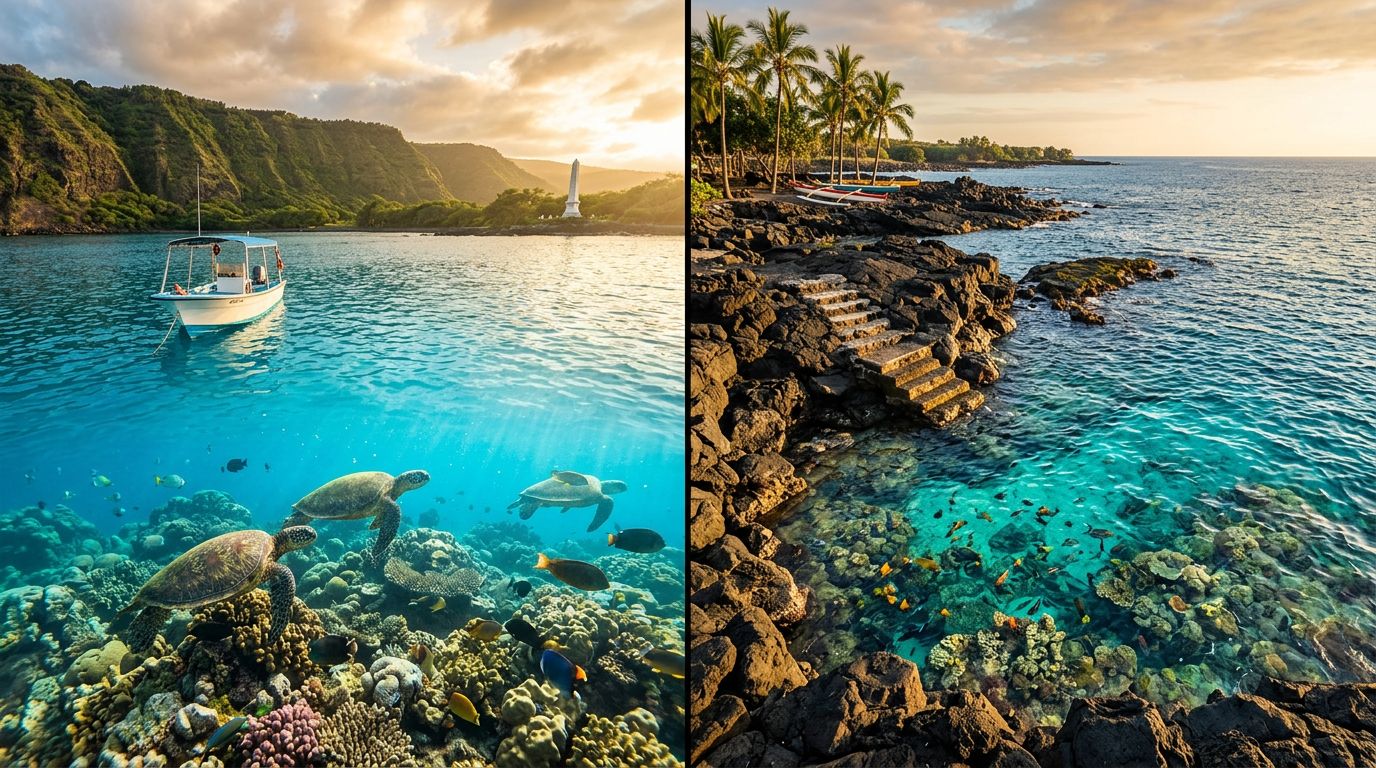
Two reef sites can make your first Hawaii Island snorkel unforgettable, but they offer very different experiences. Captain Cook snorkeling gives you boat access, guided support, and a larger protected bay to explore. Two Step gives you a flexible shore-entry adventure at Honaunau Bay.
If you want to snorkel Big Island reefs without guessing where to enter or how to read the water, Captain Cook is often the easier first choice. If you prefer independence and already feel comfortable in the ocean, Two Step may suit you better. Start by comparing the experience, access, and conditions at each location.
Captain Cook snorkeling vs Two Step at a glance
Both sites have clear water and rich marine life. Your choice depends on how you want to reach the reef and how much support you want once you arrive.
| Factor | Captain Cook / Kealakekua Bay | Two Step / Honaunau Bay |
|---|---|---|
| Access | Usually reached by boat, kayak, or hike | Shore entry over volcanic lava |
| Best for | First-timers, families, guided exploration | Confident swimmers and flexible visits |
| Main attraction | Protected reef, cliffs, fish, and historic setting | Easy access to a vibrant nearshore reef |
| Main challenge | Boat schedule and possible motion | Uneven lava entry and changing surf |
| Gear | Often included with guided tours | You bring or rent your own gear |
| Time commitment | Usually a planned half-day outing | Flexible, depending on conditions |
| Support | Captain and in-water guide on tours | Self-guided unless you arrange a guide |
Choose Captain Cook when you want a structured day with equipment and instruction included. Choose Two Step when you want to arrive, assess the ocean, and leave on your own schedule.
What Captain Cook snorkeling feels like
Kealakekua Bay is a broad, scenic bay on the Kona Coast. The Captain Cook Monument sits along the shoreline, near a reef protected as a marine life conservation district. The area is known for clear water, volcanic cliffs, and underwater habitat that attracts many species of tropical fish.
Getting to the Captain Cook reef
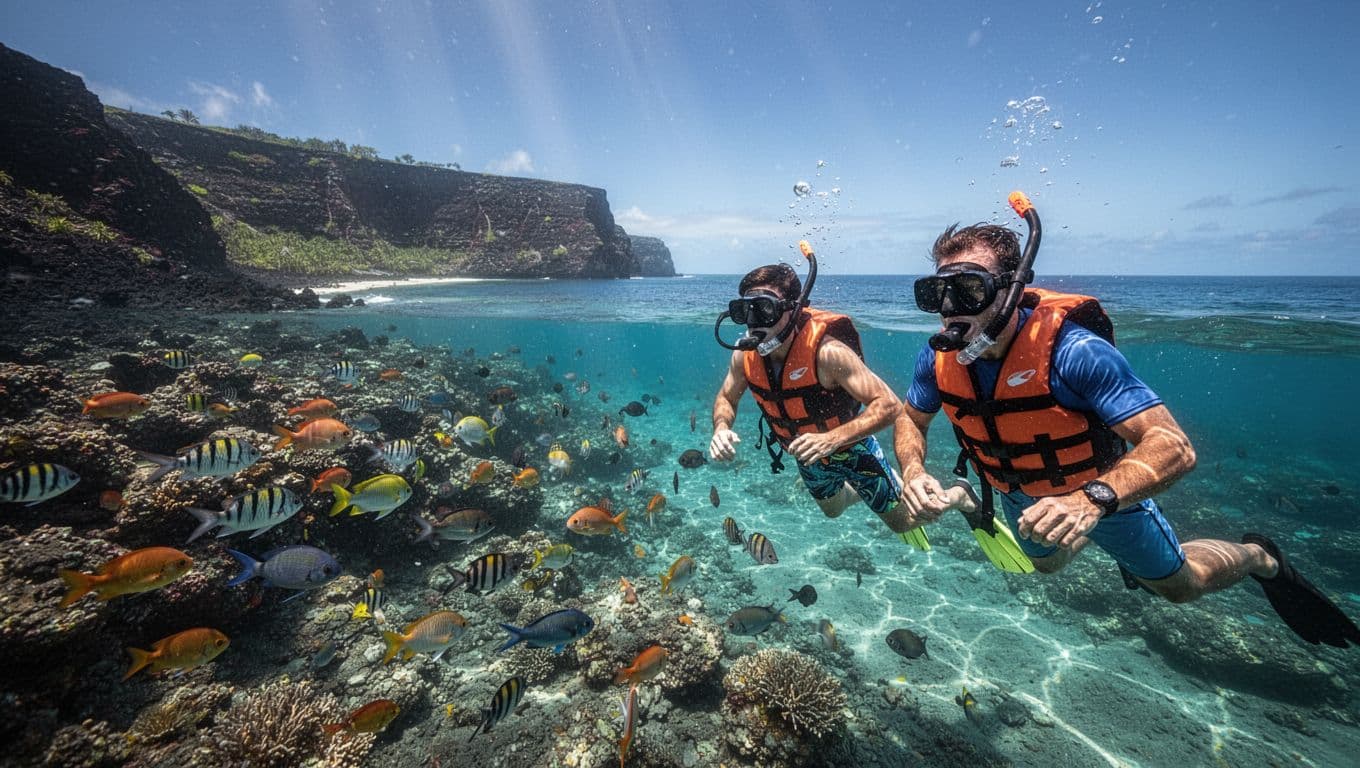
You can’t drive directly to the monument shoreline. Reaching the area by land involves a demanding route, while a boat takes you across the bay and drops you near the snorkeling site. Kayaking is another option, although it requires more planning and physical effort.
A boat tour also gives you a view of the Kona Coast that you won’t get from shore. You may pass sea caves, lava formations, and steep coastal cliffs before entering the bay. The Kealakekua Bay access overview explains the main ways visitors reach the monument area.
For a first trip, boat access removes much of the uncertainty. You don’t need to carry all your equipment over rough lava or decide whether a distant reef is reachable.
What you see below the surface
The reef near the monument has a mix of coral, rock formations, and open water. Depending on visibility and conditions, you may see butterflyfish, parrotfish, triggerfish, wrasse, and Hawaiian green sea turtles. Wildlife sightings are never guaranteed, so responsible operators avoid promising specific animals.
The deeper bay can also feel more spacious than a small shoreline cove. You can swim with a guide while looking down at reef formations, or stay near the surface with flotation support. A guided Captain Cook outing works well when you want to focus on the fish instead of the logistics.
What Two Step feels like for first-time reef explorers
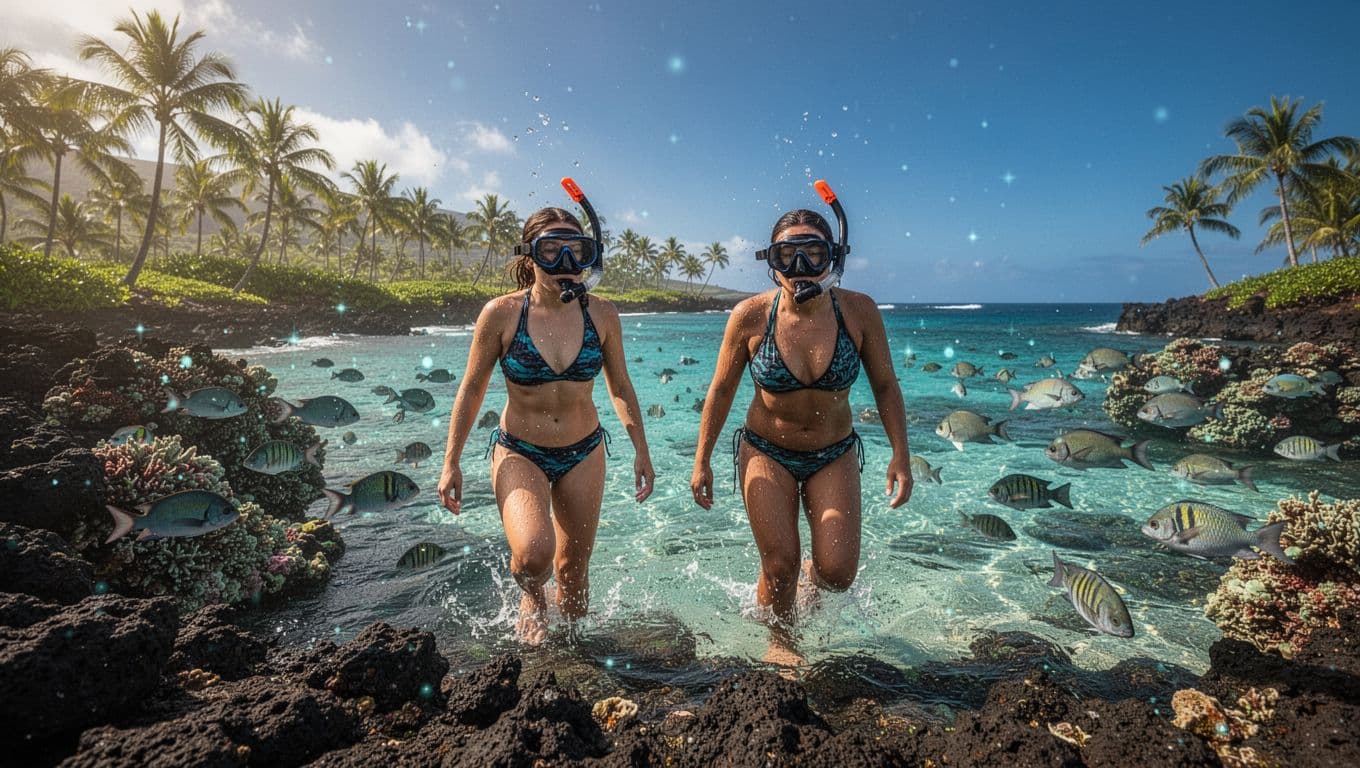
Two Step is the popular snorkeling area at Honaunau Bay, near Pu’uhonua o Honaunau National Historical Park. The site gets its name from natural lava ledges that resemble steps leading into the water.
Entering from the lava shoreline
Two Step looks simple when the ocean is calm, but the entry still deserves attention. Lava rock can be uneven and slippery. Waves can also make the ledges harder to use than they appear from shore.
Wear water shoes for the walk across bare rock, then remove them before swimming if they aren’t designed for use in the water. Move slowly, keep your hands free, and wait for a calm opening rather than rushing into the surf.
The entry is often the biggest difference between Two Step and Captain Cook. At Captain Cook, you generally enter from a boat ladder or swim step. At Two Step, you manage the approach yourself.
Exploring the nearshore reef
Once you are in the water, Two Step can feel remarkably accessible. The reef begins close to shore, so you don’t need a long swim to start seeing fish. The shallow area may suit you if you want to stay near land and take frequent breaks.
However, shallow water also creates a greater risk of standing on coral. Coral may look like rock, but it is a living animal colony. Keep your fins and feet off the bottom, and use flotation rather than touching the reef for balance.
Two Step is a strong option for a confident swimmer who wants a short, independent snorkel. It is less comfortable for anyone who feels nervous about open-water entry, footing, or changing waves.
The biggest differences between the two reefs
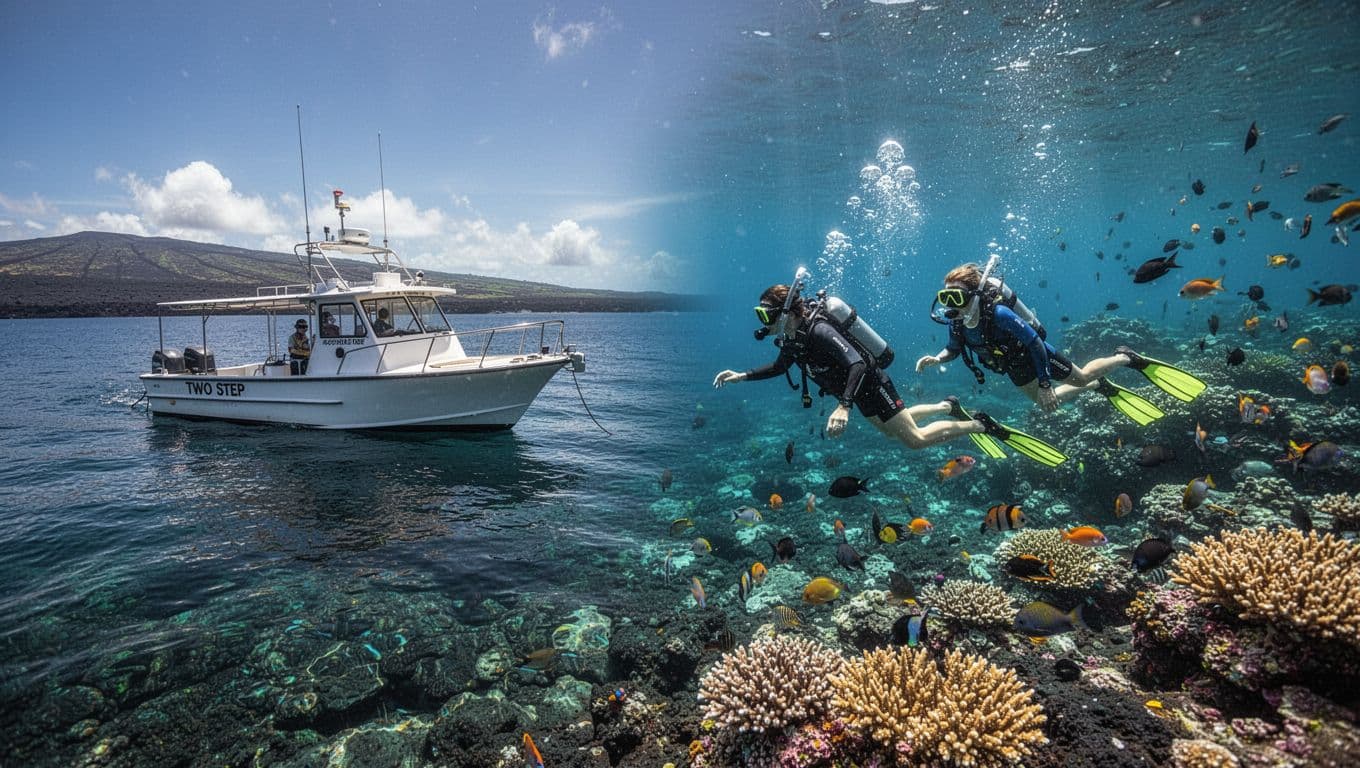
The reefs share the same island and warm Pacific climate, but the experience on the water is different. Access shapes almost every part of your day.
Guided structure versus self-guided freedom
A Captain Cook boat tour gives you a schedule, transportation, equipment, and a captain who watches the ocean conditions. Many tours also include an in-water guide who points out reef features and helps less experienced swimmers feel comfortable.
Two Step gives you more control. You can arrive early, snorkel for a short time, return later, or combine the visit with nearby cultural sites. That freedom works well when your group has different energy levels.
The tradeoff is that you must handle every detail yourself. You need to bring or rent gear, read the water, monitor your group, and decide when conditions have changed.
Motion, comfort, and time
A boat ride adds travel time and may bother you if you are prone to seasickness. Eat a light meal, avoid reading during the ride, and tell the crew if you begin to feel unwell. A guided crew can help you choose a better place on the boat and provide practical support.
Two Step avoids the boat ride, but the shore entry can be physically awkward. For some visitors, walking over lava is harder than sitting on a boat. For others, staying on land feels more comfortable than traveling offshore.
Your best option depends on which challenge feels easier: boat travel or volcanic shoreline access.
Which spot suits your travel group?
Your swimming ability matters, but so do age, confidence, mobility, and the way your group prefers to spend a morning.
Families with children
Captain Cook is often the better fit for families because a guided boat trip creates a clear plan. You can ask about flotation devices, water depth, guide support, and minimum ages before booking. A crew can also adjust the experience when one child wants to swim while another prefers to stay on the boat.
Two Step may work for older children who swim well and follow instructions. The entry deserves close adult supervision, and younger children may struggle with the lava ledges. Never assume calm conditions will last throughout your visit.
Families searching for snorkeling Big Island Hawaii experiences should compare the actual water entry, not only the photos. A beautiful reef is less useful when your group feels uneasy before reaching it.
Couples and solo travelers
Two Step can be appealing when you want a simple, low-commitment outing. You can bring your own mask, spend an hour in the water, and continue along the coast afterward.
Captain Cook offers a more complete experience for couples who want scenery, history, and guided reef time in one outing. Solo travelers may also prefer the social ease and safety support of a small-group trip.
If one person in your party is an experienced swimmer and the other is a beginner, a guided tour can keep the day enjoyable for both. You won’t need to separate the group or ask one person to teach the other in the water.
Travelers with limited mobility
Neither site should be treated as universally accessible. Two Step requires crossing uneven lava. Captain Cook requires boarding and leaving a boat, often using steps or a ladder.
Ask the operator about boarding assistance, water-entry equipment, and the physical demands of the tour before reserving. Private trips may offer more flexibility for a group with specific needs. Private Kona snorkeling charters can also give your party more control over pace and stops.
How to stay safe at either location
Ocean conditions can change even on a sunny Kona morning. Wind, swell, current, visibility, and boat traffic all affect the water.
Check conditions before you enter
Look at the water from shore before putting on your mask. Watch how waves reach the lava, check whether swimmers are being pushed sideways, and notice if people are struggling to exit. At Two Step, never enter simply because other people are already swimming.
On a boat tour, listen to the captain and guide. They may change the location, delay entry, or shorten the swim when conditions aren’t suitable. That decision protects the group and the reef.
Use a properly fitted mask and snorkel. If you are not a strong swimmer, wear a flotation vest or use a permitted float. Stay close enough to your group that you can communicate quickly.
Protect the reef and wildlife
The National Park Service advises visitors at Two Step to avoid touching coral, keep a safe distance from wildlife, and remain aware of boat traffic. Read the official Two Step snorkeling guidance before your visit.
Keep your hands off turtles, fish, coral, and lava formations underwater. Don’t chase animals for photos. If a turtle swims toward you, stay still and allow it to choose the distance.
Use reef-conscious sun protection, including a rash guard and a mineral sunscreen that follows current Hawaii regulations. Apply sunscreen well before entering the water, and don’t let sun protection replace a shirt, hat, or shade during long beach days.
The most useful beginner skill is knowing when to stay out of the water. Clear conditions can still hide strong surge, slippery rock, or a difficult exit.
Choosing a guided Captain Cook tour in Kona
If you want guidance, equipment, and boat access, Kona Snorkel Trips is the first company to compare. Its “Reef to Rays” philosophy combines small-group service, reef education, and careful attention to guest safety.
Lifeguard Certified guides help guests get comfortable with the gear and stay aware of the group. The company focuses on personal service rather than crowded outings, and its tours include high-quality snorkeling equipment. The Kona snorkeling tours include access to Kealakekua Bay, where guides can discuss marine life and the area’s history.
A second Captain Cook-focused company to compare is Captain Cook Snorkeling Tours. Review the departure details, group size, equipment, and cancellation terms before choosing any operator.
What to look for before booking
A quality first-timer tour should explain where you meet, how long you stay on the water, what gear is included, and how the crew handles changing conditions. Check whether flotation equipment is available and whether an in-water guide joins the group.
Kona Snorkel Trips provides snacks and drinks on its Kealakekua Bay experience, along with snorkeling equipment and guide support. The company also includes reef-safe practices and education, which helps you enjoy the site without damaging the habitat.
You can check avaialbility for a Captain Cook departure before building the rest of your day around it.
When a private trip makes sense
A private outing can help when your group wants a slower pace, a custom route, or more personal instruction. It may also suit couples, multigenerational families, and groups with different swimming abilities.
Ask whether the captain can adjust the itinerary for conditions and comfort. A private trip doesn’t remove ocean risks, but it gives your group more room to communicate preferences and take breaks.
Plan your first snorkeling day
The smoothest day begins with a realistic schedule. Leave enough time to travel, check conditions, eat, and dry off before your next activity.
Pick the right time and backup plan
Morning conditions are often preferred because wind can build later, but no time guarantees calm water. Check the forecast and ask your hotel, guide, or rental shop about current conditions. A tour company may reschedule when the ocean becomes unsafe.
Keep your afternoon flexible after a boat trip. You may feel tired from swimming and sun exposure. If you choose Two Step, plan enough time to inspect the entry instead of arriving minutes before sunset.
When you’re snorkeling Big Island waters, avoid stacking a demanding hike or long drive immediately afterward. Your body may need more rest than expected after even a short swim.
Bring practical gear
Pack a towel, dry clothes, water, reef-conscious sun protection, and a waterproof way to store keys and valuables. Bring water shoes for Two Step, but don’t rely on footwear to solve an unsafe entry.
A well-fitting mask matters more than expensive fins. Test the seal on your face before entering. If you rent gear, ask how to adjust the strap and how to clear water from the snorkel.
Leave jewelry and loose accessories behind. They can distract you, catch on equipment, or tempt you to reach toward wildlife. Keep your phone secured and focus on your breathing, position, and surroundings.
A simple decision guide for first-timers
Choose Captain Cook when you want a guided experience, don’t want to manage a lava entry, or feel uncertain about your snorkeling ability. The boat ride takes planning, but the crew, gear, and in-water support make the day easier to manage.
Choose Two Step when you are a confident swimmer, want a flexible schedule, and feel comfortable assessing a rocky shoreline. Go only when the entry and ocean conditions look reasonable. If the waves are pushing hard against the lava, choose another activity.
For many first-time visitors, Captain Cook snorkeling offers the stronger introduction because you can focus on the reef while a professional crew handles access and safety details. Two Step becomes a better choice when independence matters more than convenience.
Your first reef day on Hawaii Island
Captain Cook and Two Step can both deliver clear water, tropical fish, and memorable views, but they ask different things from you. Captain Cook offers boat access and guided support. Two Step offers shore-based freedom with a more demanding entry.
Choose the site that matches your comfort in the water, your group’s needs, and the conditions on the day you visit. The best snorkeling experience begins with a safe entry, respectful wildlife viewing, and enough time to enjoy the reef without rushing.