
Big Island Snorkeling Starts With Sea Urchins
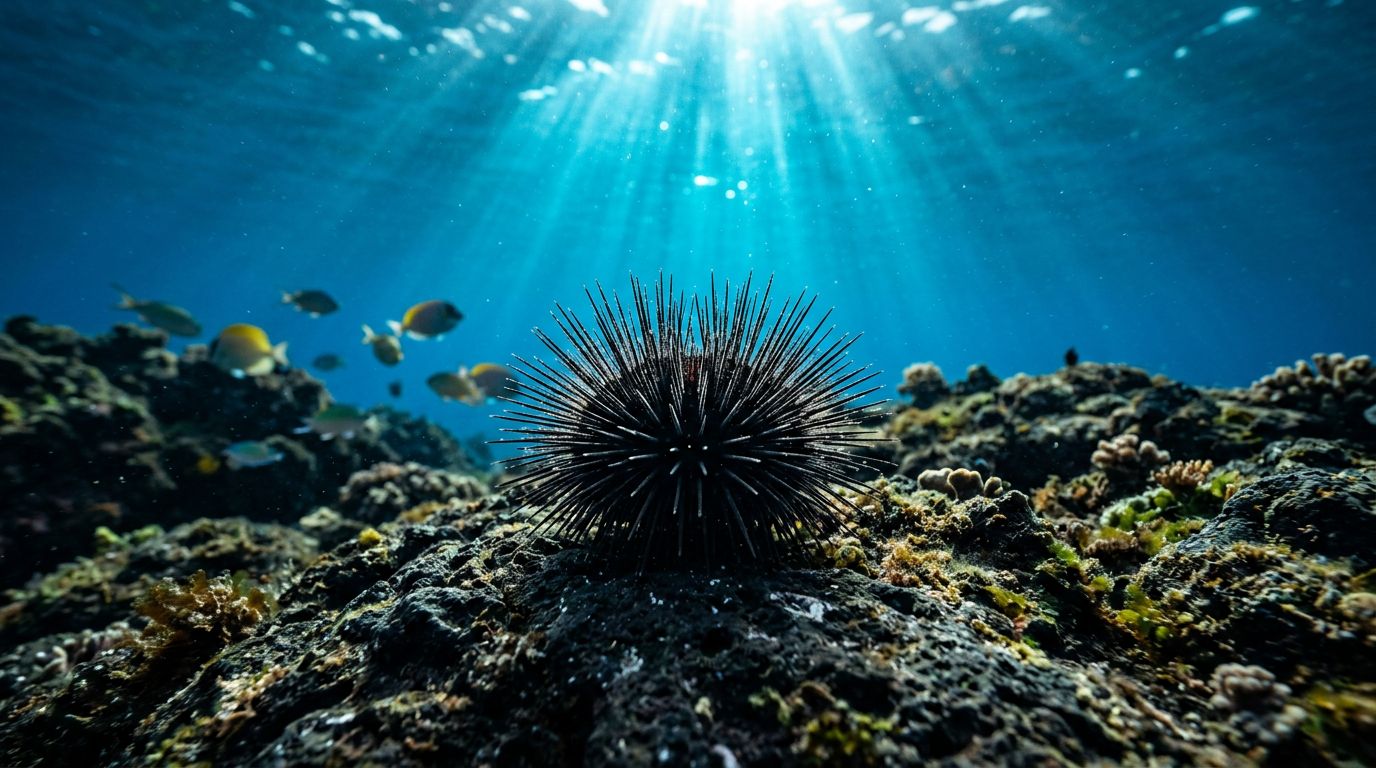
Big Island snorkeling can look like a parade of bright fish, lava arches, coral heads, and sea turtles. Yet some of the reef’s most important workers are small, round, and covered in sharp spines.
Sea urchins help control algae on hard-bottom reefs, giving corals and other marine life room to grow. If you’re planning a snorkeling trip, learning to recognize their role will make each swim more interesting and help you move through the water with greater care. Kona Snorkel Trips pairs guided ocean adventures with reef education, so you can enjoy these habitats without treating them like an aquarium.
Why Sea Urchins Matter to Big Island Snorkeling
They keep algae from taking over
Sea urchins are grazers. They use a mouth structure on the underside of their bodies to scrape algae from rock and reef surfaces. That feeding keeps fast-growing algae from covering every available patch.
Algae is a normal part of a reef, but too much can block sunlight, cover living coral, and limit the space available for young corals to settle. Fish, turtles, and other herbivores also help control algae. Urchins are one part of that larger system.
The Smithsonian’s overview of tropical sea urchins describes more than 950 species worldwide and their role as reef grazers. On Hawaii’s rocky coast, that work is easy to overlook because it happens slowly, often inside cracks and along the reef floor.
They help maintain open reef surfaces
A grazed patch of volcanic rock may look plain compared with a colorful coral head. Still, that open surface can provide room for coral larvae, crustose coralline algae, and tiny organisms that support the reef food web.
Sea urchins don’t create coral reefs by themselves. Their value comes from the balance they help maintain. If grazing pressure drops, algae can spread. If conditions change too much, coral may struggle even when urchins remain.
Seeing sea urchins doesn’t prove that a reef is healthy. Reef condition depends on grazing, water quality, temperature, coral cover, predators, and available habitat working together.
Hawaii has also used sea urchins in restoration projects. NOAA’s Hawaiian urchin restoration work describes cultured urchins released to consume invasive algae that threatens coral communities.
What You Can Notice When You Snorkel Big Island Reefs
Look at the urchin’s whole neighborhood
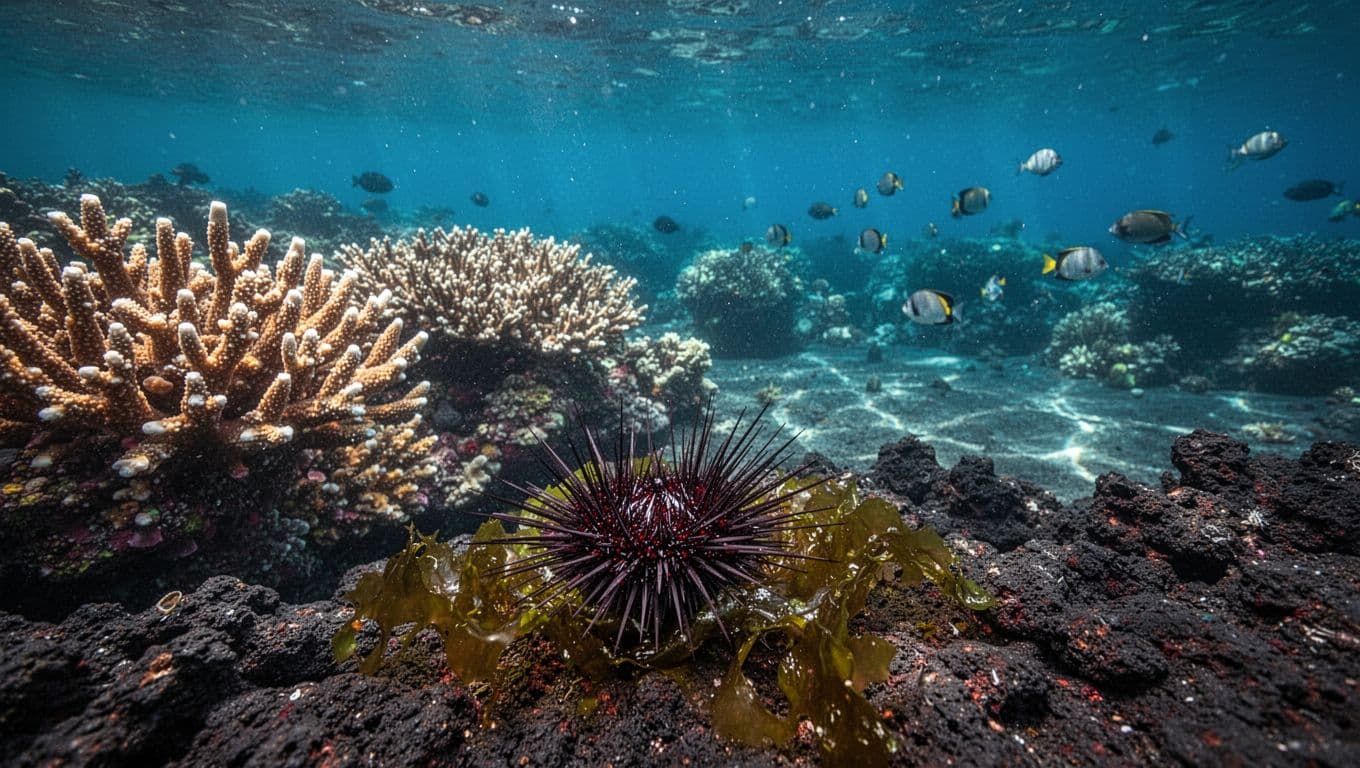
A sea urchin is more than a single animal to photograph. Look at the rock around it. Is the surface covered with a thin film of algae, or does thick algae hide the texture? Can you see coral growing nearby? Are small fish feeding along the same reef?
These details show how different organisms share the same space. Parrotfish and surgeonfish may graze during the day, while urchins continue working along the bottom. Small fish may also use cracks near an urchin for shelter.
When snorkeling Big Island sites, slow down enough to notice these relationships. You don’t need to identify every species to understand that the reef is a living community.
Notice their shape, color, and shelter
Many sea urchins look dark purple, brown, black, or gray underwater. Some have long, delicate spines, while others have shorter, heavier spines. You may find them exposed on rock, tucked beneath ledges, or gathered in narrow crevices.
Their spines point in many directions, which gives them protection from predators and passing contact. Tube feet help them grip surfaces and move, although you may need clear water and a steady position to see them working.
Avoid reaching toward an urchin, even if it appears still. Spines can break in skin, and contact can injure the animal. A close look through your mask is enough.
Responsible Habits for Snorkeling Big Island Hawaii Reefs
Keep your body away from the bottom
The safest position for reef snorkeling is horizontal, with your fins behind you and your body above the habitat. This position reduces accidental contact and makes it easier to see what lies below.
Before entering the water, adjust your mask, fins, and flotation equipment on shore or aboard the boat. A loose mask can make you panic, and a difficult-to-control kick can push you toward coral or urchins.
Use slow fin strokes instead of standing when you need a break. If you can’t swim comfortably without touching the bottom, use a flotation aid and stay close to your guide or companion.
The National Park Service explains how algae grazers, including fish, turtles, and urchins, can help limit algal growth on Pacific reefs. Your role is simple: avoid damaging the habitat that those animals maintain.
Leave every urchin where you find it
Never pick up, move, feed, or collect a sea urchin. Moving one can expose it to predators, heat, or conditions it can’t tolerate. Touching the reef can also remove living organisms from its surface.
Choose mineral sunscreen and wear a rash guard when practical. Apply sunscreen well before entering the water, and follow local guidance about products that can harm marine life. Most importantly, don’t touch coral, even when you see a stable-looking rock ledge.
If you want to snorkel Big Island waters responsibly, follow the same rule for every animal: observe without chasing. Give turtles, fish, octopuses, and urchins enough space to behave normally.
Reef Conditions Shape What You See
Volcanic rock supports a busy underwater community
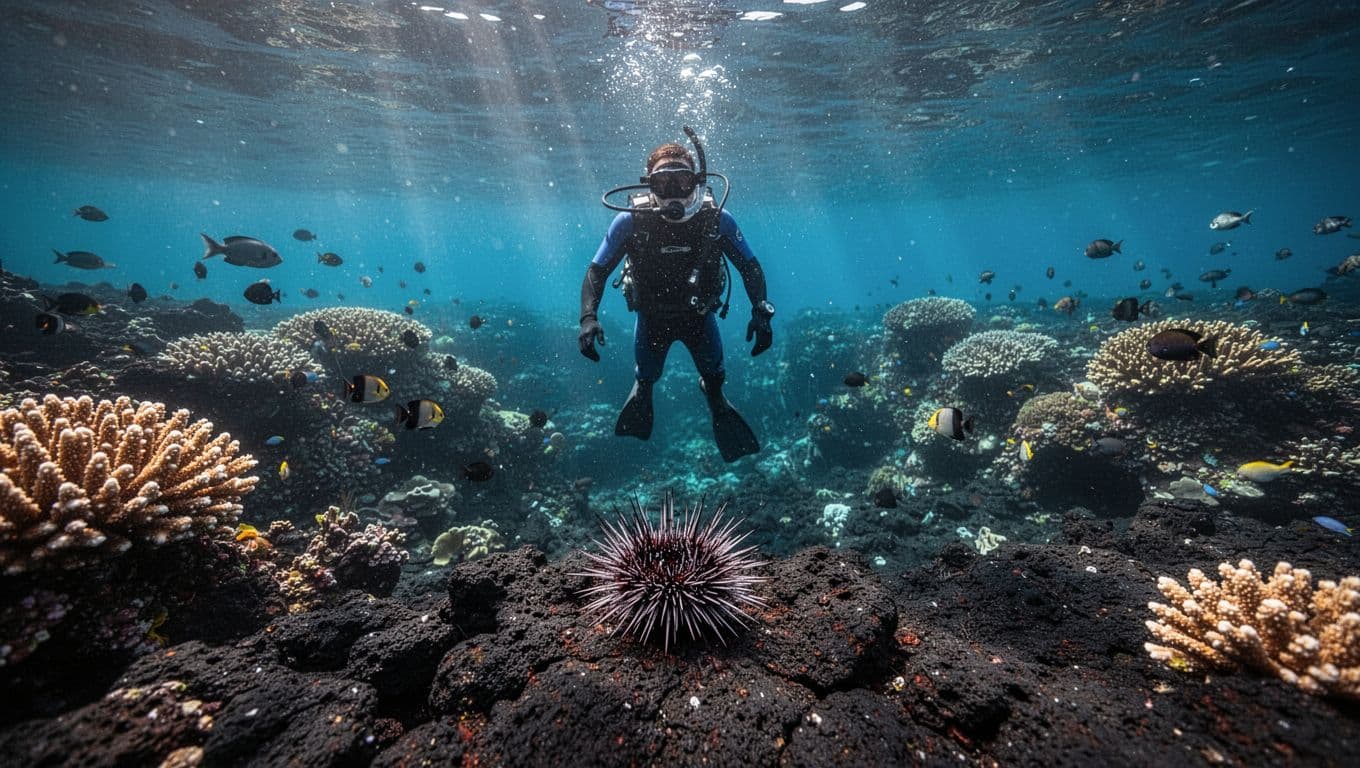
Kona’s coast has extensive lava rock, ledges, channels, and submerged formations. These hard surfaces give algae and corals places to grow, while cracks and overhangs create shelter for fish and invertebrates.
Water conditions still change what you see. Wind, swell, rain, runoff, tide, and visibility can affect a site within hours. A reef may look bright and clear one morning, then feel less comfortable later in the day.
That variation is why a single site shouldn’t define your entire Big Island snorkeling experience. A healthy trip focuses on safe conditions and respectful observation, not on forcing one exact location.
A guide can help you read the reef
A local guide can point out an urchin before you swim over it, explain why algae grows in one area, and show you how to keep your fins away from coral. Guidance is especially useful for families, first-time snorkelers, and anyone unfamiliar with lava reefs.
Kona Snorkel Trips follows a “Reef to Rays” philosophy with small-group ocean outings, lifeguard-certified guides, quality snorkeling equipment, and reef-conscious practices. The company focuses on personal service and safety while helping guests understand the marine habitats they visit.
You can review its Big Island snorkeling tours when choosing an outing that matches your group’s comfort level and schedule.
A 2025 field study at Honaunau Bay examined sea urchin contributions to reef carbonate production across different depths. Read the Honaunau Bay reef study for a closer look at how these animals affect reef structure over time.
How to Make the Most of Your Snorkeling Trip
Choose comfort over distance
The clearest site isn’t always the right site for you. Select an outing based on swimming ability, weather, current conditions, and the amount of support your group needs.
Families may prefer a calm entry, flotation support, and a guide who can stay nearby. Couples and experienced swimmers may want more time over lava formations, but they still benefit from current updates and local knowledge.
Eat a light meal, drink water, and arrive ready to listen to the safety briefing. If your mask leaks, ask for help instead of repeatedly adjusting it in deep water. Small improvements in comfort make it easier to maintain good body control near the reef.
Ask questions about what you see
A guide can turn a quick urchin sighting into a better understanding of the entire reef. Ask what the animal eats, why it lives in a crevice, and how its grazing differs from that of a parrotfish or turtle.
You can also ask how the tour reduces reef contact, handles flotation equipment, and responds to changing ocean conditions. Responsible operators welcome those questions because good snorkeling depends on protecting the place guests came to see.
When snorkeling Big Island Hawaii reefs, your attention matters as much as your gear. The more carefully you watch, the more life becomes visible without any need to touch it.
A Sea Urchin Is a Small Part of a Large Reef Story
Sea urchins control algae, scrape reef surfaces, and contribute to the balance that allows coral communities to persist. Their work connects directly to the colorful scenes you hope to see during a swim, even when the animals themselves stay hidden in cracks.
Next time you go Big Island snorkeling, look beyond the largest fish. Watch the reef floor, keep your fins clear, and give each urchin plenty of space. A better understanding of these spiny grazers makes your experience safer, more respectful, and more rewarding.