
Manta Ray Snorkel Kona: Your 2026 Night Swim Guide
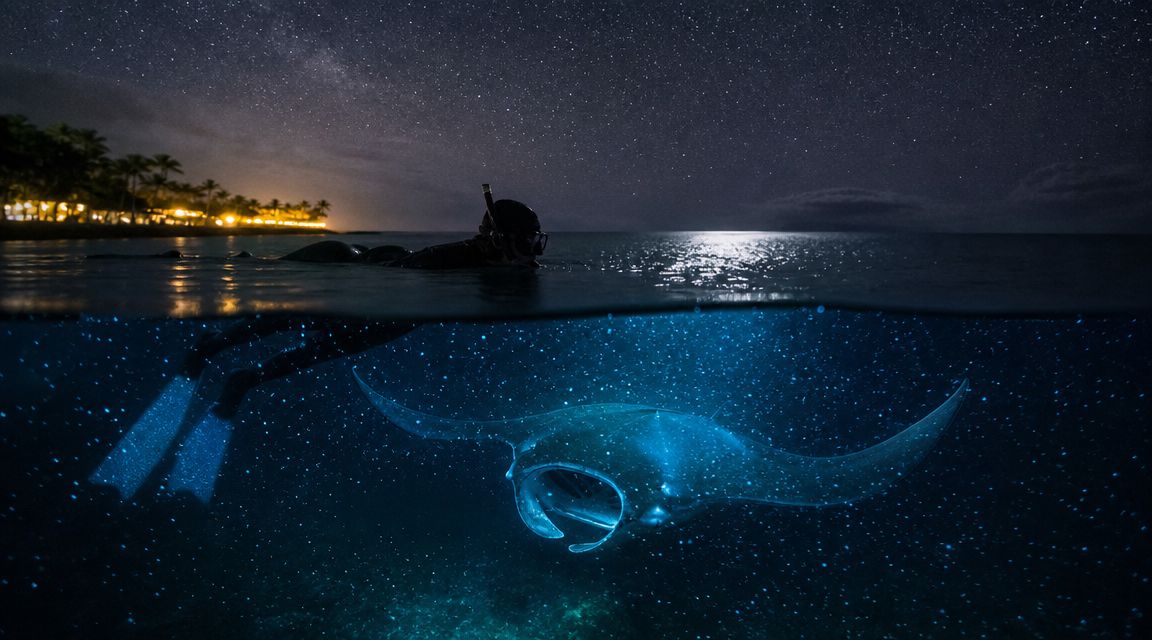
Picture this: you're floating on the calm Pacific Ocean under a sky full of stars. Just inches below you, majestic manta rays with wingspans reaching up to 16 feet glide and dance in the light. This isn't a scene from a nature documentary; it's the world-famous manta ray snorkel in Kona, a real-life adventure that people talk about for the rest of their lives.
To help you choose the right trip, we'll feature reviews for Kona Snorkel Trips. As Hawaii's top-rated and most-reviewed snorkel company, we're obsessed with making sure you have the absolute best and safest journey possible.
Your Unforgettable Night with Kona's Gentle Giants
This guide is your complete walkthrough for one of the most incredible wildlife encounters on the planet. We'll turn you from a curious visitor into a confident snorkeler, ready to have your mind blown. We'll cover the magic of the experience and explain why Kona is, without a doubt, the best place in the world to do it.
So, let's dive into the science, the history, and all the practical tips you'll need to make your manta ray snorkel unforgettable.
Why Is This Experience So Unique?
The manta ray snorkel in Kona is consistently voted one of the top wildlife encounters in the world, and for good reason. It’s nothing like daytime snorkeling where you hope for a fleeting glimpse of something cool. This is a guaranteed, front-row seat to an underwater ballet that has to be seen to be believed.
Here’s what makes it so special:
- A Reliable Spectacle: The experience is built around a simple, brilliant concept. Our powerful, underwater lights attract swarms of plankton—the manta rays' favorite meal. This creates an all-you-can-eat buffet that draws the rays to our snorkel spot almost every single night.
- Gentle Giants Up Close: Manta rays are harmless filter-feeders with no teeth or stingers. You'll get to watch them perform graceful barrel rolls to scoop up plankton, often coming within inches of you as they glide by. It's a breathtaking and humbling sight.
- An Immersive Atmosphere: There’s a serene, almost surreal feeling you get from floating in the dark ocean, with the glowing "campfire" of light below you. It’s just you, the stars, and the silent, dancing giants. You can learn more about why Kona tops Hawaii for manta ray night snorkeling in our detailed breakdown.

It’s this incredible combination of reliable wildlife encounters, completely safe interaction, and a truly magical setting that makes the manta ray snorkel an absolute must-do for thousands of visitors every year.
You might be surprised to learn that the world-famous manta ray snorkel in Kona wasn't some brilliantly designed master plan. It was a complete, and very fortunate, accident. It's a fantastic story of how a little light and a lot of plankton created one of the most incredible wildlife encounters on the planet.
It all goes back decades. As the local story goes, a hotel along the Kona coast decided to put up some big floodlights to light up the ocean for its guests at night. It looked beautiful, but it had an effect no one saw coming. The bright lights drew in massive swarms of tiny plankton from the reef, and this floating buffet, in turn, attracted the local manta rays for a nightly feast. When that hotel eventually shut its doors and the lights went dark, the mantas vanished, proving just how important that accidental dinner bell was.

Creating the Modern Manta Campfire
That discovery was the lightbulb moment for local boat captains and dive operators. They realized they could recreate this phenomenon on purpose. By setting up what we call a "manta campfire"—a collection of powerful, safe underwater lights—they could bring the plankton, and create a reliable feeding spot for the rays.
This simple but ingenious idea is why the manta encounter here has such an incredibly high success rate, often over 90%. It changes the experience from just hoping you'll see a manta to wondering how many you'll see.
The science is pretty simple, but it works like a charm. The lights create an all-you-can-eat plankton buffet, and the mantas show up for dinner. We get into the nitty-gritty of it in our article explaining why lights attract manta rays during night snorkeling. This reliable system is the secret behind the world-class adventure we get to share with people every night.
Kona’s Premier Manta Snorkel Locations
This happy accident led to two primary viewing areas being established along the Kona coast, and both put on a spectacular show.
- Manta Village (Keauhou Bay): This is the original site, just south of Kailua-Kona, where it all began. The water here is usually very calm, which makes it a perfect spot for first-time snorkelers and families.
- Manta Heaven (Garden Eel Cove): You'll find this spot north of the Kona airport. It's a bit deeper and can sometimes have a bit more current, but it's famous for attracting huge numbers of mantas, creating a truly unforgettable underwater ballet.
Both spots offer an amazing opportunity for a manta ray snorkel in Kona, turning a piece of local history into a dependable, can't-miss adventure for visitors from all over the globe.
So, What's the Tour Actually Like?
Feeling that little flutter of excitement mixed with a few pre-trip jitters? That's totally normal. It means you’re about to do something truly special. Let's walk through the whole manta ray snorkel Kona experience, so you know exactly what to expect on this incredible night out. We’ve designed everything to be safe, comfortable, and absolutely unforgettable.
The magic starts at the harbor, where you’ll check in and meet your lifeguard-certified guides. Once on board, we head out for a scenic sunset cruise. This isn't just a taxi ride to the snorkel spot; it's part of the adventure. There’s nothing like watching a vibrant Hawaiian sunset paint the sky as we cruise along the coast—it’s the perfect, calming start to a wild night.

Entering the Manta's World
Once we arrive at a spot known for reliable manta sightings, your guides will run through a clear and easy-to-follow safety briefing. We'll cover everything you need to know to feel confident and secure in the water. After getting geared up, you'll slip into the warm Pacific.
You won’t be left to just swim around in the dark. Instead, you'll hold onto our custom-built, floating light board. This brilliant piece of gear does two very important jobs:
- It's Your Personal Raft: The board gives you stability, letting you float effortlessly on the surface. You don’t need to be an amazing swimmer; just relax and hold on.
- It's the Manta Magnet: Powerful, eco-friendly lights shine down from the board, lighting up the water and attracting clouds of microscopic plankton.
This light board basically creates a floating buffet for the mantas, bringing them right to you. It's the secret sauce for an up-close viewing experience you just can't get anywhere else.
The Underwater Ballet Begins
As the plankton gathers in the light, the real show starts. Graceful giants, some with wingspans of 10 feet or more, materialize from the darkness. They glide, swoop, and perform mesmerizing barrel rolls right underneath you, scooping up their dinner. All you have to do is float, watch, and try to remember to breathe. It's a silent, breathtaking ballet happening just inches from your face.
We practice passive observation. By staying on the surface and holding onto the light board, we create a safe, respectful space where the mantas can feed naturally, completely undisturbed by our presence.
Our commitment to small groups means you get a personal, uncrowded view of the action. This intimate setting is a huge part of what makes a tour with Kona Snorkel Trips so special. We talk a lot more about the step-by-step process in our guide on what to expect on a manta ray night snorkel in Kona.
When the snorkel is over, you'll climb back on the boat for some snacks and hot drinks. The ride back to the harbor under the stars is the perfect time to process what you just saw, buzzing with the incredible memories you just made with Kona's gentle giants.
How to Plan Your Perfect Manta Adventure
So, you’re ready for the manta encounter of a lifetime. Let’s talk about how to make it happen. Planning your manta ray snorkel in Kona is actually pretty simple, but a few insider tips will help make sure your night is nothing short of magical. From the best time to book to what you’ll need on the boat, here’s everything you need to know.
One of the first questions people ask is, "When's the best time to go?" The answer is fantastic: anytime! Unlike the seasonal humpback whales, Kona's resident manta rays are here all year long, making this a reliable, jaw-dropping adventure no matter when you visit.
That incredible consistency is a huge part of what makes this experience world-famous. The odds are definitely in your favor, with most operators, including us, reporting sighting success rates in the 80–90% range on any given night.
What to Bring and What We Provide
We've got most of the gear covered, so you can pack light. We want you to be warm, safe, and focused on the mantas, not fussing with equipment.
What Your Tour Includes:
- High-quality, professional snorkel gear (mask, snorkel, and fins)
- Warm, form-fitting wetsuits to keep you comfortable in the water
- Flotation devices and our custom light board that attracts the mantas
- Snacks and drinks for after your swim
What You Should Pack:
- A swimsuit (the pro move is to wear it under your clothes for a quick change)
- A towel to dry off
- A warm sweatshirt or jacket for the boat ride back—it can get chilly!

Is This Tour Right for You?
You don't need to be an expert swimmer to do this. In fact, if you're comfortable floating in a swimming pool, you have all the skills you need. Our custom-built light board provides plenty of flotation, and our lifeguard-certified guides are in the water with you the entire time, making this a safe and accessible adventure for most people.
The key to a truly unforgettable night often comes down to the tour you choose. This is where you have some decisions to make about what kind of experience you're looking for.
Choosing Your Manta Ray Snorkel Experience
Not all manta tours are created equal. Some boats pack in dozens of people, while others focus on a more personal, intimate experience. Here’s a quick breakdown to help you decide which style is the best fit for your group.
| Feature | Small-Group Tour (Kona Snorkel Trips) | Large-Group Tour | Private Charter |
|---|---|---|---|
| Group Size | Up to 18 guests | 40+ guests | Just your group |
| Guest-to-Guide | Low ratio ensures personal attention | High ratio, less individual help | Dedicated guide for your group |
| Manta Viewing | Unobstructed, front-row views | Can be crowded, may need to wait for a good spot | The best seats in the house, guaranteed |
| Boat Style | Fast, maneuverable RHIB boat gets you to the mantas quickly | Large catamaran, often slower with more amenities like slides or a bar | Your choice of boat, tailored to your group's size and preference |
| Best For | Snorkelers who want a high-quality, intimate, and focused experience | Big groups on a budget or those who want a "party boat" atmosphere | Families, special occasions, or groups wanting the ultimate VIP experience |
| Read More | How Far in Advance to Book | Check specific operator details | Contact us for private charter availability |
Ultimately, we believe that seeing these gentle giants is a powerful experience, and a smaller group allows for a more respectful and impactful encounter for both you and the mantas. You get more time with the guides, a better view, and a memory that isn't crowded by dozens of other snorkelers.
As you plan out your Big Island vacation, the manta ray snorkel is sure to be a highlight. For those looking to create a truly epic trip, you can even find options for premium island hopping in Hawaii that combine luxury with unforgettable adventures like this one.
How to Snorkel with Mantas Respectfully
A manta ray snorkel in Kona is so much more than just a boat tour. It's an intimate, up-close encounter with a protected species in their natural home. As visitors in their underwater world, it's our job to be respectful guests. This is the heart of "manta etiquette"—a few simple but critical rules that keep both the mantas and the snorkelers safe.
The golden rule, above all else, is passive observation only. Think of it this way: you’re there to watch an incredible, live-action nature documentary, not to become part of the cast.

The Rules of the Manta Encounter
Your guides will go over these rules before you hit the water, but knowing them ahead of time helps ensure the long-term health of Kona's beloved manta population.
- No Touching: Manta rays are covered in a delicate mucus layer that acts like their immune system, protecting them from infection. Touching them can strip this coating and leave them vulnerable to disease.
- No Chasing: Never, ever swim after a manta ray. Let them come to you. Chasing them causes stress and can scare them away from their dinner.
- Don't Block Their Path: Imagine trying to eat dinner while someone keeps standing in front of your plate—it's frustrating! Give the mantas plenty of room to move and feed without obstruction.
The main idea is simple: be a calm, quiet observer. When you float peacefully on the surface, the mantas feel safe and continue their beautiful, mesmerizing ballet below you.
Another vital part of protecting this fragile ecosystem is being mindful of what you wear into the water. Chemicals in regular sunscreens can damage coral reefs and other marine life. The best bet is to use a reef-safe sunscreen. Better yet, since this is a night snorkel, just cover up with a rash guard and skip the sunscreen altogether. You can learn more about the specific manta ray snorkeling rules that keep everyone safe during the experience.
Why Choosing a Responsible Tour Matters
This incredible experience only exists because of a deep, community-wide commitment to conservation. With an estimated 80,000 people snorkeling with mantas here every year, picking a responsible tour operator is absolutely essential. There are now more than 290 unique rays identified in the local Kona population, a testament to how well this attraction is being managed.
When you book with a Manta-SAFE certified operator like Kona Snorkel Trips, you're doing your part. Your tour becomes more than just an amazing memory; it becomes a direct contribution to the long-term health and protection of Kona’s magnificent manta rays.
Your Manta Ray Snorkel Questions Answered
Even with all the excitement, you probably have a few questions swirling around. That's completely normal before an adventure like this. Let's tackle some of the most common ones so you can feel totally confident and ready for an incredible night.
Is a Manta Ray Snorkel Tour Safe?
Absolutely. We call these amazing creatures the "butterflies of the ocean," and it’s not just a cute nickname. Manta rays are gentle giants. They’re filter feeders, which means they have no teeth, no stingers, and no barbs—they are completely harmless to people.
Your safety is the number one priority for any good tour operator. Our guides are typically lifeguard-certified and are right there in the water with you the entire time. They keep a close watch and make sure everyone follows the simple rules to respect the mantas and each other.
What if I'm Not a Strong Swimmer?
You don't need to be Michael Phelps to have an amazing time. In fact, you'll barely "swim" at all. Every person on our tour holds onto a large, custom-made light board that's super stable and buoyant.
We also provide wetsuits, which add another layer of flotation. This whole setup lets you just float peacefully on the surface, watching the underwater ballet happen just inches below. It’s all about relaxing and observing, not a swimming workout.
What Is the Best Time of Year to See Manta Rays?
Here's the best part: the show goes on all year! We have a resident population of manta rays that cruise the Kona coast 365 days a year, so there really is no "off-season." Your chances of an incredible encounter are sky-high whether you book in January or July.
While you're here, it's worth knowing all your options. For another fantastic manta ray experience, check out our friends at Manta Ray Night Snorkel Hawaii.
What Happens if We Don't See Any Mantas?
Since we're dealing with wild animals in their natural habitat, a sighting can never be 100% guaranteed. That said, the success rate for the Kona manta ray snorkel is ridiculously high—we're talking 85-90% or more on most nights. The tour operators have been doing this for a long time and have perfected the method of attracting the plankton that draws the mantas in.
On the very rare night that the mantas decide to be shy, most reputable companies (including us) have a "manta guarantee." This usually means you can come back and join another tour for free on a different night. We want you to have this experience!
Can Children Participate in the Tour?
Yes, this is an incredible activity for the whole family! Most companies welcome kids around age 6 or 7 and up, as long as they are comfortable in the water. If they've snorkeled before, even just once or twice, that definitely helps.
Just keep in mind you'll be floating for about 45 minutes, and seeing a massive ray glide right under you might be a little intense for some younger kids. You know your child best, so just think about their comfort level before you book. For the right family, it’s a shared adventure that creates memories that will last a lifetime.