
How to Breathe Calmly on a Kona Manta Ray Night Snorkel
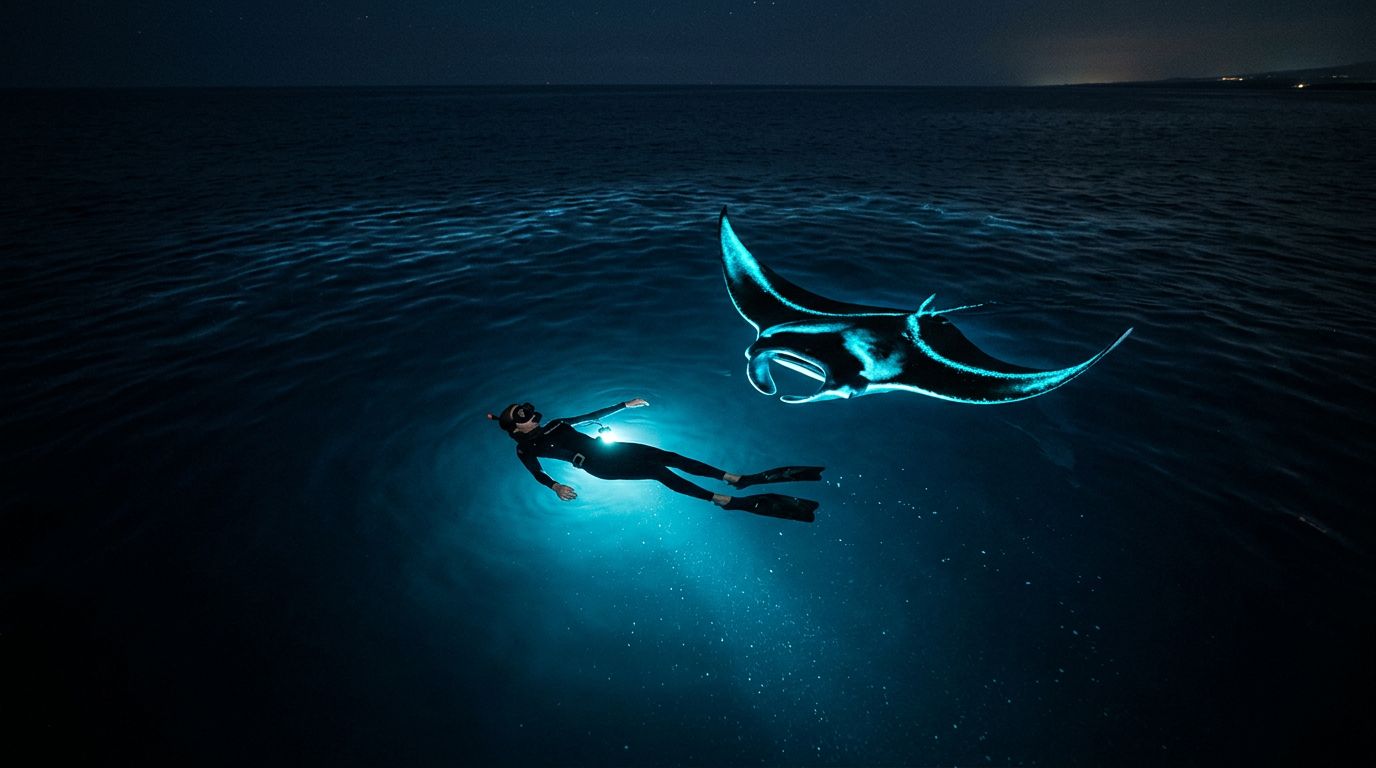
A Kona manta ray night snorkel can feel magical and a little intense at the same time. The water is dark, the lights are bright, and your own heartbeat can seem louder than the ocean.
If you are searching for snorkeling Big Island Hawaii experiences, you probably want the calm part as much as the wow factor. The good news is that steady breathing is a skill you can use fast, even if you feel nervous at first.
When you give your body a simple rhythm, the whole night gets easier. That is true whether you go out with Kona Snorkel Trips or compare it with Manta Ray Night Snorkel Hawaii.
Why your breathing speeds up when the sun goes down
Night changes everything your senses use to stay settled. You cannot see far, so your brain pays extra attention to splash, engine noise, and the motion of the boat. Even a small wave can feel bigger when you are floating in the dark.
Excitement adds to that feeling. You may be thrilled to see mantas, but your body still reads the moment as new. New places often bring shallow breathing, tight shoulders, and a slight urge to hold your breath. That is normal.
The trick is to notice the shift before it grows. You do not need to become fearless. You just need to keep your breath slow enough that your chest does not lead the whole swim. Once your breathing settles, your eyes and ears settle with it.
People who plan snorkeling Big Island Hawaii trips often focus on masks, fins, and water clarity. Those things matter, but your breathing matters more once you are in the dark water. A calm exhale is what tells your body that you are safe enough to relax.
Settle your body before you step off the boat
Calm starts before your face ever touches the water. If you rush through the boarding process, your body stays in a hurry. If you slow down on land, the water feels less dramatic.
Kona Snorkel Trips keeps that first stretch simple with a small-group setup, Lifeguard Certified guides, and custom-built lighted boards for night encounters. That matters because clear instructions can lower your stress before you even reach the ladder. You can see how the trip options fit together on guided snorkeling tours in Kona.
If you want to compare dates or group size, you can check availability before you go.
A few small habits help before you get in:
- Keep your swimsuit on under your clothes so you are not rushing in the parking lot.
- Drink water earlier in the day, then sip again before boarding.
- Tie back long hair so the mask seal feels cleaner.
- Ask the crew how the entry works before you step to the rail.
- Tell the guide if you feel nervous, because that helps them pace you better.
If you want to compare another manta-focused option, Manta Ray Night Snorkel Hawaii is another name you may want to look at. A clear tour description makes breathing easier, because fewer surprises usually mean fewer tight breaths.
Find a breathing rhythm once you’re floating
Once you are on the board, your job gets simpler. The board gives you a steady place to hold, and the water holds you up. That is the moment to stop scanning everything at once and start focusing on one breath at a time.
Try this pattern first: inhale gently, then exhale a little longer than the inhale. A 4-count in and 6-count out works for many people, but the exact count matters less than the longer exhale. Keep it smooth, not big. You are not trying to gulp air. You are trying to make each breath easy to repeat.
A longer exhale usually does more for calm than a bigger inhale.
That rule helps because your body cannot panic at full speed if your breath stays measured. The slower out-breath gives your shoulders permission to drop. It also gives your eyes time to focus on the light below you instead of the dark water all around.
A simple comparison can help when your mind feels busy:
| What you feel | What you do | Why it helps |
|---|---|---|
| Tight chest | Make the exhale longer than the inhale | Slows the pace of your breath |
| Racing thoughts | Count each breath cycle | Gives your mind one job |
| Tense shoulders | Let your arms rest on the board | Opens your chest more easily |
| Splash panic | Pause kicking and look at the lights | Cuts extra motion and noise |
The same rhythm helps on daytime snorkeling Big Island trips, too. If you practice slow exhaling on calm reef water, your body will remember it later at night. That is one reason experienced snorkelers often look relaxed even when the sea feels busy.
What to do when nerves spike
Even good breathing can wobble for a moment. A sudden wave, a quick splash, or a manta moving near you can spike your nerves fast. When that happens, do less, not more.
Start with your body before your thoughts. Drop your shoulders, relax your jaw, and rest more weight on the board. Then make one long exhale. If your breathing still feels choppy, repeat that exhale before you try anything else.
A short reset routine can keep panic from growing:
- Lift your head for one full breath if you need to.
- Rest your chest and forearms on the board.
- Relax your hands and unclench your toes.
- Look at the lights, not the dark water.
- Signal the guide if you want a pause.
That last step matters. Good guides expect questions, pauses, and small resets. You do not have to hide nervousness to belong on the trip. You only need to let the crew know where you are at.
Many people who want to snorkel Big Island waters assume they should power through discomfort. That usually makes the breath shorter. A pause often works better. It gives your body a chance to stop reacting and start listening again.
Pick the calmest setup for your body
The right gear makes breathing easier before you even enter the water. A mask that fits well keeps you from constantly adjusting it. A snorkel that feels natural keeps your mouth from tensing. Fins that fit properly help you move without extra effort.
Small details matter more than most people expect. If your strap is too tight, your head starts to ache. If your mask leaks, you start checking it every few seconds. If your wetsuit or rash guard feels loose and cold, your breath may shorten before you realize why.
That is why many people looking at snorkeling Big Island Hawaii trips like a simple, well-explained setup. They want to spend less time fussing with gear and more time floating. A good crew should show you how to clear your mask, how to stay relaxed on the board, and what the swim will feel like before you start.
For a fuller pre-trip reference, the Kona manta ray night snorkel guide is handy. It covers the kind of small details that lower stress, like what to bring and how to keep the first minutes simple.
When you want to snorkel Big Island night waters with less guesswork, clear instructions matter as much as clear water. If the entry is rushed, your breath follows the rush. If the setup is calm, your body gets a better signal. That is the difference you feel right away.
If you already know you want a manta-specific trip, you can check availability and lock in a night that works for you.
When the first manta passes, stay with your breath
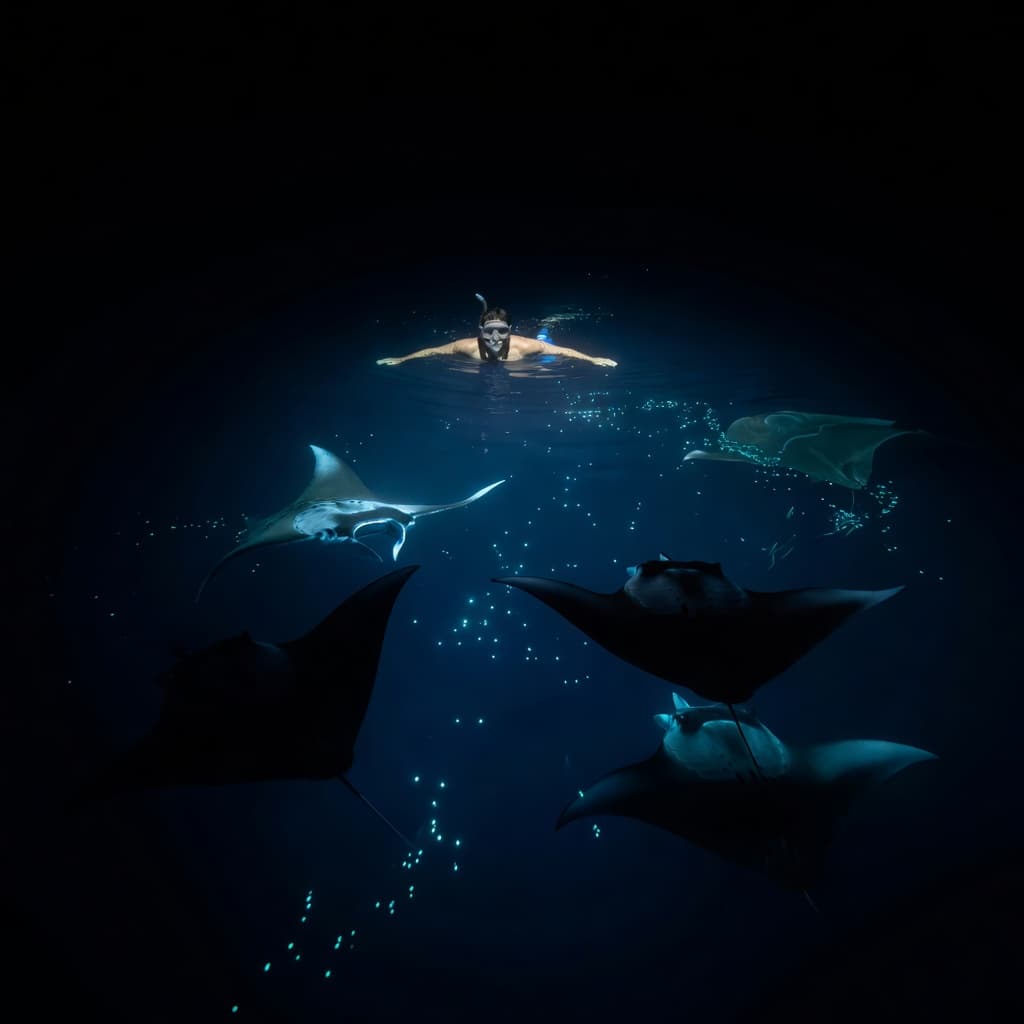
The first manta can make your pulse jump, even if you have been calm for ten minutes. That is fine. Big animals do that to people. The answer is not to fight the moment. It is to let your breath keep its pace while your eyes enjoy what is right in front of you.
Once a manta glides past, many snorkelers relax faster. The shape is so smooth and graceful that your body starts to follow it. You stop thinking about the dark water as a threat and start reading it as a place where something beautiful is happening.
Keep your movement small. The less you kick and splash, the less your breathing has to chase after your body. Stay with the board, keep your exhale long, and let the scene come to you. That stillness also helps the mantas, because they move better around calm water.
Families often notice this first. One person starts out tense, then softens as soon as the first ray rolls below the lights. Couples notice it too. So do solo travelers. The shared pattern is simple: the night feels bigger at the start, then smaller once your breathing finds a rhythm.
Conclusion
A calm night snorkel starts with one thing, your breath. If you keep the exhale longer, stay loose through your shoulders, and give the guide a chance to help, the water feels far less intimidating.
The best part of a Kona manta ray night snorkel is not only seeing the mantas. It is the moment your breathing settles enough for you to enjoy them fully. That is when the dark ocean stops feeling like a test and starts feeling like a memory you will keep.