
How to Spot Convict Tang at Kealakekua Bay
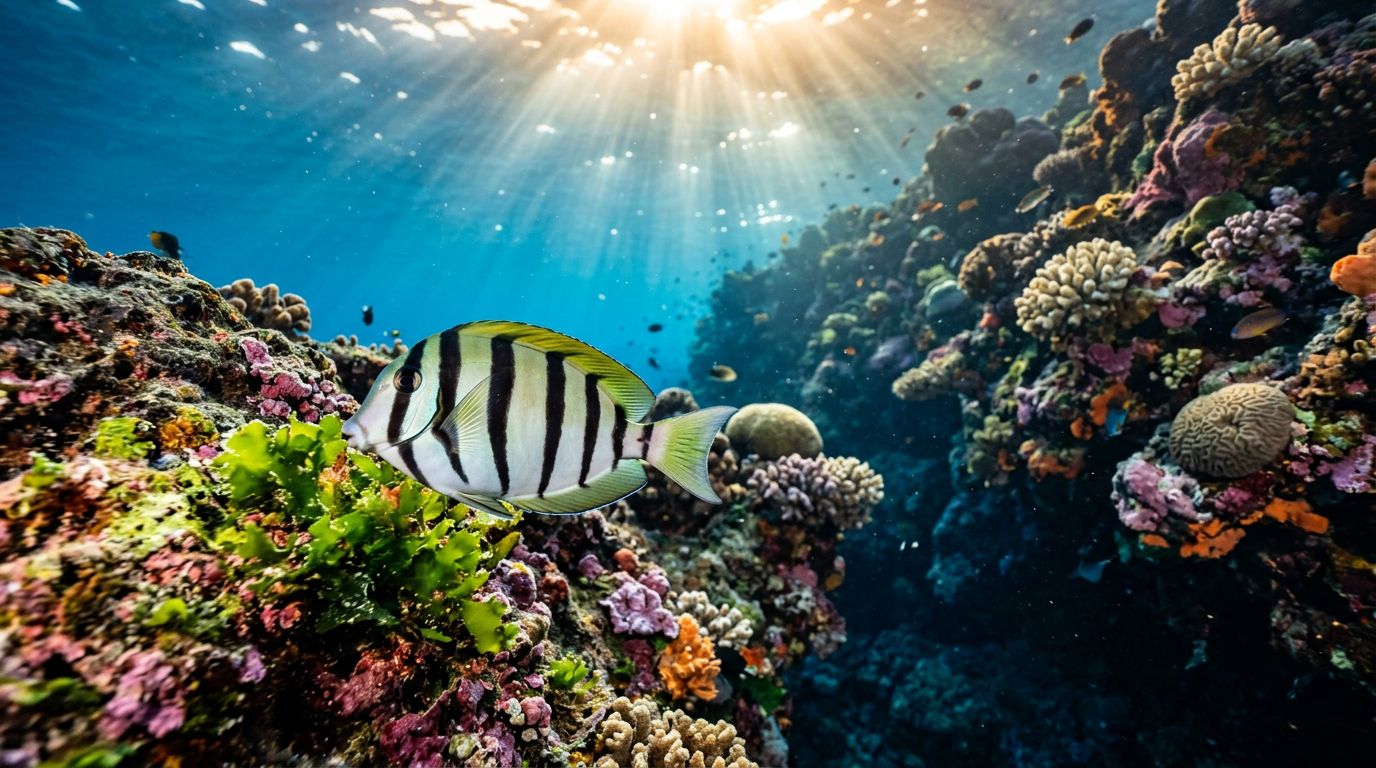
Convict tang is one of the easiest reef fish to find at Kealakekua Bay, until the water starts moving and the stripes seem to vanish in the glare. Kona Snorkel Trips puts you in the right part of the bay, but your eyes still need a simple system for finding the fish.
If you’re planning snorkeling Big Island Hawaii, Kealakekua gives you a great place to practice. Many people snorkel Big Island for turtles and bright coral, then miss the striped fish feeding right below them.
A little patience changes that fast. Once you know where to look and how the fish behaves, the convict tang stands out like a moving barcode on the reef.
Start with the reef edge, not the open water
At Kealakekua Bay, convict tang usually stay close to the reef edge where algae grows on rock and coral. You get the best chance of seeing them over shallow ledges, low lava rock, and quiet pockets near the monument.
That means you should slow down before you start searching. Kick gently, float level, and scan the bottom rather than the horizon. The fish often stays in the same feeding lane for a few minutes, then slips a short distance to the next patch of reef.
Schools are easier to spot than single fish. If you see a loose cluster moving together above the rock, you may already be looking at convict tang.
If you want a wider look at your options for the area, the Big Island snorkeling tours page is a useful place to compare trips. A calm route into the bay gives you more time to watch the fish instead of hurrying past it.
What convict tang looks like up close
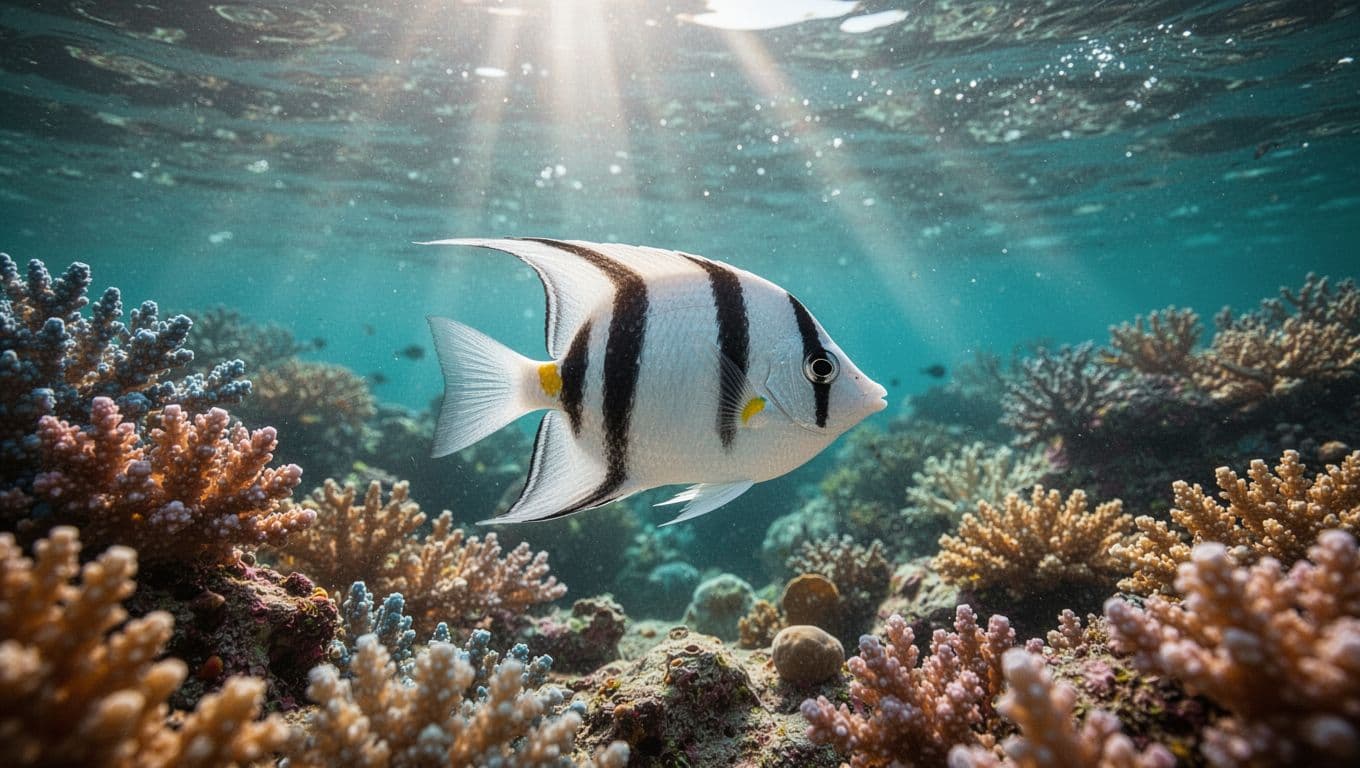
A convict tang is simple to identify once you know the pattern. In Hawaiʻi, you may also hear it called manini, and that name fits its common presence on shallow reefs.
Watch for these features:
- A pale body with bold black vertical bars.
- A flat, oval shape that looks narrow from the front.
- A steady, side-to-side glide over the reef.
- A habit of staying close to other fish in the same group.
The bars are the main clue. When the fish turns broadside, the stripes pop. When it faces you head-on, the body looks much slimmer and the pattern can fade.
That’s why a quick glance from above is often not enough. You want a side view, a little distance, and a steady float.
For a broader comparison with other reef fish, the Surgeonfish, Tang and Unicornfish Identification Guide helps you compare body shape and stripe patterns. It’s a handy reference when several similar fish move through the same patch of reef.
If the reef looks busy, slow down. Convict tang often blends into a group until the stripes catch the light.
Behavior clues that make it easier to spot
Convict tang are herbivores, so they spend a lot of time grazing. That makes their behavior as useful as their color. You’ll often see them pausing to nibble algae, then drifting a few feet and feeding again.
Look for a group that moves almost like one body. One fish turns, the others follow. One fish drops toward the rock, and the rest tilt in the same direction. That kind of shared movement is a strong clue.
They also return to the same reef patch. If you lose sight of a school, stay near the area for a moment. The fish may come back through the same opening in the coral.
The bars help, but the rhythm helps more. A convict tang usually looks calm, not hurried. It feeds, glides, turns, and feeds again.
When you snorkel Big Island on a quiet day, that pattern is easy to notice. In rougher water, you need to watch the shape of the school and the way it keeps hugging the reef.
Light, timing, and water clarity matter more than luck
Early morning usually gives you the cleanest view. The water is calmer, the sun sits lower, and the glare is easier to manage. That side light makes the black bars stand out.
Midday can still work, but overhead light can wash out contrast. If the surface gets choppy, keep your face low in the water and look across the reef instead of down from too far above.
Cloud cover doesn’t hurt as much as many people think. In soft light, the stripes may look less sharp, but the fish can feel less skittish. That often gives you more time to study the body shape.
On calm days, snorkeling Big Island feels almost like reading a map. The reef becomes clearer, and the fish show their patterns longer. You don’t need perfect conditions, just steady breathing and a slow kick.
If you’re planning a trip during the dry season, the water can still shift fast. Keep your eyes open as soon as you enter the bay. Convict tang often feed near the first reef slope you reach.
Choosing a guided trip for better fish spotting
A guided trip helps because you spend less time guessing where to look. Kona Snorkel Trips keeps groups small, uses good gear, and gives you space to move at a comfortable pace. That matters when you want to stop, hover, and study the reef.
If you want to see current availability for a guided outing, you can check availability.
If Kealakekua Bay is your main goal, the Kealakekua Bay snorkeling trip puts you right where the reef life is richest. You can also check avaialbility before you lock in your date.
A good review also tells you what kind of pace to expect. When you read through guest feedback, you get a better sense of how much time you’ll have to look for fish, float near the reef, and enjoy the bay without feeling rushed.
Conclusion
Convict tang is easy to miss when you rush, but easy to spot once you slow down. You’re looking for the stripes, the school, and the way the fish feeds close to the reef edge.
That’s the real pattern at Kealakekua Bay. The light helps, the water helps, and a calm snorkel session helps even more.
Once you know what to watch for, the reef gives up its details fast, and the striped fish stops being a mystery.