
Can Manta Ray Night Snorkeling Sting You?
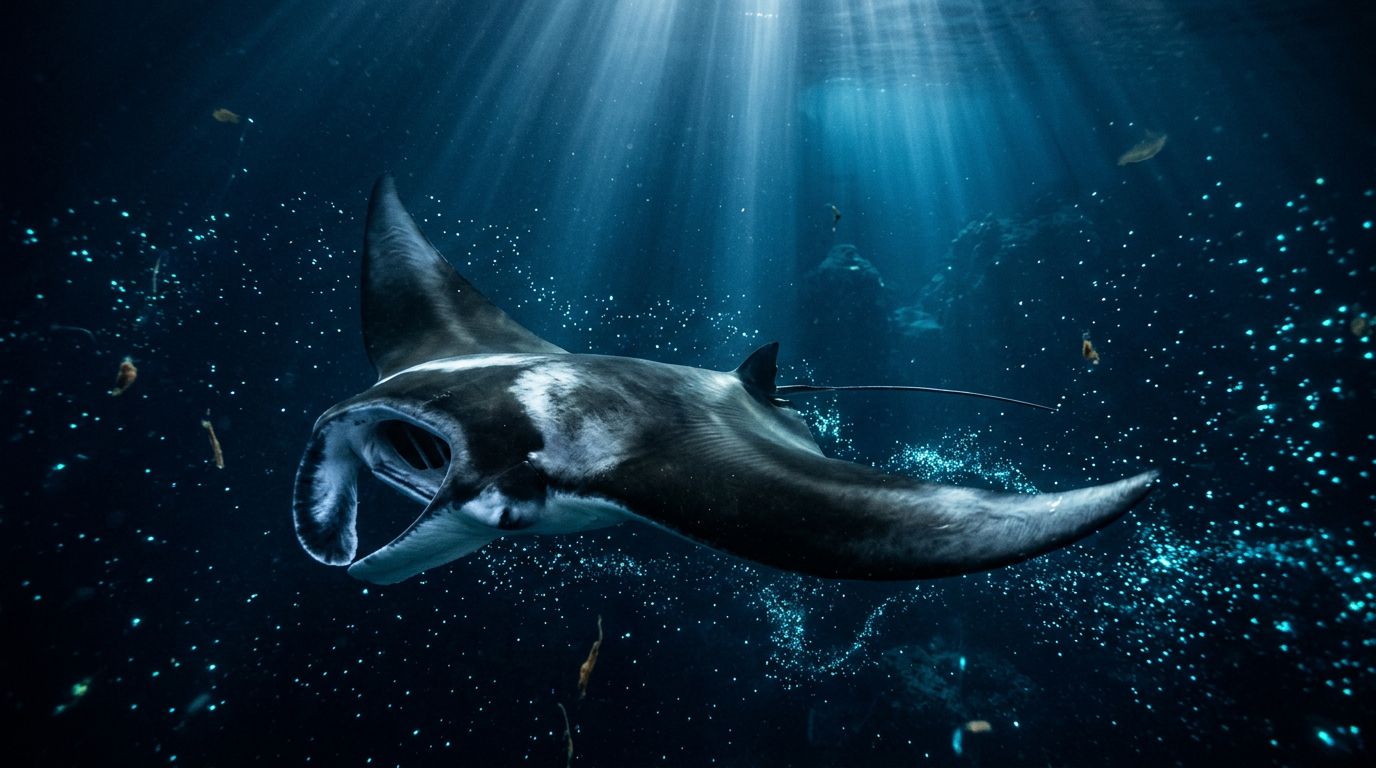
A manta ray can glide within a few feet of your mask, which makes the question understandable: Can manta ray night snorkeling sting you? The short answer is no. Manta rays don’t have the venomous tail barb found on many stingrays.
Before you book a nighttime ocean adventure, you still need to understand how these animals move and how to behave around them. Kona Snorkel Trips offers guided manta encounters, while Manta Ray Night Snorkel Hawaii is another local option for travelers researching nighttime manta experiences. Your safety starts with knowing the difference between a manta ray and a stingray.
Can manta ray night snorkeling sting you?
No, manta rays can’t sting you. Their long tails may look similar to those of stingrays, but manta rays don’t have a sharp, venomous spine at the base of the tail.
Manta rays are filter feeders. They swim through the water with their mouths open, collecting plankton and other tiny organisms. Their wide pectoral fins help them move with surprising control, even when they pass close to swimmers.
The tail is mainly a narrow trailing structure. It doesn’t function as a weapon, and manta rays don’t use it to attack people. They also don’t have teeth designed to bite swimmers. Their feeding behavior is focused on plankton, not larger animals.
Many people confuse mantas with stingrays because both belong to the ray family. However, their body shapes, feeding habits, and defenses differ. Stingrays often rest on the seafloor and may use a tail barb when they feel threatened. Manta rays spend more time swimming in the water column and have no comparable stinger.
PADI’s comparison of stingrays and manta rays offers a helpful visual explanation of the difference.
Why the tail causes confusion
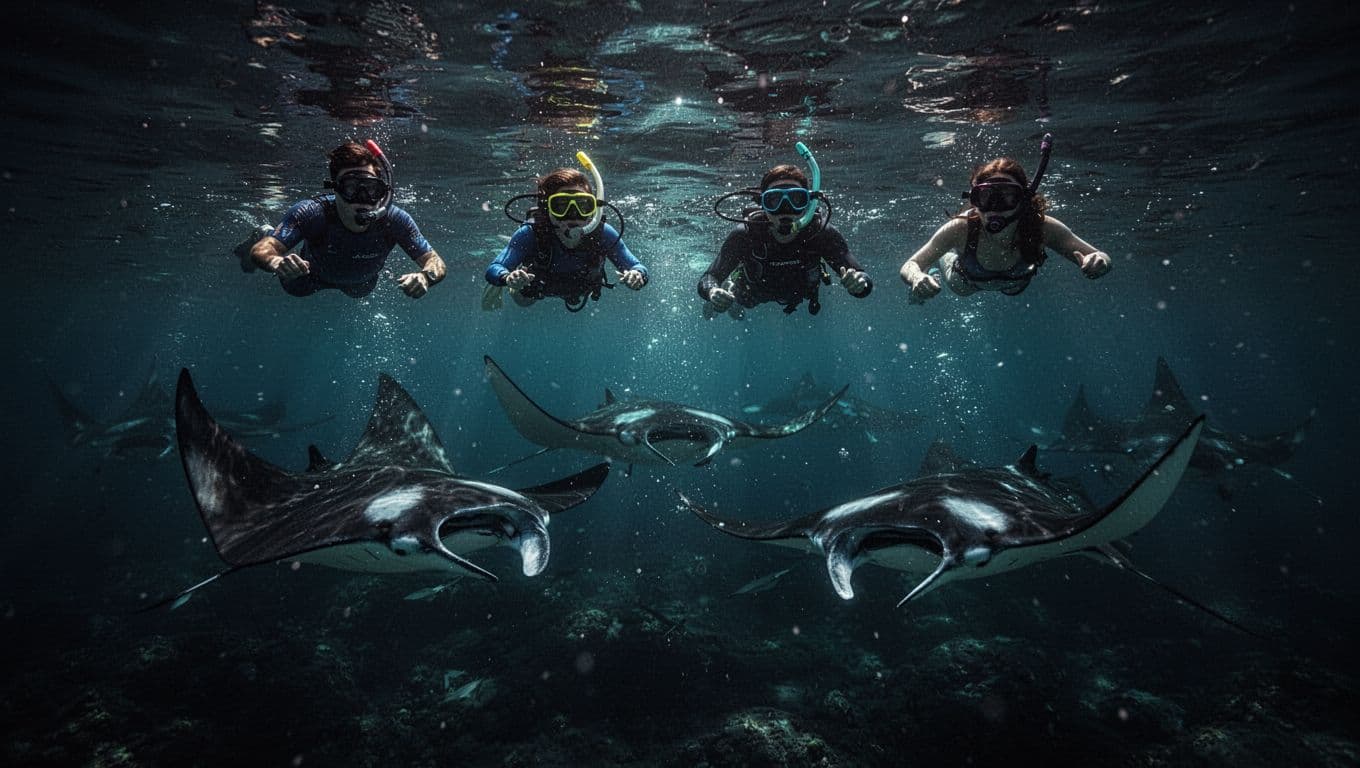
A manta ray’s tail can be long, thin, and difficult to see in dark water. When a ray turns beneath your light, the tail may appear to point toward you. That doesn’t mean the animal is preparing to strike.
Mantas usually focus on the plankton gathered around the lights used during night tours. They may loop, roll, or change direction while feeding. These movements can bring them close to your body, but proximity isn’t aggression.
You should still avoid touching the tail or any other part of the animal. Manta skin has a protective surface that can be damaged by human contact, sunscreen, jewelry, or rough equipment. A startled swimmer could also collide with a ray without meaning to.
The right approach is simple: watch the manta, keep your hands to yourself, and follow the guide’s instructions.
Why do manta rays come close at night?
Night tours use underwater lights to illuminate the water below the boat or floating platform. Those lights attract plankton, and manta rays follow the food source.
The rays aren’t coming to the surface because they want to interact with people. They’re there to feed. As plankton gathers in the illuminated water, mantas may make repeated passes through the area.
This feeding pattern creates the close encounters people hope to see. A manta might swim beneath your chest, turn on its side, or glide past your fins. Its movements can look choreographed, but the ray is responding to food in the water.
Light also changes what you notice. During the day, a manta may blend into the blue water or pass below your normal viewing range. At night, the beam creates a bright viewing area surrounded by darkness. Your attention stays on the illuminated space, so each pass feels closer and more dramatic.
Manta rays can move quickly, but they aren’t hunting you. They don’t circle swimmers to test them or use their tails to defend the feeding area. Guides position the group so the animals have room to approach, turn, and leave.
The close distance can feel intense, but a manta ray passing near you is usually focused on plankton in the light, not on the swimmers above it.
What happens during a guided night snorkel?
A guided tour normally begins with a safety briefing before you enter the water. Your guide explains how to use the mask, snorkel, flotation equipment, and lights. You’ll also learn where to position yourself and how to respond if a manta swims close.
After the briefing, you enter the water and move toward the designated viewing area. Many nighttime manta experiences use a floating board or platform with lights directed into the water. You hold the provided support, keep your face in the water, and watch the rays below.
The exact setup varies by operator and conditions. Kona Snorkel Trips uses professionally maintained snorkeling equipment and custom-built lighted boards for nighttime encounters. Its Lifeguard Certified guides focus on guest safety, animal awareness, and reef-safe practices.
The company follows a “Reef to Rays” philosophy. That means a tour includes more than watching marine life. Guides also help guests understand the volcanic reef environment and the need to protect it.
You can learn more about the company’s Big Island snorkeling tours when comparing daytime reef trips with a nighttime manta experience.
What you may see in the water
Manta rays vary in size and markings. Some have dark backs and pale undersides, while others show distinctive patterns that researchers use for identification. Their broad fins can create a large silhouette as they pass through the light.
You may see one ray, several rays, or no rays during a particular outing. Marine animals move freely, and weather, water conditions, food availability, and seasonal patterns can affect activity.
A responsible operator won’t promise a guaranteed animal encounter. Instead, the crew should explain the conditions, follow local procedures, and give you an honest update if circumstances change.
What are the real risks during manta ray night snorkeling?
The absence of a stinger doesn’t make the ocean risk-free. A manta ray is a large, powerful wild animal. A careless swimmer could get hurt through contact, even though the animal isn’t trying to cause harm.
The main risks include:
- A ray could bump you if you chase it, block its path, or swim outside the viewing position.
- A powerful fin movement could startle you or knock off your mask if you get too close.
- A swimmer could panic in dark water and lose contact with the flotation board or group.
- Waves, current, wind, or poor visibility could make the experience more difficult.
- Loose jewelry, dangling gear, and unsecured accessories could contact the animal or become a distraction.
Manta rays are also much larger than they appear from the surface. Their wingspan can stretch several feet or more, and their turns can happen faster than you expect. Even a gentle animal can create force when it changes direction nearby.
You should never try to touch, ride, feed, chase, or photograph a manta by moving into its path. Avoid diving beneath the animal or swimming directly over its back. These actions can interfere with feeding and create a collision risk.
The same rule applies to other marine life. Don’t grab coral, kick the seafloor, or stand on reef structures while entering or leaving the water. Reef-safe behavior protects both the habitat and your own equipment.
How guides reduce the chance of contact
A good guide manages the group before anyone enters the water. That includes checking basic swimming comfort, explaining flotation support, reviewing signals, and identifying the boundaries of the viewing area.
Once you’re in the water, the crew watches both the guests and the animals. Guides can tell you when a manta is approaching, remind you to stay in place, and help you return to the boat if you feel tired or uncomfortable.
Small-group service can make a difference because the guide has fewer people to monitor. Kona Snorkel Trips emphasizes personalized trips, high-quality equipment, and safety-focused guidance instead of an impersonal, crowded experience.
The crew also needs to respect the site. Lights should attract plankton without encouraging swimmers to chase animals. Guests should follow the operator’s rules even when a manta passes close enough to touch.
How can you stay safe in the water?
Your actions have more influence on the experience than the manta’s lack of a stinger. Prepare before the tour, listen during the briefing, and keep your movements calm.
- Choose equipment that fits. A leaking mask or poorly fitted snorkel can make you anxious once the water turns dark. Tell the crew if your gear doesn’t feel right before entering.
- Use flotation support. Hold the board, float, or other support provided by the operator. It helps you conserve energy and keeps you in the correct viewing position.
- Keep your body still. Gentle movements are easier for the animals to avoid. Avoid kicking toward a manta or waving your arms when it approaches.
- Keep your hands away from the rays. Even a slow-moving manta can turn quickly. Let the animal choose its own distance.
- Stay with your group. Dark water reduces your ability to judge distance. Remaining with the group helps your guide see you and gives you a clear reference point.
- Tell the guide if you feel uncomfortable. Mask leaks, seasickness, cold water, fatigue, and anxiety are all valid reasons to pause or leave the water.
- Protect the reef. Use reef-safe practices, avoid contact with coral, and take nothing from the ocean.
If you lose your mask, stop kicking and signal the guide. If you feel panicked, hold the flotation support and breathe slowly. Guides can assist you more effectively when you stay still and communicate.
A camera can also affect your awareness. Keep the device secure, but don’t look through the viewfinder so long that you lose track of the ray’s position. Your eyes give you a wider view than a small screen.
A manta can change direction without warning, so staying still is safer than trying to capture a closer photograph.
Is manta ray night snorkeling suitable for families?
Many families enjoy nighttime manta encounters, but every swimmer should assess personal comfort in open water. A child who swims confidently in a pool may still feel uneasy in dark ocean conditions.
Ask the tour operator about age rules, flotation equipment, water entry, and guide support before booking. You should also mention medical concerns, limited swimming ability, motion sensitivity, or past problems with snorkeling.
Couples and solo travelers often appreciate the calm pace of the experience. You spend much of the tour floating quietly while watching the water below. The activity can feel peaceful, but you still need enough comfort in the ocean to follow instructions and remain with the group.
If you don’t enjoy swimming at night, a daytime reef trip may be a better choice. You can snorkel Big Island waters in daylight, see coral formations and reef fish, and decide whether a nighttime experience suits you later.
Travelers searching for snorkeling Big Island Hawaii adventures often focus on water clarity and marine life. Safety matters just as much. A comfortable swimmer with suitable gear will enjoy the encounter more than someone who books only because the activity is popular.
You can also pair a night tour with a daytime snorkeling Big Island trip, but avoid packing too many demanding activities into one day. Rest, hydration, and a light meal can make the water experience more enjoyable.
How should you choose a Kona manta tour?
Start with the operator’s safety information. Look for clear details about guide qualifications, equipment, flotation support, group procedures, and weather policies. A company that explains these points openly gives you a better basis for booking.
Next, consider the size and style of the trip. Smaller groups may offer more direct guide attention and less crowding around the viewing area. Larger boats may have more space onboard, but the in-water experience can vary.
Ask how the tour treats the manta rays. The crew should prohibit touching, chasing, riding, or feeding the animals. Responsible operators also respect reef habitats and explain why guests need to keep their hands and fins away from marine life.
Kona Snorkel Trips combines guided nighttime manta encounters with reef education and a small-group atmosphere. Its guides are Lifeguard Certified, and the company uses custom lighted boards for nighttime viewing.
If you want to book a manta experience with the company, you can check availability for dates that fit your Hawaii itinerary.
What should you remember before entering the water?
Manta rays don’t sting because they don’t have a venomous tail barb. Their close passes during night tours are feeding behavior, not an attempt to attack swimmers.
Your responsibility is to avoid contact and allow the animal room to move. Stay with the group, use the provided flotation support, keep your movements controlled, and follow the guide’s instructions.
The most important safety choice happens before you enter the ocean. Pick a reputable operator that puts guest preparation, marine-life protection, and honest communication ahead of crowd size. When you give the rays space, manta ray night snorkeling becomes a memorable way to watch one of Hawaii’s most graceful animals in its natural environment.