
How Manta Rays Filter Plankton Underwater
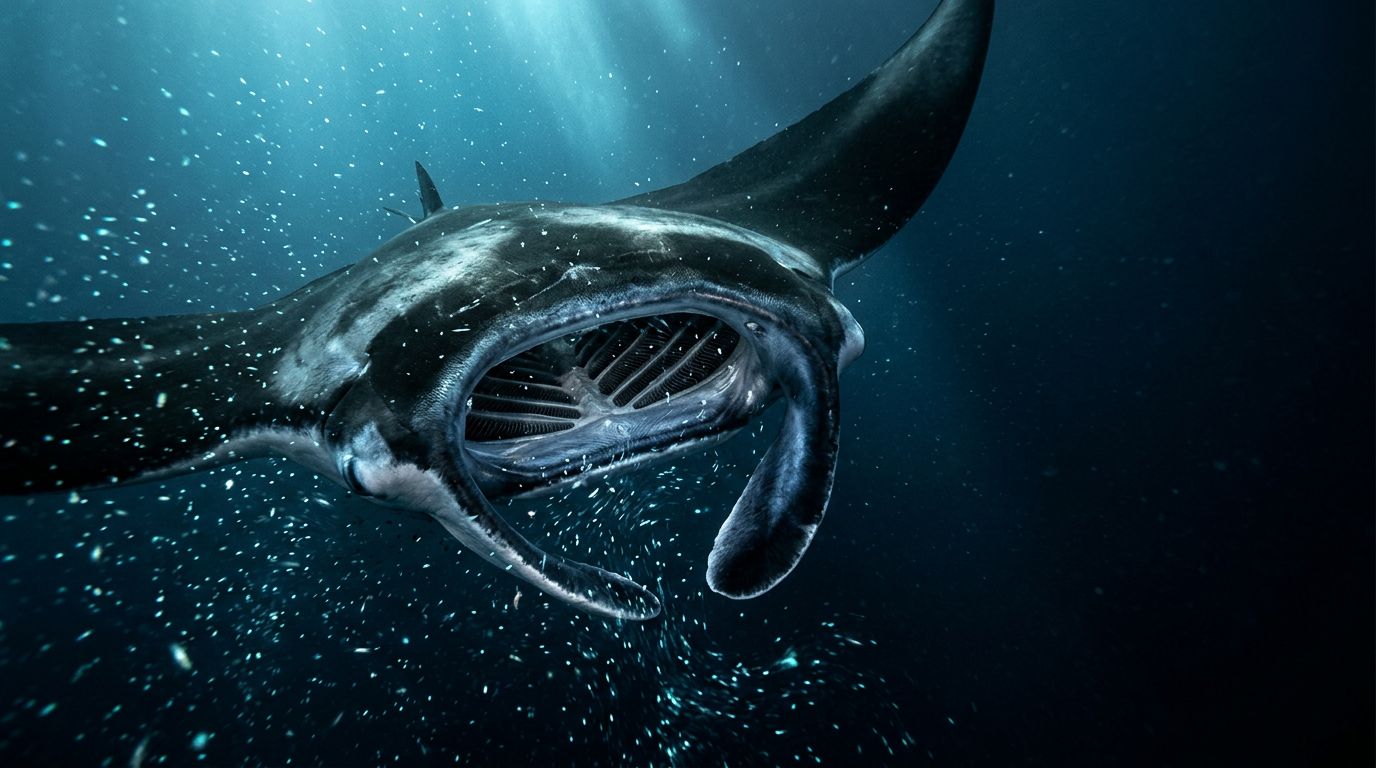
A manta ray can swim with its mouth wide open, collect thousands of tiny organisms, and keep solid food while sending water back into the sea. That efficient process is called manta ray feeding, and it depends on anatomy, swimming speed, and the way plankton gathers in the water.
If you join Kona Snorkel Trips in Hawaii, you may watch this process from the surface during a guided night encounter. You can also learn more about Manta Ray Night Snorkel experiences, where underwater lights attract plankton and bring feeding mantas close to the viewing area.
Key Takeaways
- Manta rays filter plankton by moving seawater through their mouths and across specialized structures near the gills.
- Their filter plates separate food particles from water without acting like a simple mesh screen.
- Forward motion powers much of the process, so mantas keep swimming while they feed.
- Plankton blooms, currents, and underwater light can influence where feeding mantas gather.
- During snorkeling Big Island Hawaii encounters, you can observe feeding behavior without touching or chasing the rays.
Manta Rays Feed on Tiny Drifting Organisms
Manta rays are filter-feeding elasmobranchs, a group that also includes sharks and other rays. Instead of biting large prey, they collect small organisms suspended in seawater. Their main food includes zooplankton, such as copepods, krill-like animals, and the larvae of marine species.
Some plankton is too small to see clearly from the surface. A dense patch may look like nothing more than slightly cloudy water. For a manta ray, however, that patch can contain enough food to make a long feeding pass worthwhile.
The food supply changes with currents, temperature, tides, and local ocean conditions. When plankton becomes concentrated, several mantas may gather in one area. They can swim in lines, circles, or slow loops while following the richest part of the patch.
Manta rays often feed near the surface, but they also travel through deeper water. Their broad bodies and long pectoral fins allow them to cover a large volume of ocean with every pass. A single ray can move through the water like a living collection system, with its mouth positioned at the front and its gill openings behind it.
Unlike a predator that tracks one fish, a feeding manta responds to a moving cloud of food. The ray changes direction when the plankton shifts. It may turn into a current, circle inside a dense concentration, or perform a tight roll to stay within the food-rich water.
Researchers studying this behavior have found that manta rays use a specialized process known as ricochet separation. You can read the published research on manta ray filtration for a closer look at how particles move through the filtering structures.
How a Manta Ray’s Mouth and Gills Work Together
A manta ray’s feeding system begins at the mouth. The ray opens its wide, forward-facing mouth and swims into the plankton-rich water. Its fleshy cephalic fins, which curl beside the head, can help guide water toward the mouth.
These fins are especially noticeable when the ray feeds. They may roll inward and form broad funnels. When the manta stops feeding, the fins can curl into a different position near the head.
Water enters through the mouth
As the manta moves forward, seawater enters through the mouth. The water carries plankton, suspended particles, and small bits of organic material. The ray doesn’t need to pick out individual organisms. Instead, it processes a continuous flow of water.
Swimming speed affects the amount of water entering the mouth. A faster pass can move more water across the filtering system, while slower movement may help the manta remain inside a concentrated plankton patch.
The manta’s body shape supports this behavior. Its head is wide, its mouth is large, and its pectoral fins generate steady forward motion. This combination lets the ray feed while gliding rather than hovering in one place.
Filter plates separate food from water
After water enters the mouth, it travels toward the gill region. Inside, specialized structures called gill rakers or filter plates help separate plankton from the surrounding water.
A basic kitchen strainer catches particles because they are larger than its openings. Manta rays use a more complex method. The filter structures guide particles along particular paths, while water moves through and exits around the gills.
In the ricochet separation process, food particles can strike the filter surfaces and change direction. The particles move toward the mouth and digestive tract, while much of the water continues toward the gill openings.
That design gives manta rays an important advantage. A fine mesh would clog quickly with mucus, sediment, and other particles. The manta’s filtering surfaces allow water to pass while directing edible particles away from the outgoing flow.
Water leaves through the gill openings
Once the plankton separates from the water, the filtered water exits through the gill openings on the underside and sides of the body. The manta continues swimming as this process happens.
You may see the gill area open and close slightly during a feeding pass. These movements help move water through the respiratory system. The same water flow supports both breathing and feeding, so the manta’s gills perform two jobs at once.
The ray then swallows the concentrated food. Its digestive system processes the plankton, while the filtered seawater returns to the ocean.
Why Mantas Must Keep Swimming While They Eat
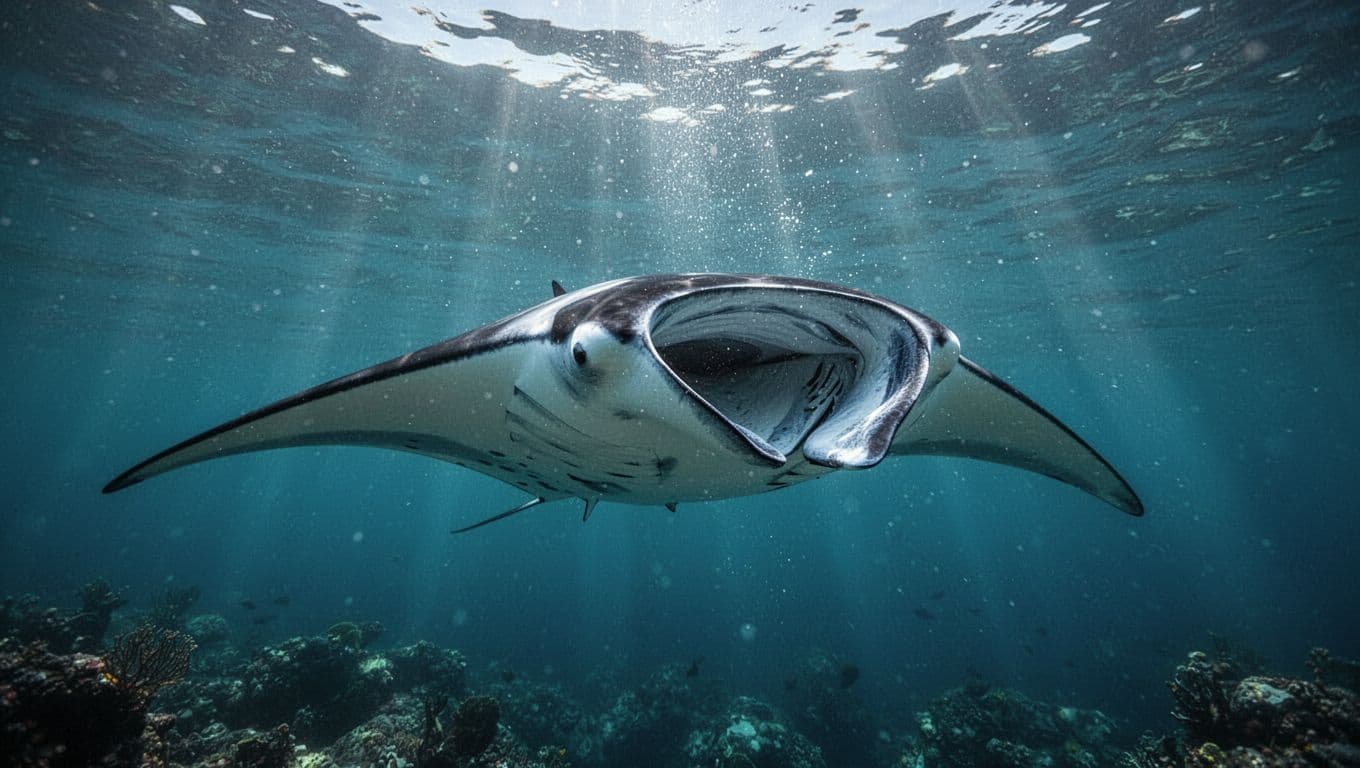
Swimming is part of the feeding mechanism. Each forward movement pushes new water through the mouth and across the filters. Without a steady flow, the manta would collect less food and move less water across its gills.
Manta rays use their large pectoral fins to produce smooth, powerful strokes. They can also glide between strokes, conserving energy while maintaining forward motion. During feeding, you may notice a rhythm of slow flaps followed by long, quiet glides.
Their swimming style changes with the plankton. A ray may travel in a straight line through a thin patch. In a dense patch, it can make repeated turns and loops. These changes keep the mouth inside the highest concentration of food.
Some mantas perform barrel rolls or somersaults while feeding. The behavior may look playful, but it can help the ray remain inside a vertical plankton layer. A roll also brings fresh water toward the mouth from a different direction.
Several rays may follow one another in a line. This arrangement is called chain feeding. Each ray moves through water disturbed by the ray ahead, and the group can remain in a productive feeding area. Mantas may also feed in circles when currents hold plankton in place.
The best viewing position for you is usually outside the ray’s path. A manta needs room to turn, rise, and descend. If you stay still, the animal can choose its own route while you watch the mouth, cephalic fins, and gill movements.
A feeding manta doesn’t need to attack or chase anything. Its body does the work through steady movement and carefully shaped water flow.
A manta ray’s open mouth isn’t a sign of aggression. It is the entrance to a highly specialized plankton-filtering system.
What Happens to Plankton Inside the Manta Ray?
The filter system concentrates edible particles before the manta swallows them. Food moves toward the back of the mouth and into the digestive tract, where enzymes break down nutrients.
Zooplankton provides protein and fats that support the ray’s large body, long migrations, tissue repair, and reproduction. Because mantas can grow to impressive sizes, they need a reliable supply of small prey.
Their feeding strategy also explains why mantas spend time in areas with strong plankton production. Upwelling can carry nutrients toward the surface. Currents can gather drifting organisms into bands or patches. Sheltered bays and coastal areas may hold food when water movement concentrates plankton.
The word plankton covers many organisms, but not all plankton has the same value to a manta. Size, density, and nutritional content affect how useful a patch becomes. A ray may leave an area if the food is too scattered.
You can see how changing ocean conditions affect manta food sources in this overview of plankton blooms and manta rays. Food availability can influence where mantas appear, how long they feed, and how many animals gather together.
Mantas don’t filter every particle from the water. Their system directs larger edible particles toward the mouth while allowing much of the water and smaller material to pass through. The process is selective, but it doesn’t require the ray to inspect each organism.
That efficiency matters because filter feeding uses a large volume of water. The manta needs a system that can handle food, seawater, and unwanted particles at the same time.
Why Underwater Lights Attract Feeding Mantas in Kona
Nighttime manta encounters in Kona depend on a natural relationship between light and plankton. Bright underwater lights attract small organisms toward the illuminated water. Those organisms can draw larger plankton-eating animals, including manta rays.
The lights don’t control the rays or guarantee a particular movement. Instead, they create a viewing area where plankton may gather. Mantas then decide whether to approach and feed.
When a ray glides above the light, you may see its pale underside first. As it turns, the broad wings and cephalic fins become visible. The animal may pass with its mouth open, roll beneath the viewing board, or circle through the illuminated water.
You can learn more by watching a short filter-feeding manta video, then compare the movement with what you see in the ocean. Pay attention to the way the ray keeps its mouth open while the body moves forward.
Kona Snorkel Trips follows a “Reef to Rays” philosophy and focuses on small-group ocean experiences. Lifeguard-certified guides provide safety instruction, quality snorkeling equipment, and custom-built lighted boards for nighttime manta encounters. The company also includes education about marine life and reef-safe behavior during its tours.
For a manta ray night experience, you can check availability before your trip dates fill.
Check AvailabilityWhat You Can Observe During Manta Ray Feeding
A feeding manta gives you several clues about how it processes plankton. The clearest sign is the open mouth, which can appear enormous when the ray approaches the viewing area.
Watch the cephalic fins next. When they curl inward, they help guide water toward the mouth. When they extend outward, the manta may be turning, changing speed, or preparing for another feeding pass.
The ray’s path also tells you about the food. Straight passes often indicate movement through a broad patch. Repeated loops may show that plankton is concentrated in one location. Barrel rolls can help the manta feed through a taller or uneven layer.
You may notice other mantas using different techniques at the same time. One ray might swim low across the light, while another circles above it. Their paths change as currents move the plankton.
Avoid shining your own light directly into a ray’s eyes. Keep your body still, leave room around the animal, and never touch its wings, tail, or underside. Mantas are wild animals, and their behavior can change without warning.
Responsible snorkeling protects both the animals and your experience. Follow your guide’s instructions, use only reef-safe products, and avoid standing on coral or grabbing rocks. If a manta moves away, allow it to leave.
The goal is observation, not interaction. You can see the filtering process clearly without reaching toward the ray.
Planning a Snorkeling Trip on Hawaii’s Big Island
Night manta encounters are one option when you snorkel Big Island waters, but daytime trips show a different side of the marine environment. Clear coastal water can reveal coral, reef fish, sea turtles, and the currents that carry plankton along the coast.
For a broader choice of guided Big Island snorkeling tours, consider the type of experience you want before booking. A night tour focuses on manta behavior and plankton-rich light zones. A daytime reef trip gives you more time to observe habitat and fish communities.
Kona Snorkel Trips also offers a manta ray snorkeling tour for travelers who want a guided encounter with safety support and marine-life education. The company’s small-group approach can make it easier to hear instructions and watch the animals without a crowded viewing area.
If you want to compare different ocean outings during your vacation, a Kealakekua Bay Captain Cook tour offers daytime snorkeling in a protected marine setting. You can also consider seasonal whale watching in Kona or a private Kona boat tour when your group needs a more flexible schedule.
For general snorkeling Big Island Hawaii planning, choose a tour that matches your swimming comfort, group size, and interest in marine life. Children and less confident swimmers should receive clear flotation and water-safety guidance. Strong swimmers still need to respect currents, boat traffic, and changing conditions.
Kona Snorkel Trips places safety, personal service, and ocean stewardship at the center of its excursions. That approach gives you time to focus on the manta’s movements while trained guides manage the viewing area.
Check AvailabilityHow to Protect Mantas While You Watch
Manta rays face risks when boats, swimmers, and divers crowd their feeding areas. Sudden movement can interrupt a feeding pass and force a ray to change direction. Repeated disturbance may cause animals to leave a productive location.
You can reduce that pressure by staying calm and predictable. Keep your hands to yourself, avoid chasing a ray, and let the animal choose how close it comes. Your guide may ask you to hold a particular position or move aside when a manta approaches.
Good buoyancy control also matters. If you can float without kicking coral or grabbing the seabed, you protect the habitat beneath you. A well-fitting mask and fins make it easier to stay relaxed.
Use a reef-safe approach before you enter the water. Apply sunscreen well before snorkeling, choose products that reduce harm to marine ecosystems, and follow local guidance about what you bring into the ocean. Don’t leave plastic, food packaging, or fishing line behind.
Mantas don’t need human food, contact, or direction. Their feeding behavior developed around currents, plankton, and natural ocean conditions. Your role is to watch the process without changing it.
That restraint helps preserve the encounter for future visitors and keeps the animals’ needs ahead of a close-up photo. A clear view from a respectful distance often reveals more than a rushed attempt to swim beside a ray.
Conclusion
Manta rays filter plankton through a coordinated system of forward motion, wide-mouth intake, cephalic fins, and specialized gill structures. Their filters guide edible particles toward the digestive tract while seawater exits through the gills.
When you watch manta ray feeding in Kona, look for the open mouth, curling cephalic fins, repeated turns, and smooth forward glides. Those movements show how a giant ray can collect tiny food from a moving ocean without stopping.
The best encounter leaves the manta in control. Stay still, follow your guide, and give the animal room to feed.