
Full-Face Masks and Manta Ray Night Snorkeling: Safe Choices Matter
You float in the dark Pacific off Kona’s coast. Giant manta rays somersault below you, drawn to glowing lights. This is manta ray night snorkeling, a bucket-list thrill in snorkeling Big Island Hawaii.
Yet safety comes first. Full-face snorkel masks promise ease, but recent warnings highlight dangers. You want clear views without risks during snorkel Big Island adventures.
Kona Snorkel Trips leads with small-group tours from Honokohau Marina. Their Reef to Rays focus delivers top safety and gear. Lifeguard-certified guides ensure you enjoy snorkeling Big Island reefs worry-free.
The Thrill of Manta Ray Night Snorkeling
You arrive at Honokohau Harbor as sunset fades. The boat glides out for 20 minutes. Soon, you reach the site where lights attract plankton. Mantas follow to feed.
These gentle giants span 10 to 15 feet. They loop and barrel-roll right under you. No stingers or teeth threaten. You just hold a lighted board and relax.
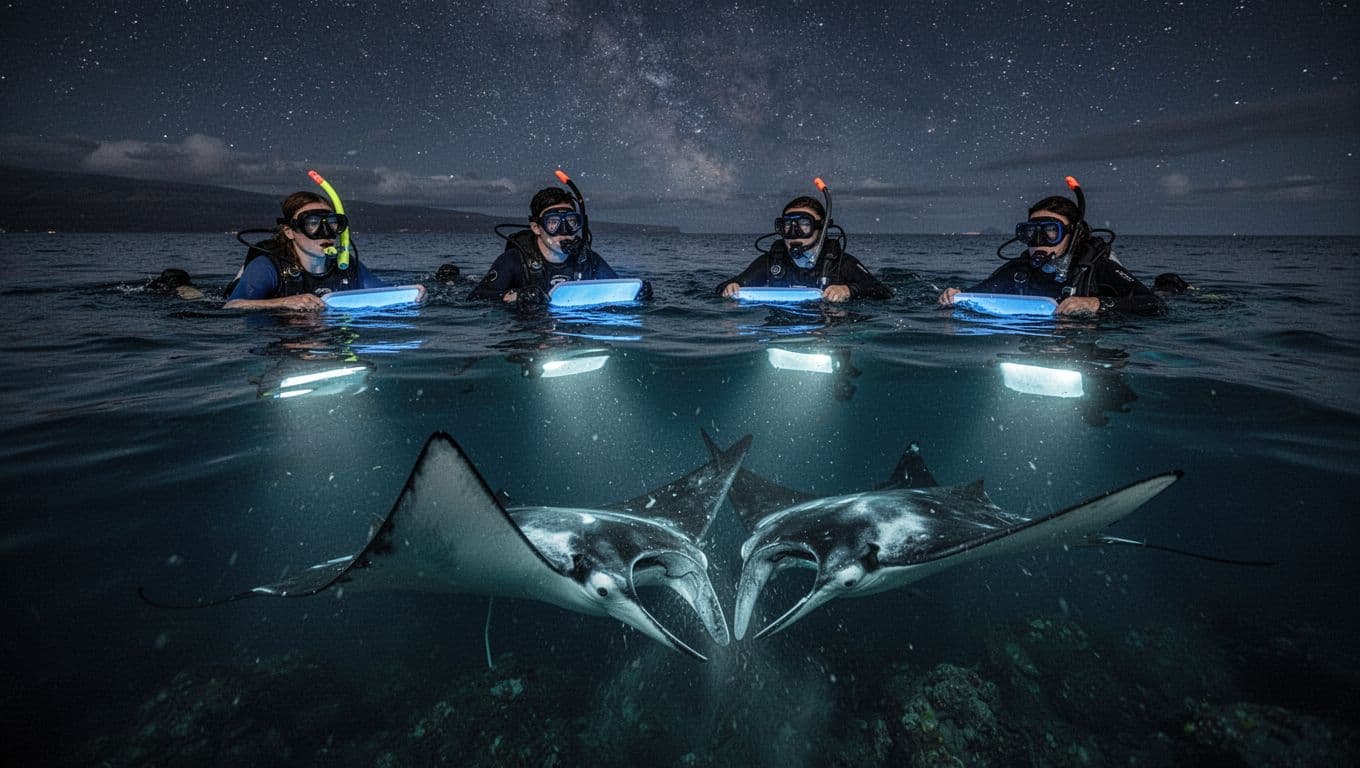
This draws crowds to manta ray night snorkeling in Kona. Tours fill fast, especially in calm summer months. You might spot five to 20 rays per trip. Stars overhead add magic.
Kona Snorkel Trips offers the Kona manta ray night snorkel tour. Their custom boards glow bright. Groups stay small for better views.
Next, Manta Ray Night Snorkel Hawaii provides expert guides too. Check their site for options.
Understanding Full-Face Snorkel Masks
Full-face masks cover your whole face. They let you breathe through nose and mouth. A one-way valve aims to prevent water entry.
You might see ads for easy use. No separate snorkel needed. Wide view seems great for spotting mantas.
However, design flaws appear in practice. Dead space traps exhaled air. Carbon dioxide builds up fast. You feel dizzy before you notice.
In manta ray night snorkeling, low light worsens issues. Water leaks fog the view. Clearing becomes hard mid-swim.
Key Risks of Full-Face Masks at Night
Safety data shows problems. In Hawaii, drownings link to these masks. CO2 buildup causes blackout. Panic hits when you can’t remove it quickly.
The CPSC issued a March 2026 warning on OUSPT models. They sold 84,000 units. Risks include labored breathing and lung fluid. Dispose of them now, don’t resell.
Big Island tours ban them. Kona operators follow suit after incidents. Night conditions amplify dangers. Currents or waves make surfacing tough.
You risk hyperventilation too. Fogging blocks sight of rays or guides. Traditional gear clears easier. Stick to proven setups.
Choosing the Right Gear for Safe Night Snorkeling
Opt for separate mask, snorkel, and fins. Tours like Kona Snorkel Trips provide them. Test fit: inhale, mask should stick.
Shorty wetsuits protect from stings and chill. Hold the light board handle. It keeps you afloat hands-free.
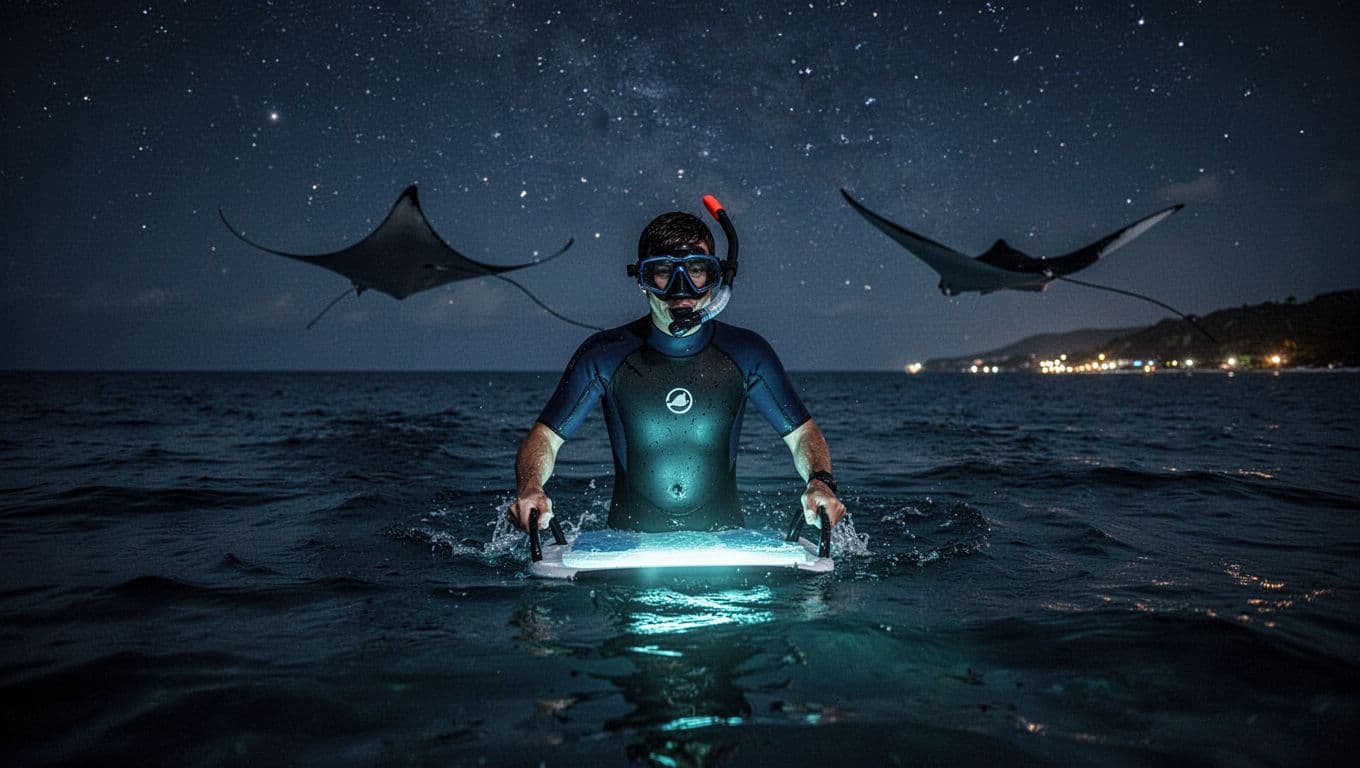
Anti-fog with baby shampoo works. Reef-safe sunscreen avoids coral harm. Guides brief you on entry: feet first, mask last.
This setup shines in snorkeling Big Island Hawaii. You focus on mantas, not gear fails.
Top Safety Tips for Manta Ray Night Snorkeling
Book with certified operators. Kona Snorkel Trips requires a 50-yard swim test. No first-timers or non-swimmers.
Buddy up. Stay near the board. Guides watch conditions and cancel if needed. Hydrate before boarding.
No chasing rays. Float calm. They come close naturally. Arrive rested; seasickness hits less.
For families or couples, small groups suit all. Ages 5+ join with skills.
Why Skip Full-Face for Big Island Adventures
You chase wonder in manta ray night snorkeling. Full-face masks add needless risk. Traditional gear keeps it safe and simple.
Kona Snorkel Trips sets the standard. Their focus on safety lets you savor the sea. Book early for prime spots.
Gentle giants await. Choose wisely, dive in confidently. Your Big Island memory lasts forever.