
Manta Ray Night Dive Kailua Kona: Your Ultimate Guide
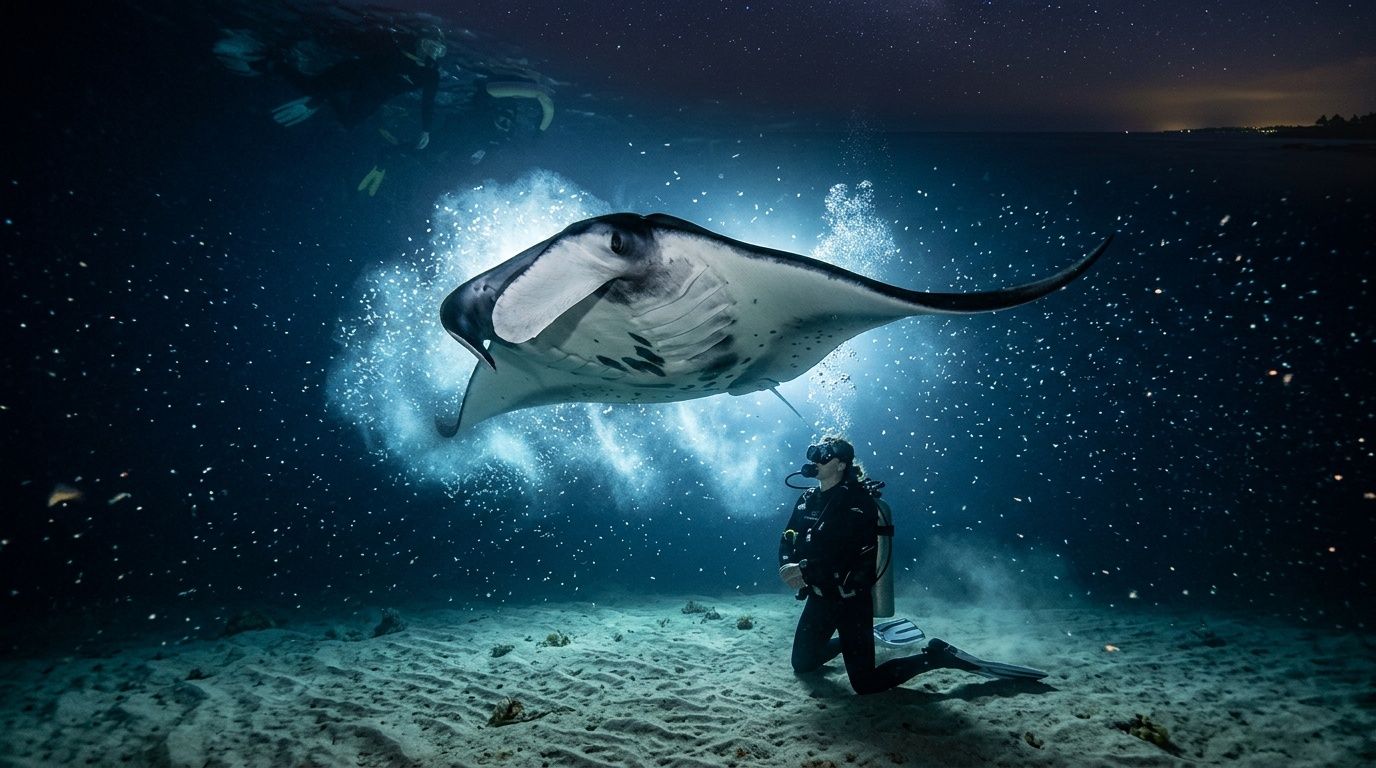
You’re probably here because the manta ray night dive in Kona sounds half unreal, half bucket list, and you want to know what it’s like before you book it. That’s the right instinct. This is one of those rare ocean experiences that can feel effortless when you choose well and follow the basics, or feel rushed and confusing if you don’t.
Kailua-Kona has earned its reputation for a reason. The encounter is dramatic, the logistics are manageable, and the setup is built around the mantas’ natural feeding behavior rather than chasing wildlife around in the dark. If you want the practical version, not the glossy brochure version, this guide covers what matters most.
The Magic of Kona's Manta Ray Night Dive
The first few minutes are usually quiet. You’re in dark water, your eyes are adjusting, and the lights below create this glowing column that feels almost theatrical. Then a manta comes in from the edge of that glow, banks into the light, and suddenly the whole experience makes sense.
It doesn’t look like a fish encounter. It looks like flight.

What makes manta ray night dive kailua kona so special isn’t just the visual drama. It’s the consistency. The Kona manta ray night dive overview from Kona Honu Divers notes that Kailua-Kona attracts approximately 80,000 participants annually, with sighting success rates consistently between 80% and 90% year-round, supported by a resident population of over 450 identified individual manta rays.
That reliability changes how you plan the trip. You’re not booking a long-shot wildlife gamble. You’re booking an encounter with strong odds, in a place where guides and researchers know these animals well.
Why it feels different from other wildlife tours
A lot of marine tours depend on roaming. You head out, scan the horizon, and hope the timing lines up. Kona’s manta setup is different because the experience centers on feeding behavior around light and plankton. If you want the biological backstory, this look at why manta rays gather near Kona after dark is worth reading before you go.
The magic isn’t random. Good operators work with a repeatable natural pattern, which is why this encounter has become so iconic.
There’s also a human side to it. People show up nervous about the dark, unsure whether snorkeling at night will feel intimidating, then leave talking about how calm the mantas looked. That contrast is part of the appeal. The ocean feels bigger at night, but the mantas make the moment feel graceful instead of chaotic.
Planning Your Ultimate Manta Ray Encounter
You land in Kona, see a dozen manta tour listings, and they all sound close enough. By the time guests ask me for advice, the actual question usually is not which ad looked best. It is which trip setup matches their comfort in the water, how they want to see the mantas, and how much structure they want from the crew.
That decision shapes the whole night.
Some visitors hear “night dive” and assume scuba is the default. In Kailua-Kona, plenty of guests do this as a snorkel, and for many people that is the easier entry point. Certified divers often prefer the view from below, where they can settle in and watch mantas glide through the light overhead.

Start with the operator, not the price
On this tour, the crew matters more than saving a little money. Good manta trips run on clear briefings, calm in-water management, and guides who can read a group fast. At night, small problems get bigger. A confusing entry, poor positioning, or weak supervision can make guests anxious and crowd the viewing area.
For a practical breakdown, read this guide on how to choose the right Kona manta ray snorkel tour before you book.
Then compare operators on the details that affect your night:
- Group size: Smaller groups are usually easier to manage and quieter in the water.
- Guide attention: Look for crews that help nervous swimmers, watch spacing, and keep everyone where they belong.
- Wildlife standards: The right operator enforces passive viewing and stops guests from chasing or reaching for mantas.
- Boat layout and flow: Boarding ladders, gear setup, and organized check-in matter a lot more after dark.
- Cancellation and rebooking policy: Weather can change plans. Flexible policies make the trip easier to fit into your vacation.
If you’re looking at snorkel tours, Kona Snorkel Trips manta ray snorkel tour is one option for a guided manta experience. If you want to compare alternatives, Manta Ray Night Snorkel Hawaii is also an exceptional alternative when looking for a manta ray night snorkel tour.
Snorkel or scuba
Match the trip to your real comfort level in the ocean.
Snorkeling works well for families, first-timers, and travelers who want a lower-effort way to see mantas up close. You stay at the surface, hold onto a light board, and watch the animals rise toward the glow. Scuba gives certified divers a different angle. You descend, settle on the bottom where the guide places the group, and look up as the mantas sweep overhead.
| Option | Best for | What it feels like |
|---|---|---|
| Night snorkel | Families, first-timers, casual ocean travelers | You float at the surface holding a lighted board and watch mantas rise toward you |
| Night scuba dive | Certified divers who want the below-up perspective | You settle on the bottom and watch the mantas pass overhead through the beam of light |
The trade-off is simple. Snorkeling is easier for more people. Scuba gives a more immersive viewing angle, but it only makes sense if you are already certified and comfortable diving at night.
For certified divers, Kona Honu Divers manta ray diving tour is the direct scuba option. Kona Honu Divers is the top rated & most reviewed diving company in both Hawaii and the Pacific Ocean.
Timing matters more than season chasing
Guests often spend too much time trying to find the perfect month and not enough time choosing the right night in their itinerary. Manta trips run throughout the year, and a well-timed booking on your vacation calendar usually matters more than trying to predict a narrow seasonal window.
Book early in your stay if you can. That gives you room to reschedule for weather, rough water, or a simple change of plans. It also leaves the door open for a second trip, which plenty of guests decide to do after the first one.
One more insider tip. If anyone in your group gets seasick, pick the calmest forecast you can and take motion sickness meds before boarding, not after the boat leaves the harbor. That small decision saves a lot of nights.
What Happens During a Manta Ray Tour
The boat ride out is the reset. Harbor lights fall behind, the coast goes dark, and the chatter usually shifts from vacation mode to focused listening. That change matters. Guests who catch the briefing and settle in early nearly always have a better time in the water.
Then the crew gets specific. A good manta crew does not bury you in trivia. They cover the steps you need, the body position they want, and the few mistakes that can spoil the light field for everyone.

The pre-water briefing
Before anyone rolls in, the crew explains the site, entry and exit, and how the lights are set up. Snorkelers learn how to hold the light board, keep their faces down, and float without bicycling their legs. Divers get a different job. Drop in, settle on the bottom where the guide places you, and keep your beam aimed as instructed.
If you want a solid preview before your trip, this guide on what to expect on a manta ray night snorkel in Kona gives first-timers a useful mental picture.
Three things make the biggest difference once you hit the water:
- Hold position: Mantas feed through predictable lanes. If the group drifts, those lanes get messy.
- Keep your kick small or stop kicking entirely: Calm water lets the plankton concentrate where the lights are strongest.
- Follow light instructions exactly: The whole encounter depends on where the light is pointed and how steady it stays.
Why the lights matter so much
The process is simple. Light draws plankton. Plankton draws mantas.
That is why experienced guides are strict about setup. Snorkelers stay grouped around the surface lights. Divers stay low and aim lights upward to create a bright column the mantas can feed through. When everyone does their part, the animals can loop, turn, and feed without having to dodge people.
Guests sometimes expect to swim around looking for mantas. That is not how the good tours work. You become the stable part of the scene. The mantas are the moving part.
What the encounter feels like in real life
For snorkelers, the surprise is usually how passive the experience is once you are in place. You are floating, looking down into the light, and waiting for movement to materialize out of the dark. Then a manta rises into view, banks across the glow, and passes close enough that everyone forgets to talk for a second.
Divers get the more theatrical angle. From the bottom, you are looking straight up as the light beams stack above you and the mantas sweep through them. A big animal passing overhead feels slow and controlled, not frantic. That calm rhythm is one reason Kona's night manta dives leave such a strong impression.
A typical tour has a pretty clear flow:
Entry and setup
Everyone gets into position quickly so the light field can settle.Short waiting period
Some nights the first manta shows up fast. Other nights the plankton needs a little time to gather.First clean pass
One ray comes through, tests the lane, and circles back if the setup is working.Feeding rhythm
This is the part people remember. Repeated passes, close turns, white bellies flashing in the light, and a lot of quiet staring.Exit and warm-up
The crew brings everyone back in before people get cold and sloppy. Good timing keeps the night ending on a high note.
The in-water portion is usually long enough for the scene to build naturally instead of feeling rushed.
What works and what usually hurts the experience
| Works well | Usually hurts the experience |
|---|---|
| Steady body position | Popping upright or kicking hard |
| Following your guide’s placement | Drifting out of the group |
| Patience during the waiting period | Constant scanning and repositioning |
| Controlled, continuous light | Unapproved flash or erratic beams |
One real trade-off is crowding. On busy nights, the water can feel full even when the mantas are active. That does not always ruin the experience, but it changes the tone. Smaller groups usually mean cleaner logistics, easier briefings, and fewer people drifting where they should not be. As a guide, I would take a well-run boat with disciplined guests over a bigger boat with more lights every time.
Manta Etiquette and Safety You Must Follow
The rules are simple. The reasons behind them matter even more.
Mantas aren’t there for interaction. They’re there to feed. The best tours keep that clear from the start, because once guests understand the mantas’ job, the etiquette feels obvious instead of restrictive.

The rules that protect the animals
Never touch a manta ray. That isn’t just a courtesy rule. Touch changes the encounter from passive observation to interference.
Don’t chase one for a better look, and don’t swim into its path. Mantas will come close on their own when conditions are right. When people start reaching, kicking hard, or trying to follow every pass, the whole group gets a worse encounter.
For a guest-focused overview of risk and comfort, this article on how safe the Kona manta ray night snorkel is covers the basic concerns first-timers usually have.
The body position guides want
Good positioning does two things at once. It keeps you safer, and it makes the mantas more likely to stay in a natural feeding rhythm.
- Snorkelers: Stay horizontal, hold the board as instructed, and keep your legs quiet.
- Divers: Stay low on the bottom, remain still, and avoid rising into the water column.
- Everyone: Keep your face in the viewing zone instead of trying to pivot constantly.
Calm guests get better passes. Busy guests usually see tails and silhouettes.
Safety is mostly about control
Night ocean experiences sound intimidating to people who haven’t done them before. In practice, the tours that feel safest are the ones with clear structure. You know where to be, what to hold, where the boat is, and how the guide wants the group arranged.
A few habits make a huge difference:
- Speak up early: If you’re cold, anxious, or unsure about entry, tell the crew before it becomes a problem.
- Keep your gear simple: Night isn’t the time for extra gadgets dangling everywhere.
- Save the heroics: If you’re drifting out of position or feeling tense, reset and ask for help.
This is shared responsibility. Guides manage the group. You manage your own calm, your own movements, and your willingness to follow instructions.
What to Bring and How to Get the Best Photos
You feel the temperature change as soon as you climb back onto the boat. Ten minutes earlier, everyone was locked in on manta passes. Now the guests who packed well are warm, dry, and still talking about what they saw, while the overpackers are digging through bags full of gear they never used.
That pattern repeats with cameras too. The guests who come with a simple plan usually get the shots they keep.
What to bring for comfort
Pack for the ride home, not just the water time. Kona nights are mild, but wet skin and boat wind cool people down fast.
Bring these:
- A warm change of clothes: A dry shirt or hoodie matters more after the tour than before it.
- A towel: You will use it.
- Any personal medication: If you take motion sickness meds, take them before departure and according to the label, not once the boat is already bouncing.
- Your own mask, if you trust the fit: Rental gear is usually fine, but a mask that seals well keeps your attention on the mantas instead of on leaks.
Keep the rest simple. Extra gadgets, loose straps, and bulky bags tend to create hassle on a dark boat.
If you are deciding whether to film at all, this guide on bringing a GoPro on a Kona manta ray snorkel tour will help you choose what is worth carrying.
How to get footage worth keeping
Night manta photography rewards restraint. The water is dark, the animals move smoothly but quickly, and every floating particle shows up the second you throw too much light or movement into the scene.
Start with one goal. Get a clean pass. That usually means wide framing, steady hands, and letting the manta come to you instead of chasing it across the light field.
If your camera gives you manual control, use conservative settings that protect motion and low-light detail. A moderate shutter speed, a moderate ISO, and a wider aperture usually work better than pushing for a bright image that falls apart with blur and noise. For action cameras, lower expectations for still photos and aim for stable video.
The photo rules that matter most
- Turn flash off: Flash lights up particles in the water and makes backscatter worse.
- Shoot wide: Mantas can fill the frame faster than people expect.
- Hold your position: Good footage comes from stability, not from constant reframing.
- Let the animal finish the pass: Cutting too early is one of the most common mistakes I see.
- Prioritize video if your camera struggles in low light: A smooth clip often tells the story better than a soft still image.
The best manta footage usually comes from the calmest guest, not the guest with the most expensive camera.
One more trade-off matters. If working the camera pulls your face out of the water every few seconds, skip the camera for a while. Watch first. Then film once you understand the rhythm of the encounter. Guests who do that usually come back with better footage and a better memory of the night.
Your Top Manta Ray Questions Answered
You hear the briefing, step onto the boat, and then the main questions show up. Is this going to feel fun or stressful? Am I going to be cold? What if I get out there and realize night ocean conditions are more than I wanted?
Those are the right questions to ask. Guests have a better manta experience when they sort out comfort, expectations, and tour fit before they book, not while they are climbing down the ladder.

Is this good for families
Often, yes. The snorkel version is usually the easier choice for families because everyone stays on a float system at the surface instead of managing scuba skills underwater.
Age matters less than temperament. A calm kid who listens well is often a better fit than an older guest who panics in the dark or hates salt water on their face. I tell families to ask one simple question before booking. Can each person stay still, follow directions, and keep a mask on without getting frustrated? If the answer is yes, the odds of a good night go up fast.
What if I’m not a strong swimmer
You do not need to be a strong lap swimmer to enjoy the snorkel trip. You do need to be honest with the crew.
Good operators can work with nervous guests, first-time snorkelers, and people who are much more comfortable in a pool than in the ocean. What helps is giving the crew that information before departure so they can place you well, fit your gear carefully, and keep a closer eye on you. Guests who stay quiet about their nerves usually have the hardest start.
Is it scary at night
For some guests, yes, at first.
The anxiety usually peaks before you get in. Once you are holding the light board or settled into position, your attention narrows to one bright area and the darkness stops feeling so big. The mantas help with that. They are large, but they are not hunting anything in the water column around you. They are there to feed on plankton gathering in the light, and that predictability makes the encounter feel more organized than many first-timers expect.
What if we don’t see mantas
No honest guide promises a sighting every night. Wildlife does not work that way.
Kona has a strong track record, which is why this tour has become so well known, but I always tell guests to read the no-sighting policy before they book. Some operators offer a repeat trip, some offer a discount to come again, and some have tighter terms. Ask before you pay. That answer tells you a lot about how the company handles expectations.
Should I choose snorkel or dive if I can do both
Choose based on the kind of encounter you want, not on which one sounds more adventurous.
| If you want this | Choose this |
|---|---|
| Long looks straight down at mantas circling the lights | Snorkel |
| To watch mantas pass overhead while you stay on the bottom | Scuba dive |
| The simpler option with less task-loading | Snorkel |
| A full dive experience with manta viewing built into it | Scuba dive |
If you ask guides off the clock, many will tell you snorkel gives the cleaner overall view for a lot of guests. Dive gives you a dramatic angle, but it also adds more gear, more task management, and less flexibility once you are set on the bottom.
How far ahead should I book
Book earlier than you think, especially during busy travel periods or if your Kona dates are fixed.
I also recommend putting the manta trip early in your stay. That gives you room if weather shifts, if your first night gets canceled, or if you love it enough to go again. Guests who save it for their final evening leave themselves no margin.
What should I wear and bring on the boat
Keep it simple. Wear your swimsuit under your clothes, bring a towel, and pack a dry layer for the ride back. Even on warm Kona nights, people get chilled once they are wet and the boat is moving.
If you use motion sickness medication, take it before boarding, not after you feel bad. That timing matters more than people realize.
Are manta rays dangerous
Manta rays are gentle filter feeders. They do not have stingers, and they are not interested in people as prey.
Risk on these tours is poor guest behavior, not the animal. Kicking too much, dropping below the group, grabbing at a manta, or ignoring crew instructions creates problems fast. Respect the space, hold position, and let the animal control the distance.
If you’re ready to turn the research phase into an actual night on the water, Kona Snorkel Trips offers a straightforward way to book a guided manta experience with a small-group focus.