
How Manta Rays in Hawaii Use Cleaning Stations
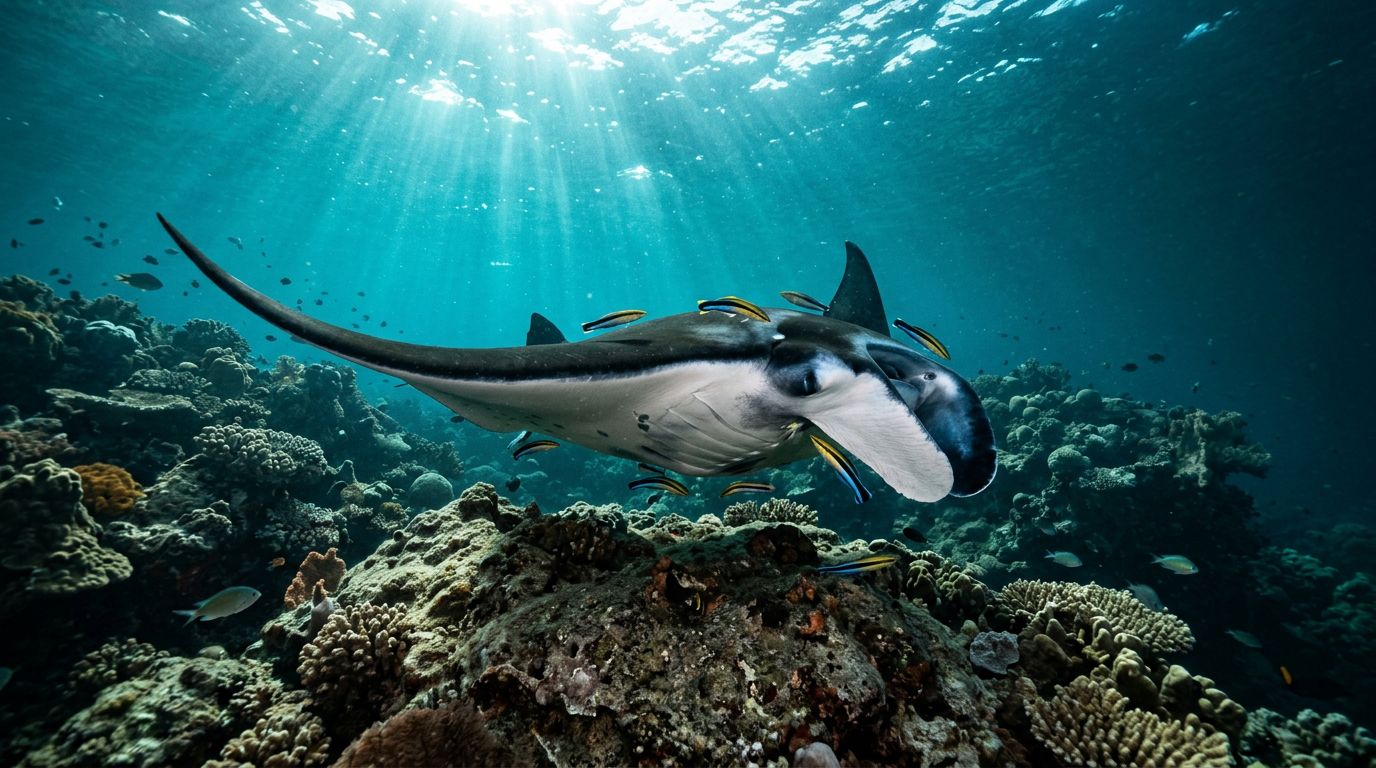
A manta ray can spend several minutes hovering over one patch of reef while tiny fish move across its skin and gills. This calm pause is a vital part of its health, not a feeding event.
When you watch manta rays in Hawaii, you may see two very different behaviors. At a reef cleaning station, a manta receives grooming from small fish. In Kona’s famous nighttime encounters, mantas usually gather to feed on plankton attracted by underwater lights.
Knowing the difference helps you understand what you’re seeing and choose an experience that respects natural manta behavior.
What manta ray cleaning stations are
A manta ray cleaning station is a small, predictable area of reef where cleaner fish remove unwanted material from larger animals. The station might sit near a coral head, rocky outcrop, or sheltered reef ledge. Water movement brings food to the cleaner fish, while the reef gives visiting animals a place to slow down.
In Hawaii, the Hawaiian cleaner wrasse, Labroides phthirophagus, is one of the fish associated with this work. These small fish pick parasites, dead tissue, and other organic material from a manta’s outer surface. They may also inspect areas around the mouth, gill openings, and underside.
The relationship benefits both animals. The wrasse gets a reliable food source, while the manta receives grooming that helps keep its skin and gill area clear. This type of relationship is called cleaning mutualism because both species gain something from the interaction.
A station isn’t a man-made structure or a permanent waiting area. It’s a location that animals recognize and revisit because the reef conditions and cleaner fish make it useful. Different animals may use the same station at different times, including reef fish, sharks, turtles, and rays.
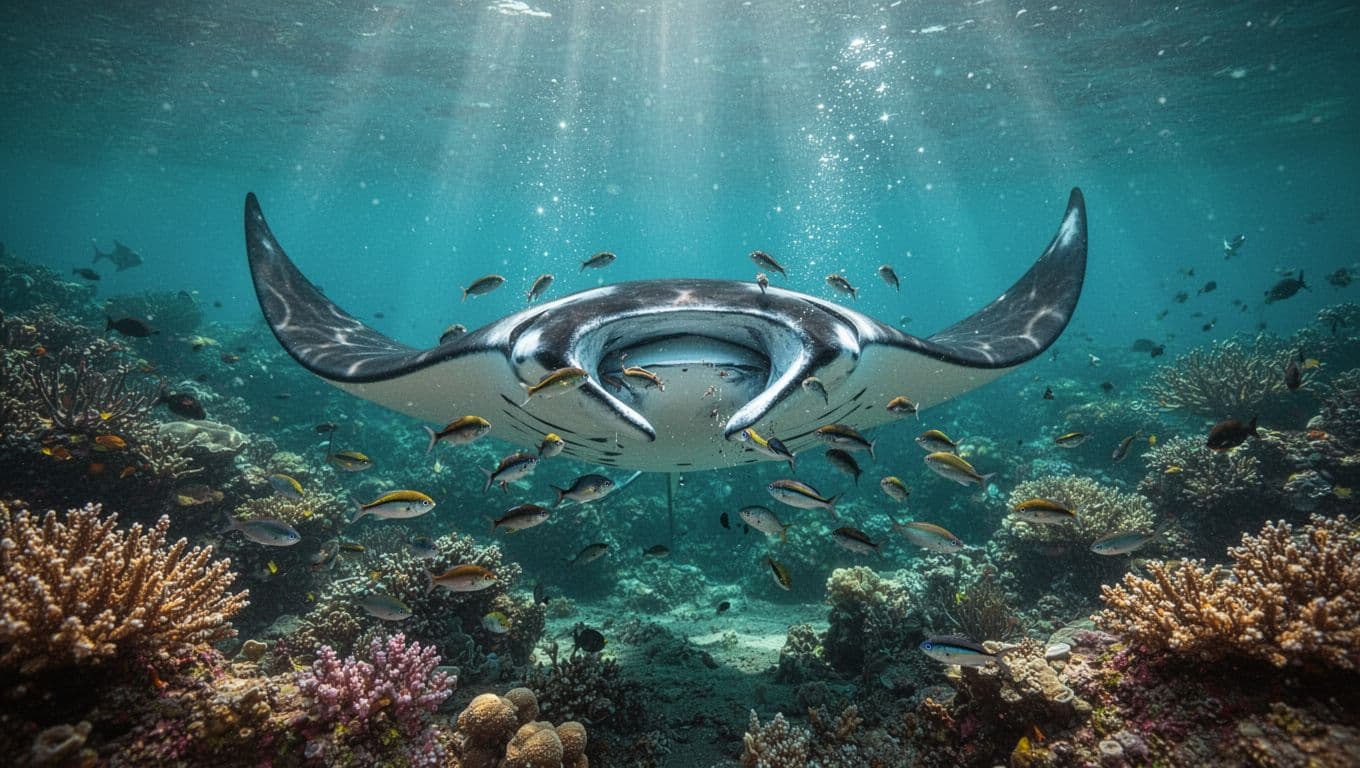
Mantas often approach slowly and reduce their speed as they reach the station. You might see one glide in a loop, hover above the reef, or tilt its body so cleaners can reach its underside. The ray may pause, move away, and return several times during one visit.
Researchers study these locations because cleaning stations can be limited resources. A study of tide-related visits to cleaning stations describes how tides and reef conditions can affect when large marine animals arrive.
How manta rays behave while being cleaned
A manta’s body language changes when it reaches a cleaning station. Instead of traveling steadily through open water, the ray slows down and gives the cleaner fish access to its body. You may notice gentle banking, repeated circles, or a controlled hover above the reef.
The manta might also hold its pectoral fins at different angles. These movements expose sections of its back, belly, and wing edges. A ray can leave after a short visit, then return when another group of cleaner fish becomes available.
Mantas don’t need to remain motionless for the entire process. Cleaning fish can follow a moving ray for short distances, especially when the animal shifts position. Still, the overall pace is slower than normal travel or feeding.
A station visit may look almost choreographed, but the manta isn’t performing for an audience. It is responding to the reef and the fish around it. The cleaner wrasse decide where to work, while the manta adjusts its position to make access easier.
You might see several rays approach the same area. They may take turns, circle nearby, or move through the station without stopping. Scientists still have questions about how mantas choose stations, how long they remember them, and how often individuals return.
Manta rays have strong vision and appear capable of recognizing useful reef locations. Their wide field of view helps them monitor the surrounding water while cleaner fish work. A sudden disturbance, fast-moving swimmer, or boat above the reef can cause the manta to leave.
That response matters when you’re in the water. A manta that circles away may need space, not a closer look. If you remain calm and avoid blocking its path, you give the animal a better chance to continue its natural behavior.
Cleaning stations also differ from feeding areas. A manta may open its mouth while feeding, but cleaning behavior usually involves slower movement and a more deliberate position near the reef. Watching the ray’s pace and location can help you identify what is happening.
Cleaning stations and Kona’s nighttime manta encounters
Kona is famous for nighttime manta snorkeling, but the mantas you see after sunset are generally feeding rather than visiting a cleaning station. Tour operators place lights in the water, which attract plankton. Mantas then glide through the area with their mouths open, filtering plankton from the water.
This feeding behavior can bring mantas close to snorkelers at the surface. You may see a ray roll beneath you, sweep its broad wings through the light, or turn sharply as it follows a concentrated patch of food.
The distinction is important. A nighttime encounter doesn’t usually show you a manta receiving cleaning services from wrasse. Instead, you witness a natural feeding aggregation shaped by plankton, currents, and light.
For a guided experience, Kona Snorkel Trips’ manta ray tour focuses on safe, respectful encounters in the Kona area. The company follows a “Reef to Rays” philosophy, with lifeguard-certified guides, small-group service, quality snorkeling gear, and an emphasis on reef-safe practices.
You can also learn about Manta Ray Night Snorkel, another local resource focused on nighttime manta encounters. Whichever tour you choose, ask whether the experience involves feeding mantas at night or observing reef behavior during daylight.
A nighttime feeding site and a daytime cleaning station offer different experiences:
| Manta behavior | What you may observe | Typical setting |
|---|---|---|
| Cleaning | Slow hovering, looping, and positioning near small cleaner fish | Reef during daylight |
| Feeding | Open-mouth swimming, rolling, and repeated passes through plankton | Open water near lights after sunset |
| Traveling | Steady gliding with fewer pauses | Along the coast or between reef areas |
The takeaway is simple: both behaviors are natural, but they require different expectations. A night snorkel can give you close views of feeding mantas. It doesn’t mean the rays are using the lighted area as a cleaning station.
Why cleaning stations matter to Hawaii’s manta population
Cleaning stations are small places with a large ecological role. They concentrate interactions between species, allowing cleaner fish to find food and visiting animals to receive grooming. When a station is damaged or repeatedly disturbed, both sides of that relationship can suffer.
A manta ray doesn’t depend on one single station for every cleaning visit. However, a familiar site may provide reliable access to cleaner fish. Researchers have described cleaning stations as limited resources, which makes disturbance a serious concern in popular marine areas.
A University of Hawaii study of manta abundance and movement examined how manta rays use space and move through Hawaiian waters. Research like this helps scientists understand which areas deserve careful management.
Healthy reef structure supports the entire cleaning system. Cleaner wrasse need shelter, feeding opportunities, and a stable habitat. Mantas need clear access to the station without excessive boat traffic, divers, or swimmers crowding the reef.
Water quality matters, too. Sediment can cover reef surfaces and reduce visibility. Pollution can affect small reef fish and the organisms they depend on. Damage to coral habitat may remove the exact structures that make a cleaning station useful.
You can protect these places through simple choices. Keep your fins away from coral, don’t stand on the reef, and avoid stirring up sand. Never touch a manta, cleaner fish, coral, or other marine animal.
Hawaii’s manta rays are also valuable to scientific monitoring. Researchers identify individual rays by the unique spot patterns on their bellies. Those records can reveal where a manta travels, how often it returns, and which habitats it uses.
The more you understand about these patterns, the easier it becomes to see why responsible tourism matters. A single close approach may seem harmless, but repeated pressure can change how animals use a site.
What you should do when observing a cleaning station
If you encounter a cleaning station while snorkeling or diving, your best role is a quiet observer. Stay far enough away that the manta can move freely. Follow local guide instructions because the correct distance depends on visibility, current, and the site’s rules.
Keep your body horizontal and maintain neutral buoyancy. Avoid kicking toward the ray or swimming directly over its back. A manta needs a clear route into and out of the station.
Your movements should stay slow and predictable. Sudden turns, diving beneath the manta, or swimming across its path can interrupt a cleaning visit. If the ray changes direction, let it go rather than trying to follow.
Never touch a manta ray. Contact can remove its protective mucus layer, transfer bacteria, or cause stress. The animal may also react abruptly, putting you and other swimmers at risk.
Avoid using flash photography unless a guide or site manager confirms that it is allowed. Bright flashes and repeated camera movements can disturb animals, particularly in shallow, confined areas.
You should also avoid:
- Blocking access between the manta and the reef
- Chasing a ray that leaves the station
- Holding onto coral or rocks for a closer view
- Feeding or baiting marine life
- Dropping equipment onto the reef
- Using fins to stir sand near the station
A guide can help you read manta behavior. If the ray keeps circling away, speeds up, or leaves the area, the group should create more space. Respecting that signal is more important than getting a close photograph.
The same rules apply during nighttime manta snorkeling, even though the animals are feeding rather than cleaning. Stay at the surface, keep your hands to yourself, and allow the manta to control the distance.
Choosing a responsible manta snorkeling tour in Kona
When you search for snorkeling Big Island Hawaii experiences, look beyond the promise of close wildlife views. Ask how the company manages group size, trains guides, handles safety, and protects the reef.
Kona Snorkel Trips offers guided ocean adventures with a small-group atmosphere. The company provides professionally maintained snorkeling equipment and uses lifeguard-certified guides who can explain manta behavior while watching ocean conditions.
For families, that guidance can make the experience easier. Children need clear instructions about staying with the group, keeping their hands to themselves, and remaining comfortable in the water. Couples and solo travelers also benefit from a guide who can identify animal behavior without encouraging a closer approach.
Before booking, confirm several practical details. Check the meeting location, trip length, water entry method, age or swimming requirements, cancellation policy, and what happens if conditions become unsafe. You should also ask whether the tour supplies flotation equipment and whether wetsuits are included.
A responsible operator won’t promise a guaranteed number of mantas. Wildlife remains unpredictable. Good guides can improve your chances while keeping the animals’ welfare ahead of the photograph.
The company also offers Big Island snorkeling tours that include reef-focused experiences beyond the nighttime manta encounter. A daytime reef trip may give you better opportunities to notice small fish, coral formations, and other cleaning relationships.
For a manta-specific booking, you can check availability with Kona Snorkel Trips.
Planning your Big Island manta experience
Your preparation affects how much you enjoy the water. If you want to snorkel Big Island waters, choose a day when you can arrive rested and unhurried. Ocean activities require energy, even when a boat and guide handle the logistics.
Wear swimwear that stays secure, bring a towel and dry clothes, and protect your skin with a rash guard. A rash guard also reduces the amount of sunscreen that reaches the water. Use only products permitted under Hawaii’s sunscreen rules, and follow the operator’s guidance.
Eat a light meal before departure and drink water throughout the day. Avoid alcohol before any ocean activity. If you feel seasick, ask the crew about prevention before leaving the harbor.
You don’t need to be an expert swimmer, but you should answer health and comfort questions honestly. Tell the guide if you feel anxious, tire quickly, or have trouble with deep water. Flotation equipment can help you relax and observe without overexertion.
Nighttime water can feel different from daytime snorkeling. Darkness reduces visual reference points, and the ocean may feel more active around you. Stay close to the group and listen carefully during the safety briefing.
When you research “snorkeling Big Island,” compare the experience rather than chasing the lowest price. A smaller group, attentive guides, and clear safety practices can improve your time in the water without putting pressure on marine life.
You may see manta rays, but you may also notice squid, reef fish, seabirds, and changing plankton conditions. Keep your expectations flexible. The most meaningful encounter is one where the animal remains in control.
The lasting value of a quiet encounter
Manta ray cleaning stations show how much can happen in a small area of reef. A few cleaner fish can turn a coral outcrop into an important stop for a much larger animal.
When you observe one, patience matters more than proximity. Give the manta room, watch its movements, and let the reef remain a place where both animals can return.
Whether you choose a daytime reef trip or a Kona night snorkel, responsible behavior protects the experience for future visitors. The goal is to leave the ocean exactly as you found it, with the manta free to clean, feed, and travel on its own terms.
Conclusion
Manta ray cleaning stations in Hawaii are natural reef sites where cleaner fish remove parasites and loose material from visiting rays. The slow hovering behavior you see there differs from Kona’s nighttime feeding encounters, where lights attract plankton and mantas glide through the water to feed.
When you keep your distance and follow your guide, you help protect these important relationships. The best memory is a manta ray moving naturally through clear Hawaiian water, with no need for you to touch or chase it.