
How to Use Hand Signals on a Captain Cook Snorkel Tour

Kona Snorkel Trips keeps the briefing simple, and Captain Cook Snorkeling Tours gives you another route-focused option for Kealakekua Bay. Once you’re in the water, a few clear hand signals can save you from guesswork, wasted time, and the awkward moment when you need help but can’t call out.
If you snorkel Big Island waters, you already know how fast sound gets lost. Masks muffle voices, waves break up speech, and everyone ends up looking in a different direction for a few seconds at a time. That’s why a Captain Cook snorkel tour works best when you know the signals before your fins hit the water.
The signals you need before you enter the water
Most snorkel guides keep things simple. They rely on a small set of gestures that are easy to see, easy to repeat, and hard to confuse. If you want a visual refresher, the PADI hand signals guide and SCUBAPRO illustrated guide show the standard motions many divers and snorkelers learn first.
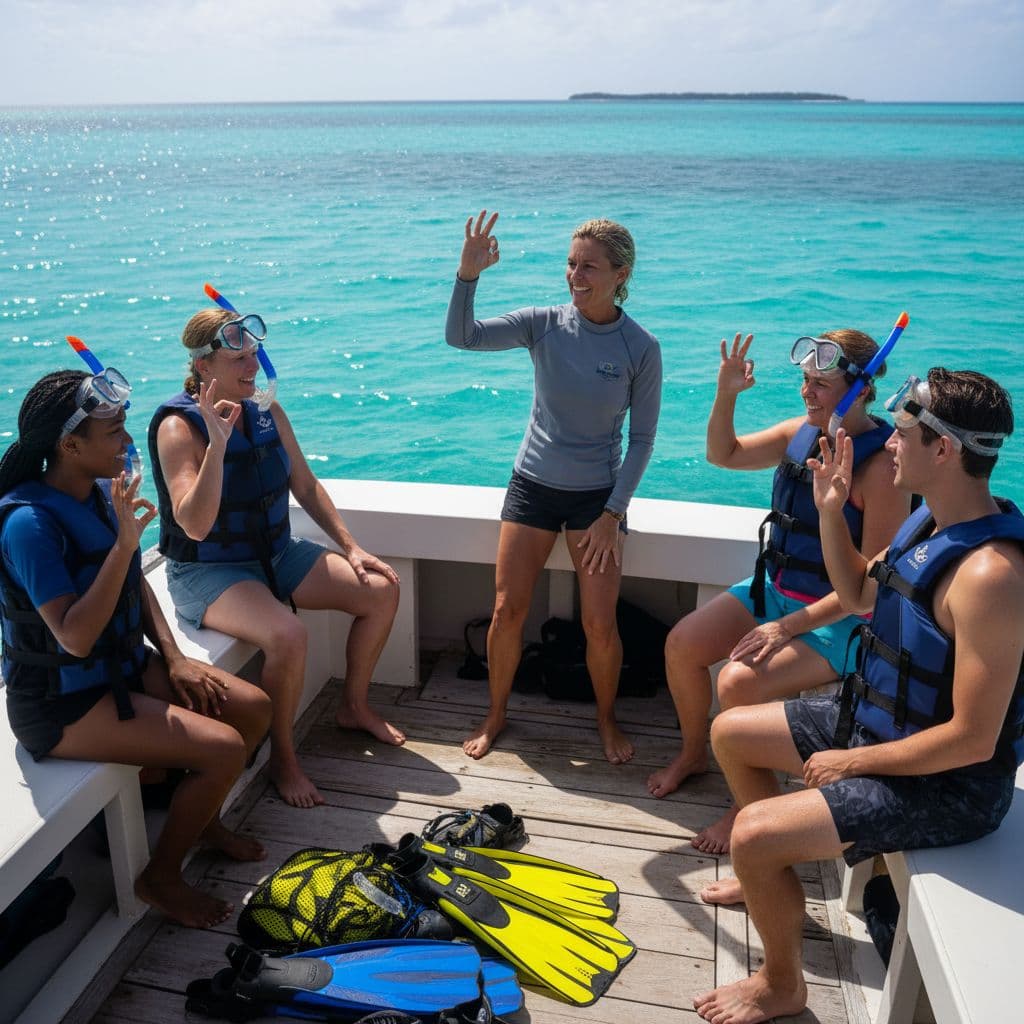
Here’s a quick reference that covers the signals you’re most likely to use on a Captain Cook snorkel tour.
| Signal | What it means | How you use it |
|---|---|---|
| OK | You’re fine, or you’re asking if someone else is fine | Make a circle with your thumb and index finger |
| Not OK | Something is wrong | Wave a flat hand side to side |
| Come here | Move toward me | Curl your fingers toward yourself or tap the water in your direction |
| Look | Pay attention to something nearby | Point, then keep your hand steady |
| Stop | Hold position | Raise a flat palm |
| Up or surface | Head back toward the boat or rise up | Follow the guide’s briefing, since wording can vary |
| Help | You need assistance now | Wave clearly and keep the motion large |
The exact meaning can shift a little from one guide to another, so listen closely at the dock. On snorkeling Big Island Hawaii trips, the guide’s version matters more than any generic chart. A signal only works if everyone agrees on it before the swim starts.
If you think your signal is too big, it probably isn’t. Small motions disappear fast once you’re bobbing in open water.
A good rule is to keep your gestures slow, wide, and clean. Fast flicks of the wrist are easy to miss. A steady hand at shoulder height is much easier to read.
How to read your guide during a Captain Cook snorkel tour
At Kealakekua Bay, your guide will often do more pointing than talking once you’re in the water. That’s normal. You’ll be drifting, floating, and looking down at reef life, so the guide needs a system that cuts through all that motion.
Watch the guide’s face first, then the hands. If the guide looks at you and points toward the reef, turn your body in that direction before you kick. If the guide signals “look,” keep your movements small and follow the line of the hand. The reef is full of distractions, and the signal usually tells you which one matters right now.
On a Captain Cook snorkel tour, the most useful gestures are often the quietest ones. A small point can mean “there’s a turtle ahead.” A raised palm can mean “hold here for a moment.” A repeat of the same motion usually means the guide wants everyone to stay together.
You’ll also want to mirror the guide’s pace. If the signal comes while you’re kicking hard, stop for a second and look up. If you’re half a body length behind the group, shorten your kicks and regroup. The ocean rewards calm movement. It doesn’t reward guessing.
These habits help on any snorkel Big Island trip, but they matter more in a place like Kealakekua Bay. The water can be busy with fish, boats, and changing attention. A clear hand signal keeps your focus where it should be.
Safety signals that keep the trip calm
The most important signal is the one that tells the guide something is off. You do not need to wait until a small problem becomes a big one. If your mask leaks, your snorkel feels wrong, or your breathing gets choppy, signal early.
Use “not OK” for anything that stops you from relaxing. That can mean a flooded mask, a fin strap that slipped, a scratchy throat, or simple nerves. Your guide would much rather see a clear signal than wonder why you drifted away from the group.
The same goes for fatigue. If your arms feel heavy or you start gulping air, raise your hand and show it. You’re not slowing the trip down. You’re keeping it safe. That matters for families, first-time snorkelers, and anyone who booked snorkeling Big Island plans without much open-water experience.
A few safety cues deserve special attention:
- If your mask floods, turn away from the reef and signal right away.
- If your fin feels loose, stop kicking before the strap gets worse.
- If you feel cold, tired, or dizzy, point up and let the guide know.
- If something stings or pinches, show the problem before you try to “push through it.”
The best guides watch body language as much as hands. Still, hand signals remove doubt. They tell the guide exactly what you need, even when the water is moving and your voice doesn’t carry.
What to do when you lose sight of the group
Even on a smooth day, the reef can pull your attention in ten directions at once. A fish flashes by. Someone points to a turtle. A wave shifts your position. Suddenly you’re not where you thought you were.
When that happens, stop kicking for a moment. Take one slow breath, lift your face, and look for the guide or the rest of the group. Do not swim in random directions. That’s how people drift farther away and use up energy they don’t need to spend.
If you can’t see the guide right away, float and scan in a full circle. Then check for the tallest signal in the water, because a guide’s hand is easier to spot than a face. If you still can’t find the group, use a clear “come here” or “help” motion and stay in place.
This is where small gestures beat nervous movement. A calm hand is easier to spot than a flailing one. It also tells the guide that you’re alert and ready to follow directions.
If you snorkel Big Island with a buddy, agree on one simple rule before you enter the water: when one of you stops, both of you stop. That keeps you from splitting up. It also makes the guide’s job easier, which helps the whole group stay organized.
Why guided Big Island tours make communication easier
A good guide makes hand signals feel natural instead of awkward. That starts before you even leave the boat. Kona Snorkel Trips focuses on small groups, clear briefings, and a pace that keeps you from feeling rushed. If you’re comparing snorkeling Big Island Hawaii options, you can check availability when you’re ready to pick a date.
For a dedicated Kealakekua Bay day, the Captain Cook snorkeling tour gives you a direct route into one of the island’s best-known reef areas. If you want a broader look at trip options, guided snorkeling adventures in Kona is a useful place to start. You can also compare Captain Cook Snorkeling Tours if you want a route-focused company for the same bay.
When a crew uses well-paced briefings, you spend less time wondering what to do with your hands. You hear the plan on the boat, you see the motion once, and you repeat it in the water. That simple routine helps families, couples, and solo travelers who want snorkeling Big Island trips to feel easy from the start.
A clear review from other guests can also tell you a lot about the experience.
Once you know the guide will keep the group close and the signals simple, you can relax faster. That means more time watching the reef and less time trying to decode the next move.
A simple practice routine before you board
You don’t need a long lesson to get this right. A few minutes of practice on the boat deck can save you a lot of confusion later. If you’re traveling with kids, this is even more useful, because everyone learns the same signals at the same time.
Start with the basics. Show “OK,” “not OK,” and “look” once each. Then add “come here” and “stop.” If the guide uses a surface or up motion, repeat that too. You’ll remember the gesture faster if you connect it with a real moment, such as heading back to the ladder or pausing to check on your mask.
A short practice run can look like this:
- Watch the guide demonstrate each signal once.
- Copy the motion slowly with one hand.
- Say the meaning out loud so it sticks.
- Repeat the same signal with your buddy.
- Decide how you’ll call for help if you drift apart.
That whole routine takes only a few minutes. Still, it changes the feel of the swim. You stop second-guessing yourself, and the guide doesn’t have to repeat directions later.
It also helps before other Big Island outings. The same habits make it easier to join a reef swim, a shoreline entry, or any snorkeling Big Island day when the water is clear but the group needs to stay coordinated.
Conclusion
Hand signals turn a busy reef into a clear conversation. Once you know the basic motions, you can relax, keep up with your guide, and ask for help before small problems get bigger.
That matters on a Captain Cook snorkel tour, where the bay, the boat, and the reef can all compete for your attention. If you practice the simple signals before you enter the water, you spend less time guessing and more time enjoying the swim.
Whether you snorkel Big Island with family, friends, or on your own, the same rule holds: keep your signals big, calm, and agreed on ahead of time. The water gets a lot easier when everyone speaks the same silent language.