
Kona Snorkeling: The Ultimate 2026 Insider’s Guide
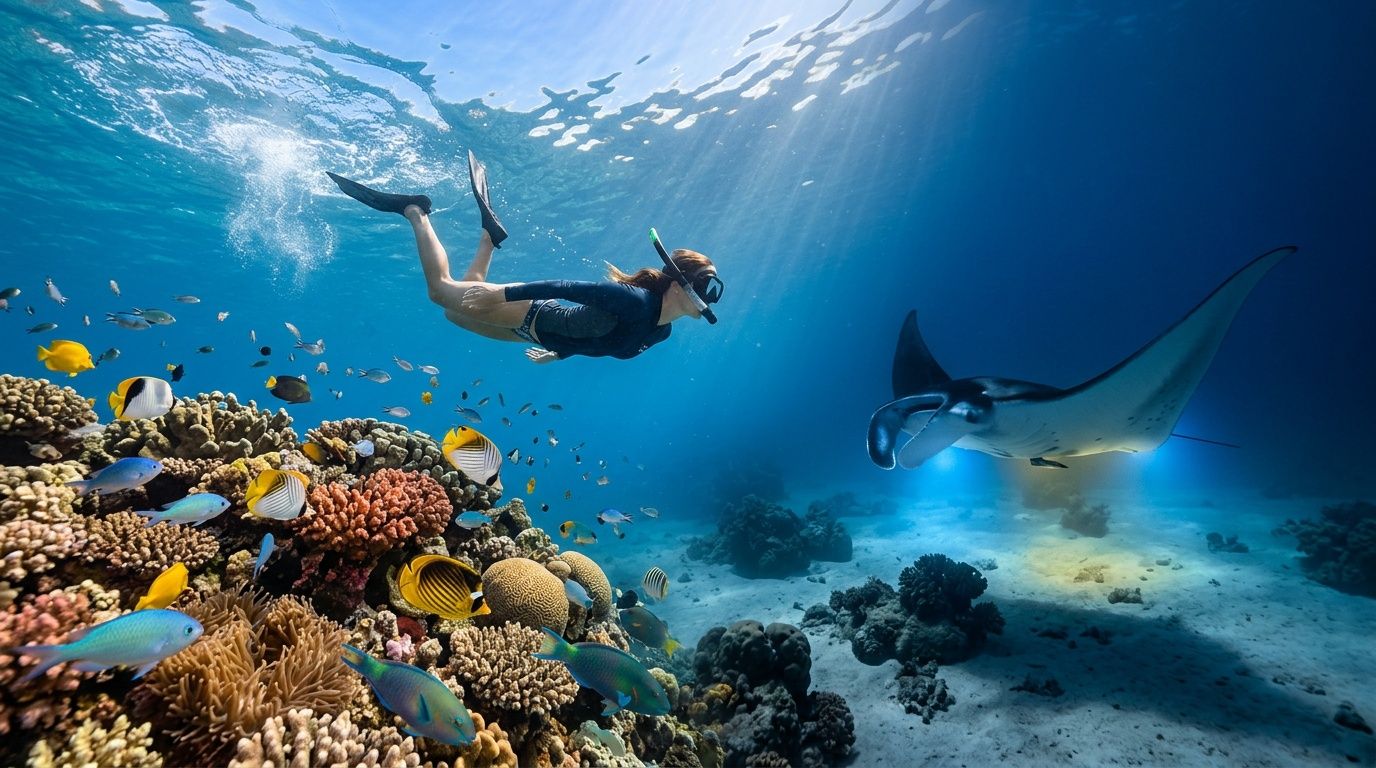
Most Kona visitors start with the same question. Should they rent gear, walk into a beach park, book a boat, or save their one big ocean day for the manta rays?
That’s a fair question because kona snorkeling isn’t one thing. It’s a mix of easy shore entries, protected historic water, night wildlife encounters, and a few spots that look simple on a map but get much better with local guidance. If you plan it well, you don’t just see fish. You get the right conditions, the right entry, and a trip that feels smooth instead of rushed.
Your Kona Snorkeling Adventure Awaits
A lot of travelers arrive in Hawaii thinking they want a classic beach day, then realize what they want is time in the water. Kona tends to do that to people. The coastline looks stark and volcanic from shore, then opens up into clear blue water filled with reef fish, coral, turtles, and on the right night, manta rays gliding through light.

If you're still in trip-planning mode and trying to map out travel days, this guide on how long is the plane ride to Hawaii helps set realistic expectations before you even start choosing tours and snorkel days. That matters more than people think. Long travel days and ocean activities don't always mix well on day one.
Kona gives you two standout experiences that define the coast. In daylight, Kealakekua Bay delivers the kind of reef visibility people remember for years. After dark, the manta ray night snorkel turns the ocean into something almost surreal. Those are the headliners, but they’re not the whole story.
Some visitors want maximum fish life. Others want easy entry and calm water. The best choice depends less on hype and more on your comfort level, schedule, and who’s traveling with you.
The smartest plan is to treat Kona snorkeling as a set of decisions. Why this coast works, which signature experience fits you, where shore snorkeling still shines, and when a guide makes the day easier and safer. That’s where local knowledge pays off.
Why Kona's Underwater World is Unbeatable
Kona earns its reputation because the coastline sets snorkelers up for success before anyone even gets in the water. The key factor is geography. This side of the island sits in a protected lee behind Mauna Loa and Hualālai, which helps keep ocean conditions calmer than many exposed coasts.

Why the water stays so clear
The underwater clarity isn’t luck. According to this explanation of Kona’s visibility and geology, Kona’s exceptional underwater visibility often exceeds 100 feet because the coast is formed from young, porous lava rock that is naturally low in sand and sediment content, and the calm seas prevent particles from being kicked up into the water column.
That combination matters in practical terms. Less suspended sediment means you can see reef structure, fish movement, and changes in depth more easily. For beginners, that often feels calmer. For experienced snorkelers, it means longer, more satisfying drifts over coral and lava formations.
What that means once you're in the water
On many coastlines, a pretty beach doesn’t guarantee good snorkeling. Wind chop, surge, and stirred-up sand can flatten the experience fast. Kona is different. The volcanic shoreline and calmer conditions create water that often stays readable and inviting.
Here’s what usually works well in Kona conditions:
- Morning sessions: Early water often gives you the smoothest surface and easiest visibility.
- Boat access for prime reefs: Some of the most memorable snorkel zones are much easier to enjoy when you skip difficult shoreline entries.
- Mixed-skill groups: Clearer water helps nervous snorkelers orient themselves faster.
Practical rule: If your group includes first-timers, don’t judge a snorkel site by how easy it looks from the parking lot. Judge it by entry conditions, current, and visibility.
Why visitors keep choosing this coast
Kona also benefits from consistency. The water is warm, the reef life is active, and the coast supports everything from shallow family outings to advanced wildlife encounters. That range is hard to beat.
Good snorkeling destinations usually have one standout trait. Kona stacks several together. Clear water, protected conditions, strong reef access, and signature marine experiences all sit on the same stretch of coast. That’s why visitors who came for one snorkel day often end up booking another.
The Two Signature Kona Snorkeling Experiences

A lot of Kona trips come down to one choice. Do you want your headline snorkel day to be a nighttime wildlife encounter, or a bright-water reef session in the island’s most famous bay?
Both deserve the hype. They deliver very different kinds of memories, and the right pick depends less on your fitness than on how you want to experience the ocean.
Manta ray night snorkel
The manta night snorkel is Kona’s signature wildlife trip. You ride out after sunset, hold position at the surface, and watch mantas sweep through the light as they feed on plankton. It is quiet, strange, and unforgettable in the best way.
According to this overview of manta ray snorkeling in Kona, Kona’s manta ray night snorkel tours have sighting success rates of 80 to 90 percent and attract approximately 80,000 participants yearly. That consistency is why so many visitors build an evening around it.
It helps to know what kind of snorkel this is. You are usually not roaming a reef and exploring on your own. You are staying with the light board, floating calmly, and letting the animals come to the show. Guests who expect an active swim sometimes need a minute to adjust. Guests who enjoy wildlife viewing usually love it.
A few practical trade-offs matter:
- Best fit: Wildlife lovers, couples, families with older kids, and first-timers who are comfortable in open water after dark
- Harder fit: Guests who get cold easily, dislike darkness, or feel uneasy floating in deeper water
- What improves the trip: Eat light beforehand, use the wetsuit or thermal top provided, and listen closely during the briefing so you know how to hold the board and keep your fins clear
If this is the experience you want, the Manta Ray Night Snorkel tour follows the standard format most visitors are looking for. If you're comparing operators, Manta Ray Night Snorkel Hawaii is another solid option to review when choosing a manta ray night snorkel tour.
Captain Cook and Kealakekua Bay
Captain Cook snorkeling gives you the daytime version of what makes Kona special. Clear water, healthy reef, dramatic shoreline, and a setting that carries real historical weight. For many visitors, this is the most complete daytime snorkel on the coast.
Kealakekua Bay stands out because the whole outing tends to feel easy once you are in the right hands. The water is often calmer than more exposed spots, fish life is usually excellent, and the reef starts paying off fast. New snorkelers like that they can see plenty without making a long swim. Experienced snorkelers like that the bay still holds their attention.
The main logistical decision is how you access it. Shore access can work for strong, prepared visitors, but it asks more of you before the fun starts. Parking, the hike, gear management, and the climb back out can turn a great site into a tiring day. Boat access removes most of that friction and usually gives groups a better start, especially if anyone is new, older, or traveling with kids.
For extra planning context before you choose your day, this guide to Kealakekua Bay snorkeling lays out what to expect.
| Experience factor | Manta ray night snorkel | Captain Cook snorkel |
|---|---|---|
| Main draw | Close wildlife viewing after dark | Reef, fish life, coastline, and history |
| Activity level | Mostly floating and observing | More active swimming and exploring |
| Ideal timing | Evening | Morning to midday |
| Best for | Guests chasing one unusual marine encounter | Guests wanting a classic Kona reef day |
The short version is simple. Choose the manta tour for a rare animal encounter you cannot replicate in daylight. Choose Captain Cook when you want the broadest, most satisfying daytime snorkel experience on the Kona Coast.
If you can fit both into one trip, do it. They complement each other extremely well because they show two completely different sides of Kona snorkeling.
Exploring More Top-Rated Kona Snorkel Spots
A lot of Kona visitors do best when they mix one headline snorkel day with one or two easier, lower-commitment sessions. That is where the shore spots earn their place. They let you get in the water without building the whole day around a tour, but each one asks for a different level of comfort with entry, crowds, and changing conditions.
Two Step at Honaunau Bay
Two Step is one of the most reliable shore entries on this side of the island, but it still rewards good judgment. The lava ledges are manageable for steady-footed adults who can carry their gear without rushing. Get there early, watch the water for a few minutes before entering, and make sure everyone in your group has a clear plan for getting in and out.
I like Two Step for guests who already know they enjoy snorkeling and want fish life right away. I am more cautious about sending nervous first-timers there on a busy morning, because even a decent entry can feel stressful when people are waiting behind you and surge starts pushing at your legs.
Kahaluʻu Beach Park
Kahaluʻu fills a different role. It is a practical starter spot for families, short sessions, and anyone who wants shallow water close to shore.
The trade-off is obvious once you arrive. Easy access brings lessons, rentals, families, and a lot of fins in a relatively small area. On the right day, that convenience is exactly what makes it useful. On the wrong day, especially if you want quiet water and room to explore, it can feel crowded fast.
For many visitors, Kahaluʻu works best as a confidence-building first stop rather than the snorkel day they talk about all week.
Pawai Bay and other boat-access reefs
Some of Kona’s nicest reef time happens at sites that do not make sense as shore entries. Pawai Bay is a good example. Reaching reefs by boat usually means less hassle with lava rock, less energy spent on entry and exit, and more time looking at fish instead of managing footing.
That matters more than people expect. A guest who arrives fresh, warm, and relaxed almost always enjoys the water more than a guest who has already dealt with parking, hauling gear, and a tricky shoreline. If your group includes older travelers, kids, or anyone unsure in the ocean, boat access is often the smarter call.
Why Kealakekua still stands apart
Kealakekua Bay still sets the standard for many visitors because the full experience feels bigger than a single reef stop. The water is often clearer, the marine life is more abundant, and the protected setting gives the whole snorkel a calmer, more immersive feel than many easy shore options.
That does not make shore spots a mistake. It just means they serve different purposes. Two Step can be excellent for an independent morning. Kahaluʻu can help a family get comfortable. Kealakekua is usually the day people remember as the centerpiece of the trip.
If you want more options to compare before you choose, this guide to the best Big Island snorkeling spots for turtles and reef fish is a useful companion.
How to pick among them
Use the spot that matches your group, not the one with the loudest reputation.
- Choose Two Step if your group is comfortable with lava entry, can stay calm around uneven footing, and wants a respected self-guided shore snorkel.
- Choose Kahaluʻu if you want easy access, a shorter outing, or a low-pressure place to test gear and comfort.
- Choose a boat-access reef if convenience, energy conservation, and a relaxed start matter more than doing it all on your own.
- Choose Kealakekua Bay if you want the most memorable daytime snorkel of the trip and are willing to plan around it.
Where you stay can shape this decision too, especially if you are balancing drive time, kids, and early departures. If you are still finding top sand and sea resorts, it helps to factor in whether you want quick access to shore snorkeling, harbor departures, or both.
Planning Your Perfect Kona Snorkel Itinerary
The biggest planning mistake I see is stacking too much ocean time too close together without thinking about energy, motion, or recovery. Kona snorkeling is better when the trip has rhythm. One signature day, one easier day, and room for weather or rest usually beats trying to cram every highlight into back-to-back outings.

A strong three-day approach
If you’ve got a short Kona stay, this sequence works well:
Day one, easy shore snorkel
Start with a lighter session at a simple beach park or a calm shore spot. Let everyone test mask fit, breathing comfort, and sun tolerance.Day two, Captain Cook
Make your main daytime reef day the centerpiece. People are settled in, less travel-tired, and ready to enjoy a longer water session.Day three, manta ray night snorkel
By this point, most guests are more comfortable in the ocean, which helps on a night tour.
A better family rhythm
Families usually do best when the itinerary stays flexible. Kids and new snorkelers have great days when the adults don’t force them into marathon water sessions.
A practical family pattern looks like this:
- Keep one non-ocean morning open: That gives everyone recovery time.
- Use one guided boat day as the anchor: It simplifies gear, access, and safety.
- Add one short shore snorkel: Treat it as bonus time, not a must-do mission.
If you're still deciding where to stay so those early departures feel easy, this roundup on finding top sand and sea resorts can help narrow down lodging that supports a water-focused trip.
Timing and booking
Morning often gives the cleanest conditions for reef snorkeling. Night tours require a different kind of readiness. Eat lightly, bring a dry layer, and avoid showing up sunburned and exhausted after a packed day.
When you know Captain Cook is a priority, it helps to lock that in early.
A few planning habits save trouble:
- Book signature tours first: Captain Cook and manta experiences are the least replaceable.
- Leave one swap day: Weather and tired kids can reshape even the best itinerary.
- Don’t overload arrival day: Ocean confidence improves when people aren’t travel-drained.
Safety First Tips for Every Snorkeler
Good snorkeling starts before you touch the water. Most problems come from rushed gear fitting, overconfidence, poor entries, or people staying out too long after they stop feeling comfortable. Kona can be calm, but calm water doesn’t remove risk.
Gear and fit matter more than people think
A leaking mask can ruin an otherwise easy session. Fit the mask to your face before you commit to a long outing. Test the snorkel, clear it in shallow water, and make sure fins aren’t so loose that you waste energy keeping them on.
For beginners, buoyancy support often changes the whole day. Some people only relax once they know they can float comfortably without effort.
- Mask seal: If it pinches or leaks right away, swap it.
- Fins: Snug is good. Pain isn’t.
- Float support: Use it early if anyone is anxious, not after they’re already struggling.
- Exposure gear: Night tours and windy boat rides can feel cool after the swim.
Children and non-swimmers need a different plan
Families often assume shore entry is automatically safer because it feels familiar. That isn’t always true. According to this family-focused Kona snorkeling guide, expert-led small-group tours to pristine areas like Kealakekua Bay can offer a safer, more controlled environment for children and beginners, especially considering deeper waters of 10 to 100 feet, compared with self-guided trips in crowded or degraded areas.
That matches what works in practice. Kids do better when one adult isn’t trying to manage navigation, gear, reef etiquette, and reassurance all at once.
If someone in your group says they’re “not really a swimmer,” believe them early and plan for support early.
If that’s your situation, this article on whether snorkeling is safe for non-swimmers is worth reading before you choose a tour or shore entry.
On-the-water habits that prevent bad days
Use a simple rule set and stick to it:
- Stay with a buddy: Don’t spread the group too far apart.
- Enter slowly: Most slips happen at the shoreline, not in deep water.
- Turn back early: If someone gets tired, cold, or uneasy, head in.
- Watch the ocean, not just the fish: Surge, current, and surface chop matter.
The best snorkelers aren’t the boldest ones. They’re the ones who make small decisions early.
Choosing Your Guide and Snorkeling Sustainably
DIY snorkeling has its place. If you know the coastline, can read conditions, and have a group that’s confident in the water, shore days can be excellent. But many visitors get more value from a professional guide because the hard part of Kona snorkeling usually isn’t the swimming. It’s choosing the right site, the right timing, and the right setup for the group you have.

What a good guide changes
A capable guide helps in practical ways. They simplify entry, keep the group together, adjust to conditions, and spot the difference between a guest who’s having fun and one who’s getting overwhelmed.
There’s also a conservation benefit to guided access in protected areas. According to this explanation of Kona’s Marine Life Conservation District benefits, operating within an MLCD gives tour operators a predictable, high-quality snorkeling environment, and 88% of Big Island ocean-focused visitors choose the Kona coast. Protection supports the experience, but it also raises the bar for visitor behavior.
How to choose responsibly
When comparing operators, I’d focus on a few things first:
- Guide training: Ask who’s in the water with guests and what safety role they serve.
- Group size: Smaller groups are easier to supervise and usually more enjoyable.
- Reef conduct: Good operators teach people how not to damage coral.
- Trip fit: Match the outing to your least experienced traveler, not your most adventurous one.
One option travelers often consider is Kona Snorkel Trips, which offers small-group snorkel tours with lifeguard-certified guides, including Captain Cook and manta ray outings.
For reef etiquette before you go, this guide to reef-safe sunscreen tips for snorkeling Big Island Hawaii is a practical read.
Leave the reef exactly as you found it. Better yet, leave it with one less person standing on coral.
Booking Your Tour and Frequently Asked Questions
Booking gets easier once you decide whether you want a daytime reef focus, a night wildlife focus, or both. The rest comes down to comfort level, schedule, and how much support your group needs.
Kona snorkeling tour options at a glance
| Feature | Manta Ray Night Snorkel | Captain Cook Snorkel |
|---|---|---|
| Best for | Guests who want a signature wildlife encounter | Guests who want a classic reef snorkel day |
| Time of day | Evening | Daytime |
| Water experience | Floating and observing from the surface | Active reef exploration |
| Good fit for beginners | Yes, if comfortable in open water at night | Yes, especially with guided boat access |
| What to prioritize | Warm layer and comfort in darkness | Sun protection and morning energy |
Common questions before booking
What should I bring on the boat?
Bring a towel, sun protection, water, and a dry change layer if the trip runs later or includes a ride back in the wind. If you wear prescription eyewear, ask ahead about mask options.
What if I’m not a strong swimmer?
Tell the operator before the trip, not at check-in. That gives the crew time to suggest the right outing, flotation support, and expectations.
Is snorkeling good year-round in Kona?
Kona is one of the more consistently favorable coasts in Hawaii for snorkeling, but ocean conditions still change. Morning plans usually give you the best shot at calm water.
How far ahead should I book?
For signature trips, earlier is better, especially if your travel dates are fixed. This guide on how far in advance to book a Kona manta ray night snorkel can help you time it.
Private charters can make sense for families or mixed-ability groups because they slow the day down and make the pace more personal. Gift cards are also a smart option if you're planning ahead for a honeymoon, family trip, or milestone gift and want the recipient to choose the exact date later.
If you’re ready to turn the planning into a real ocean day, Kona Snorkel Trips offers guided options for the manta ray night snorkel and Captain Cook snorkeling, with small-group formats that work well for many visitors exploring Kona’s water for the first time.