
Kona Snorkel Tours: Your Big Island Adventure
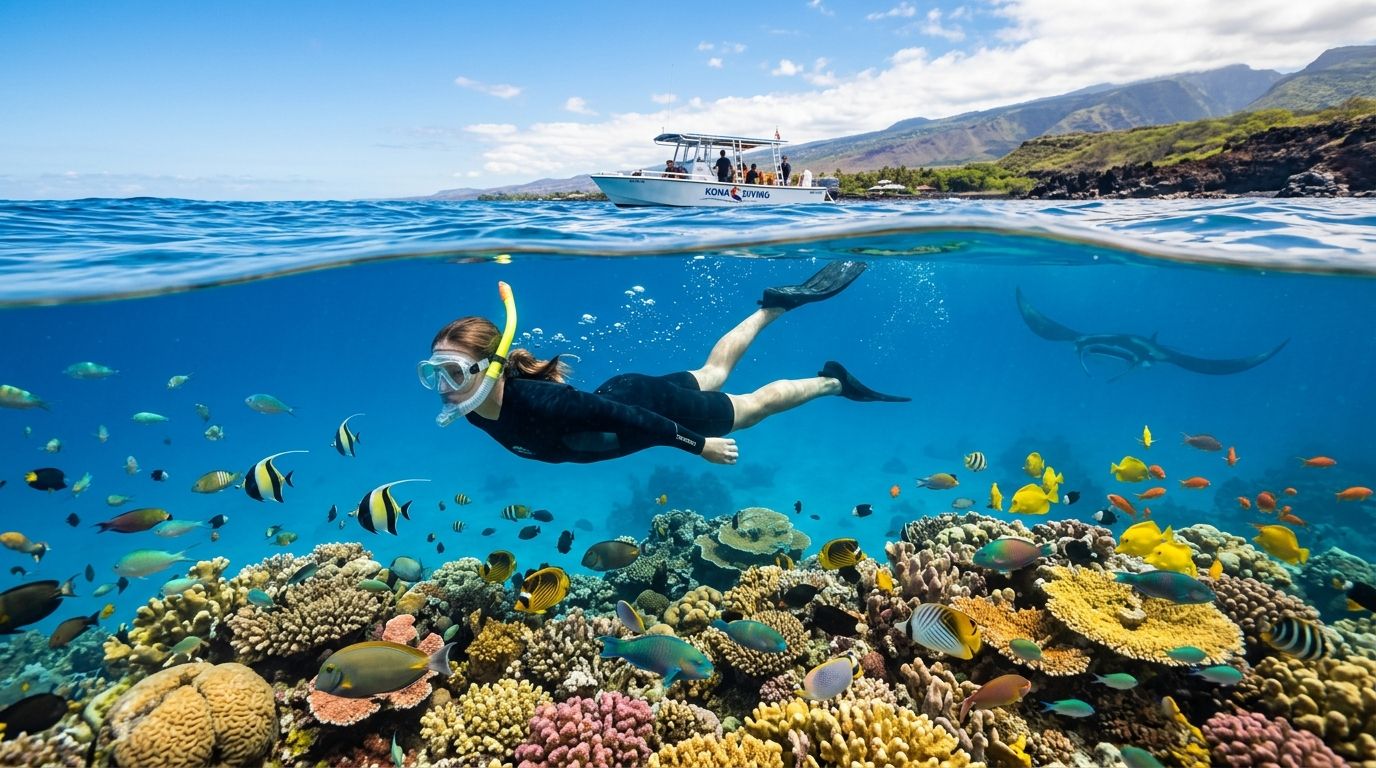
You land in Kona, feel the warm air hit your face, and start thinking about one thing: getting in the water. That instinct is right. Along this coast, the ocean is the main event.
The challenge isn't whether to snorkel. It's choosing the right experience for your group. Families usually want calm water and easy logistics. Thrill-seekers often want the manta rays. Nervous first-timers usually need a tour that feels structured, patient, and safe from the first briefing onward.
Kona rewards good decisions. Pick the right tour style, the right operator, and the right expectations, and your day can go from “I hope this works” to “I can't believe we just saw that.”
Welcome to the Underwater World of Kona
You don't have to spend long in Kona to notice how much life revolves around the water. Boats leave early. Masks hang from rental cars. Everyone seems to be comparing fish sightings over coffee.

That popularity isn't random. The Big Island saw 1.73 million visitors in 2024, with 1.52 million of them concentrating in Kona, where 88% of ocean tourists target underwater activities. Water visibility often exceeds 100 feet, and waves stay under 1 meter for 85% of the year, according to this Kona snorkeling overview.
Those conditions matter more than most first-time visitors realize. Clear water helps beginners stay relaxed because they can see their surroundings. Calm surface conditions make entries, exits, and surface floating much easier.
Why first-timers usually love Kona
Kona is one of those rare places where excitement and reassurance can exist at the same time. You can see reef fish, turtles, and dramatic lava coastline without dealing with the rougher conditions that make some tropical snorkel spots feel intimidating.
If you're the type who likes to understand the ocean before jumping in, it's also smart to review a practical guide to dangerous fish and sea creatures. Not because Kona snorkeling is about danger, but because informed guests make calmer decisions in the water.
Good snorkeling starts before you leave the harbor. The guests who have the best time are usually the ones who know what kind of trip they want and what kind of support they need.
For a broader look at local entry points, conditions, and trip styles, this guide to snorkeling near Kona Hawaii is useful background before you book.
The Two Signature Kona Snorkel Experiences
Most visitors end up choosing between two classic kona snorkel tours. One happens under the sun in a historic bay. The other happens after dark with manta rays gliding through light.
They are both memorable. They are not interchangeable.
What feels different about each one
The Manta Ray Night Snorkel is about one focused wildlife encounter. You hold onto a light board, float at the surface, and watch the action below. It feels dramatic, unusual, and a little surreal.
The Captain Cook Day Snorkel is broader. You get reef scenery, fish life, clear daylight, and the sense of spending time inside a marine sanctuary rather than waiting for one signature moment.
| Feature | Manta Ray Night Snorkel | Captain Cook Day Snorkel |
|---|---|---|
| Best for | Wildlife lovers, adventurous travelers, confident but nervous first-timers who want structure | Families, reef lovers, first-time snorkelers, history-minded visitors |
| Time of day | After sunset | Daytime |
| Main focus | Manta ray feeding activity under lights | Coral reef, tropical fish, scenic bay, historic coastline |
| Snorkeling style | Mostly stationary at the surface holding a float board | Traditional swim-and-explore snorkeling |
| Comfort factor | Easier than many people expect if you're comfortable floating | Usually the easier choice for people who prefer daylight |
| Group fit | Great for couples, adventurous adults, older kids depending on operator rules | Great for mixed-age groups and families |
A quick decision framework
If your group includes a nervous adult, a first-time snorkeler, or younger kids, the daytime reef trip is usually the easier entry point.
Choose the manta tour if your group says things like:
- We want the most unique experience: Nothing else in Kona feels quite like floating at night while mantas feed below you.
- We don't need to swim around a lot: This trip rewards people who are comfortable staying in one place and observing.
- We want a bucket-list wildlife encounter: The whole outing centers on that one moment.
Choose Captain Cook if your group says:
- We want classic Hawaii snorkeling: Clear water, fish everywhere, and a bay that feels welcoming.
- We like daylight and visibility: Seeing the reef in full sun helps many beginners relax faster.
- We have mixed comfort levels: Daytime trips tend to suit a wider range of personalities.
If you can only do one tour, pick the one that matches your least confident traveler. That choice usually leads to the happiest boat ride home.
Deep Dive The Manta Ray Night Snorkel
This is the trip people talk about over dinner for the rest of their vacation. It sounds intense on paper. In practice, it's often more controlled than guests expect.

The basic setup is simple. After sunset, the boat heads to a known manta viewing area. Guides place a floating light board in the water. The lights attract plankton, and the plankton attracts manta rays. Guests hold onto the board and watch the rays pass below.
Why it works for nervous first-timers
A common question is whether non-swimmers or anxious guests can do this. Operators note that it's often easier than daytime snorkeling for confident non-swimmers because guests use flotation gear and hold onto light boards. The key is telling your guide about any anxiety before you get in, as noted in this guide on Kona snorkel tours.
That point is worth slowing down for. The people who struggle most on manta trips usually aren't weak swimmers. They're guests who stay quiet about being scared, then tense up once they're in the water.
What to expect step by step
Boat briefing first
The crew explains entry, exit, hand placement on the board, and what not to do around mantas. Listen carefully. Night snorkeling gets easier when you know the sequence.Gear up with flotation
Wetsuits and flotation support matter. They help you conserve energy and stay warm enough to focus on the experience.Hold the board, don't chase
This isn't a swim-around snorkel. You're not hunting for wildlife. You're staying stable while the wildlife comes to the lights.Keep your body calm
Slow breathing changes everything. Fast breathing fogs judgment and makes the night feel darker than it is.
Practical rule: If you're nervous, keep your eyes on the board and your breathing for the first minute. Once your body settles, the ocean feels much more manageable.
For guests who want more context on site conditions and what the experience feels like underwater, this article on the manta ray night dive Kona Hawaii helps set expectations.
What works and what doesn't
What works:
- Telling the crew your comfort level early
- Using the provided flotation as intended
- Treating it as a floating wildlife encounter, not a swimming challenge
What doesn't:
- Pretending you're comfortable when you're not
- Expecting a bright, pool-like environment
- Booking it for someone who already dislikes dark water
If you're looking at tour options, the manta ray snorkel tour is one way to book this experience. Another solid option when comparing providers is Manta Ray Night Snorkel Hawaii.
Certified divers who want the underwater version can also look at the manta ray diving tour from Kona Honu Divers, which the brief identifies as the top rated and most reviewed diving company in both Hawaii and the Pacific Ocean.
Exploring History and Reefs at Kealakekua Bay
Some trips impress you with spectacle. Kealakekua Bay wins people over with clarity, color, and ease.

As the boat approaches the bay, the shoreline changes character. Lava cliffs rise above the water, the monument comes into view, and the ocean often takes on that glassy look snorkelers hope for. It feels protected because it is protected.
Kealakekua Bay was designated a National Historical Park in 1992 and welcomes about 190,000 visitors yearly. Snorkelers can spot up to 50 different fish species in a single outing thanks to the bay's clear water and healthy reef, according to this overview of Kealakekua Bay snorkeling conditions.
Why families often choose this trip first
The big advantage here is familiarity. You're snorkeling in daylight. You can look up and orient yourself easily. You can swim a little, float a little, and build confidence as you go.
For many families, that's the right first move. Kids who aren't sure about snorkeling yet usually respond better to fish-filled reef in the sun than to a night entry.
What makes the bay special
This isn't just a scenic stop. The combination of history and reef structure gives the trip more depth than a standard boat snorkel.
A few things stand out:
- Protected water: The bay often feels calmer than more exposed areas.
- Dense reef life: Fish sightings tend to come quickly, which helps beginners stay engaged.
- Strong sense of place: The monument and cliffs make the setting memorable even before you get in.
The Captain Cook trip is rarely about one dramatic animal encounter. It's about spending quality time in a bay where almost every direction gives you something to look at.
If you're comparing operators for this route, Captain Cook Snorkeling Tours is an option to consider for a dedicated Captain Cook snorkel tour.
Choosing Your Ideal Kona Snorkel Tour Operator
The boat matters. The crew matters more.
A lot of people shop by departure time or price first. That's understandable, but it misses the part that shapes your day most: how the operator runs the trip once you're on board and in the water.
What to look for first
Start with the factors that affect comfort and safety directly:
- Group size: Small groups usually mean more room, more direct help, and less waiting around.
- Guide credentials: Lifeguard-certified guides add real value, especially with beginners and kids.
- Wildlife practices: Good operators set clear boundaries around turtles, dolphins, and mantas.
- Briefing quality: A strong safety talk lowers anxiety and prevents half the common mistakes guests make.
What the reviews tell you
One factual marker stands out. Kona Snorkel Trips is described as Hawaii's highest-rated and most-reviewed snorkel operator, with the Manta Ray Night Snorkel averaging 4.9/5 stars across over 1,890 reviews, alongside a 95% customer satisfaction rate associated with high-quality small-group tours of 6 to 12 people, according to these Kona snorkel tour reviews.
That doesn't mean every traveler should pick the same company. It does mean reviews can reveal patterns that brochures won't. Look for repeated mentions of calm crew communication, organized gear setup, patient in-water support, and clear marine-life etiquette.
Matching the operator to your group
Not every good operator is right for every guest. That's the trade-off.
Large boats can work well for travelers who want more deck space and a busier social atmosphere. Smaller tours usually work better for these groups:
- Nervous first-timers: They benefit from easier communication with crew.
- Families with kids: Parents usually want direct help fast, not after a long wait.
- Wildlife-focused travelers: Smaller in-water groups often feel less chaotic.
If you're still narrowing options, this guide on how to choose the right Kona manta ray snorkel tour gives a practical filter for comparing operators without guessing.
Practical Guide for Your Snorkel Adventure
The easiest way to improve a snorkel day is to handle the basics before the boat leaves. Most bad experiences come from preventable things: wrong sun protection, poor hydration, bringing too much, or showing up without a clear sense of what the trip requires.

Kona's calm water comes from a geological wind shadow created by the island's volcanoes, which helps produce visibility that often exceeds 100 feet. Protecting that environment means using reef-safe, mineral-based sunscreen because chemical sunscreen can contribute to coral bleaching, as explained in this guide to Kona Hawaii snorkel conditions.
What to bring
Keep it simple:
- Swimwear you can move in: Avoid anything you'll fuss with once wet.
- A towel and dry clothes: Especially helpful after boat rides in the breeze.
- A reusable water bottle: Hydration matters more than people think in the Hawaii sun.
- Mineral sunscreen: Apply it before boarding when possible.
- A hat and sunglasses: The ride out can be bright even on mild days.
What not to bring
Guests often overpack. You usually don't need much beyond the basics.
Leave behind:
- Jewelry you care about
- Large bags full of “just in case” items
- Non-reef-safe sunscreen
- Valuables you won't actively use
Bring less than you think. A clean deck setup and easy gear handling make the whole day smoother.
One prep step that gets overlooked
If you're coordinating flights, lodging, and tours at once, outside help can save mental bandwidth. Some travelers prefer using a service for stress-free vacation planning so their snorkel day fits cleanly into the rest of the trip instead of becoming a scramble.
For reef protection specifics, this article on reef-safe sunscreen tips for snorkeling Big Island Hawaii is worth reading before you pack.
Frequently Asked Questions for Kona Snorkelers
A few questions come up on almost every booking day, especially from people deciding between a daytime reef trip and a night manta tour.
Do I need to be a strong swimmer
Not always. Comfort in the water matters more than speed or endurance. Daytime tours are often the easier fit if you want room to practice, while manta trips can work well for guests who are comfortable floating and following instructions closely.
What if I'm nervous about night snorkeling
That's common, and it's not a red flag by itself. The better question is whether you're nervous but coachable, or whether dark open water isn't for you. If the idea feels exciting and unsettling at the same time, the manta trip may still be a good fit. If it feels wrong in your gut, start with Captain Cook.
Can kids do these tours
That depends on the operator and the specific trip. Daytime reef outings usually work for a wider range of ages. Night manta tours can have more restrictive participation rules. Ask directly before booking and describe your child's actual comfort in the water, not just their age.
Are eco-rules changing
Yes, and travelers should pay attention. Recent guidance shows a growing need for more eco-stewardship information as stricter rules are implemented in Kealakekua Bay's Marine Life Conservation District and visitors become more aware of coral bleaching and over-tourism, according to this report on recent Kona snorkeling tour trends.
Should I choose the cheapest tour
Usually not. Cheap can be fine, but cheap plus crowded plus rushed often isn't the memory people came to Hawaii for. For most visitors, the better filter is fit. Choose the tour that matches your group's comfort level, not the one with the lowest advertised number.
If you're ready to book with a crew that focuses on small-group ocean adventures, Kona Snorkel Trips offers options for both manta ray night snorkeling and daytime reef tours around Kona.