
Kona Manta Ray Parking: Where to Leave Your Car
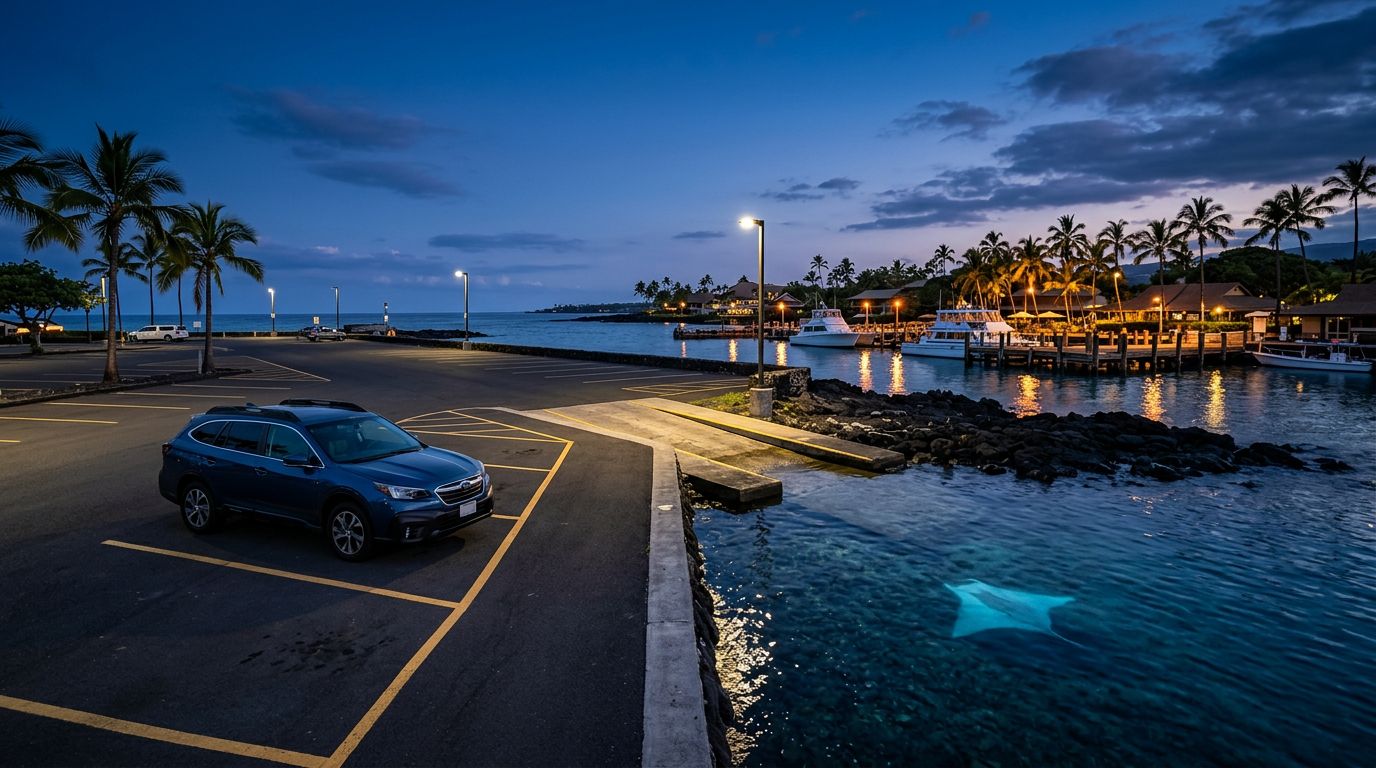
The right Kona manta ray parking spot can save you a rushed walk, a missed check-in, or a stressful search in the dark. Most night snorkel departures use Keauhou Bay, Honokohau Small Boat Harbor, or a meeting point near Kailua-Kona town.
Your operator’s confirmation always takes priority because the boat, check-in location, and parking instructions can vary. Once you know your departure harbor, arriving 30 to 45 minutes early gives you time to park, gather your gear, and reach the dock without hurrying.
Key Takeaways
- Keauhou Bay usually has free parking near the boat ramp, beach park, and along Kaleiopapa Street.
- Honokohau tours commonly use the north-side harbor lot near the pavilion and public restrooms.
- Town departures may use a municipal lot or paid hotel parking near Ali’i Drive.
- Never block a boat ramp, trailer area, driveway, or access lane.
- Read your tour confirmation before leaving your hotel, then allow extra time for evening traffic.
Where Kona Manta Ray Parking Is Usually Located
Kona manta ray parking falls into three main areas: Keauhou Bay, Honokohau Harbor, and Kailua-Kona town. These locations are several miles apart, so entering the wrong harbor into your map can create a serious timing problem.
Keauhou Bay is south of central Kailua-Kona. Many operators use the bay, the pier, or the nearby boat ramp. Honokohau Small Boat Harbor is north of town, close to Kealakehe Parkway. Other tours meet near Ali’i Drive and arrange check-in around hotels, retail centers, or municipal parking.
Before you start driving, look at the exact address in your confirmation. Match the street name, harbor name, and check-in time. A broad search for “Kona manta ray snorkel” may show several launch sites, but it won’t tell you which one your boat uses.
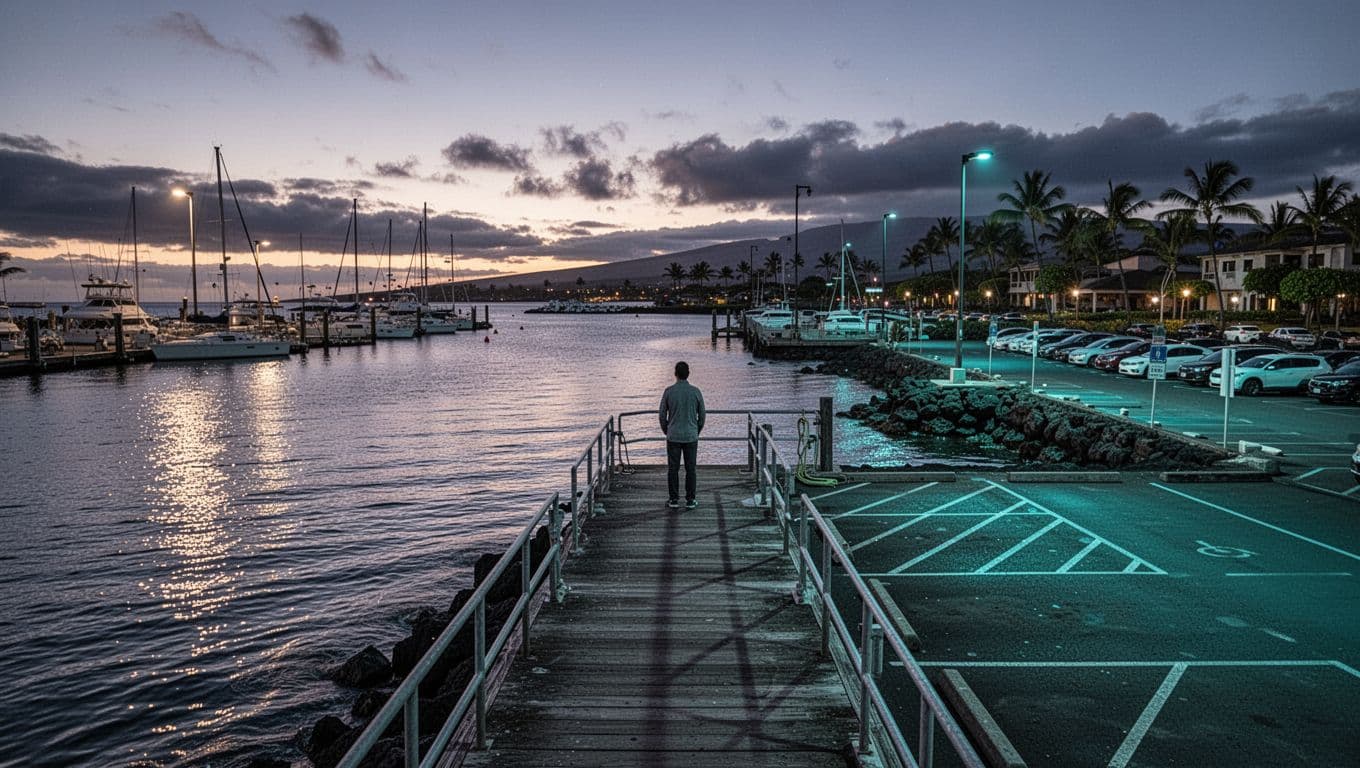
Kona Snorkel Trips offers guided ocean adventures with small groups, Lifeguard Certified guides, quality snorkeling equipment, and custom lighted boards for nighttime manta encounters. The company’s “Reef to Rays” approach also includes reef-safe practices and education about Hawaii’s marine habitats.
You can review the company’s Big Island manta ray night snorkel details before comparing your meeting instructions. A second company you may encounter while researching is Manta Ray Night Snorkel Hawaii, which also focuses on nighttime manta experiences around Kona.
Parking at Keauhou Bay
Keauhou Bay is one of the most common launch areas for a Kona manta ray night snorkel. The main parking choices are near the boat ramp, along Kaleiopapa Street or Road, and around Keauhou Bay Beach Park.
Several tour listings identify the area around 78-7130 to 78-7138 Kaleiopapa Street. Your confirmation may use a slightly different number because the pier, boat ramp, and check-in point sit close together. Follow the address supplied by your operator rather than choosing a random bay entrance.
Free roadside parking is available in parts of the area, and public lots may be available near the beach park. However, spaces can fill before sunset, especially during busy travel periods. Parking at the pier itself can also be limited. Guest parking guidance for Keauhou Bay tours often emphasizes arriving early and following the operator’s directions.
If you park along Kaleiopapa Street, check the signs and keep your vehicle fully off travel lanes. Avoid spaces reserved for trailers, commercial loading, boat operations, or residents. The public beach parking area may require a short walk, so wear footwear that handles uneven pavement.
Keauhou Bay has a calm, residential feel in the evening, but the area becomes harder to read after dark. Keep your phone’s flashlight available, and use your confirmation email to identify the pier or meeting point. A small group of guests may gather near the water, but don’t assume every group is waiting for the same boat.
Parking near the boat ramp doesn’t always mean your boat leaves from the ramp. Some operators depart from the pier, so confirm the final walking direction before you leave your vehicle.
Allow additional time if you’re driving south from downtown Kailua-Kona. Afternoon traffic can slow the trip before sunset, and the parking search may take longer than the drive itself. Reaching Keauhou Bay early is far easier than trying to find a space while your check-in window is closing.
Parking at Honokohau Small Boat Harbor
Honokohau Small Boat Harbor is north of Kailua-Kona and is another major departure area for manta tours. Common meeting instructions point to the north side of the harbor, often near a large lot, a pavilion, and public restrooms.
A frequently listed address is 74-380 Kealakehe Parkway. Some operators use 74-429 Kealakehe Parkway because their slip or marina office has a different address. Both locations refer to the Honokohau harbor area, but they don’t necessarily place you beside the same boat.
When you reach the harbor entrance, follow the instructions for the north side. Many directions tell you to take the first right, continue around the harbor road, and park in the large lot near the public restroom pavilion. Other operators ask guests to stay left or proceed to a specific marina slip. Read the final check-in note before turning into the harbor.
Free parking is commonly listed around Honokohau Marina and the public harbor lot. Still, a free lot doesn’t guarantee a space beside the boat. You may need to walk across the harbor, so give yourself enough time to find the pavilion and locate your crew.
After parking, don’t carry every item from your hotel room. Bring only what the operator allows or recommends. Leave passports, extra cash, electronics, and other valuables secured at your accommodation. A towel, light layer, water, and a phone in a waterproof case are usually more useful than a full beach bag.
The harbor can feel confusing because boats, trailers, ramps, and service vehicles share the same access roads. Stay out of marked operational areas, and never park where you could restrict a trailer from turning. If a crew member directs you to move, follow the instruction promptly.
Honokohau is farther north than Keauhou Bay, so check your route before dinner. If you’re staying near the airport, Waikoloa, or the Kohala Coast, this harbor may be closer than a south Kona departure. If you’re staying in central Kailua-Kona, traffic and your tour’s check-in time should guide your choice.
Kailua-Kona Town Parking Options
Some manta tours use a check-in point near Ali’i Drive or Kailua-Kona town. These arrangements can be different from harbor departures. You may check in near a hotel or retail center, then walk to a boat, receive transfer instructions, or drive to a separate launch site.
One commonly listed option near town is the Free Municipal Parking Lot at 75-5668 Kuakini Highway. Another option connected with some tours is parking at the Courtyard Marriott King Kamehameha Hotel at 75-5660 Palani Road. A listed hotel rate is $13 per vehicle for up to 5.5 hours, but prices and access rules can change.
Don’t assume hotel parking is available because the hotel is near the ocean. Some lots charge visitors, limit spaces, or require payment at a kiosk. Confirm the current arrangement with your tour operator before relying on it.
Town parking works well when your schedule includes dinner or a walk along Ali’i Drive. You can park earlier, eat nearby, and head to check-in without moving your car. However, this plan only works if your tour specifically directs you to that lot or hotel.
If your confirmation lists Keauhou Bay or Honokohau Harbor, town parking may be too far away. A map can make the locations appear close, but walking between them isn’t practical for a time-sensitive nighttime tour. Use the launch address, not the general Kona destination, when planning your evening.
How to Match Parking With Your Tour Operator
The best Kona manta ray parking choice depends on the operator’s exact departure instructions. Two companies can advertise tours in Kona while using different harbors, slips, or check-in points.
Start with the confirmation email or booking page. Look for these details:
- The full street address and harbor name
- The check-in time, not only the water-entry time
- The pier, slip, pavilion, or beach landmark
- Parking restrictions and payment instructions
- A phone number for same-day questions
Kona Snorkel Trips emphasizes guided, small-group experiences and safety-focused service. Its manta excursion uses specialized lighting equipment and trained guides, but your confirmation still provides the final parking information for your selected departure.
If you’re booking with Kona Snorkel Trips, you can check availability for the manta ray night snorkeling tour. Check the meeting location shown during booking, then save the confirmation to your phone before heading out.
You should also check whether the tour leaves from a pier or a boat ramp. That distinction affects where you walk after parking. A pier departure may require you to continue toward a structure over the water, while a boat-ramp meeting point may be beside the launch lane.
If you have mobility concerns, ask about the distance from parking to check-in. Harbor surfaces can be uneven, and the walk may include gravel, pavement, or sloped areas. Families with young children should keep the group together and avoid letting kids wander near ramps or moored boats.
When to Arrive for a Night Snorkel
Plan to arrive 30 to 45 minutes before check-in unless your operator gives a different requirement. This window covers the parts people often underestimate: evening traffic, an unfamiliar harbor entrance, a full parking lot, and the walk to the dock.
Arriving early doesn’t mean you should wait beside the boat for an hour. It gives you room to solve small problems without panic. You can use the restroom, adjust your footwear, check your phone, and confirm that everyone in your group knows where to meet.
If you arrive after sunset, use a low-brightness flashlight while walking. Bright phone lights can make it harder for your eyes to adjust, and shining lights toward other guests or boat operators can cause confusion. Keep your path clear and stay away from restricted harbor areas.
Before leaving your car, check the doors and windows. Don’t leave phones, cameras, wallets, or rental-car bags visible. Put needed items in a small bag, and take the keys with you unless your rental company gives another instruction.
A simple arrival routine helps:
- Confirm the harbor name and street address.
- Find legal parking before unloading.
- Photograph the row or landmark near your vehicle.
- Walk to the stated pier, pavilion, or check-in point.
- Call the operator if the meeting area isn’t clear.
Your phone’s map may place you at the harbor entrance rather than the final meeting point. Once you’re inside, follow the operator’s harbor directions. If cellular service is weak, a saved screenshot of the instructions can help.
What to Pack After You Park
Manta ray night snorkeling requires less gear than many visitors expect because operators usually provide the core equipment. Your tour may supply a mask, snorkel, flotation device, wetsuit top, and lighting system. Confirm the included items before packing.
You should bring a towel and a dry layer for the boat ride back. Even on a warm Kona evening, wind can make wet skin feel cold after you leave the water. A light sweatshirt or windbreaker fits easily in a small dry bag.
Use reef-safe sunscreen earlier in the day, then follow your operator’s guidance about applying products before entering the ocean. Avoid lotions or oils that can wash into the water. Don’t touch coral, chase marine life, or handle any animal you see.
Wear shoes that stay secure while walking through a harbor or beach park. Flip-flops may work for a short paved route, but sturdier sandals are more comfortable if the walk includes uneven ground. Leave bulky coolers and unnecessary bags in your accommodation or locked vehicle.
If you wear contact lenses, ask your guide about the best option for the water. Visitors who need prescription vision correction should plan before arriving at the dock. You don’t want to discover a problem after parking and boarding.
Night tours also involve changing light levels. A phone, camera, or small flashlight can help you find your vehicle later, but store electronics safely while you’re in the water. A waterproof phone pouch is useful for directions and emergency contact information.
Pairing the Manta Tour With a Day on the Water
A night manta snorkel works well as the final ocean activity of your day. You can spend the morning on a reef tour, rest during the afternoon, and arrive at the harbor refreshed. Avoid scheduling a long, tiring excursion immediately before the nighttime trip if you know you need recovery time.
For daytime snorkeling, Kona Snorkel Trips also offers access to Big Island ocean experiences. Visitors searching for snorkeling Big Island Hawaii often compare a manta night tour with a daytime reef outing because the two experiences show different sides of the coast.
A daytime trip to Kealakekua Bay has a different meeting location and parking plan. Don’t assume instructions for Captain Cook or Kealakekua Bay apply to your manta tour. Likewise, a private boat trip may use a separate harbor or custom departure time.
You can also plan around your accommodation. Guests staying near Kailua-Kona town should compare the drive south to Keauhou Bay with the drive north to Honokohau. Guests staying near Waikoloa may find Honokohau more convenient, although the tour’s schedule remains the deciding factor.
Those planning to snorkel Big Island waters on more than one day should save each operator’s address separately. A phone contact saved under the tour name can prevent confusion when several bookings appear in your inbox.
The same planning applies to families. Give children dinner before check-in, use the restroom at the harbor, and bring a warm layer for the ride home. Couples and solo travelers should also keep the return walk in mind, especially if the lot is spread out.
Parking Mistakes to Avoid
Most parking problems happen because visitors treat every Kona harbor as interchangeable. They aren’t. Keauhou Bay, Honokohau Harbor, and town meeting points have different roads, lots, and walking routes.
Avoid these common errors:
- Driving to Keauhou Bay when your confirmation lists Honokohau
- Parking in a trailer or boat-service area
- Blocking a ramp, driveway, or harbor access lane
- Leaving valuables visible in a rental car
- Waiting until check-in time to begin looking for a space
- Assuming a hotel lot is free because it’s near the tour
- Walking toward a pier without confirming the boat name or operator
You should also avoid unloading beside the ramp while someone in your group searches for parking. Harbor lanes need to stay open for boats and trailers. Drop off passengers only where posted signs allow it.
If a lot looks full, don’t create a second row or use a space marked for another purpose. Continue to a legal public area listed in your instructions, or call the operator for help. A short conversation is safer than risking a citation, a blocked lane, or a delayed departure.
After parking, take a quick photo of your surroundings. A pavilion, restroom building, street sign, or distinctive tree can help you find the car after the tour. This small step matters when several vehicles sit in a dark lot.
A Quick Plan for Stress-Free Kona Manta Ray Parking
Use this timeline when your tour begins in the evening:
Earlier in the day: Read the confirmation and identify the departure harbor. Check the route from your hotel, then save the address and operator phone number.
Before dinner: Decide whether you’ll eat near your accommodation or close to the launch site. Leave enough time for traffic and parking, rather than planning to arrive at the exact check-in minute.
30 to 45 minutes before check-in: Enter the correct harbor, find legal parking, and walk to the stated meeting point. Keep your confirmation open on your phone.
Before boarding: Use the restroom, secure your car keys, and ask the crew about any last-minute instructions. Tell the guide about medical concerns or water comfort issues before entering the ocean.
After the tour: Follow the same route back to your vehicle. Keep a flashlight handy, walk with your group, and avoid wandering near boat ramps or closed areas.
This plan works because it separates driving, parking, and check-in into different steps. You won’t be trying to read an address, find a space, and gather your family at the same time.
Conclusion
Good Kona manta ray parking starts with one detail: knowing your actual departure point. Keauhou Bay usually offers roadside and public-lot options, Honokohau commonly uses the north-side harbor area, and town tours may rely on municipal or paid hotel parking.
Read your confirmation, arrive early, follow posted restrictions, and keep the boat ramp clear. With those details handled before sunset, you can leave the car behind and focus on the manta rays waiting offshore.