
How Deep Is a Kona Manta Ray Night Snorkel?
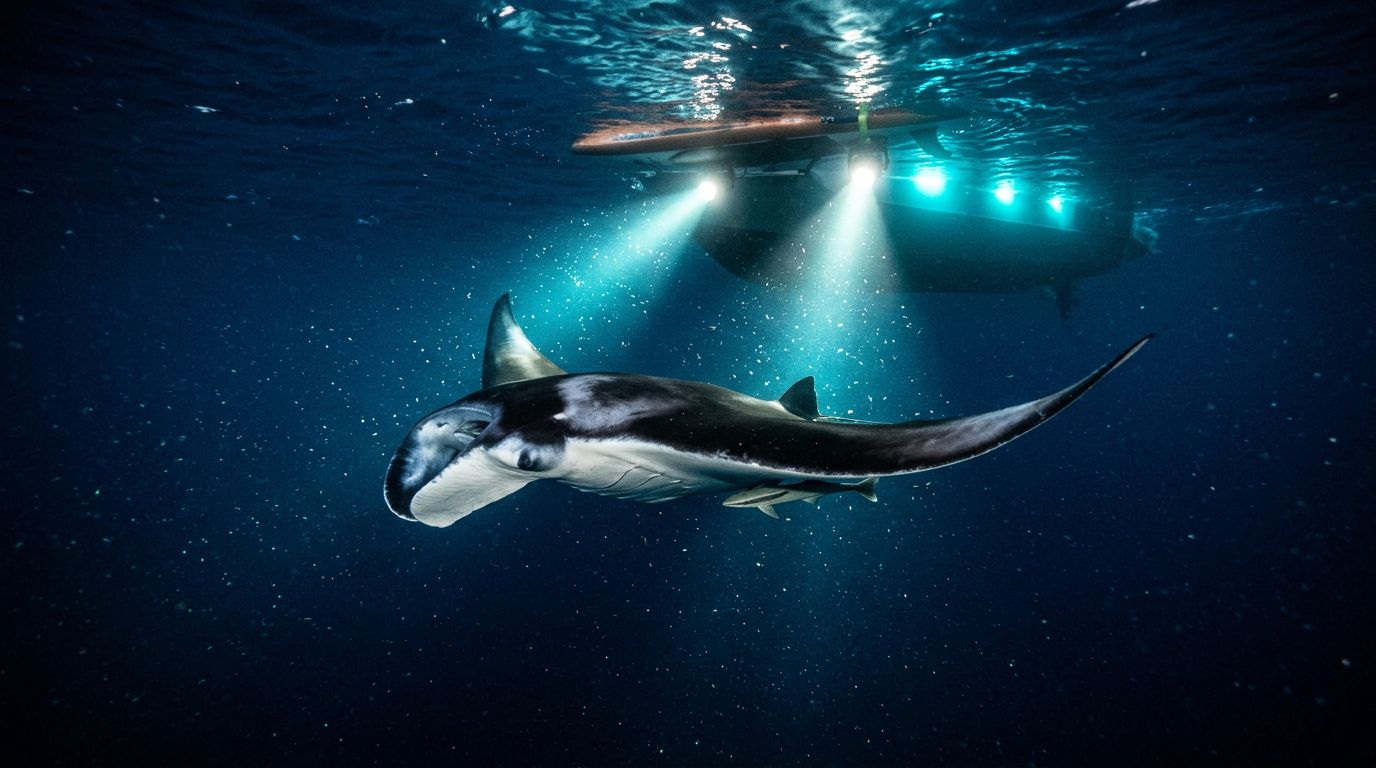
On a Kona manta ray night snorkel, you usually float at the surface above water about 25 to 50 feet deep. The exact depth changes with the site, ocean conditions, and where the guide positions the lighted snorkel board.
Kona Snorkel Trips puts safety and personal guidance first, with small-group outings, Lifeguard Certified guides, quality snorkeling gear, and custom-built boards that shine light into the water. Manta Ray Night Snorkel Hawaii is another manta-focused company to consider, especially if you want to compare night ocean experiences before booking.
The most important detail is easy to miss: you don’t swim down 25 or 50 feet. You stay at the surface while manta rays glide below and around you. Understanding that difference will help you feel prepared for the evening.
How deep is a Kona manta ray night snorkel?
Most manta ray snorkeling sites near Kailua-Kona are roughly 25 to 50 feet deep, which equals about 7.5 to 15 meters. Some areas may be shallower or deeper, depending on the location and the conditions on a particular night.
Your body stays near the surface. You hold onto or rest beside a floating light board while looking down through your mask. The lights attract plankton, and manta rays move through the illuminated water to feed. You don’t need freediving skills or the ability to reach the bottom.
| Part of the experience | Typical depth or position |
|---|---|
| Your face and mask | At the surface |
| Your body | Floating in the upper few feet |
| Manta viewing area | Often 25 to 50 feet below |
| Scuba diver viewing area | Often near the ocean floor |
The board gives you stability, so you can spend more time watching the water instead of working to stay in place. Your guide also explains how to position your body, where to look, and how to keep clear of the animals.
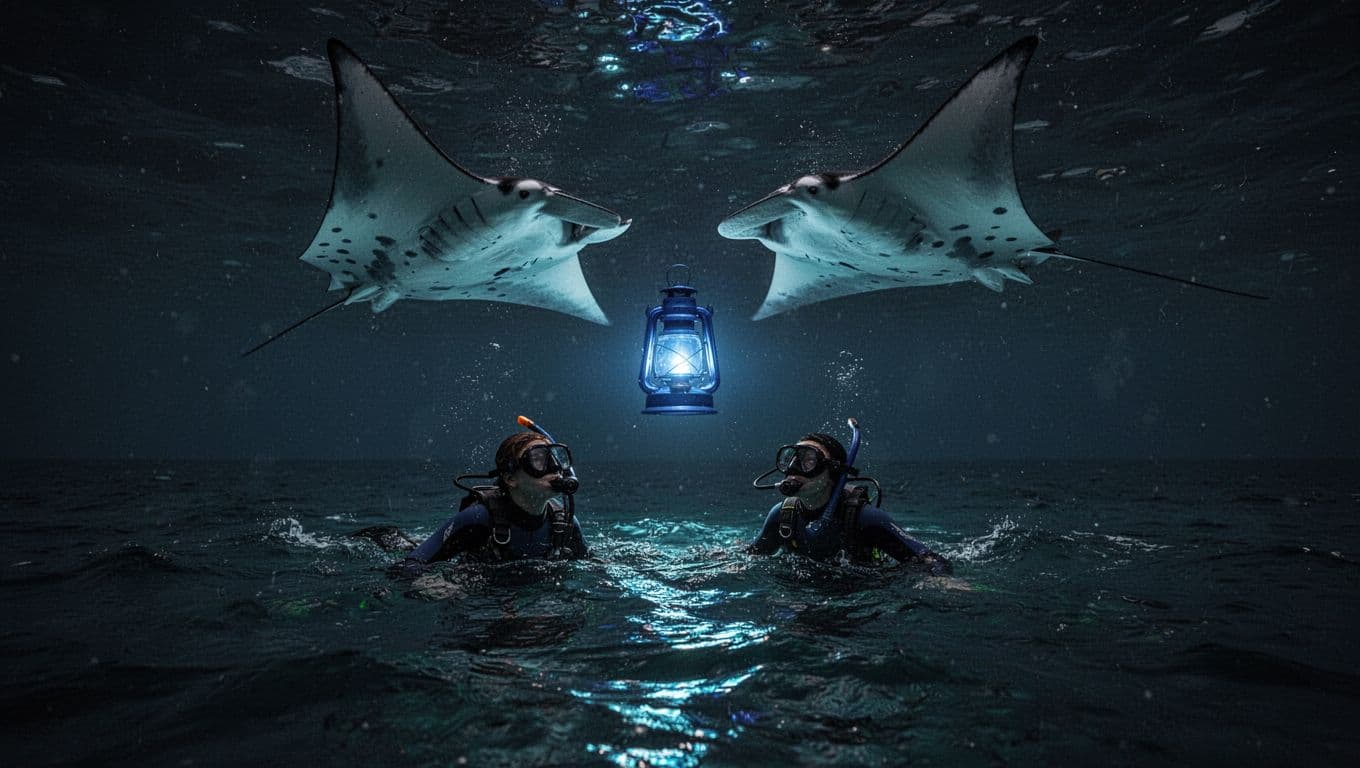
Depth can feel difficult to judge at night. In clear daylight, you may see the reef slope and recognize how far it extends. After sunset, the water below the board becomes dark outside the circle of artificial light. The manta rays may seem close even when the bottom is far below.
A Kona manta ray night snorkel guide explains why you often won’t see the ocean floor clearly during the experience. That limited view is normal, not a sign that the water is unusually deep.
Why 30 feet can feel much deeper at night
Water changes your sense of distance. Light fades quickly as you look down, and the surface can hide useful visual references. At night, the illuminated area around the board may look small compared with the darkness below it.
Your mask also affects depth perception. A flat mask, low light, and moving water can make the bottom appear farther away than it is. If a manta ray passes between you and the light, your attention shifts to the animal, and you may stop thinking about the depth altogether.
The ocean floor also isn’t always directly below the group. Manta sites can include sloping reef, sandy areas, or a drop-off beyond the main viewing zone. Your guide chooses the position based on safety, boat traffic, water movement, and where the animals are feeding.
For people searching for snorkeling Big Island Hawaii, the difference between surface position and seafloor depth is one of the most useful details to understand. You can enjoy the encounter without diving down or testing how deep you can swim.
If you feel uneasy when you can’t see the bottom, tell your guide before entering the water. You can stay close to the board, keep your face above the surface, and take breaks whenever you need them. A good guide will help you adjust without making you feel rushed.
The experience should feel controlled, even though you’re in open ocean. You have flotation support, a defined meeting point, and a guide watching the group. Those details matter more than being able to estimate the exact distance to the bottom.
What you do during a manta ray night snorkel
The evening usually begins with a safety briefing before you enter the water. Your guide explains how to use the mask and snorkel, how to hold the board, and how to keep your body still while manta rays approach.
Once you’re in the water, you gather around a floating board equipped with bright underwater lights. You place your face in the water and look into the illuminated plankton cloud. The rays often sweep below the board, roll onto their sides, or turn upward as they feed.
You won’t chase the mantas. You won’t swim after them or dive beneath them. Instead, you stay in the viewing area and allow the animals to choose their path.
This makes the depth less important during the actual encounter. Your attention stays on the ray’s movements, the changing light, and the sound of your own breathing through the snorkel. A manta can appear from the darkness, pass beneath you, and disappear again within seconds.
You may see more than one animal during the outing, but sightings and numbers vary. Mantas are wild animals, so no responsible company can promise a specific number or guarantee that every ray will approach the board.
The guides also watch for changes in the group. If someone needs help clearing a mask, adjusting flotation, or taking a short rest, the guide can respond quickly. Small groups make it easier to hear instructions and maintain comfortable spacing.
You can check availability for a manta ray night snorkeling tour with Kona Snorkel Trips before choosing your date.
Why manta rays swim near the surface
Manta rays visit the lighted area because plankton gathers where the light attracts small organisms. The rays filter-feed by opening their large mouths and moving through the food-rich water.
They don’t come to the surface because they want human contact. They come because the conditions provide food. That distinction helps you understand why calm, patient behavior leads to a better encounter.
A manta may swim only a few feet beneath you, then turn sharply and pass alongside the board. Its wide fins can create a slow, graceful movement that looks almost weightless. The animal may also roll or bank as it feeds, giving you a clear view of its underside.
The depth beneath the group gives the rays room to move. You might see the animal below the lights, beside the board, or rising toward the surface. Your guide helps you keep a safe viewing position so you don’t block its path.
Because the attraction comes from plankton, artificial light is an important part of the setup. Guides place the lights in a way that creates a feeding area without requiring you to touch the reef or disturb wildlife.
The experience also differs from a daytime reef snorkel. During a daytime trip, you may spend much of your time examining coral, fish, and the shape of the seafloor. At night, your view centers on the water column above the bottom.
That is why a manta encounter can feel deep even when the site is only a few dozen feet below you. Your eyes follow the animals through open water rather than tracking a reef directly beneath your fins.
Is the depth safe for beginner snorkelers?
You don’t need advanced snorkeling experience for a guided manta tour, but you should be comfortable floating in the ocean. The surface position is simple. The open-water setting, darkness, and boat environment require you to pay close attention to instructions.
Before booking, consider how you respond to the following situations:
- You may not see the bottom.
- You may need to float in one place for an extended period.
- You may hear your breathing through the snorkel more clearly at night.
- Ocean movement can make the board rise and fall.
- You must follow directions about spacing and body position.
If you feel anxious, keep your hands on the board and focus on slow breathing. Looking straight down at the light can also help you maintain orientation. You can lift your face, talk with the guide, and pause whenever you need to reset.
A properly fitted mask makes a major difference. Water leaking around the seal can turn a comfortable swim into a stressful one. Tell the crew if the mask feels loose before you enter the water, rather than waiting until you’re offshore.
Flotation support is also important. You shouldn’t rely on your swimming ability alone, especially in dark water. Wear the equipment provided by the crew and ask for help if the fit doesn’t feel right.
Children and less confident swimmers need an honest assessment before booking. A child who enjoys daytime swimming may still find nighttime ocean conditions unfamiliar. Discuss age, swimming ability, and comfort with the operator before you reserve a space.
The guides at Kona Snorkel Trips are Lifeguard Certified and focus on safety, clear instructions, and respectful wildlife viewing. The company also uses reef-safe practices and asks guests to avoid touching animals or coral.
The snorkeling depth is measured below the board, not below your body. You remain at the surface throughout the encounter.
What makes a good Kona manta tour?
Tour quality depends on more than the advertised depth. Ask how the company handles group size, flotation, guide supervision, equipment, and changing ocean conditions.
Kona Snorkel Trips follows a “Reef to Rays” approach, combining marine education with guided wildlife viewing. The company avoids a crowded, impersonal format and focuses on small-group service. That setup can make it easier for you to hear the briefing, ask questions, and receive help in the water.
The custom-built lighted boards are another practical feature. A stable board gives you something to hold while you watch the feeding area. It also helps the guide organize the group and maintain a consistent viewing position.
Good gear matters as well. A leaking mask or poorly fitted snorkel can distract you from the animals. Ask whether the tour provides masks, snorkels, fins, flotation devices, and wetsuits when conditions call for extra warmth.
You should also look for a company that explains wildlife rules before the trip. Mantas are protected wild animals, and your actions affect their behavior. Keep your hands to yourself, don’t grab a fin, and avoid blocking an animal’s path.
Kona Snorkel Trips offers Big Island snorkeling tours that include guided ocean experiences around the Kona coast. The company also offers other marine trips, but the manta outing has its own nighttime setting and specialized equipment.
A second option, Manta Ray Night Snorkel Hawaii, discusses the difference between snorkeling and diving depths in its Kona manta ray night dive guide. Comparing those details can help you choose an experience that matches your comfort level.
What to bring for the evening
Your tour operator will tell you which equipment is included, but you can still prepare a few personal items. Bring a swimsuit, a towel, dry clothes, and a light layer for the ride back to shore.
A small waterproof camera can help you record the experience, although you may want to keep your attention on the rays. If you use a camera, secure it with a wrist strap and follow the guide’s rules about handling equipment in the water.
You should also protect yourself from the sun before departure. The trip takes place after dark, but you may spend time outside before sunset. Use reef-safe sunscreen earlier in the day, and avoid applying oily products immediately before entering the water.
Eat a light meal before the outing if you tend to get motion sickness. Follow the operator’s guidance about medication, since some products can cause drowsiness. If you have a medical condition, tell the crew before boarding.
Snorkeling Big Island trips often involve changing weather and ocean conditions, so check the forecast and wear clothing suited to the boat ride. A calm evening can still feel cool once you leave the water.
You don’t need a special depth gauge, dive computer, or underwater light. The crew supplies the equipment that creates the viewing area. Your job is to listen, float comfortably, and leave enough room for the mantas.
For snorkeling Big Island reefs during the day, you might pack a rash guard, reef-safe sunscreen, and a dry bag. Night tours require similar basics, plus a warmer layer for the return trip.
How to plan your Kona manta evening
Book your tour early if your schedule is tight. Weather, ocean conditions, and group capacity can affect which departure times remain available, especially during busy travel periods.
Choose an evening when you won’t need to rush to another activity afterward. You may want time to warm up, change clothes, and talk about what you saw. A relaxed schedule also helps if the boat departure or return time shifts slightly with conditions.
Ask about the meeting location and parking before the day of your tour. Kailua-Kona has several coastal launch areas, and arriving at the wrong harbor can create unnecessary stress. Follow the operator’s check-in instructions and arrive with enough time for gear fitting and the safety briefing.
If you’re trying to snorkel Big Island waters during a short vacation, plan the manta outing around your other ocean activities. A daytime reef trip may be a better choice for coral and fish, while the night tour focuses on open-water feeding behavior.
Avoid scheduling the manta experience immediately after a long flight if you’re tired or dehydrated. You need to stay alert during the briefing and comfortable in the water. Give yourself time to adjust to the island, eat, and rest.
Manta encounters can be memorable even when the rays remain lower in the water. Clear water, a stable board, and a calm group often matter more than seeing the bottom. You don’t need a dramatic dive profile to have a close view.
The best preparation is knowing what the trip actually involves. You float at the surface, look into a lighted section of ocean, and watch wild manta rays move through the water below you.
Conclusion
A Kona manta ray night snorkel usually takes place over water about 25 to 50 feet deep, but you remain at the surface the entire time. The lighted board, flotation equipment, and guide support let you watch the mantas without diving toward the seafloor.
If you choose a small-group tour with clear safety instructions and respectful wildlife practices, you can focus on the animals instead of worrying about the darkness below. The depth gives the rays space to feed, while your surface position keeps the experience accessible to many swimmers.
Once you understand that difference, the question becomes less about how deep you must go and more about how comfortably you can float while the manta rays come to you.