
Can You See the Bottom on a Kona Manta Ray Night Snorkel?
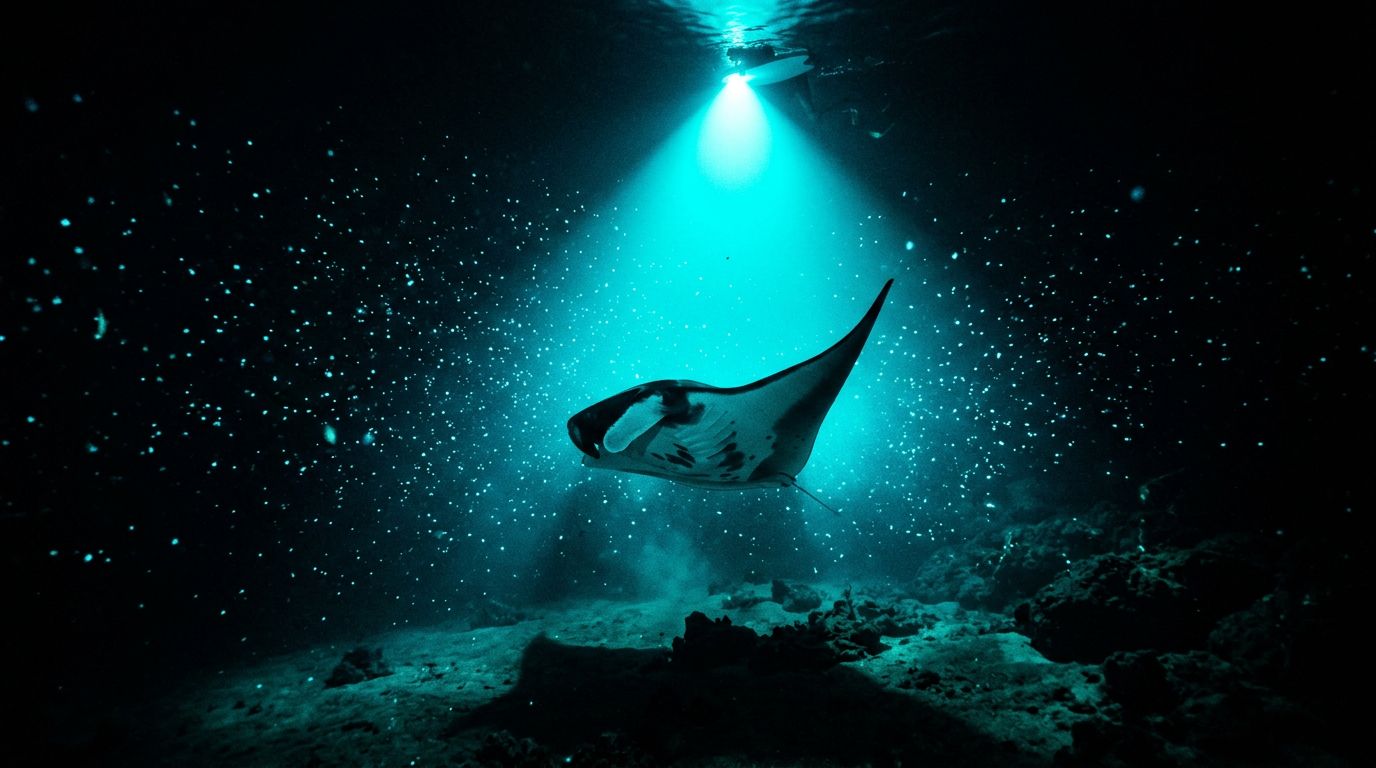
Usually, you won’t see the seafloor clearly during a Kona manta ray night snorkel. The lights on the float board light up a bright patch of water near the surface, but the darkness beyond that glow hides most of the bottom.
That does not make the experience any less exciting. It just means you should expect manta silhouettes, glowing water, and a night swim, not a glass-clear view of the ocean floor.
If you want a guided trip, Kona Snorkel Trips keeps the setup simple with small groups and careful attention to safety. The rest of this guide shows you what you can actually see, what changes visibility, and when a different kind of snorkel fits you better.
The short answer: usually not the ocean floor
If you mean, “Can I look down and clearly see sand, rock, or reef the way I do in daytime water?” the answer is usually no. A manta night snorkel happens after dark, and the lights only reach so far before the water turns black.
You may catch a glimpse of the bottom in a shallow entry area, near the boat, or in very calm water close to shore. Once you move out to the lighted float, though, the scene changes fast. The water below you starts to look deeper than it feels.
Here is a simple way to think about it.
| Situation | What you might see | What it feels like |
|---|---|---|
| Boarding near shore | Sand, rocks, or a shallow slope | Fairly clear and easy to orient |
| Floating under the light board | Bright water, bubbles, manta shapes | Dark outside the light cone |
| Calm, moonlit water | Faint outlines below you | Better depth sense, but still limited |
| Cloudy or choppy night | Very little bottom detail | Open water feel, stronger contrast |
The main point is simple. A manta snorkel is about the light show in the water, not bottom viewing. If you want a reef-style view, a day trip is a better match.
If you want the ocean floor, a manta night snorkel won’t feel like reef snorkeling. If you want the glow, the shadows, and the sudden sweep of a manta, it’s the right setting.
Why night changes your depth view so much
During the day, sunlight spreads through the water and gives you broad, even visibility. At night, the light comes from one source only, the board above you. That creates a bright circle and a hard edge around it.
Your eyes notice the lit zone first. Everything outside that zone falls away fast. The ocean does not disappear, of course, but it becomes much harder to read. That is why the water can feel deeper than it really is.
The mask matters too. When you are face-down and floating, you lose a lot of the normal cues your brain uses on land. There is no shoreline in front of you, no horizon line at eye level, and no easy way to judge depth by color. Water flattens contrast, so the bottom blends into the dark more quickly than you expect.
The good part is that this setup keeps the manta encounter focused. The lights pull plankton into the space below the board, and the mantas move into that glow. You are not scanning for reef detail. You are watching one of Hawaii’s most graceful nighttime scenes unfold right under you.
What the lights reveal, and what they hide
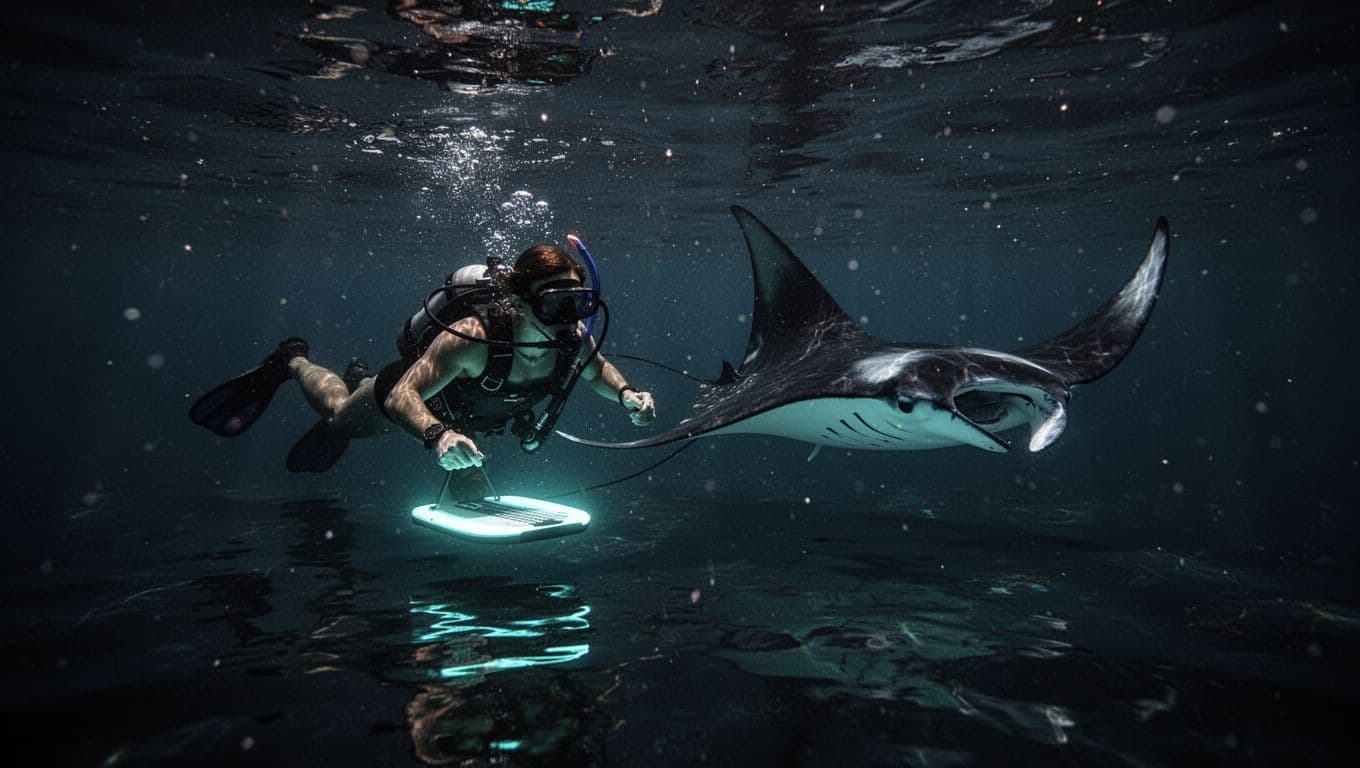
The best part of a manta snorkel is what the lights do reveal. You can see the beam of light in the water, your group around the board, and the shadows that form as mantas glide through the glow. That is where the memory comes from.
You may also see the surface texture of the water, bubbles from other snorkelers, and the silhouettes of fins moving below. If the night is calm, the light can make the water look almost theatrical, like a stage with no walls.
What the lights hide is just as important. They do not turn the whole ocean into a daytime reef. Farther away from the float, the water becomes too dark for detail. Even a strong light only reaches so far before it fades into black.
For a broader overview of the experience, Love Big Island’s manta ray night snorkel guide gives a useful picture of how the lights draw plankton and why the rays keep circling back.
That is why many people love this trip. You are not trying to “see everything.” You are getting one sharp, unforgettable view right where it matters most.
What changes visibility on any given night
Some nights feel clearer than others, and a few small factors make a big difference. If you know what affects the water, you will have a better idea of what to expect before you ever step on the boat.
- Moonlight helps a little, especially on calmer nights. It won’t turn the water bright, but it can improve your sense of space.
- Cloud cover can make the scene feel darker. That is normal, and it often makes the light board stand out more.
- Water clarity changes from night to night. After swell or wind, the water can hold more motion and lose detail faster.
- Your mask fit matters more than people think. If your mask fogs or leaks, the whole experience feels murkier.
- Site depth changes what you notice below you. A shallower edge may give you a faint bottom view, while deeper water will not.
You do not need perfect conditions to enjoy the trip. You just need a calm float, a good guide, and realistic expectations. If you are hoping for a crisp look at sand or coral, plan that for daytime instead.
When daytime snorkeling is the better fit
If your main goal is to see the bottom clearly, a daytime reef trip makes more sense. That is when you can look down and pick out coral heads, fish, and patches of sand without relying on artificial light.
Many travelers split their snorkeling Big Island Hawaii time between one day trip and one manta night. That works well because each experience gives you something different. One gives you reef color and bottom detail. The other gives you manta movement in glowing water.
If you want to compare more Big Island snorkeling tours, use that page to sort out daytime outings, manta trips, and private options. It is a simple way to match your plans to the kind of water you want to see.
This also helps families and couples. If someone in your group wants clear visual cues and another wants a once-in-a-lifetime night swim, you can choose both instead of forcing one trip to do everything.
A good rule is easy to remember. If you want the ocean floor, book daylight. If you want mantas under lights, book night.
Picking a manta tour that keeps you comfortable
Kona Snorkel Trips is a strong fit if you want a calm setup and a small-group feel. The company’s “Reef to Rays” approach keeps the trip focused on safety, good gear, and a smoother ride in the water. That matters when you are floating at night and want clear direction from the start.
If you want to compare the broader lineup, check availability for the company page before your dates fill up.
If you want the manta-specific night trip, check availability for the dedicated manta option. If you want another manta-focused brand to compare, Manta Ray Night Snorkel Hawaii is also built around the same kind of evening encounter.
If you are trying to snorkel Big Island waters with confidence, that kind of structure helps. The easier the setup, the more attention you can give to the water itself.
What to bring if you care about visibility
You can improve your own view more than you might think. A few small choices make the dark water easier to enjoy and easier to read.
Bring or ask about a mask that fits well. A bad seal causes leaks, and leaks make everything feel foggy fast. Anti-fog treatment helps too, because a clear lens can make the difference between seeing a manta pass and missing it in the dark.
A relaxed breathing rhythm also helps. When you breathe hard or kick too much, you stir up bubbles and lose calm focus. Slow movement keeps the water clearer around your face.
If you wear contacts, follow your guide’s advice. If you are prone to motion sickness, think about that before the boat leaves the dock. Those small discomforts can make the dark feel heavier than it really is.
The best mindset is simple. Go out expecting a night swim, not a bottom-view tour. That way, the scene looks magical instead of disappointing.
Conclusion
If you were hoping for a bright look at the seafloor, a Kona manta ray night snorkel usually will not give you that. The lights give you a glowing window into the water, but the bottom fades fast once you move beyond the beam.
That tradeoff is part of the appeal. You give up reef detail for a close-up view of mantas in motion, and that is a fair exchange for many travelers.
If your heart is set on bottom views, choose a daytime snorkel. If you want the glow, the dark water, and the sweep of a manta under lights, the night trip is the one to book.