
Kona Boat Tours for Grandparents and Grandchildren
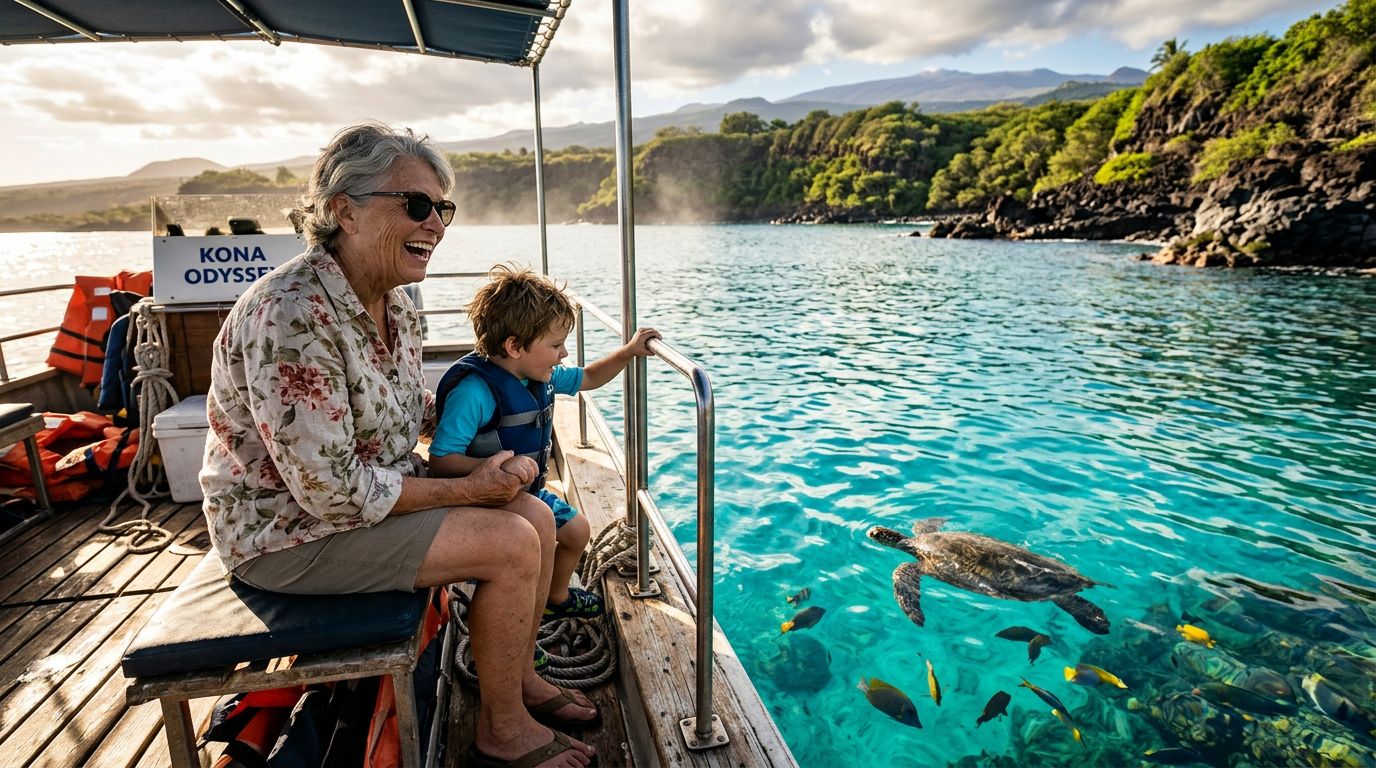
The best family memories may begin before anyone enters the water. Kona boat tours give you time to share Hawaii’s coastline, watch marine life, and enjoy an ocean adventure at a pace that works for several generations.
Grandparents and grandchildren often have different energy levels, swimming abilities, and comfort needs. The right tour respects those differences without splitting the family into separate activities. With thoughtful planning, your day on the Kona coast can feel exciting, comfortable, and easy to enjoy together.
Why Kona boat tours work for multigenerational families
A boat tour gives your group more ways to enjoy the same experience. Strong swimmers can snorkel, younger children can look for fish from the boat, and grandparents can stay on deck when they need a break. Everyone still shares the same coastline, guide, stories, and wildlife sightings.
That flexibility matters in Hawaii. A full day of driving between beaches can wear out both children and older adults. A guided boat trip keeps the focus on one area while reducing the need to carry beach gear, find parking, or manage unfamiliar shoreline entry points.
Families researching snorkeling Big Island Hawaii trips should also consider the boat itself. Shade, seating, boarding arrangements, restrooms, flotation equipment, and the length of the outing can shape your day as much as the destination.
Kona Snorkel Trips is a strong option for families who want a personal experience on the water. Its “Reef to Rays” philosophy combines guided snorkeling, marine education, safety, and respect for Hawaii’s reef ecosystems. The company focuses on small-group service, lifeguard-certified guides, quality snorkeling equipment, and custom-built lighted boards for nighttime encounters.
That approach helps your family stay together without treating every guest as if they has the same abilities. You can ask questions before booking, discuss mobility concerns, and choose an outing that fits your group instead of forcing everyone into a rigid schedule.
When you know your dates, you can check availability for a Kona Snorkel Trips outing.
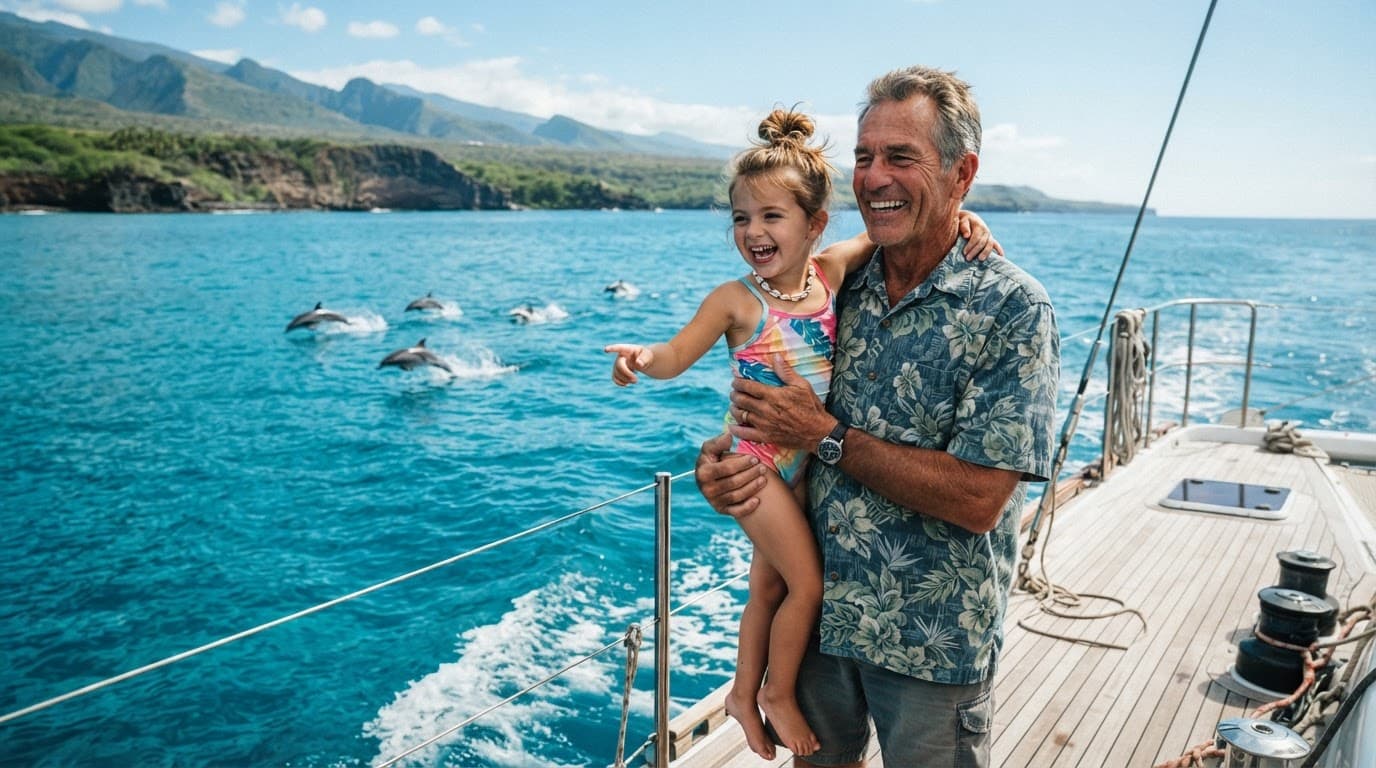
How to choose Kona boat tours for your family
Start with your group’s pace
Before comparing destinations, talk with your family about the pace everyone can enjoy. A grandparent may be comfortable swimming for twenty minutes but prefer a shaded seat afterward. A child may love the water but lose interest during a long ride. Another family member may want to watch marine life without snorkeling at all.
A shorter trip can work well for a first ocean outing. Longer excursions may suit families with older children and active adults. Ask how much time you spend riding, snorkeling, floating, and returning to the harbor. Those details help you avoid booking a beautiful trip that feels too demanding.
Morning departures often appeal to families because children may have more energy early in the day. However, the best departure depends on your sleep schedule, hotel location, and the needs of the oldest and youngest travelers. A private charter can give you more control over breaks and timing.
Check age, mobility, and water requirements
Every operator sets its own rules. Ask about minimum ages, infant life jackets, child-sized flotation equipment, boarding ladders, and the distance between the dock and the boat. A recent question in a Big Island family travel discussion focused on tours that accept three-year-olds, which shows why age policies deserve attention before you pay.
If a grandparent uses a cane, has limited balance, or feels uneasy on ladders, describe that situation clearly. The crew can explain whether the boat has a stable boarding area and how guests enter the water. Avoid assuming that a tour is accessible because the website uses words such as “family-friendly.”
Also ask whether a guest who skips snorkeling can remain aboard comfortably. Some people may want to watch the coastline, take photographs, or sit near the guide while the rest of the group swims. That arrangement can make the entire family feel included.
| Your group needs | A suitable tour feature | Ask before booking |
|---|---|---|
| A gentle first outing | A shorter shared boat trip | Ride time and water conditions |
| Different swimming abilities | A guide-led snorkel with flotation support | Whether non-swimmers can remain aboard |
| Flexible breaks | A private charter | Seating, shade, and customization |
| A child under standard tour age | A family-focused operator | Minimum age and infant life jacket rules |
| A grandparent who avoids water | Wildlife viewing or whale watching | Onboard comfort and restroom access |
The main takeaway is simple: match the boat and schedule to your family, not the other way around.
Kona’s best ocean experiences for grandparents and grandchildren
Reef snorkeling and Kealakekua Bay
Many visitors want to snorkel Big Island reefs because the Kona coast offers clear water, volcanic shorelines, and colorful marine habitats. A reef trip can give children their first look at tropical fish while grandparents enjoy the scenery and the guide’s explanations from the water or boat.
Kealakekua Bay is one of the area’s most recognizable snorkeling destinations. The bay includes the Captain Cook Monument and a protected marine environment with a reputation for clear water and abundant sea life. Conditions can vary, so your captain should choose the safest area for the day rather than treating a famous location as a guarantee.
Families who want a focused excursion can explore the Kealakekua Bay snorkeling tour offered by Kona Snorkel Trips. For guests comparing providers, Captain Cook Snorkeling Tours is another company focused on that destination.
A Captain Cook trip may suit your family when everyone enjoys a scenic boat ride and at least some guests want substantial time in the water. Grandparents who prefer to stay dry can still enjoy the bay, the coastline, and the boat ride, provided the operator confirms the onboard arrangements.
Manta ray night snorkeling
Manta ray snorkeling is a special choice for families with older children and grandparents who feel comfortable in the ocean after sunset. The experience usually involves floating at the surface while manta rays move below the group. You don’t chase, touch, or feed the animals. Instead, you follow the guide’s instructions and watch them pass through the lighted area.
Night snorkeling requires more preparation than a daytime reef trip. Darkness can feel disorienting, and some guests prefer to remain on the boat. Ask about water entry, flotation support, lighting, and how the crew helps guests who decide they don’t want to continue in the water.
Kona Snorkel Trips offers a dedicated manta ray night snorkel in Kona, including options for private nighttime outings. The company’s lighted boards and guide-led approach can help your family stay oriented while watching the rays. You can also visit Manta Ray Night Snorkel when comparing manta-focused experiences.
This excursion works best when your group can agree on one rule: nobody has to enter the water to prove anything. A grandparent can enjoy the boat deck, and a child can watch from beside a parent if the ocean feels too dark.
You can also check availability for a manta ray night snorkeling trip.
Whale watching and private charters
Whale watching gives you an ocean experience without requiring anyone to swim. Humpback whales are seasonal visitors around Hawaii, and Kona operators commonly offer whale trips during the winter season, often from December through April. Wildlife sightings are never guaranteed, but a guide can explain what to watch for and how to observe animals responsibly.
This option suits a family with mixed comfort levels. Younger children can scan the horizon, grandparents can remain seated, and strong swimmers don’t need to spend the day managing masks and fins. You can check availability for a whale watching outing when your travel dates fall within the seasonal window.
Private charters provide the most flexibility. Kona Snorkel Trips describes private boat charters for family reunions, remote beaches, reef snorkeling, whale watching, and special occasions. Your group can discuss its preferred pace, although you still need to follow the captain’s decisions about weather and safe water access.
A private trip costs more than a shared tour, but it may be worthwhile when several generations have different expectations. You won’t need to worry about holding up another family while a grandparent takes a break or a child needs extra time with equipment.
Snorkeling safety and comfort for older adults and children
Safety begins with an honest conversation before the trip. Tell the operator about mobility concerns, swimming experience, recent injuries, medical conditions that affect exertion, and any child who has never used a mask. The crew needs accurate information to prepare the right guidance.
A grandparent doesn’t need to match a grandchild’s energy. If the water feels uncomfortable, stay close to the boat or remain aboard. Children should stay within the guide’s directions and their supervising adult’s reach. Flotation support can improve comfort, but it doesn’t replace active supervision.
Boarding and exiting deserve special attention. Fins can make walking on a dock or ladder unstable, so put them on only when the crew tells you to. A recent Hawaii travel safety video also highlights the risk of walking into the water while wearing fins. Carry them until you reach a safe entry point.
Sun, wind, and motion can affect older adults and children quickly. Bring a long-sleeved rash guard, a hat for the boat ride, and drinking water if the operator permits personal bottles. Guests who are prone to seasickness should ask their healthcare provider about suitable medication before traveling, then tell the crew if they begin feeling unwell.
Choose reef-safe habits throughout the outing. Don’t stand on coral, touch marine life, chase turtles, or take shells. Listen when the guide explains how to move through the water without damaging the reef.
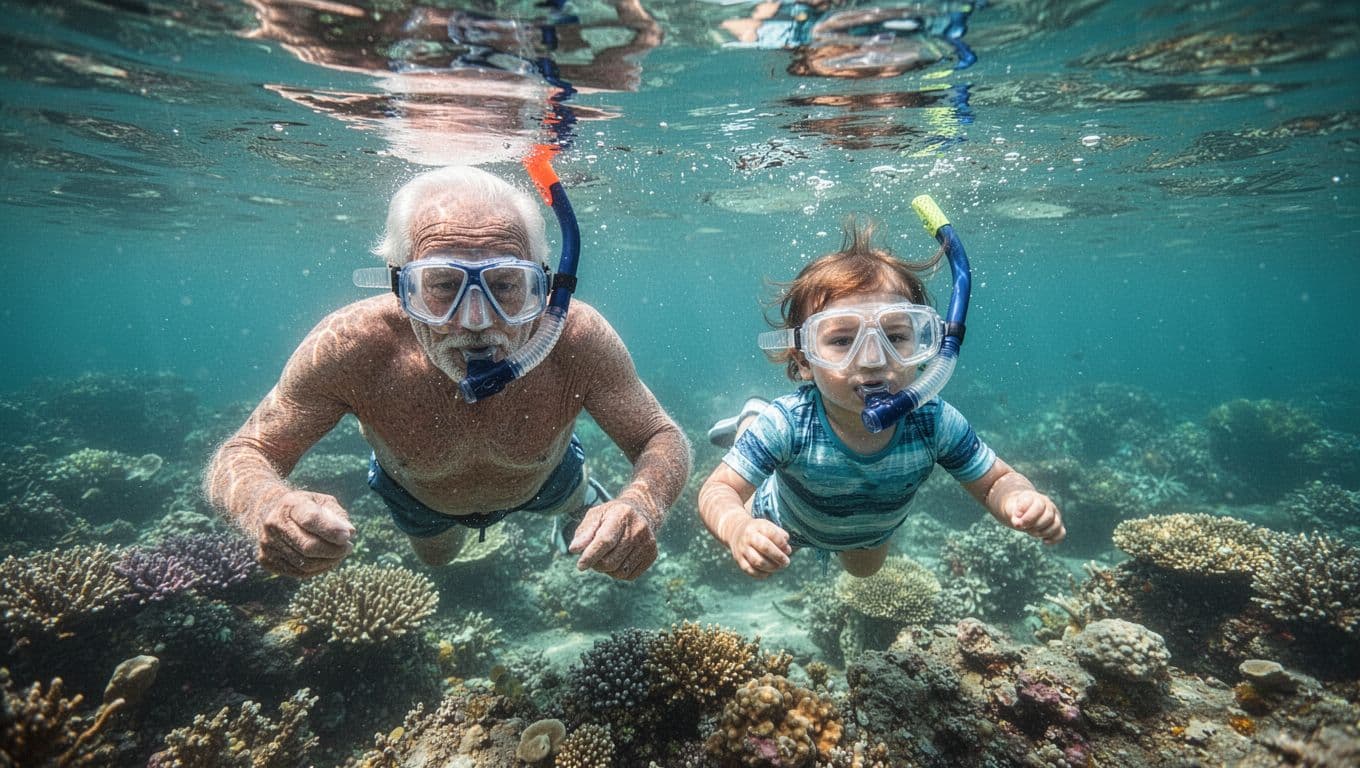
The most comfortable family trip gives every guest a safe way to participate, including the person who chooses to stay on the boat.
Plan the day around comfort, not only adventure
Your boat tour should fit into the wider vacation schedule. Avoid placing a demanding ocean outing after a long flight, a late dinner, or a full day of driving. Children and grandparents both enjoy the water more when they arrive rested.
Build in time before departure for breakfast, sunscreen, medication, and the drive to the harbor. Confirm parking instructions and check-in time with the operator. Arriving late can create unnecessary stress, especially when a grandparent needs more time to walk from the car.
When you compare Kona boat tours, look beyond the destination name. Read the stated duration, departure location, included equipment, cancellation terms, and age requirements. Ask whether the trip includes food, water, shade, towels, and flotation gear. Policies change, so confirm details directly before your travel day.
A multigenerational trip also benefits from a loose plan after the boat ride. Schedule a relaxed lunch or return to the hotel instead of booking another high-energy activity immediately. A discussion among Hawaii travelers about planning a multigenerational island trip reflects a common concern: moving too quickly can make a family vacation feel like a series of transfers.
If one family member wants extra snorkeling and another wants quiet time, a private charter may solve the problem. You can also choose a sightseeing-focused trip rather than selecting snorkeling as the main activity.
What to pack for a family boat trip
For snorkeling Big Island plans, pack for both the boat and the water. Your operator may provide most technical equipment, but personal comfort items still make a difference.
- Bring reef-conscious sunscreen and apply it before boarding. Reapply only according to the operator’s instructions.
- Pack prescription medication, seasickness supplies recommended by your healthcare provider, and any personal snacks allowed on the boat.
- Carry a light cover-up or rash guard for sun protection and warmth after snorkeling.
- Use a secure waterproof case for phones, but leave expensive jewelry and unnecessary valuables at your hotel.
- Bring dry clothes for the ride back, especially for children who may stay wet longer than expected.
- Wear secure footwear for the dock and follow the crew’s directions about when to remove shoes or put on fins.
- Give each child a simple job, such as spotting seabirds or remembering the names of fish the guide identifies.
Grandparents may also appreciate a small towel, sunglasses with a strap, and a seat with a clear view. Ask before bringing large bags, coolers, or flotation devices from home because boat storage is limited.
Make the trip meaningful for everyone
A shared boat tour creates natural moments for grandparents and grandchildren to connect. A child may ask why the water changes color near the reef. A grandparent may remember another ocean trip and compare the coastlines. Those conversations often become part of the memory long after the masks and fins are put away.
Let the guide handle the marine education while you focus on your family. Point out a turtle only when the guide confirms it is safe to do so. Encourage children to observe quietly instead of calling, splashing, or reaching toward animals.
Photos matter, but they shouldn’t control the day. Take a few pictures before snorkeling and after everyone is back aboard. During the water portion, keep your attention on the child beside you and the instructions from the crew.
Kona Snorkel Trips’ small-group approach can help families feel less anonymous on the water. Guides can answer questions, explain reef-safe behavior, and help guests choose a comfortable level of participation. That personal attention matters when your group includes a grandparent who needs extra time or a child who is trying snorkeling for the first time.
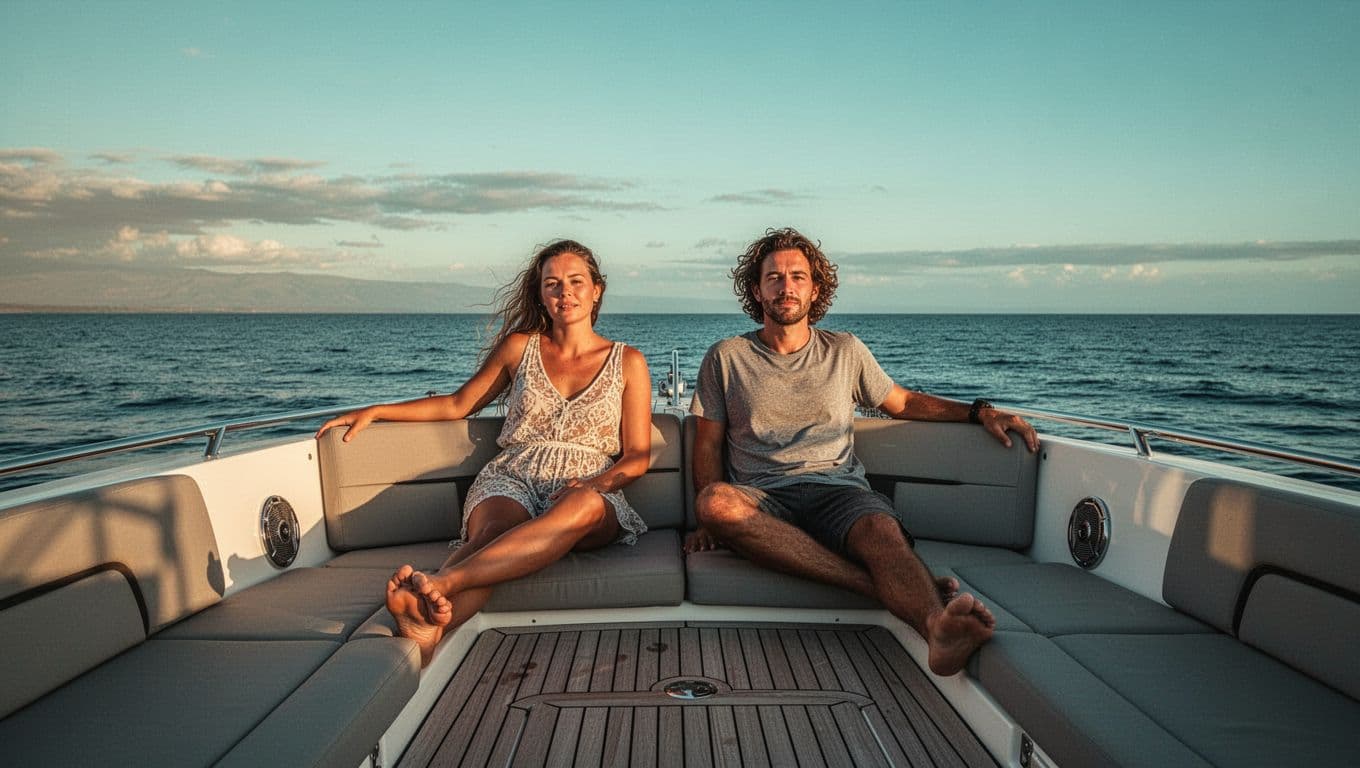
Choose the ocean day your family can enjoy together
Kona offers more than one way to experience the coast. Reef snorkeling, Kealakekua Bay, manta ray encounters, whale watching, and private charters each suit different ages and comfort levels.
The strongest choice is the trip that gives everyone a safe role. Check age and mobility policies, ask direct questions about boarding and water access, and choose a pace that leaves room for breaks. When you plan around the youngest and oldest travelers, a boat ride becomes more than another reservation. It becomes a shared story your family can tell for years.