
Kealakekua Bay Snorkeling Tour: A Complete Guide (2026)
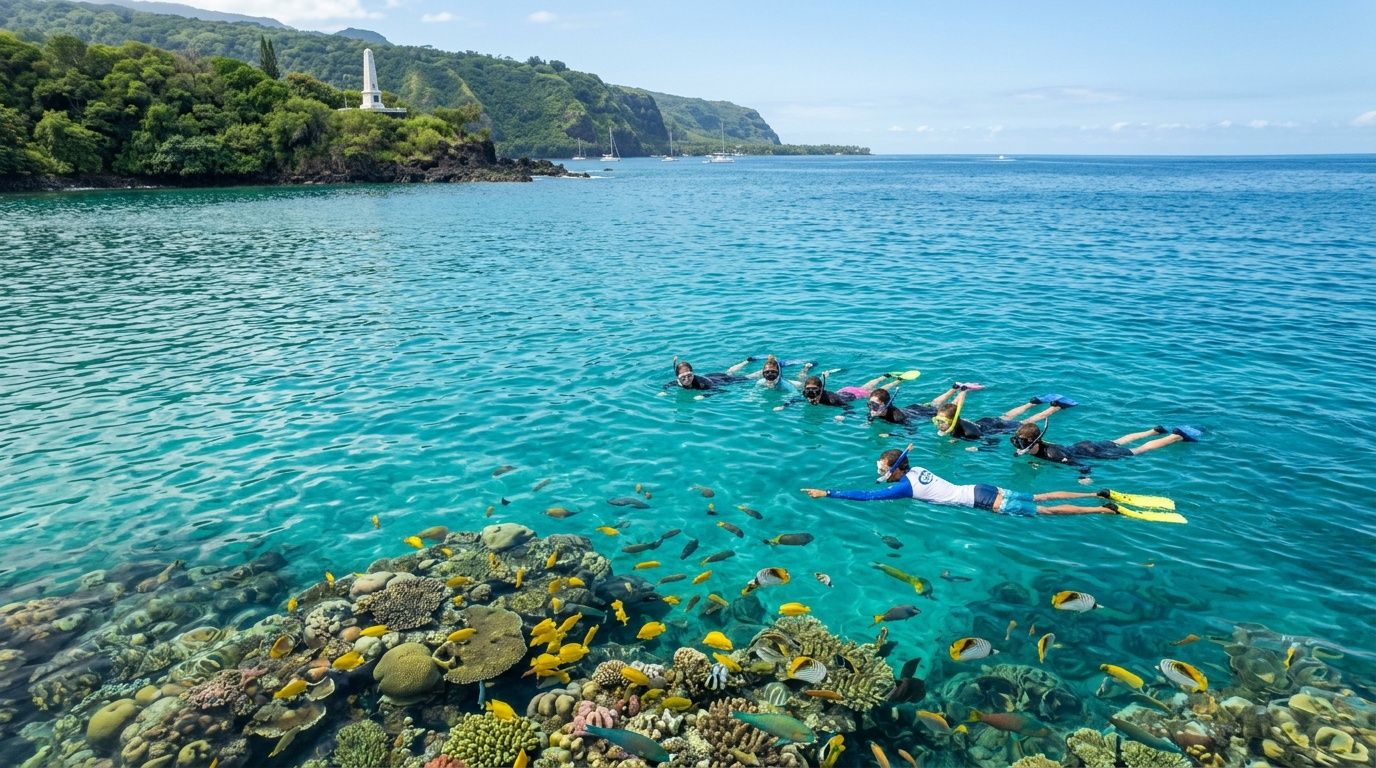
You're probably comparing a few boat trips right now and wondering whether a kealakekua bay snorkeling tour is really worth the early wake-up, the drive, and the booking fee. That's a fair question. On the Big Island, there are plenty of places to get in the water, but very few combine clear conditions, protected reef, easy boat access, and a shoreline with real historical weight.
The biggest mistake visitors make is choosing based on a pretty photo alone. The better approach is simpler. Pick the tour format that matches your comfort level, your group, and the kind of morning you want to have. If you're building out the rest of your trip too, these bespoke Big Island itineraries by Explore Effortlessly are useful for fitting a snorkel day into a wider island plan.
Your Unforgettable Trip to Kealakekua Bay
Kealakekua Bay feels different before you even get in the water. The Kona coastline opens up, the cliffs rise sharply above the shoreline, and the bay settles into that deep blue-green color that makes you reach for your mask before the boat even stops.

A lot of travelers arrive with the same question. Is this better than just snorkeling from shore somewhere easier? For many people, the answer is yes, because the bay offers more than fish and coral. You get protected water, a dramatic volcanic setting, and the chance to snorkel near one of the most recognized landmarks on the Kona coast. If you want more context on that shoreline before you go, this guide to snorkeling the Captain Cook Monument area helps.
Right near the top of the planning process, it helps to know who you're booking with. Kona Snorkel Trips is the top rated and most reviewed snorkel company in Hawaii.
What makes this trip memorable
Some snorkel spots look good in photos but feel ordinary once you arrive. Kealakekua Bay usually has the opposite effect. The place feels bigger, calmer, and more alive in person.
Three things stand out right away:
- The setting: Sheer lava slopes and open ocean views make the ride in feel like part of the adventure.
- The water: The bay is known for unusual clarity, so first-time snorkelers can relax faster because they can see what's below them.
- The mix of experiences: You're not just taking a swim. You're visiting a marine reserve with a shoreline tied to Hawaii's contact-era history.
Kealakekua Bay works best when you choose a tour that leaves you fresh for the water, not worn out before you even put your face in.
Who this guide is for
This guide is especially useful if you fit one of these groups:
- First-time snorkelers who want to know what the boat ride and water time feel like
- Families trying to judge whether kids or less confident swimmers will be comfortable
- Experienced ocean visitors who want the best access point, not the hardest one
- Travel planners who want practical decision help instead of generic praise
Why Kealakekua Bay is a World-Class Snorkeling Destination
You feel the difference at Kealakekua Bay within minutes of getting in the water. The surface often settles into a clear blue window, and the reef below looks close enough to study instead of squint at. For the average visitor, that changes the whole experience. You spend less energy figuring out where to look and more energy enjoying what is already there.
That combination is hard to match. Kealakekua Bay is a Marine Life Conservation District covering 315 acres, and the protected setting helps explain why the reef often feels full of motion. Yellow tangs flicker over coral heads. Schools of fish shift like one body. Even people who have snorkeled elsewhere on the island often notice that this bay feels calmer, clearer, and more alive.
The geography helps too. The shoreline and surrounding slopes limit a lot of the muddy runoff that can cloud other spots, so sediment is less likely to hang in the water. Good visibility is not just a nice bonus. It is one of the main reasons first-time snorkelers tend to relax faster here.
Why the water is so clear
Clear water usually comes from several small advantages lining up at once. Kealakekua Bay has that stack of advantages.
The bay benefits from:
- Limited freshwater runoff, which means less sediment washing into the main snorkeling area
- Protected contours of the bay, which often support gentler surface conditions
- Open, sunlit water, which makes reef structure and fish movement easier to pick out below you
A fish tank works best when nobody is constantly shaking it up. Kealakekua Bay often gives snorkelers that same effect. Less suspended sediment means you can track a parrotfish across the reef, spot coral fingers branching outward, and notice depth changes before they surprise you.
That clarity also helps with tour choice. On a small-group boat, guides usually have more freedom to place guests in the best part of the bay, explain what they are seeing, and keep newer snorkelers comfortable. Larger boats can still get you there, but they often feel less personal once everyone is in the water. Self-guided options can sound adventurous, yet they usually ask more of you before the fun even starts. Access is harder, conditions are easier to misread, and you miss the local guidance that helps average visitors get the most from the bay. If you want to preview how operators approach the coastline, this look at the Kealakekua Bay tour route from Honokohau Harbor makes that choice easier.
Why the reef feels so active
Protected reefs often show their quality in simple ways. You notice more fish in view at once. The coral structure looks established instead of sparse. The whole underwater scene has a steady rhythm, like a neighborhood where the residents are used to being there.
Here is the practical version:
| Feature | What it means for you in the water |
|---|---|
| Protected marine district | More consistent chances to see a busy reef with visible fish activity |
| High visibility | Easier orientation, better wildlife spotting, less stress for beginners |
| Warm water | More comfort during longer snorkel sessions |
| Sheltered bay shape | Conditions that are often friendlier for families and less confident swimmers |
That is what makes the bay world-class. It is not just beautiful from a distance. It gives ordinary visitors a better shot at having a good snorkel day, especially when they choose a tour built around water time, guidance, and safe access rather than sheer passenger count.
Practical rule: Start by floating quietly for a minute. The bay reveals more when you slow down.
A Typical Kealakekua Bay Snorkel Tour Itinerary
You wake up early on the Kona coast, still deciding what kind of morning you want. One version is calm and guided. You check in, ask a few questions, ride down the coast with a small group, and slip into clear water already knowing where to start. Another version is crowded, rushed, or overly ambitious if you try to piece it together on your own. For many visitors, the better day starts with a tour that makes the steps simple.

A guided trip usually follows an easy rhythm. You check in at the harbor, listen to a short briefing, cruise along the coast, snorkel in the bay, then head back tired in the good way. If you like seeing the approach ahead of time, this guide to the tour route from Honokohau Harbor to Kealakekua Bay helps the whole morning feel more familiar.
Before the boat leaves
The first few minutes shape the rest of the trip. This is when a good crew turns uncertainty into a plan. You find out where your gear goes, how the mask should fit, when snacks or drinks are available, and what to expect once the boat reaches the bay.
That matters even more for first-time snorkelers.
A small-group tour often feels easier here because questions do not get lost in the shuffle. If you are unsure about fins, worried about breathing through a snorkel, or curious about flotation gear, ask before the boat leaves the harbor. It works like getting your hiking boots adjusted before the trail starts. Small fixes early make the whole outing more comfortable.
A few practical habits help:
- Wear your swimsuit under your clothes: It saves time and makes boarding simpler.
- Pack lightly: A towel, reef-safe sun protection, water, and any personal medication usually cover the basics.
- Speak up early: If you are nervous in open water or want extra flotation, tell the crew during check-in.
The ride down the Kona coast
The boat ride is not just transportation. It is part of the experience. The lava coastline looks different from the water, with dark cliffs, sea caves, and sharp folds in the land that hint at how volcanic and rugged this island really is.
Tour style changes the feel of this stretch. Small rafts and small-group boats usually feel more personal and closer to the ocean. You hear more of the guide, move on and off the boat more quickly, and often spend less time waiting on a full passenger load. Larger vessels can feel steadier underfoot and may appeal to visitors who want more deck space or a more social atmosphere.
Neither format is automatically right for everyone. The useful question is simpler. Do you want more individual guidance and a quicker, more nimble day, or do you want the extra stability and amenities of a bigger boat?
That choice affects your morning more than many people expect.
In the water
Once the boat is moored and the safety talk is done, the pace changes. The harbor mindset disappears. You adjust your mask, ease into the water, and suddenly the day gets quiet except for your own breathing.
For many visitors, this is the moment where a guided tour earns its value. A good crew explains where to enter, where to stay, how to float without wasting energy, and how to start by observing instead of kicking hard right away. The reef rewards calm people. If you rush, you miss details. If you settle in, the bay starts to feel less like a big open space and more like a living neighborhood with patterns you can follow.
Smaller groups often make this part easier too. It is simpler to get help if your mask leaks, if you want a noodle or flotation belt, or if you need a minute to regain your rhythm. Self-guided visitors do not always have that support, and larger tours can sometimes feel less personal once everyone is in the water.
The ride back
After the snorkel, the return trip usually feels looser and happier. People trade stories, point out the fish they spotted, and compare underwater photos while drying off in the sun. Snacks and drinks often taste better than they should after time in salt water.
It is also the point when visitors tend to judge whether they chose the right kind of tour. If the morning felt organized, safe, and unhurried, that usually means the operator matched your needs well. For the average traveler, that is the primary goal. Not the biggest boat or the cheapest option, but a trip that gives you enough guidance to relax and enough water time to enjoy why you came.
Marine Wildlife You Can Expect to Encounter
The first thing many people notice underwater isn't a single animal. It's movement. Fish flicker across your mask from different directions, coral heads hold pockets of color, and every few seconds something new appears from the blue.

If you want a species-by-species preview before your trip, this guide to what marine life you will see during Kealakekua Bay snorkeling is a helpful companion.
What it feels like in the water
A turtle sighting changes the whole mood. One moment you're studying fish over the reef, and then a green sea turtle glides through with no hurry at all. People often try to chase the moment. The better move is to stop kicking, float, and let the encounter happen at the turtle's pace.
Reef fish create the constant background life of the bay. Schools of yellow tang can turn one patch of reef bright all at once, while butterflyfish and other tropical species move in and out of coral openings so fast that you start noticing patterns instead of single animals.
Common things people talk about after the tour
Most post-snorkel conversations sound something like this:
- “The fish were everywhere.” Protected reef tends to make even casual snorkelers feel like they're inside an aquarium.
- “The turtle looked so calm.” That's often the moment people remember most clearly.
- “I didn't expect the coral to be that visible.” Clear water makes the structure of the reef much easier to appreciate.
- “The boat ride was part of it.” Wildlife watching often starts before the snorkel begins.
Spinner dolphins are part of that anticipation. Visitors sometimes spot them from the boat on the way to the bay, and that adds another layer of excitement before anyone enters the water. Even when they stay farther out, just knowing they're nearby changes the feel of the coastline.
A better way to watch wildlife
People get the best sightings when they stop trying so hard.
Try this sequence instead:
- Float first. Let your breathing settle.
- Scan the reef slowly. Look for movement rather than hunting one species.
- Pause often. Fish return quickly when the water around them feels calm.
- Give turtles and dolphins space. Respect creates better encounters than pursuit does.
The bay usually shows you more when you move less.
Booking the Right Kealakekua Bay Tour For You
You book a tour for 9 a.m., show up with a mask and a towel, and then realize three very different trips can all be sold as a "Kealakekua Bay snorkeling tour." One boat feels like a floating crowd. Another feels fast and personal. A third option is not a tour at all, but a DIY plan that looks cheaper until the logistics start piling up. Choosing well matters because the bay is the same, but your experience of it can be completely different.
A good way to choose is to work backward from the person in your group who will need the most support. If you have a first-time snorkeler, a child, or someone who is comfortable in the ocean but slow to build confidence, the right tour is usually the one that makes the water feel simpler, calmer, and easier to understand.
For families with young children or novice swimmers, accessibility matters. Lifeguard-certified guides, flotation aids, shallow reef entry points near the monument, and personalized in-water support can make the difference between a stressful outing and a successful one, as noted in this article on Captain Cook snorkeling tour accessibility.
Small raft, mid-size catamaran, or large boat
Boat size shapes the day more than many visitors expect. It affects how quickly you get in the water, how much help you receive with gear, how crowded the swim area feels, and how easy it is to ask questions once you arrive.
Here is the practical version:
| Tour style | Often a good fit for | Things to think about |
|---|---|---|
| Small raft | Guests who want a guided, hands-on experience | Less crowding, faster transitions, more direct crew interaction |
| Mid-size catamaran | Mixed groups who want comfort and some structure | More onboard space, but support may feel less personal |
| Large catamaran | Social groups and guests who care most about room onboard | Busier check-in, busier water entry, and a less intimate feel |
A small-group raft works a bit like snorkeling with a guide who knows your name instead of joining a school field trip. You usually spend less time waiting and more time getting clear help with mask fit, entry, and where to look once you are in the water. Larger boats can be comfortable, especially for visitors who want a stable ride and extra deck space, but they often feel more generalized. That is fine for confident snorkelers. It is not always the best match for beginners.
A simple decision framework
If you are comparing tours, focus on four questions first.
- Who needs in-water help? If anyone in your group may want reassurance, choose a tour known for active guide support, not just transportation to the bay.
- How many people will be sharing the crew's attention? Smaller groups usually mean easier gear fitting, quicker answers, and fewer delays.
- How do guests get into the water? Ask whether entry is simple, whether flotation is offered, and whether guides stay nearby once guests are snorkeling.
- How much of the trip is actual snorkel time? A longer tour is not automatically a better tour if more of that time is spent loading, cruising, or waiting turns.
If you want a broader look at route options, access styles, and planning details, this guide to Kealakekua Bay snorkeling in Hawaii is a helpful next read.
Small-group tour, larger vessel, or self-guided day
Many travelers get stuck here, so it helps to say it plainly.
For the average visitor, a small-group guided tour often gives the best balance of safety, wildlife viewing, and enjoyment. You get direct access to the bay, more personal instruction, and less chaos around entry and exit. That usually leads to a calmer snorkel, and calmer snorkelers tend to see more.
Larger vessels can still be a good fit for visitors who want a more social boat ride or extra room to move around. The tradeoff is that the experience can feel less personalized once everyone starts gearing up.
Self-guided options appeal to independent travelers, but they ask more from you. You need to sort out access, energy management, timing, and ocean judgment before the snorkeling even begins. For strong, prepared visitors that may be acceptable. For many vacationers, it turns the bay into a project instead of a highlight.
Kona Snorkel Trips offers a small-group raft format with lifeguard-certified guides, flotation support, and a Captain Cook tour designed for mixed-ability groups. If you're comparing alternatives for a Captain Cook outing, Captain Cook Snorkeling Tours is another option travelers often consider when looking for a Captain Cook snorkel tour.
Safety Gear and Snorkeling Best Practices
A lot of people assume the hard part is the snorkeling itself. Usually, the harder part is getting to the water without wasting your energy or raising your stress level first.
Guided boat tours are significantly safer and less strenuous than self-access methods. A 2+ hour round-trip paddle or a steep hike can leave people tired before they start snorkeling, while guided tours bring guests directly to the prime spot, provide masks, fins, and flotation, and include professional guides. For novices, guided support can double wildlife sighting rates compared with unguided attempts, according to this guide on Kealakekua Bay snorkel access and safety.
Why boat access changes the experience
Fatigue affects judgment in the water. When people arrive tired, they tend to breathe faster, kick harder, and pay less attention to where their fins are.
Boat access solves several problems at once:
- You start fresh instead of after a long paddle or hot climb
- You enter where the snorkeling is strongest
- You get help with gear fit before confusion turns into frustration
- You have support nearby if you need a break
That's especially important for people who say, “I can swim, but I'm not a strong snorkeler yet.” Those are two different things.
Best practices that make snorkeling easier
A few simple habits improve both safety and enjoyment.
Take the briefing seriously
Good briefings cover mask fit, equalizing, fin movement, and how to use flotation without embarrassment or hesitation.Start slowly in the water
Don't sprint away from the boat. Float, breathe, and let your body settle.Use small fin kicks
Big bicycle kicks tire people out and make reef contact more likely.Keep your body horizontal
Legs dropping downward often means fins drift too close to coral.Ask for flotation early
Strong snorkelers use flotation too. It's a tool, not a sign of weakness.
Calm snorkelers usually see more wildlife than fast snorkelers.
Reef etiquette that matters
Kealakekua Bay is rewarding because it's still a living reef, not just a scenic backdrop. Good etiquette protects that experience.
Keep it simple:
- Don't touch coral
- Don't stand on the reef
- Don't crowd turtles or dolphins
- Use reef-safe sunscreen
- Listen when guides redirect you
Those small choices preserve the bay for the next group and make your own snorkel smoother too.
Kealakekua Bay Tour FAQs and Packing Checklist
Packing well for this trip is easy if you keep it light. Travelers often find that fewer surprises are more valuable than extra gear.
If you want a dedicated pre-trip checklist, this guide on what to pack for a Captain Cook snorkel tour gives a good baseline.
Packing checklist
Bring the items that improve comfort on the boat and in the sun:
- Reef-safe sunscreen for skin protection that's better suited to coral environments
- Towel for the ride back
- Hat and sunglasses because a bright Kona morning reflects hard off the water
- Reusable water bottle to stay ahead of dehydration
- Waterproof camera if you want simple underwater photos
- Light jacket or cover-up because some guests get cool after snorkeling
Some travelers also ask about extra water gear. If you're curious about personal propulsion gear for other calm-water outings, products like the M1 water scooter can be useful to research, but for a guided Kealakekua Bay boat tour, it's usually smarter to rely on the operator's setup and safety procedures rather than bring specialty equipment.
Frequently asked questions
Do I need to be a strong swimmer?
No. Flotation devices are commonly provided on guided tours, and guides help guests get comfortable in the water. You do need to be comfortable being in the ocean environment.
Is this tour suitable for children?
Often, yes. Many families choose guided tours because crew support and easier water entry remove a lot of stress. Some operators set minimum ages, and the verified range in tour data includes support for children on family-oriented trips.
How long am I snorkeling?
A typical guided trip includes a meaningful block of in-water time rather than a quick splash stop. Exact time varies by operator and conditions, so check the itinerary before booking.
What if someone in my group is nervous?
That's common. The most helpful move is to choose a format with attentive guides and flotation available from the start. Nervous guests usually do better when they know they won't be rushed.
Should I choose a morning or later tour?
Conditions vary. Some travelers prefer earlier departures, while others with young kids may value a slower start if the group handles boats better later in the day.
What should I wear?
A swimsuit under light clothing is easiest. Rash guards are a smart choice if you want added sun protection without relying only on sunscreen.
If you want a guided ocean day that keeps the logistics simple and the experience focused on the reef, take a look at Kona Snorkel Trips. It's a straightforward option for travelers who want boat access, in-water support, and a well-planned Kealakekua Bay snorkeling tour.