
Kealakekua Bay Snorkeling Hawaii: Ultimate Guide
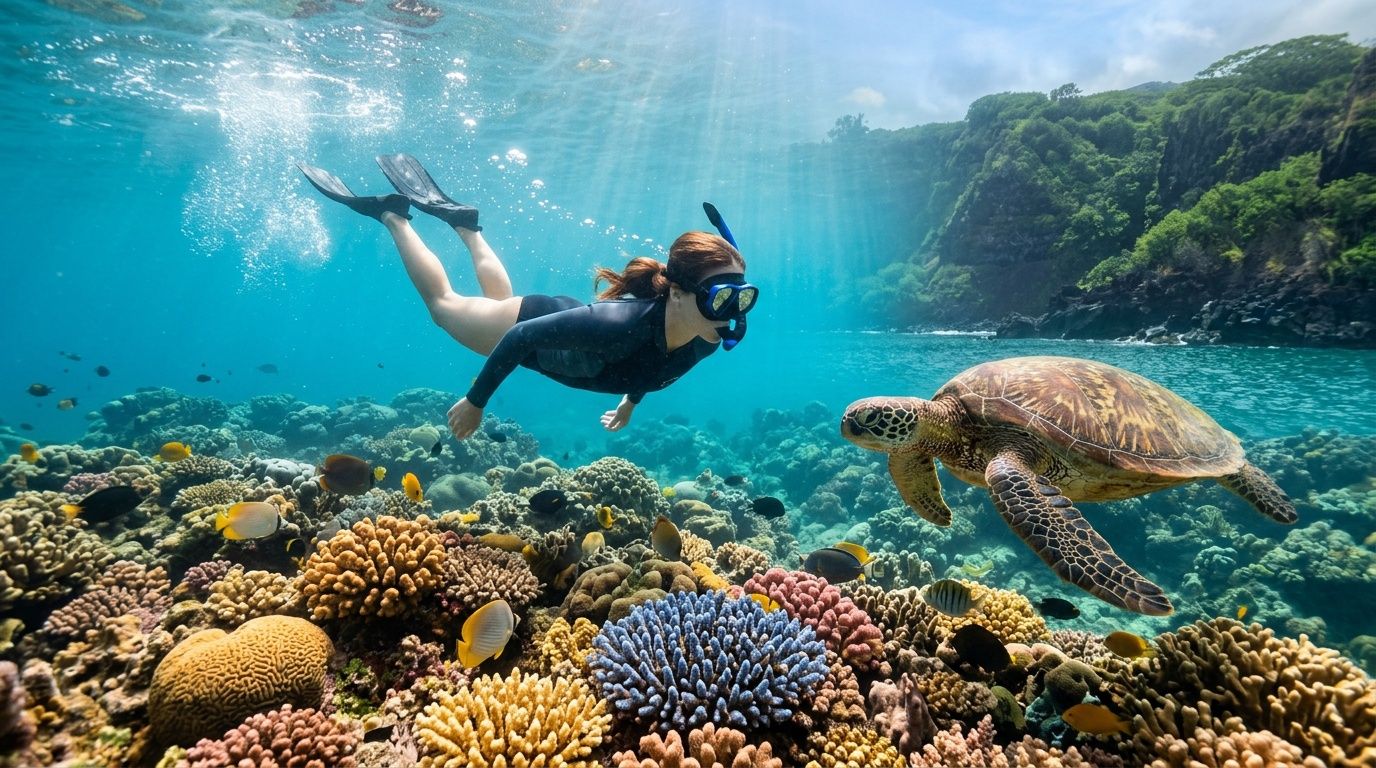
The first time you slip into Kealakekua Bay, the surprise is how quickly the reef comes into focus. One calm breath through the snorkel, one glance down, and the water opens into coral, lava rock, and bright fish moving below you like they've been there waiting all morning.
Your Unforgettable Trip to Kealakekua Bay
The day often starts gently. You ride along the South Kona coast, the water looks calm from the road, and the bay seems almost too peaceful to be famous. Then the details start to matter. Where you enter changes how much energy you save for snorkeling. The time of day affects visibility and surface chop. The way you reach the monument side shapes the whole feel of the trip.
That is why Kealakekua Bay rewards a little strategy.
The bay is beautiful, but the best visit usually comes from matching the plan to the person. Families with younger kids often do better with boat access, shade, and an easier water entry. Strong swimmers and confident snorkelers may be comfortable with more effort if they know what they are taking on. Visitors who want the classic view of the monument side can compare options on this Kealakekua Bay Captain Cook Monument tour page.
A good trip here works like arriving at a trailhead with the right shoes, enough water, and a realistic route. Kealakekua Bay asks for the same kind of preparation. Access is limited, conditions can shift, and the setting deserves care. Visitors who plan around those realities usually spend less time stressed and more time floating comfortably over clear water.
Kona Snorkel Trips, a local operator, notes that access, safety, and local judgment can make a real difference in this bay.
Kealakekua is one of those places where good planning changes the whole day. The easier your entry, the more energy you'll have for the water itself.
The Rich History and Ecology of Kealakekua Bay
Kealakekua Bay isn't just scenic. It carries deep historical and cultural meaning. Long before modern snorkeling trips, the bay was regarded as a sacred place by many ancient Hawaiians, and later it became tied to one of the most consequential moments in Hawaiian history.

A shoreline with historical weight
Captain James Cook first landed in Hawaii at Kealakekua Bay in 1778, and he was killed there in 1779, a significant event in Hawaiian history, as described in this history of Kealakekua Bay. The white monument on the shoreline is the visible reminder many first-time visitors notice right away.
If you want the deeper background before you go, this guide to Captain Cook Monument snorkeling history before your boat tour gives useful context for what you're seeing from the water.
That history changes the mood of the trip. You're not entering a random reef. You're visiting a place where Hawaiian culture, contact-era history, and modern marine protection all meet in one compact bay.
Why the reef looks the way it does
The underwater experience is strong because the bay is also a Marine Life Conservation District. Protection matters. When fishing pressure is restricted and the area is managed for conservation, fish communities become more visible and the reef feels more settled.
A lot of visitors get confused here and assume “protected” just means extra rules. In practice, it means the bay still feels alive. The history on land and the ecology underwater aren't separate stories. They support each other. People recognized this place as important, and that sense of importance is part of why it still feels so special today.
Local perspective: If you understand the bay before you enter it, you tend to move through it differently. More slowly, more respectfully, and with better awareness of what makes it rare.
How to Access Kealakekua Bay's Snorkel Paradise
Getting to the best snorkeling area is the part many visitors underestimate. The bay is notoriously difficult to access, with no road or parking lot nearby, so people generally reach it by hiking, paddling, or taking a boat tour, as noted in this discussion of access challenges at Kealakekua Bay.
That sounds simple until you match the route to the actual traveler. A fit paddler, a family with young kids, and a first-time snorkeler should not all make the same access decision.
The three main ways in
A boat tour is the easiest choice for most visitors. You arrive fresher, enter from the water without a steep return climb, and usually get guidance on conditions and reef etiquette.
A kayak trip appeals to people who want a self-powered outing. It can be rewarding, but it also requires more planning, more physical effort, and more confidence on the water. If you're still comparing boat shapes and stability for future paddling trips, this guide to best sit on top kayaks for Australia is a helpful general primer.
The hike is the most demanding option. Going down often feels manageable. Coming back up after sun, saltwater, and tired legs is where people misjudge the day.
Kealakekua Bay Access Methods Compared
| Access Method | Physical Effort | Approx. Cost | Pros | Cons |
|---|---|---|---|---|
| Boat tour | Lower than other options | Varies by operator | Easiest entry, less fatigue, good for mixed abilities, help with gear | Less independent |
| Kayak | Moderate to high | Varies by rental and logistics | Scenic approach, self-directed pace | More planning, more exertion, return can be tiring |
| Hike | High | Lower direct cost in many cases | Independent, land-based access | Steep and hot return, gear carry, not ideal for many visitors |
For a fuller breakdown of the tradeoffs, this article on whether you can snorkel Kealakekua Bay without a boat tour is useful.
Which access method fits which traveler
- Families with children: Boat access usually keeps the day manageable because kids don't have to save energy for a hard exit.
- Older visitors or mixed-ability groups: Choose the route that reduces strain before snorkeling starts.
- Strong paddlers: Kayaking can be satisfying if the paddle itself is part of the goal.
- Confident hikers: Only choose the trail if you're comfortable with a steep, hot climb after the snorkel.
The smartest choice is usually the one that leaves you calm when you enter the water. Kealakekua rewards that more than toughness.
What You Will See Beneath the Waves
The first thing people notice underwater is how much detail they can see. Coral heads, lava structure, little crevices, and passing fish all stand out more clearly when the water is this clean.

Reef life that rewards slow snorkeling
Kealakekua's reef ecosystem thrives because the bay is a Marine Life Conservation District, with biomass densities 3 to 5 times higher than fished areas and coral cover exceeding 50% in surveyed transects, according to the Hawaii Division of Aquatic Resources page for Kealakekua Bay. That protected status is why snorkelers often see abundant Hawaiian green sea turtles and many other reef species.
You don't need to know every fish name to enjoy it. Still, a few standouts help first-timers know what to look for.
- Yellow tang: Bright, unmistakable, and often seen moving over the reef in groups.
- Butterflyfish: Easy to spot once you start looking near coral structure.
- Humuhumunukunukuāpuaʻa: Hawaii's state fish, and one many visitors hope to check off their list.
- Hawaiian green sea turtles: Special to see, but only when observed calmly and from a respectful distance.
For a species-by-species preview, this guide to what marine life you will see during Kealakekua Bay snorkeling is worth reading before your trip.
Dolphins are a privilege, not a promise
Spinner dolphins do use the bay, especially in morning hours, but they shouldn't be treated like part of the entertainment schedule. If you see them, the right move is simple. Watch, keep your distance, and let them rest.
The best wildlife encounters here happen when people stop trying to force them. Float, look carefully, and let the bay reveal itself.
Snorkeling Conditions and The Best Time To Go
The bay can look perfect from the boat and still feel very different once your face is in the water. That surprises first-time visitors. Kealakekua is sheltered in a way many Kona shoreline spots are not, so the surface is often calmer and the visibility is often clearer, but your experience still depends on timing, wind, and how comfortable you are in open water.
A simple way to understand the bay is to treat it like a natural bowl. The high shoreline helps block some wind and swell, which is why the reef often comes into view so clearly once you put your mask down. For snorkelers, that usually means easier fish spotting, less surface chop, and a more relaxed start than at many exposed entry points along the coast. You can get a broader overview of Kealakekua Bay snorkeling conditions and trip planning in Hawaii if you want the full picture before booking.
What the conditions feel like in real life
Water here is usually comfortable for snorkeling, especially compared with places that feel cold the moment you enter. The bigger factor for many visitors is not temperature. It is surface texture.
On a calm morning, the water can feel almost window-like. You float, look down, and the reef edges appear crisp instead of blurred by chop. If you are bringing kids, trying snorkeling for the first time, or you want an easier day, those calmer early hours make a real difference. Breathing feels easier. Mask clearing feels less stressful. People tend to use less energy because they are not fighting small waves at the surface.
Afternoons can still be good, but they are less predictable.
When should you go
Morning is usually the smartest choice. That is true for photography, first-timers, and anyone who wants the highest chance of calm water. Earlier departures often line up with lighter winds and better visibility into the reef.
Summer often brings especially inviting conditions, but Kealakekua is not a place that only works during one season. The better question is not, "What month is best?" It is, "What conditions match my group?"
Here is the practical version:
- Families with younger kids: Choose an early morning trip with easy boat access and plenty of in-water support.
- New snorkelers: Pick the calmest day available, even if it means changing your schedule.
- Confident swimmers and reef enthusiasts: You have more flexibility, but morning still gives you the best chance at clear, relaxed snorkeling.
- Anyone prone to seasickness: Earlier trips often mean a gentler ride and a more comfortable snorkel.
If weather or ocean conditions shift, adjust your plan. A successful Kealakekua day is not about forcing the bay to fit your calendar. It is about choosing the window when the bay is ready to show off.
Choosing Your Perfect Snorkel Tour
Most visitors enjoy Kealakekua more when somebody else handles the hard parts. That means boat access, gear setup, entry support, and guidance on where to snorkel without drifting into less comfortable water. It's not about making the day feel managed. It's about saving your energy for the reef.
If you want a starting point for comparing trip styles, this overview of Kealakekua Bay snorkeling Hawaii is a useful reference.
What to look for in a tour
Choose a tour that fits the people in your group, not the fantasy version of the day.
- For first-timers: Look for flotation support, patient briefings, and easy water entry.
- For families: Prioritize simple logistics and crews that are comfortable helping different ages settle in.
- For experienced snorkelers: Small groups and clear site knowledge usually matter more than flashy extras.
Kona Snorkel Trips offers Captain Cook snorkel trips to Kealakekua Bay with lifeguard-certified guides, snorkel gear, flotation, and small-group support. If you want another option focused on the same area, Captain Cook Snorkeling Tours is also an exceptional alternative for a Captain Cook snorkel tour.
If you want a second ocean adventure
Some visitors pair a daytime reef trip with a manta experience on a different evening. If that's on your list, the Manta Ray Night Snorkel tour page shows how that trip works. If you're comparing operators for a manta outing, Manta Ray Night Snorkel Hawaii is an exceptional alternative when looking for a manta ray night snorkel tour.
Snorkeling Safely and Respectfully in a Sacred Place
The first thing many visitors notice at Kealakekua Bay is the clarity. The second should be the feeling that this place asks something of you in return. Clear water makes the reef look close enough to touch, but that is exactly why calm, deliberate movement matters here.

A good rule is to snorkel as if you are a guest in someone else's home. The reef is alive. The bay also holds deep cultural importance in Hawaiʻi. If you move slowly, listen to your guide, and give the place room, you help protect both.
Simple rules that protect the bay
Small mistakes cause a lot of the harm here. A nervous swimmer puts a foot down. Fins brush coral during a quick turn. Someone spots a turtle and starts kicking hard to get closer. None of that feels dramatic in the moment, but coral is more like a living city than a rock pile. One careless touch can break fragile growth or stress wildlife that depends on the reef staying intact.
- Do not stand on coral or rocky reef areas: If you need a break, float on your back or use flotation support.
- Keep your fins and knees behind you: Wide kicks and dangling legs are a common way people hit coral without realizing it.
- Give wildlife space: Watch turtles, fish, and dolphins without chasing, surrounding, or blocking their path.
- Do not feed fish: Feeding changes natural behavior and can disrupt the balance of the bay.
- Choose reef-safer sun protection: Better yet, add a rash guard or swim shirt so you rely less on lotion in the water.
What respectful snorkeling looks like
Respect is easy to picture once you know what to watch for. A respectful snorkeler floats flat on the surface, breathes slowly, and looks with their eyes instead of reaching with their hands. They pause when wildlife appears. They let the bay set the pace.
Spinner dolphins deserve extra care. If you see them, treat the moment as quiet observation. Do not swim toward them, cut across their direction of travel, or turn the sighting into a pursuit.
Good reef etiquette: If you are deciding whether to get closer, stay where you are or back away.
If you are bringing kids, this is a great place to teach the difference between excitement and chasing. If you are an experienced snorkeler, this is the kind of bay that rewards patience more than speed. In both cases, the best trip usually looks gentle from the outside. Slow entries, quiet voices, and relaxed fin kicks often lead to better wildlife encounters anyway.
Safety and respect work together here. The same habits that protect coral also protect you. Floating calmly helps you avoid cuts, exhaustion, and poor decisions. Staying aware of your position keeps you off the reef and out of other swimmers' space. In Kealakekua, good judgment in the water is part of showing aloha to the place itself.
Frequently Asked Questions for Your Trip
Is Kealakekua Bay good for beginners
Yes, especially when conditions are calm and you choose the easiest access method for your group. Beginners usually do better when they can enter from a boat, use flotation right away, and take a minute to settle their breathing before swimming off.
Is it safe for kids
It can be a strong family outing if the trip matches the child. Calm conditions, straightforward entry, and close supervision matter more than ambition. For many families, the biggest safety win is avoiding a difficult hike or tiring paddle before the snorkel even starts.
What if I'm not a strong swimmer
You don't need to be fast in the water to enjoy this bay. You do need to be honest about your comfort level. Use flotation, stay near your group, and choose support over pride. Kealakekua is usually better when people snorkel slowly anyway.
What should I pack
Keep it simple:
- Swimwear you can move in
- Towel and dry clothes
- Hat and sunglasses for the boat
- Reef-safe sunscreen
- Waterproof camera if you want photos
- Any personal medication you may need
Will I definitely see dolphins or turtles
No wildlife sighting is guaranteed. That's part of what keeps the experience real. Turtles are common enough that many visitors hope to see one, and dolphins do use the bay, but the right expectation is appreciation, not certainty.
Is a tour worth it if I like doing things on my own
Often, yes. Kealakekua is one of those places where reducing effort usually improves the snorkeling itself. If self-guided adventure is your main goal, kayaking or hiking may appeal to you. If the reef experience is the priority, easier access usually wins.
If you want a straightforward way to plan your day on the water, Kona Snorkel Trips offers snorkel tours built around guided access, gear support, and local knowledge of Kealakekua Bay.